Here is yet another in my series of crosswords exploring the dark side of the human condition (see, for example, Crosswords112,114,115,224,306), the filth and misery that other crossword constructors never come near. Why don’t they, I wonder? Is it that they are afraid—afraid, perhaps of the darkness within themselves, lurking just beneath their facile self-regard, their bourgeois pieties?
I was saying something, I think, and it must have been something about crosswords, because this is where I introduce my fortnightly crosswords—but what? Was it about the power of crosswords to do something? Bend the arc of history toward justice maybe? No, no, that was something else. Cognitive function—that’s it. Crosswords help maintain or even improve cognitive function in aging adults. Studies have shown. I’m pretty sure I read that somewhere. Or did studies show that crosswords failed to improve cognitive function? Or, actually, weren’t there also some studies that showed a correlation between crosswords and the arc of history? I think I read about those too somewhere, maybe in the New York Times, or was it The New Yorker? I’ve got to look those up. If I could only find my glasses. . .
Where would crossword constructors be without abbreviations? How many themes would have to be discarded if it weren’t for EEO and EOE? And the AAA and the ABA and the ACA and the ADA and the BBA and the BBB and the BBC? Indignant solvers may complain that they’ve never seen a screen referred to as an SCR, that SSRs aren’t much talked about anymore, that SPR is not a season they’ve encountered outside of a crossword, that an STR is not and has never been an orchestra section, or a narrow maritime passageway, or a stock unit, or a riverboat, or a soft-shell clam. And they have a point. But what they don’t consider is just what these guessable letters may have spared them in the way of unguessable jargon, or trivia, or slang. This puzzle is a grateful tribute to the hard-working, much-abused abbreviations that have got us all out of more than one tight cruciverbal corner with minimal semantic damage.
It’s a 1972 Academy-Award-winning song! It’s a Supreme-Court-case-worthy pill! It’s an episode of the 60s British spy series “The Avengers” (but after Diana Rigg left)! It’s also a 1937 song that didn’t win any awards, and (I’m consulting Wikipedia here) three other songs, and six record albums, and a radio show, and a web series. Isn’t it time it was a crossword puzzle? I’ve tried to fill this void while learning from the mistakes of the mornings-after of the past. I hope my “Morning After” does not quite sink to the banality of the award-winning song. I’m pretty sure it can’t be accused of arousing the heated political conflicts of the pill. And I have included Diana Rigg!
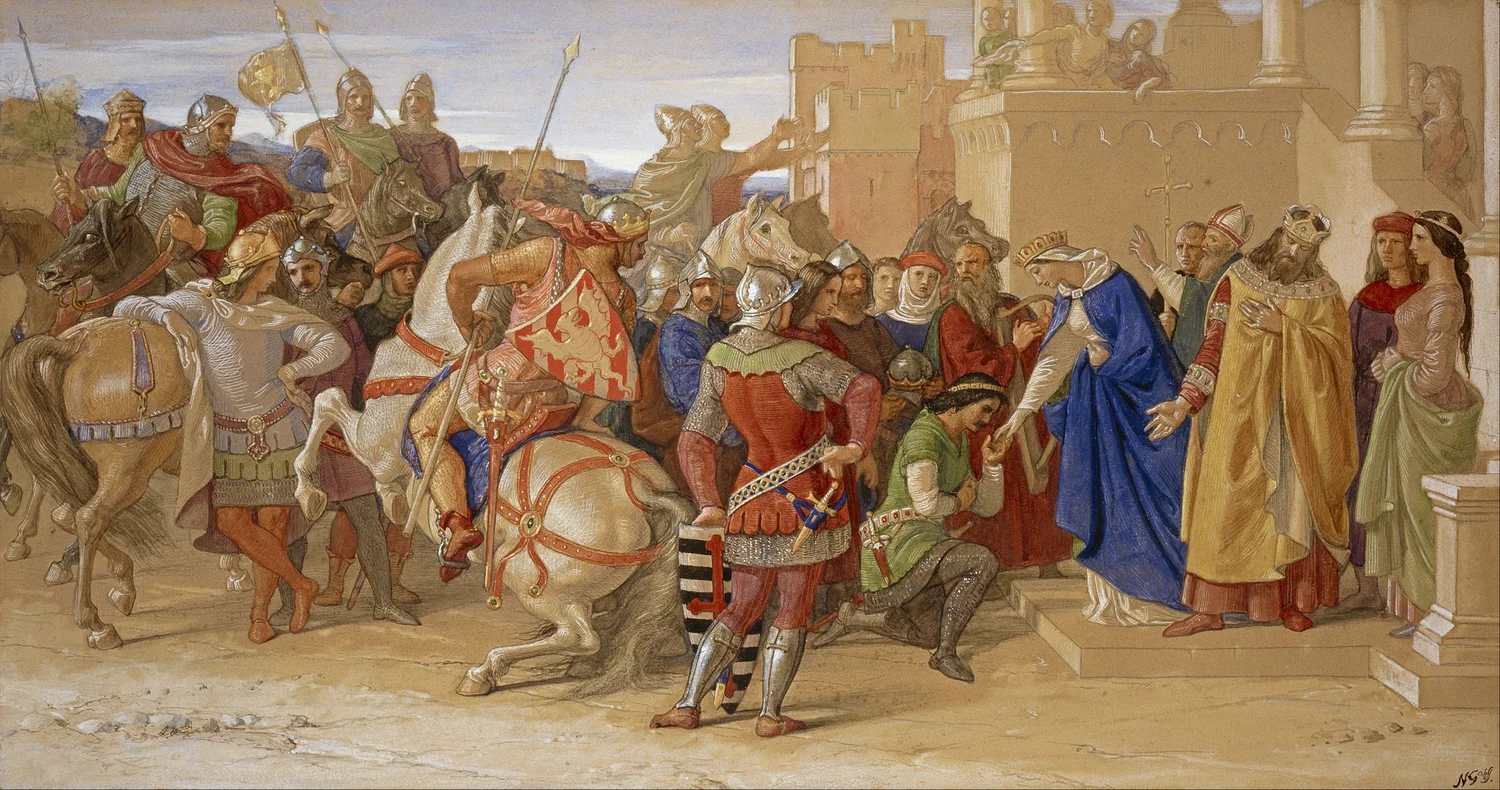
William Dyce, Piety—The Knights of the Round Table about to Depart in Quest of the Holy Grail
This is the first of a projected series of 81 puzzles honoring the multiplication table, which I intend to publish as a mnemonic aid for grade-school students. After that I’ll honor the periodic table of elements with a series of 118 or 119, depending on whether ununennium is discovered in the meantime. And then, concluding my table series series, I’ll honor the Knights of the Round Table: Sir Lancelot, Sir Gawain, Sir Galahad, Sir Bagdemagus, Sir Segwarides, Sir Gumret le petit, Sir Bleoberis de Ganis, Sir. . . well, according to one medieval source, there were 1600 of them; and their table, allowing each knight three feet of space (which, given the armor involved, is not particularly generous), must have taken up over 42 acres. Since their puzzles, posted at the rate of one per fortnight, will take up over 60 years, I may have to omit a few.
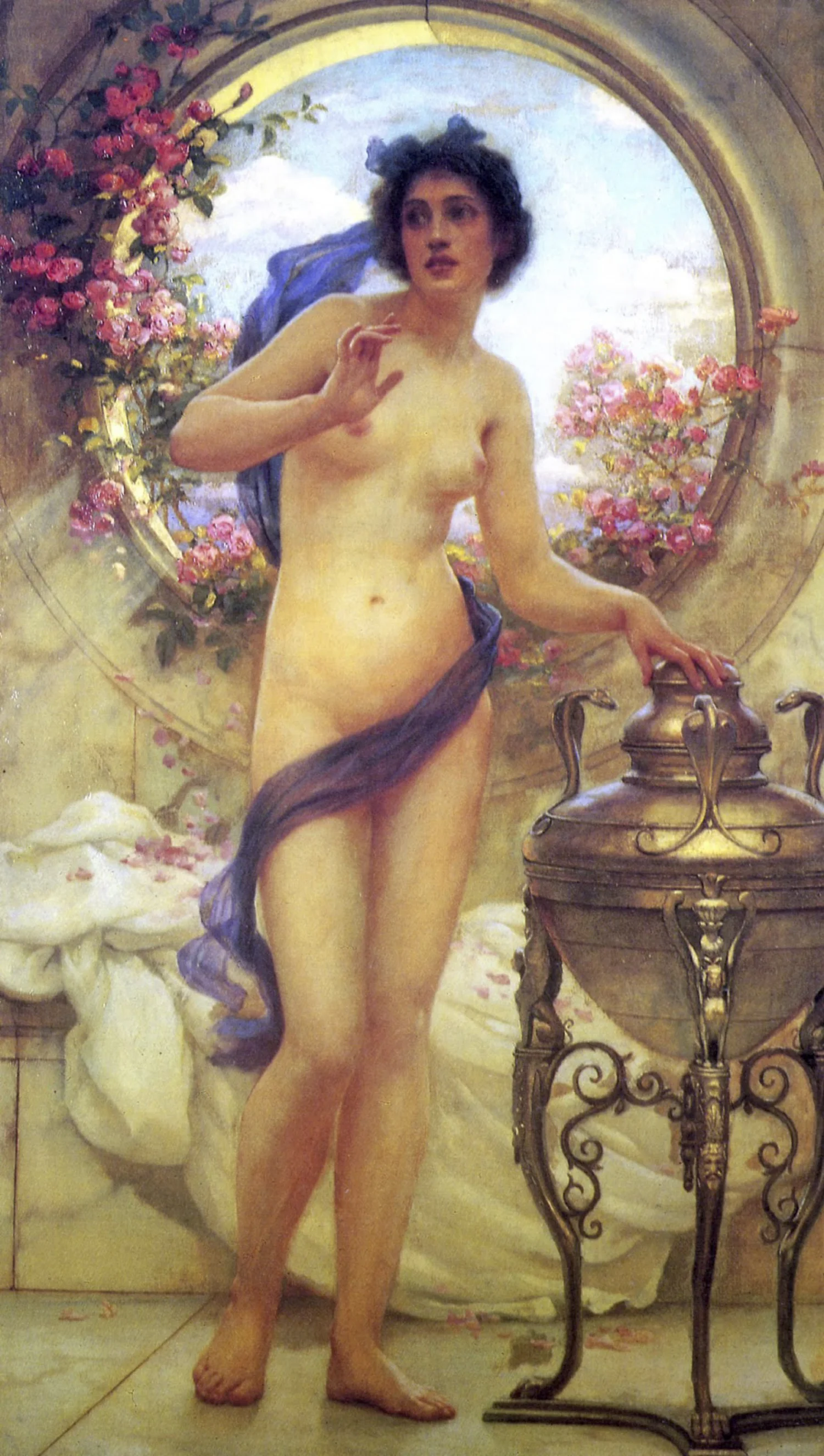
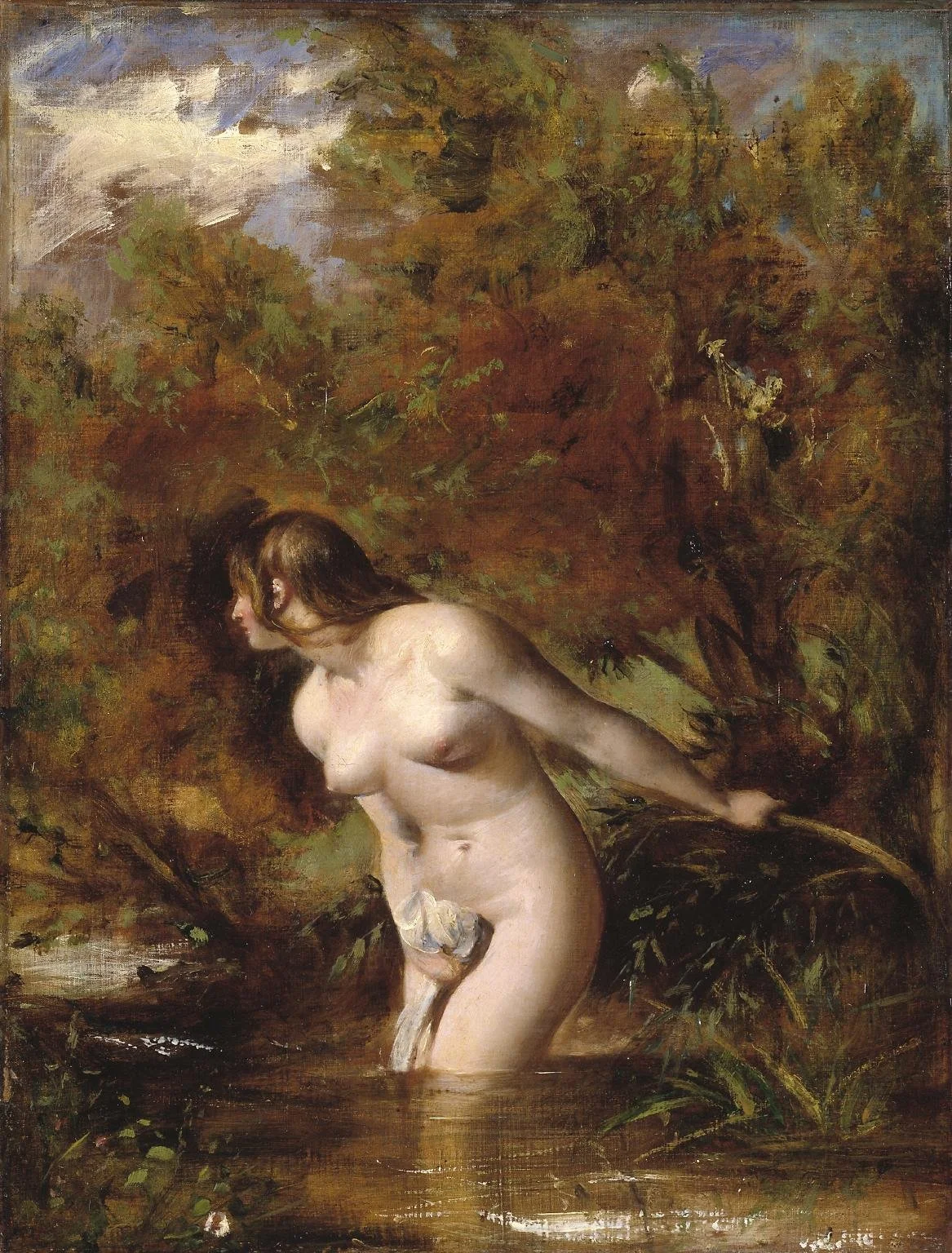
William Etty, Musidora: The Bather “At the Doubtful Breeze Alarmed”
Facing uncertainties is, of course, inevitably a part of life. Will we live to extreme old age or succumb all too soon to accident or disease? Will our crosswords be hailed by a grateful world, or neglected through ignorance, prejudice, and bad taste? In any case, we must hope for the best and do our duty, as I do every week on this website.
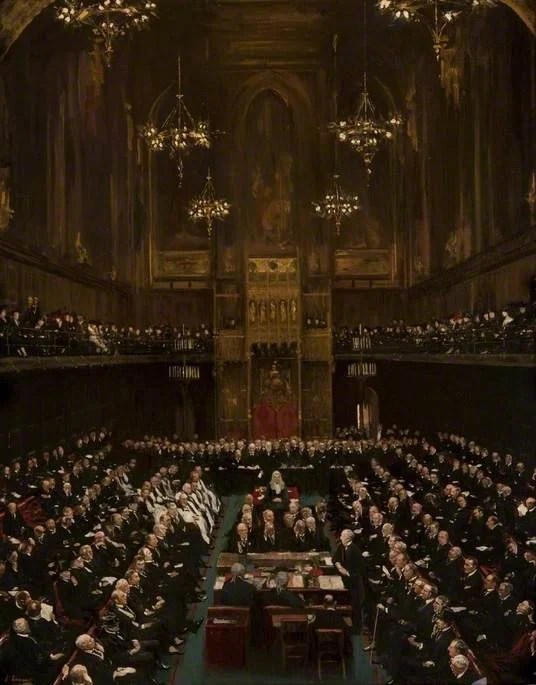
John Lavery, Viscount Morley Addressing the House of Lords
I always feel foolish talking to machines, because I think they’ll think I think they can think, and I don’t know how to ensure that they know that I know that they’re machines that don’t know anything.
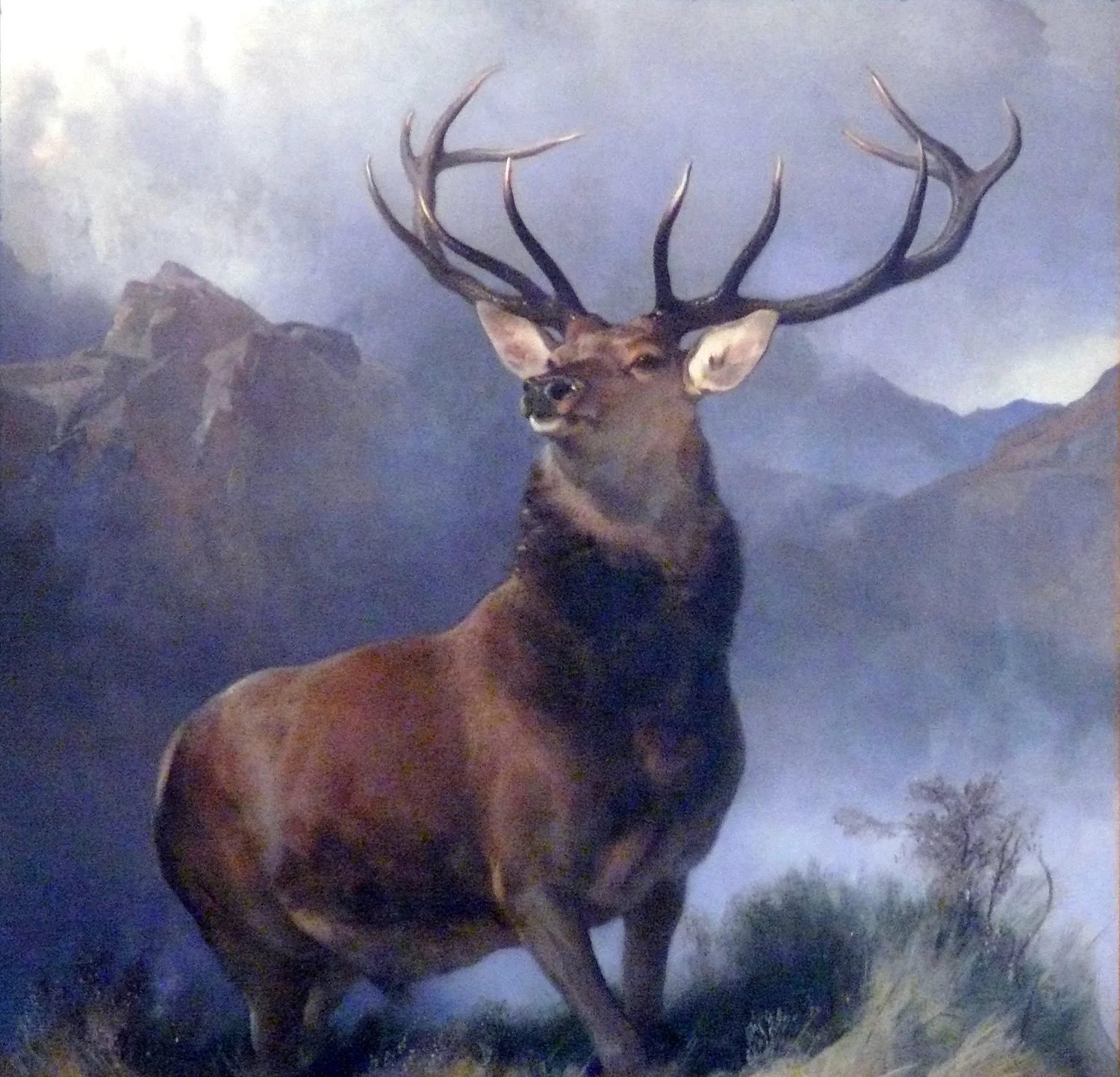
This puzzle should not be taken as an endorsement of those tasteless social events from which women are excluded (except as performers). In fact I find the idea of “stag parties” in that sense distinctly disagreeable. But if forest creatures wish to gather for their own festive purposes, I do not feel that I, from my necessarily anthropocentric subject position, have any right to condemn them.
Work hard, believe in yourself, and there is nothing in this world you cannot do!—except things that are impossible for everybody, like flying unassisted or becoming invisible; or things you must be especially endowed by nature to do, like winning a marathon; or things you have to have the right social connections to do, like publishing a crossword (invitation only!) in the New Yorker.
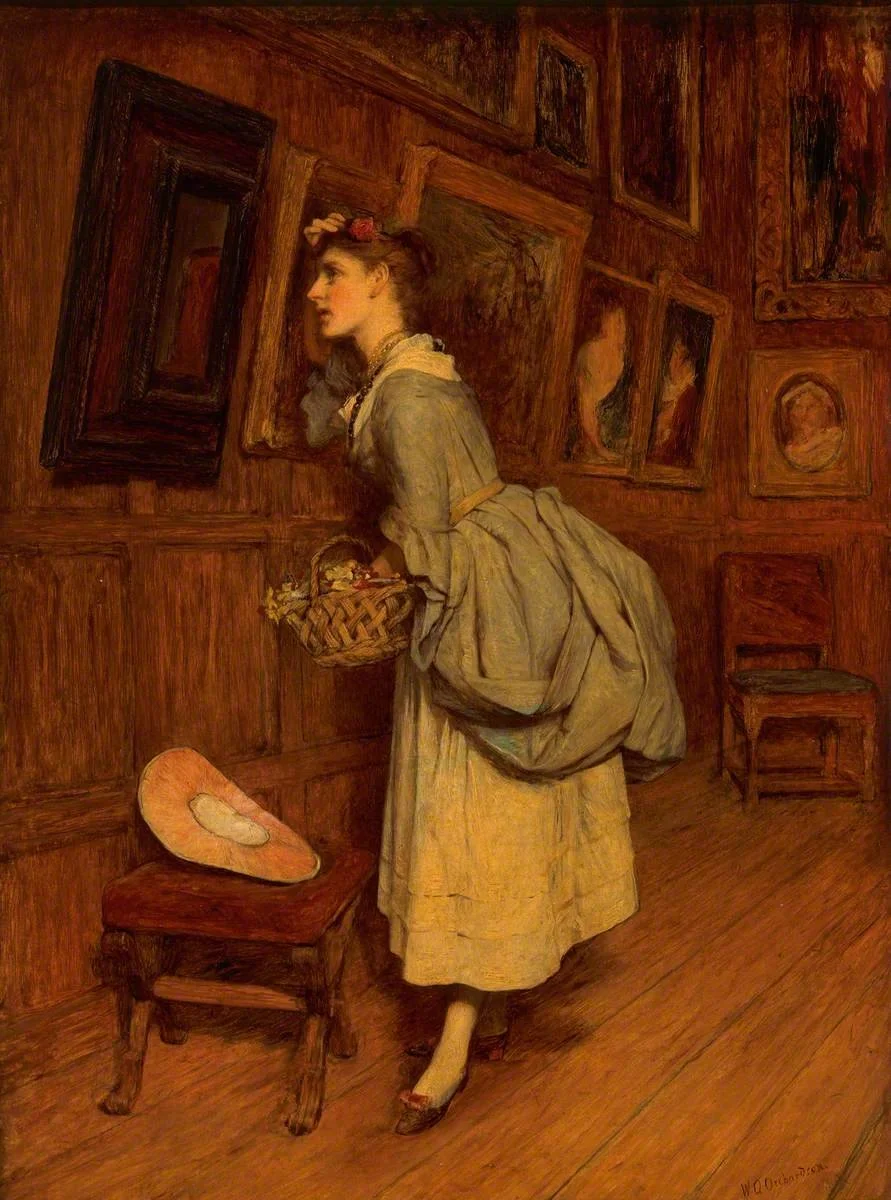
Sir William Quiller Orchardson, In the Picture Gallery
My last crossword exemplified art’s ability to lift us out of the finite worldly sphere and into the eternal; today’s exemplifies art’s complementary responsibility to represent the truth of that worldly sphere with uncompromising fidelity, however vile, however filthy, however offensive it may be. In doing so it confronts the shibboleths and pieties of our society, forcing us to reckon with the evil that lurks around and within us all.
As I’ve mentioned before, the crossword constructors of today aren’t content simply to amuse their audience—they want to improve it, to better humanity one solver at a time. Most of them can think of no more effective way of doing this than by including in their grids people and things they think good, and excluding from them people and things they think bad, in the hope that solvers will be led to adopt their own exemplary opinions. Not I—my crosswords transcend such trivial concerns. Today’s pair of crosswords, for example, force the solver to grapple with one of the most fundamental questions of the human condition: Is there a god? Solving these crosswords may not tell you directly, but it will deepen your understanding of the question and so, in a way, of the world, and of yourself.
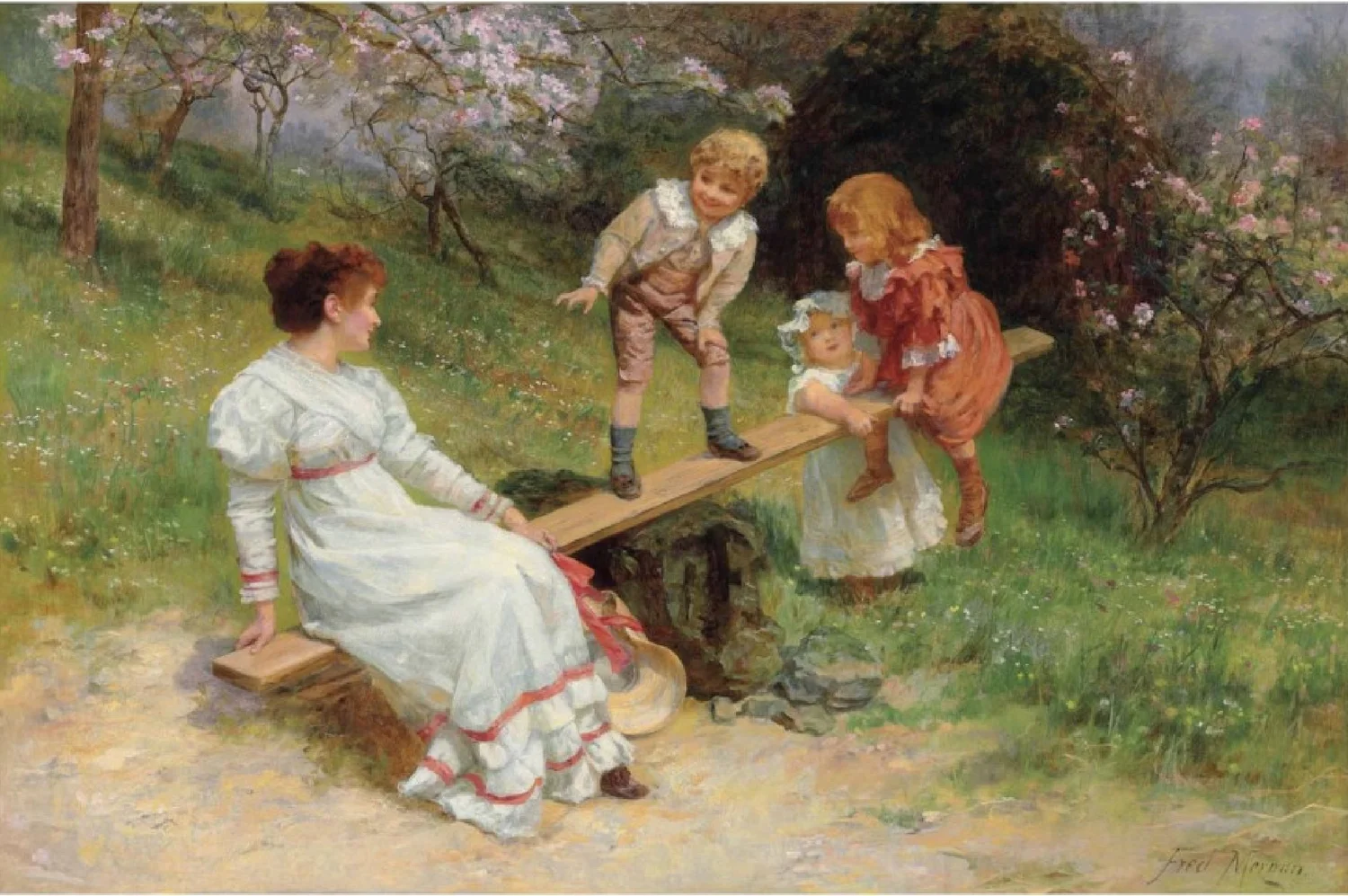
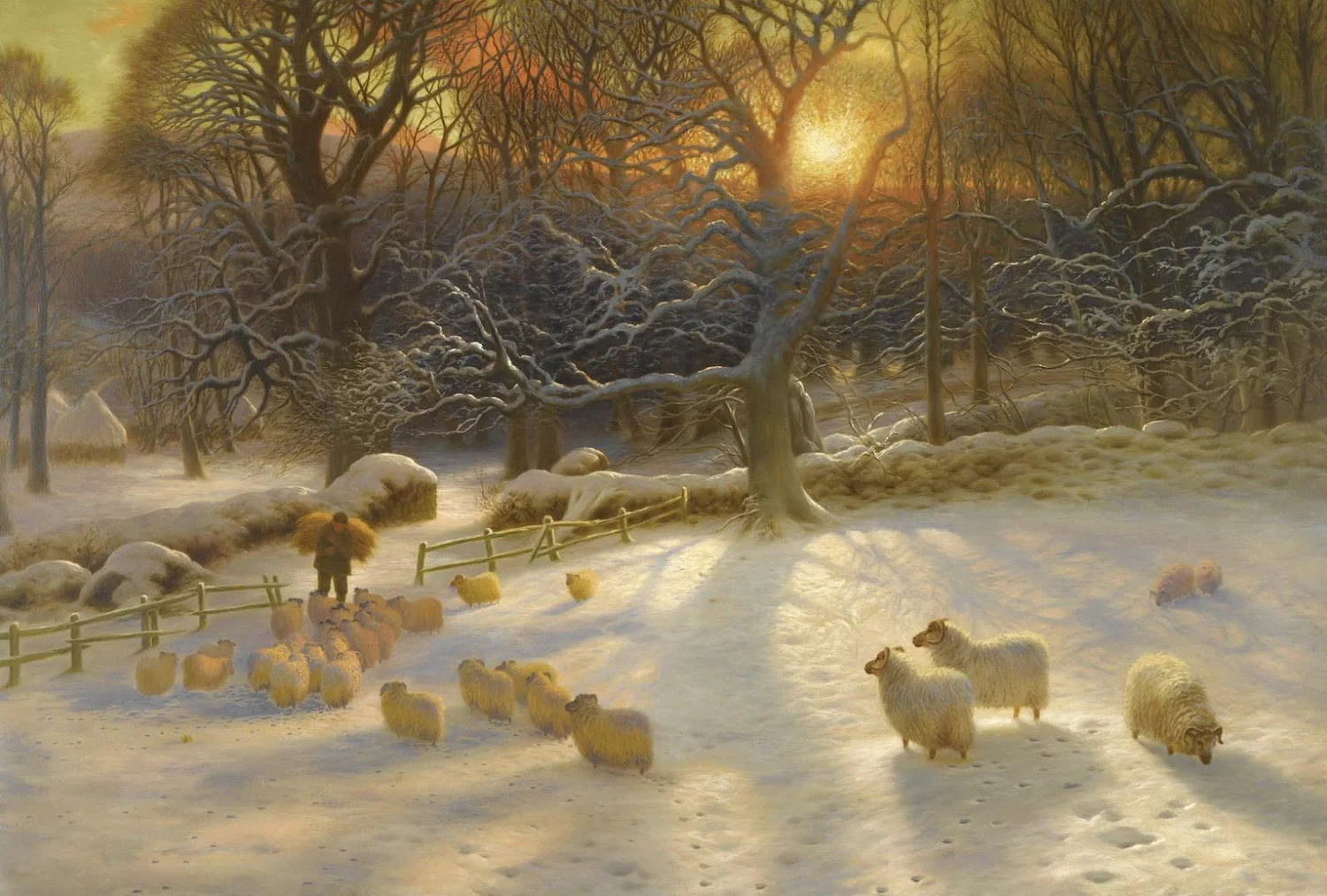
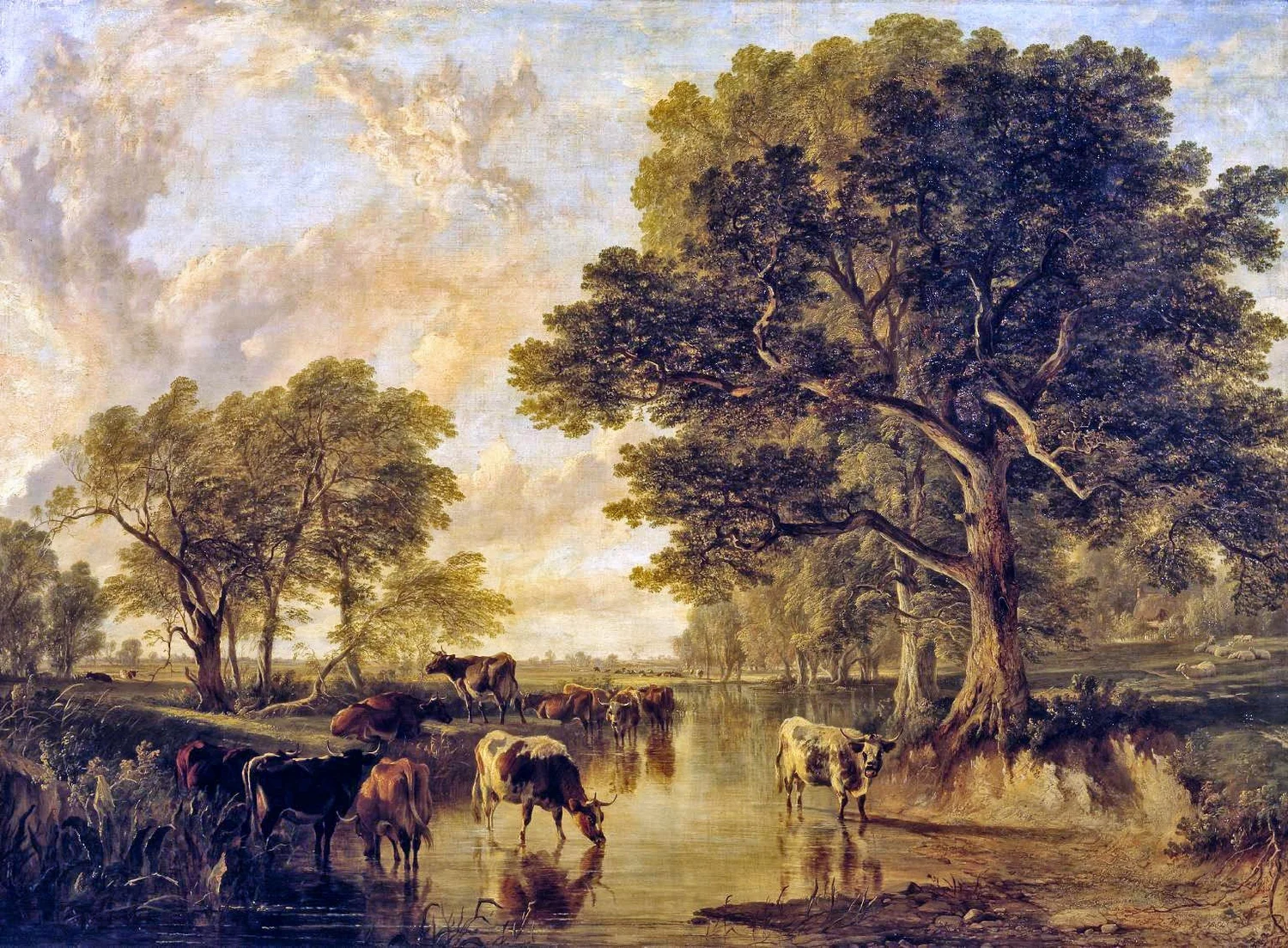
Frederick Richard Lee and Thomas Sidney Cooper, Evening in the Meadows
In my remarks on my last puzzle I had occasion to mention my alienation from alienation; today I recommend a better reaction to a sense of personal difference and exclusion: adaptation. It’s what allows us individually to survive and collectively to evolve. If you don’t fit in, if you’re different from other people, change! Nonconformists, mavericks, contrarians—who needs them? Join the herd! And if that herd is stampeding over a cliff, you’ll live a little longer by stampeding with it than by falling beneath it, and die maybe a little less unpleasantly.
Do you feel like everybody else is part of something from which you alone have been excluded? Well, everybody else feels just the same way—everybody else, that is, except me, because I’m not like everybody else.
On March 26, 1665, Samuel Pepys, the great English diarist, recorded that he had lately enjoyed an unusually long spell of good health and wondered what had caused it. Three possibilities occurred to him: the possession of a rabbit’s foot (an excellent “preservative against wind”), the avoidance of sleeping on his back (which tended to make his “water the next morning . . . very hot”), or the “taking of a pill of turpentine every morning.” Now, as a confirmed disbeliever in conventional medicine, as in all things based on reason and logic, I’ve tried each of these remedies myself, without however noticing much good effect, though the last of them may have had something to do with the state of mind in which I thought up today’s puzzle.
Three hundred! It’s an important number. There are three hundred days in the year, if you don’t count the other sixty-five or so. There were three hundred Spartans at the Battle of Thermopylae. Three hundred years ago today, J.S. Bach’s St. John’s Passion had its debut. In 300 A.D., Micheon (as Wikipedia informs us) became the ruler of the Korean kingdom of Goguryeo, and Li Shou, future emperor of the Cheng Han dynasty, was born. And so today, in honor of Li Shou, and Micheon, and St. John, and J.S. Bach, and all those fearless Spartans, I post my 300th crossword.
Here’s another six-pack of heady, refreshing theme entries, cold-filtered and beechwood-aged as usual. Given their intoxicating wit, you might want to share them with a friend, or space their consumption over two or three days, just to be safe.
That’s right, relax! Take it easy! Keep your shirt on! Cool off! Kick back! Lighten up! Simmer down! We’re just crossin’ some words and keepin’ it real! God forbid anyone should suppose that, because of our proclivity for making complex linguistic structures, we mean thereby to pretend to some off-putting level of literary or intellectual proficiency. We’re just chillin’.
I was going to use this title for one of those fun puzzles in which the theme answers are two-word phrases, each word of which begins with each of two letters—but they’re so hard to make! After hours of meditation, I managed to think of “rubber bullet,” “rex begonia,” “retail banking,” and “rock bottom.” But then I couldn’t think of a fifth, and it turned out these four were all different lengths, so that I couldn’t fit them in a grid. So I just gave up and made this puzzle instead.
As I’ve said before, we grow all our own food here at David Alfred Bywaters’s Crossword Cavalcade and Fortnightly Victorian Novel Recommender, and we grow it organically, using locally-sourced, handmade tools. How, you wonder, do we keep the pests away without pesticides? It’s simple. Following a hint from Frances Hodgson Burnett, we hide our plants in a secret garden, where the pests can’t find them. It’s one of this website’s many world-improving innovations, which we offer, like our crosswords and our novel recommendations, free of charge.