David Alfred Bywaters's Crossword Cavalcade & Fortnightly Victorian Novel Recommender. Every Saturday! Either a new language-torturing puzzle or an old novel by an unjustly neglected Victorian author. Why waste time on other amusements?

Novels

Novel 366: Sarah R. Whitehead, The Two Families (1852)
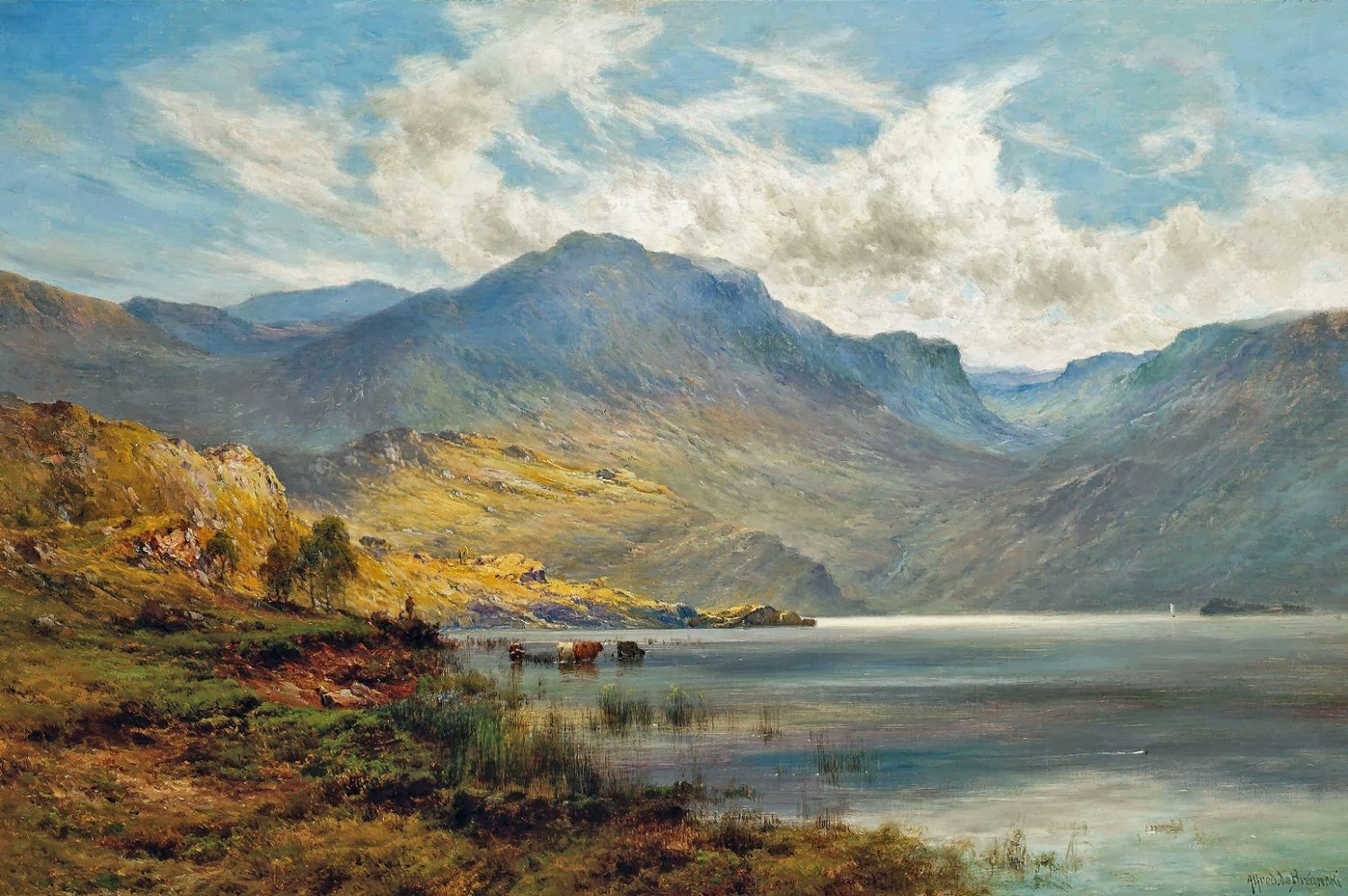
Alfred De Bréanski, Snr, Highland Light

Two families, one rich, one religious, are contrasted.


The Scottish author Sarah Robertson Whitehead (1817-1875) wrote five novels:  three in the 1850s, two in the 1870s.

“The incidents flow, rather than arise, one from out the other; the origin of the hero of the first ‘family’ is well conceived-working his way, stealthily and steadily, with a very, very little leaven, to leaven the selfishness and cunning which is part and parcel of himself, and yet cherishing one humanizing influence in his heart. The author reads human nature keenly, and correctly, and with a kindly spirit; sorry for its flaws, its mistakes, its corruptions; while for the sake of that truth she (?) never violates, tracing them with unerring fidelity; but her heart expands, and her style improves, when she displays the workings, the strength, the truth, the purity, of the Christian struggling with adversity and sorrow, and triumphing in the end--as only Christians can triumph.” Sharpe’s London Journal, January, 1852

“The delineation” of main characters “is very well done. . . .  The novel, in point of execution, belongs to the new and quiet school, or rather to an old school revived. The persons and incidents are those of everyday life, told in a congenial spirit; though the art of the describer may give more pleasure than the reality possesses.” Spectator, January 17, 1852

Download this fortnight’s novel:
v.1 https://archive.org/details/twofamiliesbyau01whitgoog

v.2 https://archive.org/details/twofamiliesbyau00whitgoog

Novel 365: Bithia Mary Croker, Mr. Jervis (1894)

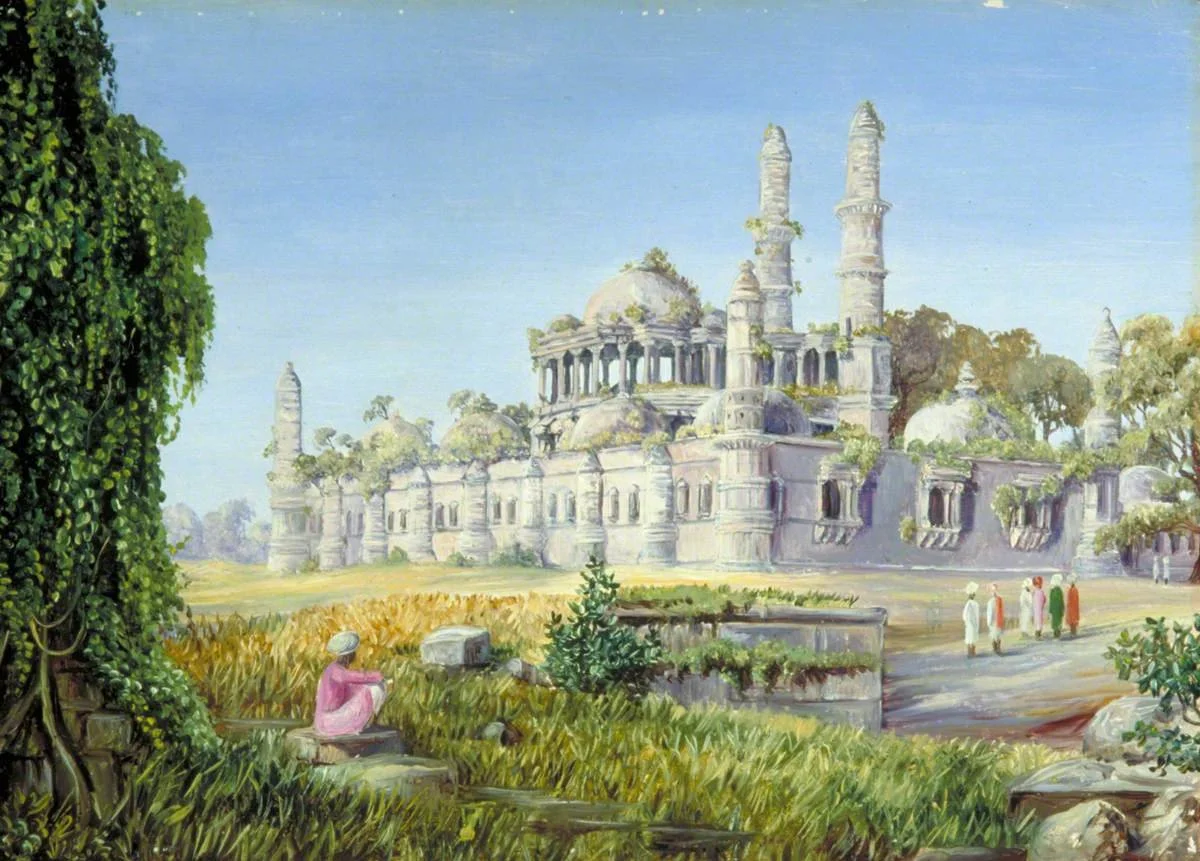
Marianne North, A Ruined Mosque at Champaneer

Rival dowagers back the claims of their nieces for eligible young men in an Anglo-Indian station.


For Croker, see Novels 013, 073, 129, 183, 259. and 328.

A “graphic and successful sketch of petty female rivalries.” Spectator, December 15, 1894

“Full of life and motion”; “a sustained comedy of Anglo-Indian manners”; “sparkling and amusing all through, and there is not a dull page in it.” Academy, January 26, 1895

Download this fortnight’s novel:

v.1 https://archive.org/details/mrjervis01crok

v.2 https://archive.org/details/mrjervis02crok

v.3 https://archive.org/details/mrjervis03crok

Novel 363: Alfred Butler, The Herberts (1842)

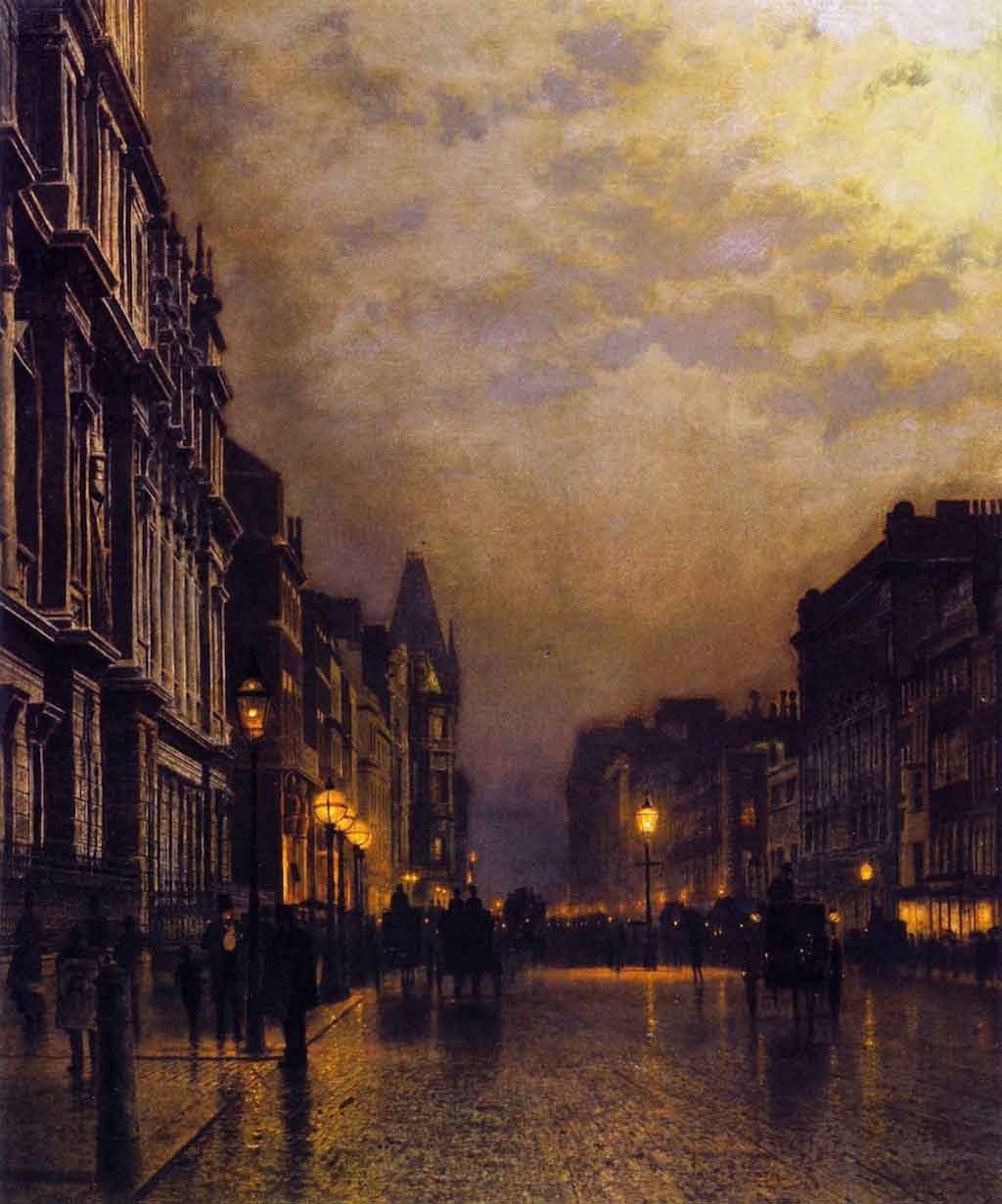
John Atkinson Grimshaw, Piccadilly at Night

A squire’s son and daughter are left to struggle in a hard world after their father dies in debt.


Alfred Butler (1809-1859) published three novels in two years, of which this was the last.

“A novel of thought, as well as feeling and observation.” Athenaeum, April 16, 1842

It has “power which is often sarcastic, observation that is keen and close, and feeling that is healthy and deserving of imitation.  There is, indeed, much mind in the novel, and much clever writing.”  Monthly Review, May, 1842

A (somewhat) dissenting opinion:

“As a fiction. . . . the Herberts is a sort of failure, in despite of several scenes of power and interest, some ludicrous ability in the author, together with sufficient metaphysical skill, and a mind endowed with the quality of speculative thought. But the writer's nature is rather critical than creative: his forte is analysis, not synthesis. He can deduce the truth from an actuality, but he cannot reproduce the real; there is little knowledge of life exhibited in his book, and consequently no living character”; but “the book abounds in shrewd remarks.”  Spectator, September 13, 1842

Download this fortnight’s novel:
v.1 https://books.google.com/books?id=l-3UeQM-srgC&newbks=1&newbks_redir=0&dq=%22the%20herberts%22%20butler%20volume%201&pg=RA3-PA273#v=onepage&q&f=false

v.2 https://books.google.com/books?id=rZvLdmiNOwMC&newbks=1&newbks_redir=0&dq=intitle%3AThe%20Herberts%2C%20by%20the%20author%20of%20'Elphinstone'.&pg=PP1#v=onepage&q&f=false

v.3 https://books.google.com/books?id=bYj3EkRGAR8C&newbks=1&newbks_redir=0&dq=%22the%20herberts%22%20butler%20volume%203&pg=PP7#v=onepage&q&f=false

Novel 362: M. Hamilton, A Self-Denying Ordinance (1896)

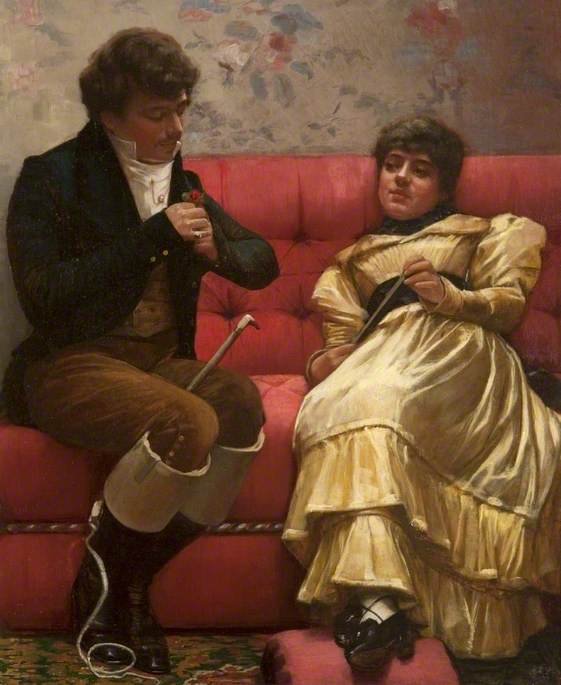
John Lavery, A Conquest, a Heart for a Rose

The daughter of an Irish attorney is taken up by a handsome but disgraced baronet.


M. Hamilton was the pseudonym of Mary Churchill Luck, née Spottiswood-Ashe (1869-1949), who wrote some 20 novels between 1896 and 1928.  This, her first, was set, like many of her novels, in her native Ulster.

“The characters are exceptionally distinct, the movement is brisk, and the dialogue is natural and convincing.” Athenaeum, February 15, 1896.

“A fine and mature performance”; the story is “told with great reticence, with insight and pathos, in a manner at once impersonal and sympathetic.” Academy, March 28, 1896

“A very pretty and natural book” with “a capitally thought-out character”; “The story abounds with fun, and is the pleasantest possible reading.” Saturday Review, April 4, 1896

Download this fortnight’s novel:
https://www.google.com/books/edition/A_self_denying_ordinance_by_M_Hamilton/T-pSTnpEqwYC?hl=en&gbpv=0

Novel 361: Mary E. Mann, Perdita (1893)

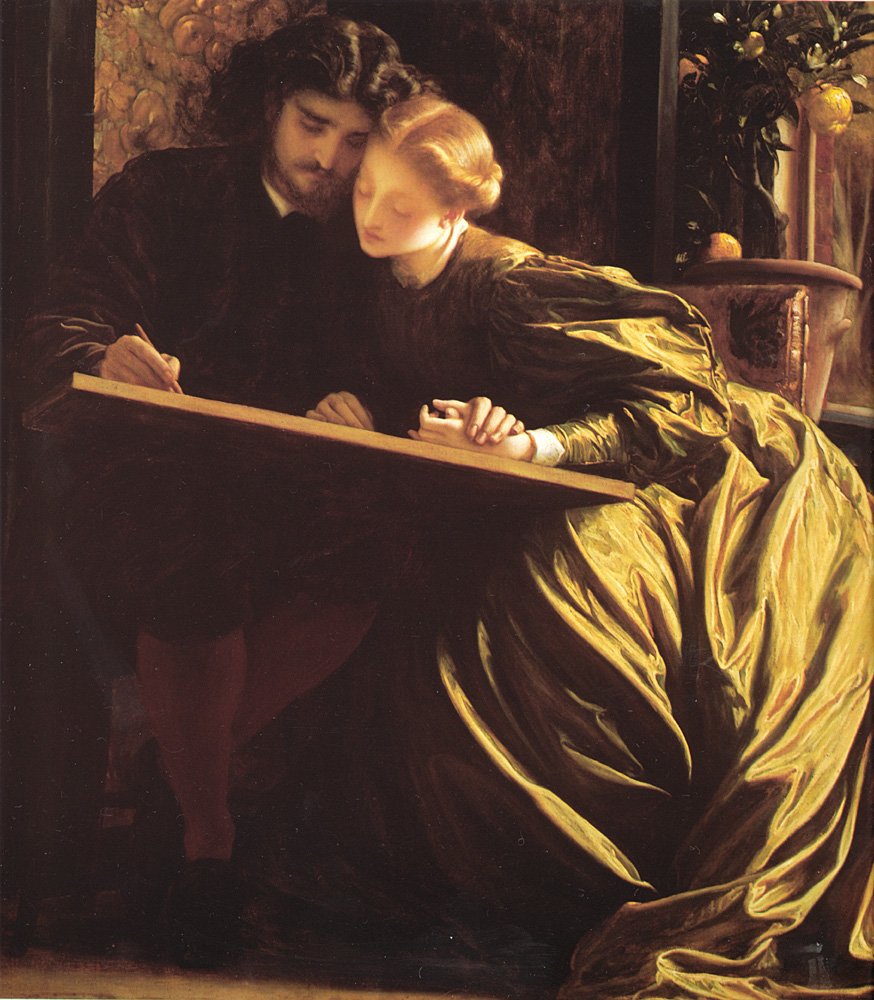
Lord Frederic Leighton, The Painter’s Honeymoon

A woman’s husband mysteriously disappears on his and her wedding day.


For Mann, see Novels 016, 154,204, and310.

It would make “an excellent melodrama”; the characters are “quite good enough to serve as scaffolding for a plot unusually well conceived.” Saturday Review, September 9, 1893

“The story is above the average . . . better worth reading than many a novel that aims higher.” Athenaeum, September 23, 1893

“Cleverness, grace, and a quiet humour” brighten a story that “might have been rather sombre.” Spectator, September 30, 1893.

Download this fortnight’s novel:
https://drive.google.com/drive/folders/17SYy3BNq9DQ8SSaqH8xvkk-Xg22cGgqT?usp=sharing

Novel 360: Eden Phillpotts, Some Every-Day Folks (1894)

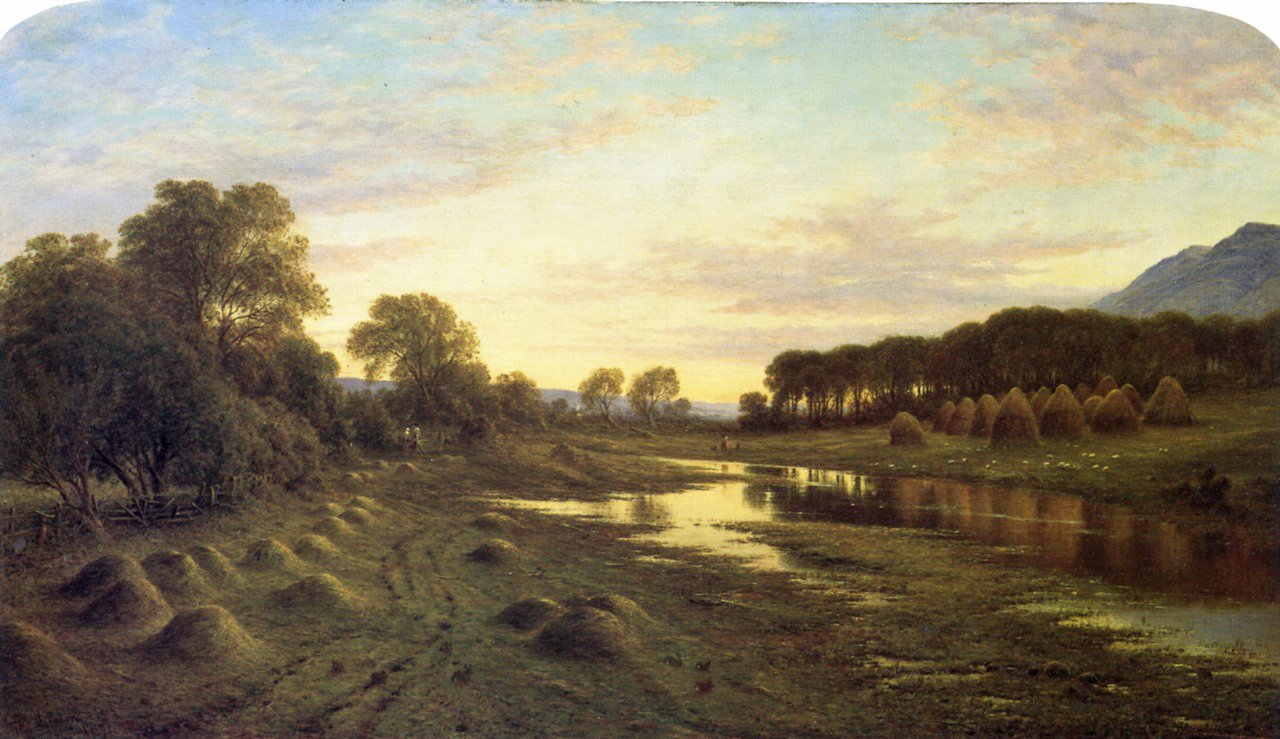
Waller Hugh Paton, In the Devon Valley near Dollar - After Rain

Life in a small town in Devonshire.


Eden Phillpotts (1862-1960) wrote nearly 200 novels during his long life, many of them (including an 18-novel series) set, like this one, in Devonshire.

“Full of a genial humour and shrewd but kindly observation of his fellow creatures.” Athenaeum, March 3, 1894

“In its unpretentious way, a veritable masterpiece, displaying an intimacy of observation . . . which is little, if at all, short of genius.” Spectator, March 31, 1894

“Mr. Phillpotts has succeeded in peopling his imaginary village with a well-contrasted assortment of varying types, drawn correctly enough in the main, but perhaps a trifle over-coloured.” Saturday Review, April 21, 1894

Download this fortnight’s novel:
v.1 http://www.archive.org/details/someeverydayfolk01phil

v.2 http://www.archive.org/details/someeverydayfolk02phil

v.3 http://www.archive.org/details/someeverydayfolk03phil

Novel 359: Sir Thomas Wemyss Reid, Mauleverer’s Millions (1885)

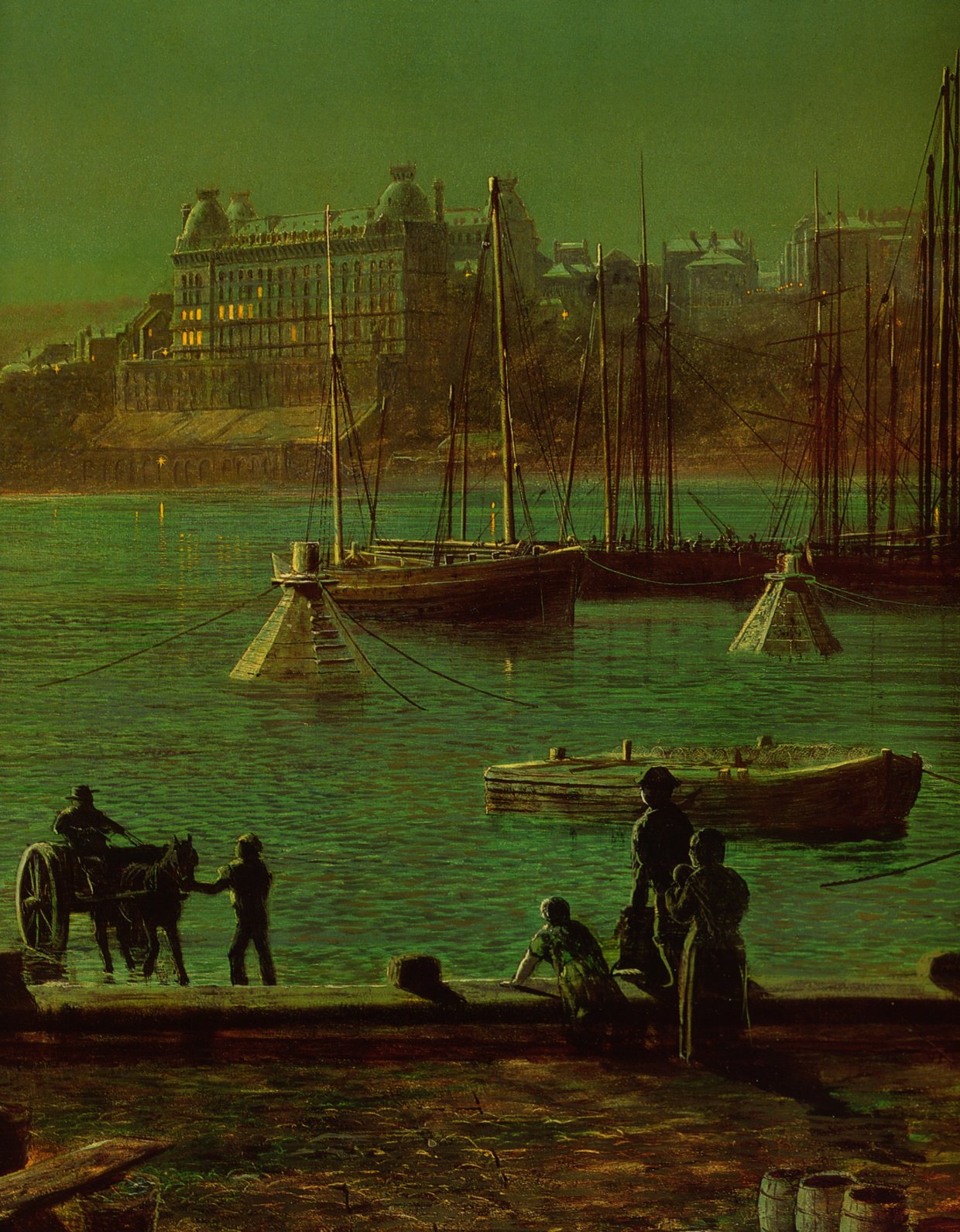
John Atkinson Grimshaw, Scarborough Bay

A young man falls in love with a mysterious woman after having protected her from a bad man on a train.


Sir Thomas Wemyss Reid (1842-1905) was better known as a journalist, editor, and publisher than as a novelist; this is the third of his three novels.

The novel is “an uncommonly good shillingsworth”; it is a “good thrilling romance. . . . the mystery becomes interesting on the third page, and continues so to the last. The most experienced reader is kept long in doubt as to the secret of the book, which is worked out with great skill, and with a strict adherence to the canons of romantic probability. . . .  But the real triumph of the book is the character of” the main villain.  Saturday Review, February 20, 1885

Download this fortnight’s novel:
https://archive.org/details/mauleverersmilli00reid

Novel 356: EsmE Stuart, Harum Scarum (1896)

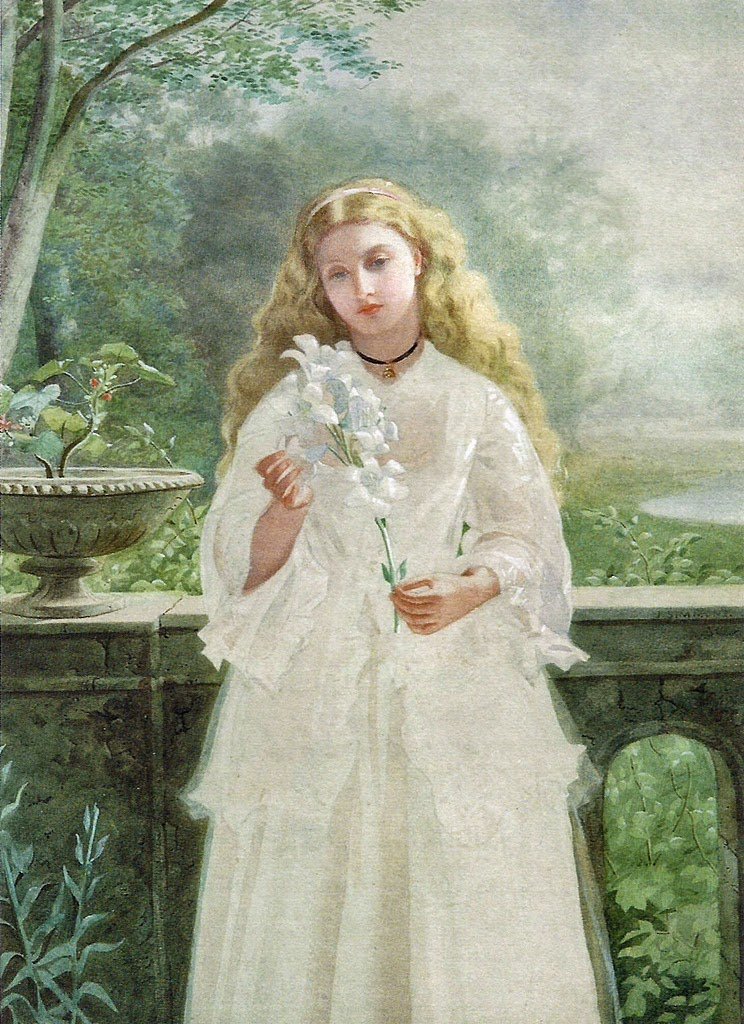
John Simmons, Girl Holding a Lily

An uncivilized Australian niece comes to live with an English country gentleman and his selfish wife.


Esmé Stuart was the pen name of Amélie Claire LeRoy (1861-1934), who wrote over 60 novels beginning in 1876.  This was the first of a series, followed by Harum Scarum’s Fortune (1909) and Harum Scarum Married (1918).

The heroine is “fresh and good-hearted, and her exploits are decidedly entertaining.” Spectator, May 30, 1896

“Fun, and froth, and amusement”; “a brilliant little family sketch.” Athenaeum, July 18, 1896

Download this fortnight’s novel:
https://www.google.com/books/edition/Harum_scarum_by_Esm%C3%A8_Stuart/bJzihMAGxtcC?hl=en&gbpv=1&pg=PA3&printsec=frontcover

Novel 355: W.E. Norris, Mr. Chaine’s Sons (1891)

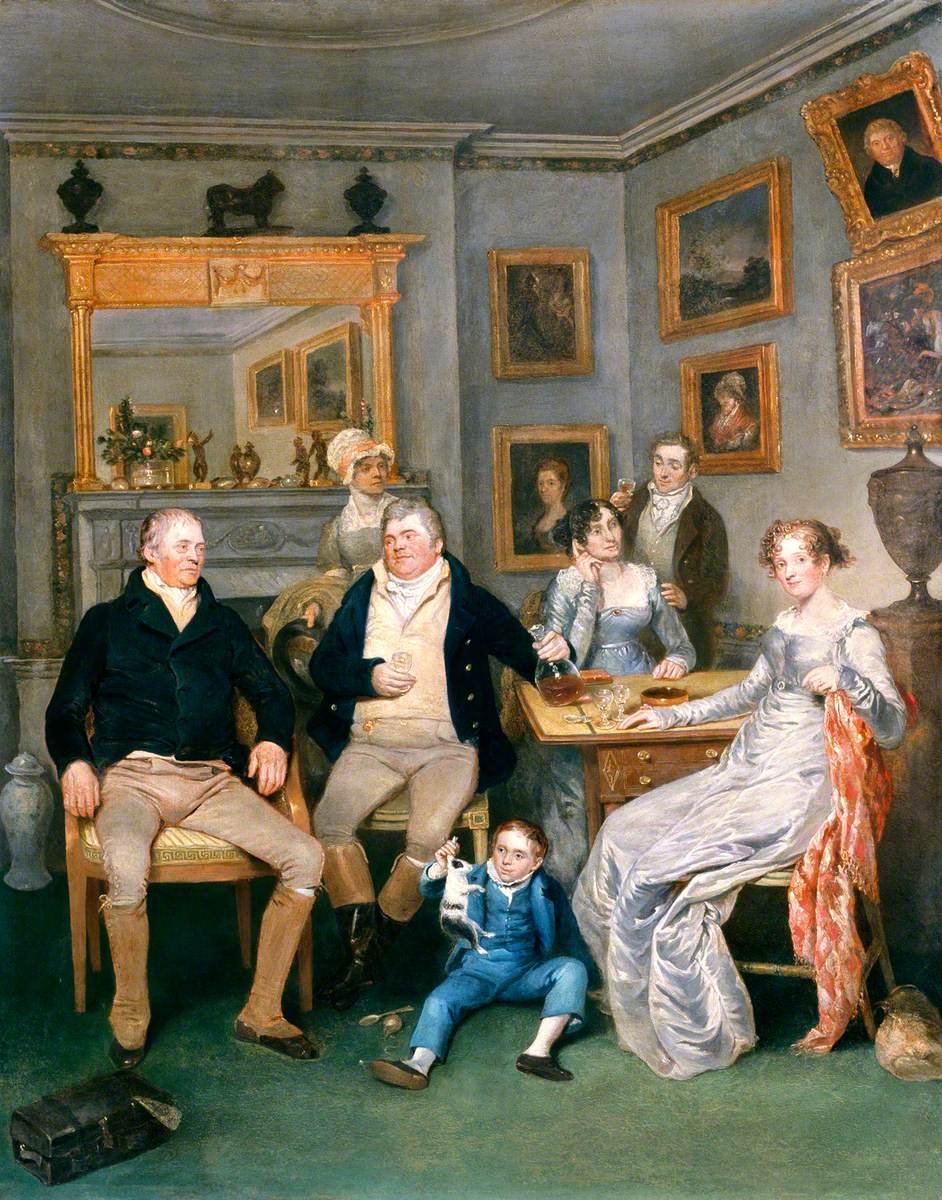
John Partridge, A Family Scene in a Domestic Interior

Three brothers of varying characters interact.


For Norris, see Novels 002, 054, 104, 156, 209,260, and 300.

The author “does not hit upon any particularly new situations, and most of his men and women are what his readers will recognize as stock characters. . . .   But there is no lack of freshness and fidelity in this story . . . whilst the author’s mildly cynical style will be as pleasant as ever to such as have acquired a taste for it.” Athenaeum, October 17, 1891

It is “distinctly clever and interesting, and Mr. Norris’s way of telling it is irresistibly amusing. . . .   It is Mr. Norris’s ‘way.’  The cynicism that is at bottom so kind, . . . the pessimism which hopes for the best, make his point of survey of life most entertaining.  There is an element of self-complacence in being made to laugh at fellow-creatures so good-naturedly. In this particular story however there is more than laughter,” e.g., pathos in delineation of some characters.  Saturday Review, October 31, 1891

A contrasting view:

It is “far too cynical”; and its cynicism not supported by “the observed facts of life”; its women are implausibly calculating, and Norris “destroys the charm” of their “portraits without imparting to them the reality which is sometimes a compensation for ugliness.” Spectator, November 28, 1891

Download this fortnight’s novel:
v.1 https://archive.org/details/mrchainessonsnov01norr

v.2 https://archive.org/details/mrchainessonsnov02norr

v.3 https://archive.org/details/mrchainessonsnov03norr

Novel 354: Margaret Hunt, This Indenture Witnesseth (1875)

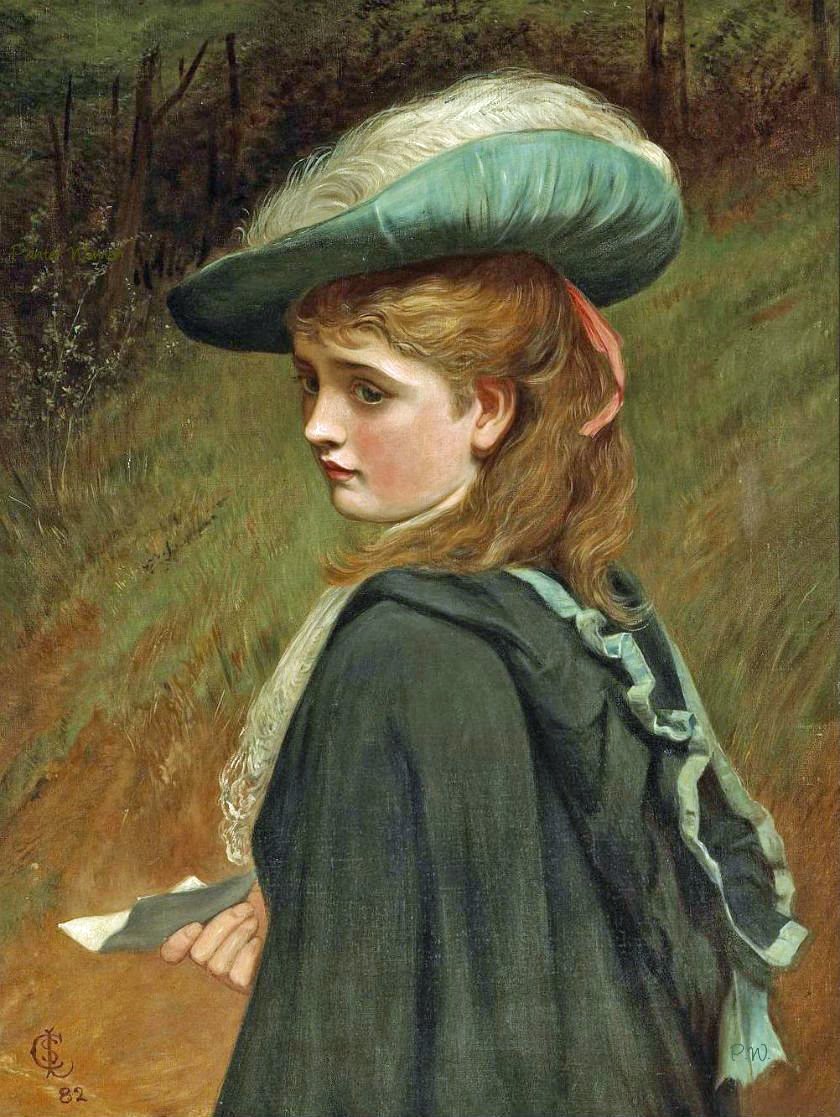
Charles Sillem Lidderdale, The Letter

A virtuous young heiress, all but engaged to a needy squire’s heir, loses her prospects.


For Hunt, see Novels 039 and 285.

Hunt “writes extremely well, and often forcibly.  She lays down her plan well beforehand, and carries it out without hurry and in good proportions”; “we are glad, on the whole, to commend this novel almost unreservedly.” Spectator, December 4, 1875

A somewhat contrasting view:

The plot is “managed with a great deal of ingenuity” but the characters are “well known to the hardened novel-reader.” Academy, November 13, 1875

Download this fortnight’s novel:
v.1 https://archive.org/details/thisindenturewit01hunt

v. 2 https://archive.org/details/thisindenturewit02hunt

v. 3 https://archive.org/details/thisindenturewit03hunt


Novel 353: Sir Walter Besant and James Rice, Ready-Money Mortiboy (1872)

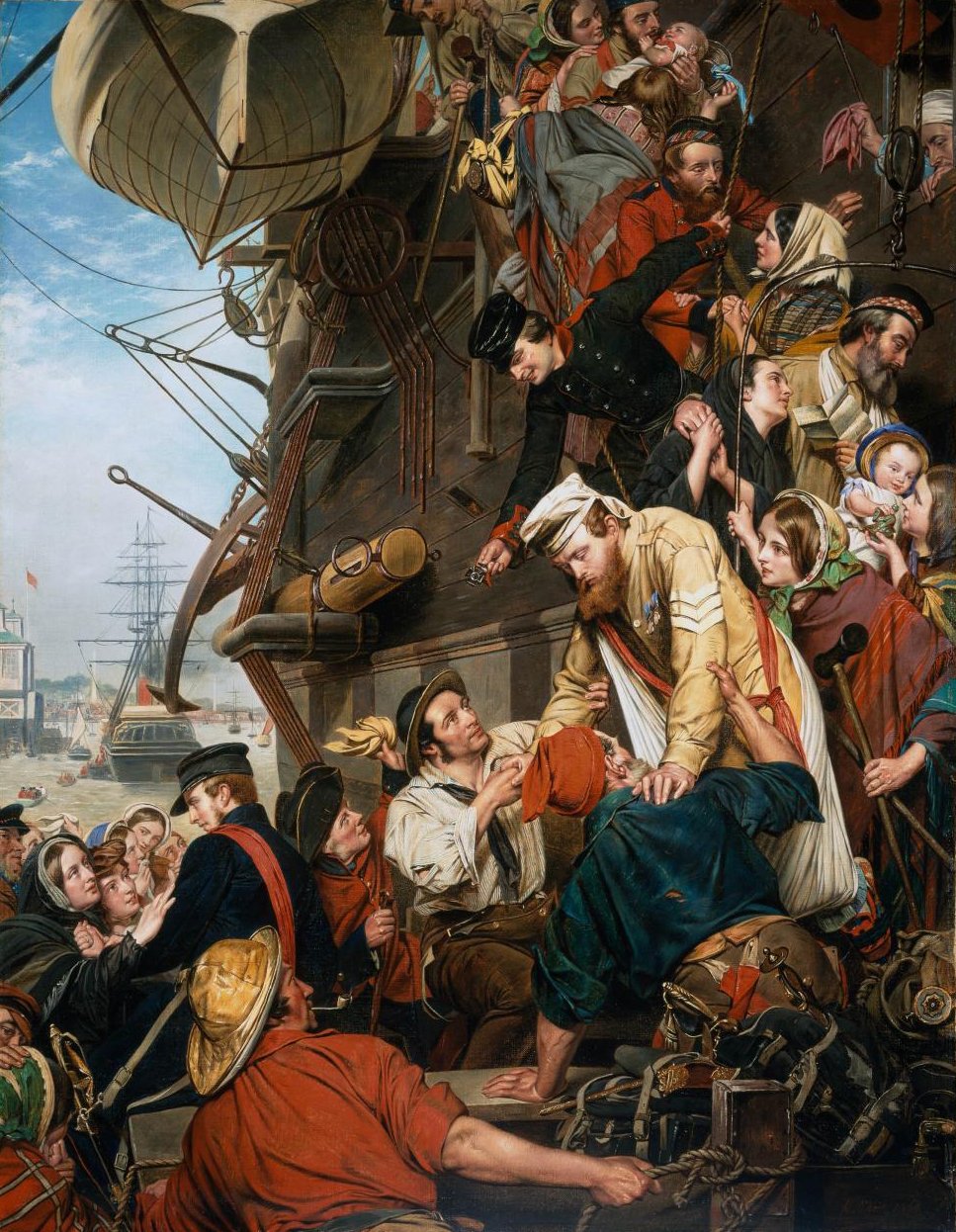
Henry Nelson O’Neil, Home Again

The son of a miserly father, supposed dead, returns unexpectedly.


Sir Walter Besant (1836-1901) wrote some ten novels with James Rice (1844-1882) and some thirty more on his own.  This was his first.

“A clever book . . . which no grown man who has any experience of life can read without being the better for it”; the author makes characters “say in his pages just what they say in every day real life.”  Athenaeum, July 13, 1872

“The story is daring and clever, and is well worth reading.” British Quarterly, July, 1873

Download this fortnight’s novel:
v.1 https://archive.org/details/readymoneymortib00besa_0

v.2 https://archive.org/details/readymoneymortib00besa_1

v.3 https://archive.org/details/readymoneymortib00besa_2

Novel 352: David Dwight Wells, Her Ladyship's Elephant (1898)

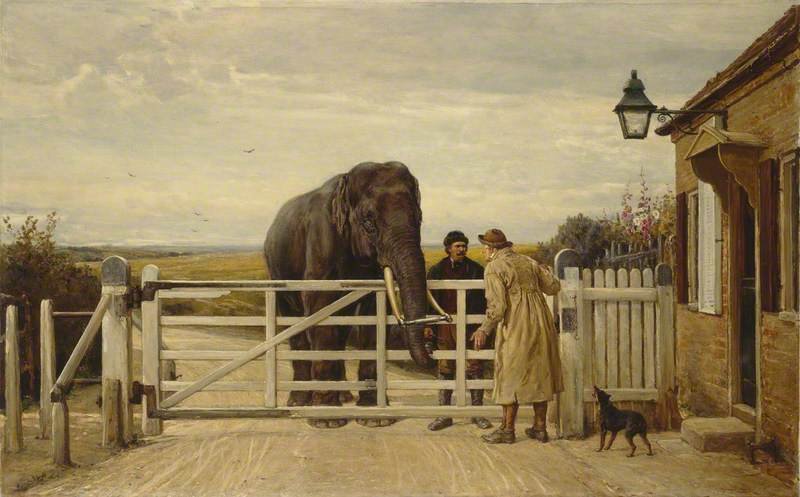
Heywood Hardy, The Disputed Toll

Two honeymoon couples are re-sorted by a train mix-up.


The American David Dwight Wells (1868-1900) wrote only three novels before his early death.

A “screaming farce, neither more nor less, and successful in its line of delightful absurdity.” Saturday Review, June 25, 1898

“An admirable piece of fooling, with not a dull page.”  Athenaeum, July 2, 1898

Download this fortnight’s novel:
https://archive.org/details/cu31924022210185

Novel 349: Holme Lee, Warp and Woof (1861)

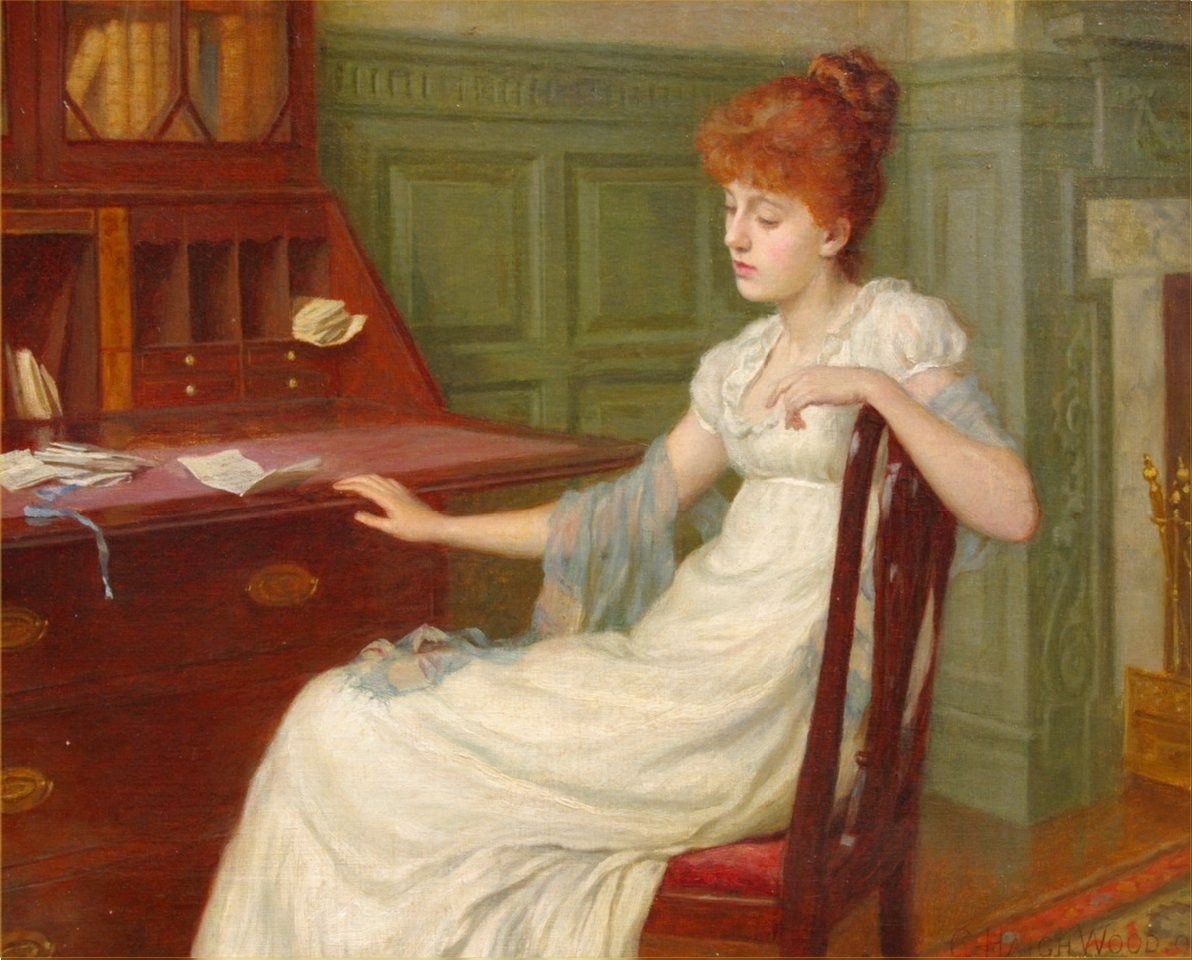
Charles Haigh Wood, Reflective Thoughts

The narrator’s father’s bankruptcy and bullying sister’s ascendancy lead to various further misfortunes.


For Holme Lee, see Novel 193

“We are delighted with this novel, both because it is quite new, and also because the story is very artistically constructed, as well as extremely interesting; and the subdued and polished style in which it is told adds immensely to the pleasure with which we peruse it”; despite a “too uniform tone of melancholy” it provides “a quiet yet truthful description of one kind of English domestic life.” Westminster Review, January 1862

The characters are “well drawn”; “a work of considerable power and thought, and shows that the authoress possesses a very keen insight into the habits and feelings of her own sex.” Critic, December 14, 1861

A contrasting view:

It has “an atmosphere of gloom so deep that the most pleasurable situation is overshadowed by the misery actors and spectators alike know to exist around them.” The author’s “decided literary power” gives it an “air of truth” that only makes it worse.  Spectator, December 7, 1861

Download this fortnight’s novel:
v.1 https://archive.org/details/warpandwooforre02parrgoog

v.2 https://archive.org/details/warpandwooforre01parrgoog

v.3 https://archive.org/details/warpandwooforre00parrgoog

Novel 348: Eleanor Frances Poynter, The Failure of Elisabeth (1890)

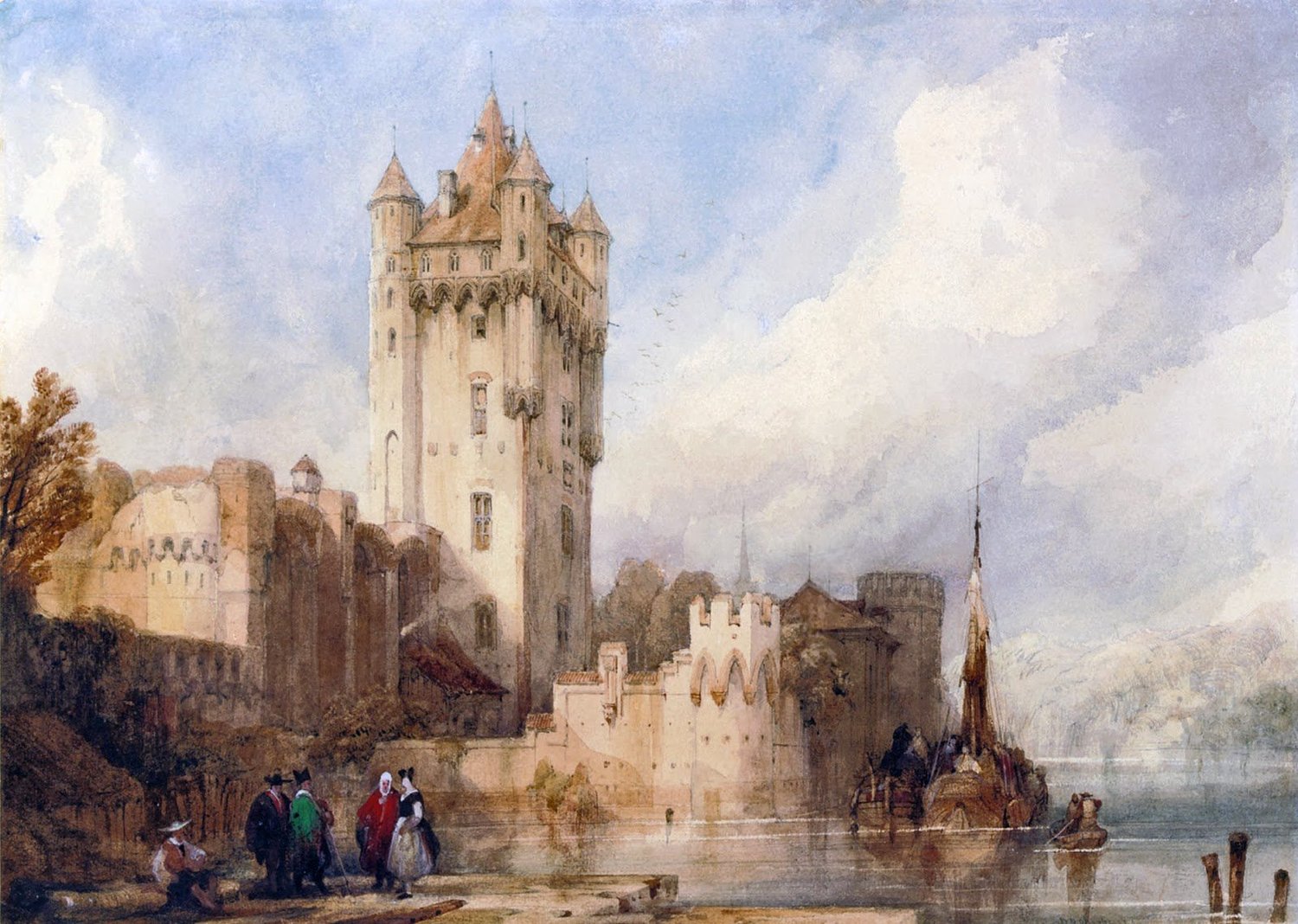
David Roberts, Kurfürstliche Burg, Eltville, on the Rhine, Germany

An innocent young lady falls in love with a stingy old clergyman.


For Poynter, see Novels 145 and 195.

“A little too long” but “a pleasing, wholesome story” with “carefully drawn distinctive characters.” Athenaeum, May 10, 1890

“The characters . . . are carefully drawn” and the “style . . . is at once strong, flowing, and lucid.” Academy, June 7, 1890

“The story contains some very lifelike and entertaining sketches of the manners and customs of British subjects habitually resident in foreign boarding-houses.” Saturday Review, June 21, 1890

Download this fortnight’s novel:
v.1 https://books.google.com/books?id=2Z9UAAAAYAAJ&newbks=1&newbks_redir=0&dq=poynter%20failure%20of%20elisabeth&pg=PP1#v=onepage&q&f=false

v.2 https://books.google.com/books?id=9MpUAAAAYAAJ&pg=PP1#v=onepage&q&f=false

v.3 https://books.google.com/books?id=FaNUAAAAYAAJ&newbks=1&newbks_redir=0&dq=The_Failure_of_Elisabeth&pg=PP5#v=onepage&q&f=false

Novel 347: Margaret Oliphant, The Cuckoo in the Nest (1892)

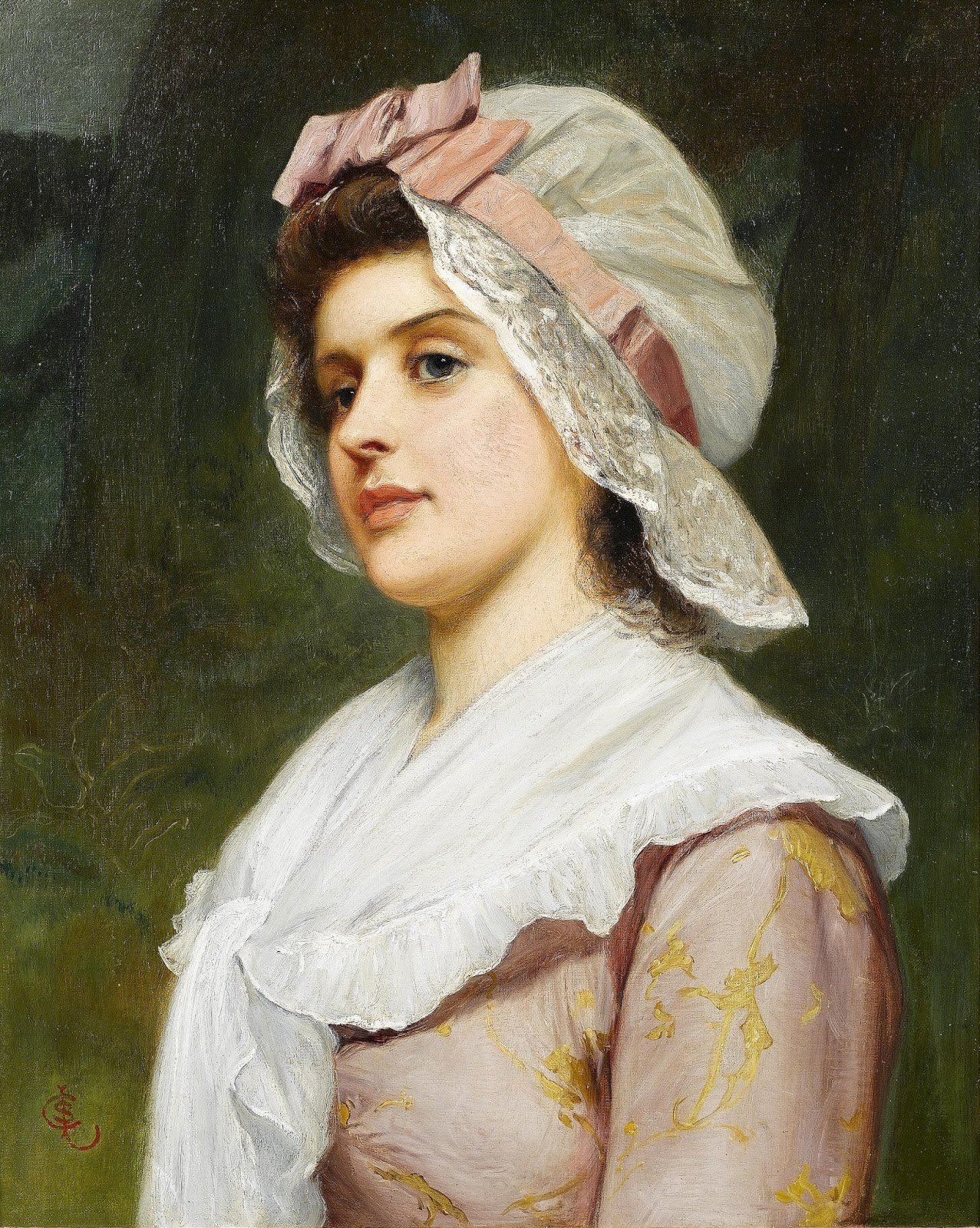
Charles Sillem Lidderdale, A Country Maid

An innkeeper’s daughter seeks to marry into a genteel family.


For Oliphant, see Novels 007, 008, 056, 107, 152, 205, 206 and 266.

Oliphant “has seldom, to our thinking, made a completer portrait than that of” this novel’s heroine. “Her insight into the byways of manner and modes of thought of a certain class” is “admirable” Athenaeum, September 24, 1892

The main character is “presented with such searching truthfulness and such fine dramatic realism, that the book is worthy of a place beside the most brilliant of its predecessors.” Spectator, December 3, 1892

Download this fortnight’s novel:
v.1 https://archive.org/details/Cuckoo_in_the_Nest_vol1

v.2 https://archive.org/details/Cuckoo_in_the_Nest_vol2

v.3 https://archive.org/details/Cuckoo_in_the_Nest_vol3

Novel 346: Charlotte Dunning Wood, A Step Aside (1886)

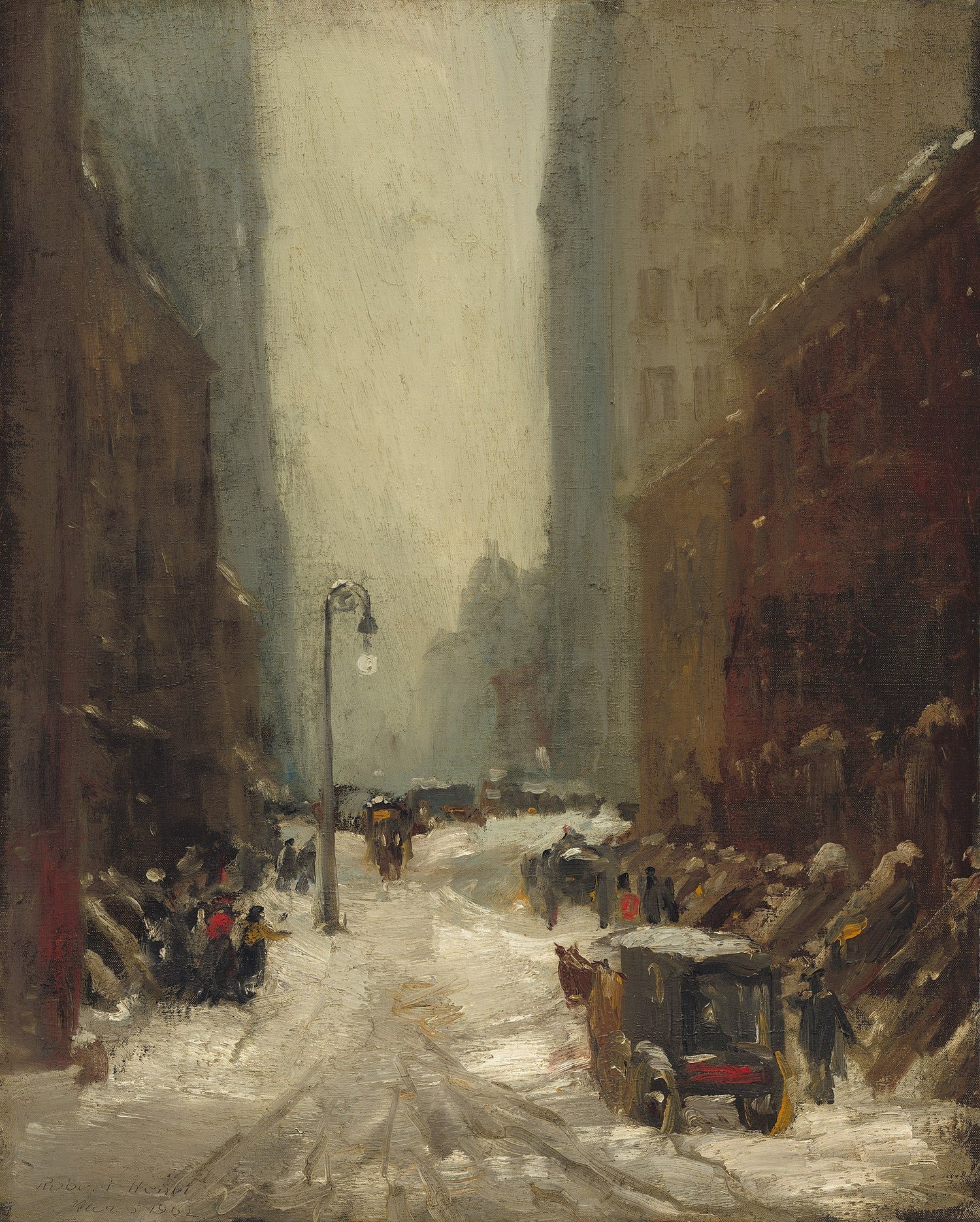
Robert Henri, Snow in New York

In New York City, the relationship of a poor teacher and an ambitious young clerk is troubled by poverty.


For Wood, see Novel 287.

The hero is “described with much genuine feeling”; the heroine is “a sweet and natural character”; the author “does not attempt to excite her readers, but she both interests them and touches their hearts.” Athenaeum, October 9, 1886

Dunning “contrives to tell a very unobtrusive story with interest and charm, and lets her characters display themselves.” Saturday Review, November 13, 1886

Download this fortnight’s novel:
https://archive.org/details/astepaside00woodgoog

Novel 344: Justin McCarthy, Donna Quixote (1879)

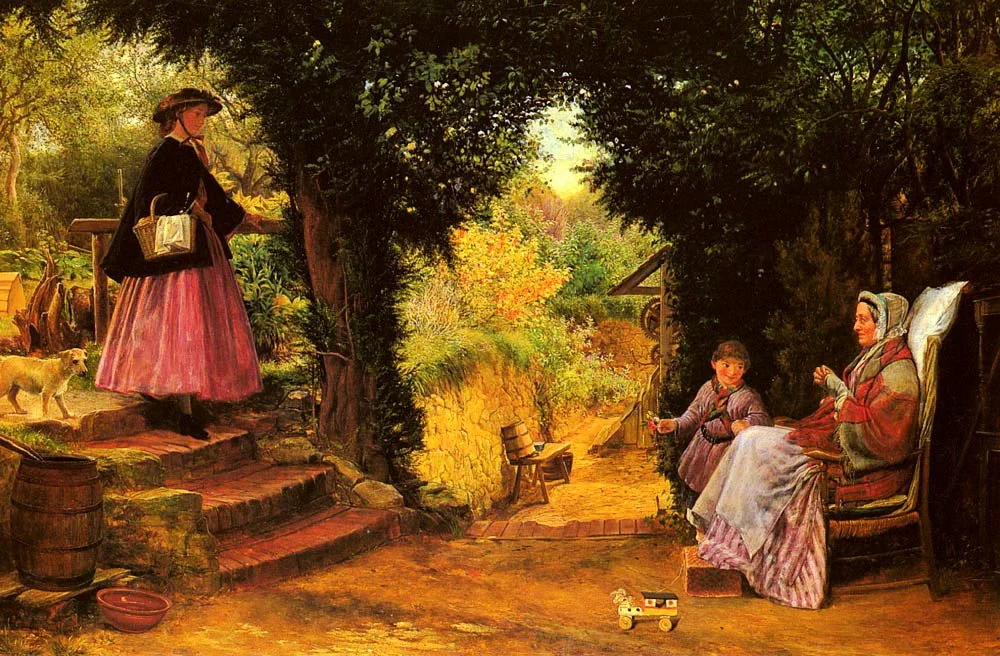
Richard Redgrave, Young Lady Bountiful

A dying man marries the woman he loves so that she can inherit his wealth; she tries to do good with it.


For McCarthy, see Novels 059, 163, and 220.

It “has in its characters and its descriptions as much freshness and as much humour as we have observed in the author's former novels, combined with more than hints of a strength which he has not before exhibited”; it is “the best novel that we have read for a considerable time.” Saturday Review, December 13, 1879

“Mr. Justin McCarthy’s novels rank among the select few which deserve to be as popular a hundred years hence as they are now.  Contemporaries welcome them chiefly for the sake of plots which, though slight, are always interesting, and heroes and heroines in whose fortunes even the most hardened novel reader cannot fail to sympathise.  Posterity will turn to them for the social aspect of our time, illustrated by subordinate characters each of whom typifies some current whim or folly.  And, notwithstanding Mr. McCarthy’s keen sense of humour, these types are portraits, not caricatures, their outlines being sharpened and their tints deepened only to such an extent as the true artist permits himself.” Academy, December 27, 1879

Download this fortnight’s novel:

https://archive.org/details/donnaquixote00mcca/

Novel 343: Charlotte Yonge, The Stokesley Secret (1861)

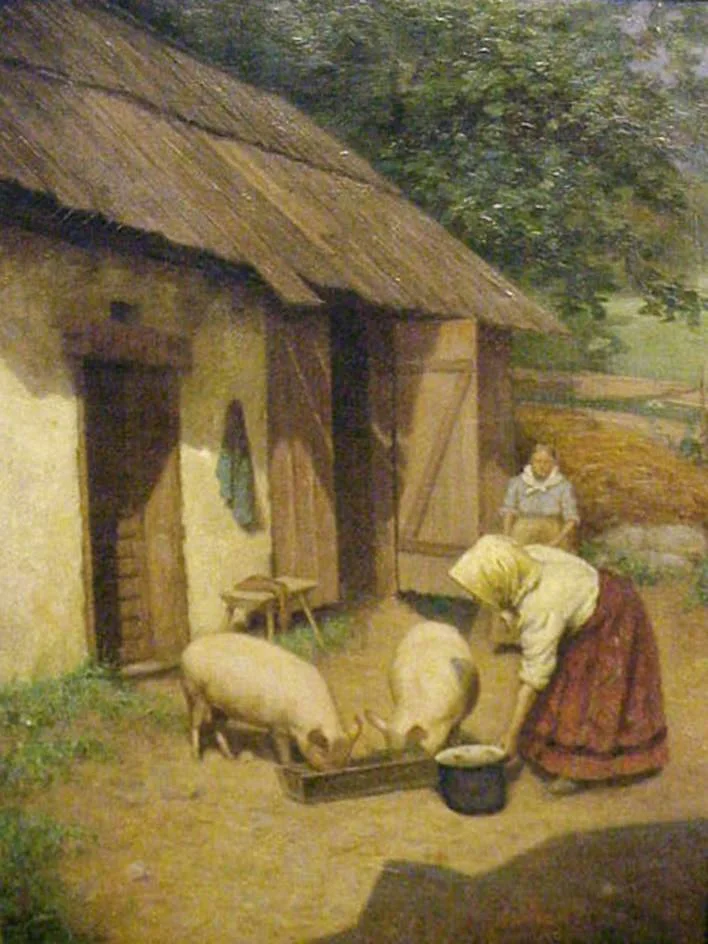
Stanhope Alexander Forbes, Feeding the Pigs

Nine sibling children save up to buy a poor neighbor a pig.


For Yonge, see Novels 003, 053, 103, 155, 210, and 261.  This, a children’s novel, relatively brief and very charming, shows clearly her unique genius at characterization.

“There is something very natural and true in the picture of school-room life:  the little naughtinesses, the petty teasings, the small vexations, will be familiar to every member of a large family party.” Athenaeum, November 2, 1861

Download this fortnight’s novel:

https://archive.org/details/stokesleysecret00yonggoog/

Novel 342: Katherine Biggar, The Fair Carew (1851)

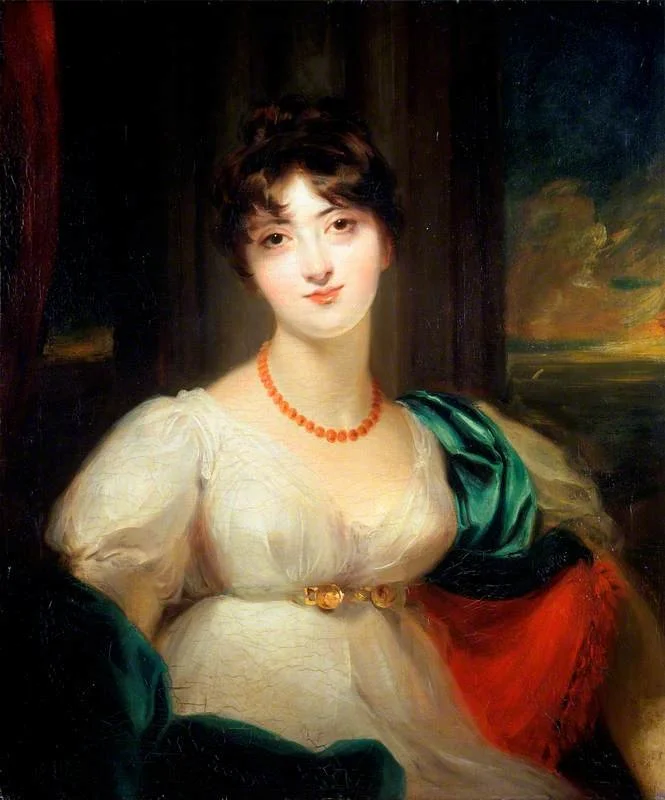
Sir Thomas Lawrence, Paulina, First Wife of Sir Codrington Edmund Carrington

A girl is led into a secret marriage with an army officer called to war.


About Katherine Biggar, nothing is known but her name (which Troy J. Bassett finds in her publisher's accounts), and that she wrote two novels, of which this was the first.

It has “no ordinary merit.”  “The authoress . . . would seem to have reckoned throughout her labours more upon the reader’s appreciation of a quiet pen well informed of the petty vices and foibles of human nature, than upon his desire to be enthralled by harrowing descriptions and astounding situations, that form no part of the natural and every-day business of life.”  However, much of it is “tedious if not unprofitable.”  Literary Gazette, November 29, 1851

It has an “extremely interesting plot”; an “unusual number of characters” are “finished with the nicest and most discriminating skill”; “one of the pleasantest, most sensible, and best-written works of fiction we have lately had to report on.”  Bentley’s Miscellany, January 1852

A contrasting view:

“We cannot recognize in the The Fair Carew any power of eloquence, nor any acuteness of observation. The story is not without interest, though made up of threadbare materials. The best quality in the book is the power of sketching character, which, though it does not go beyond sketching, has nevertheless a distinctiveness and freedom of touch which give hope of future excellence.” Leader and Saturday Analyst, November 22, 1851

Download this fortnight’s novel:

https://archive.org/details/faircareworhusba01lond/

https://archive.org/details/faircareworhusba02lond/

https://archive.org/details/faircareworhusba03lond/

Novel 340: Mrs. Wilfrid Ward, One Poor Scruple (1899)

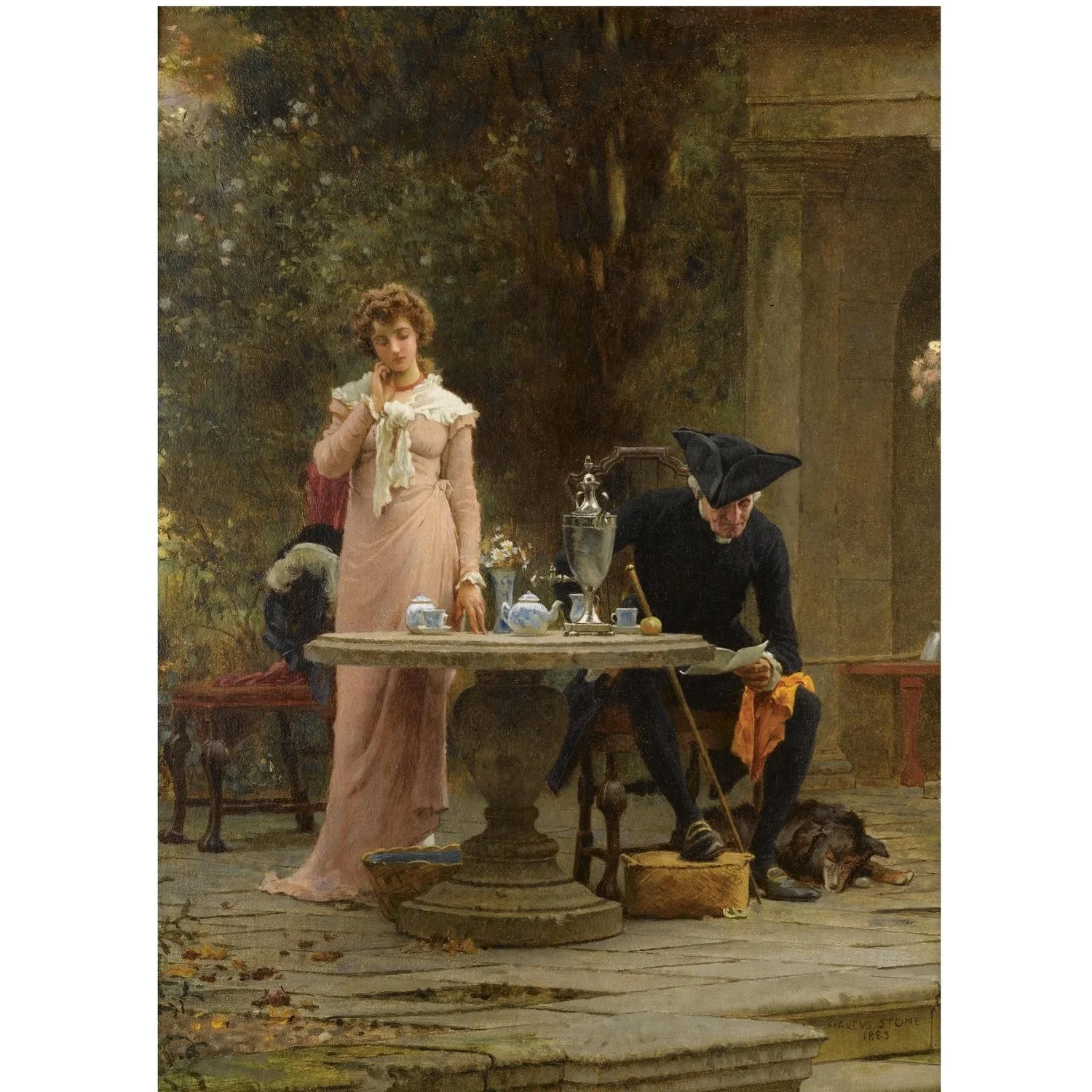
Marcus Stone, An Offer of Marriage

A worldly woman struggles to reject her Catholic upbringing.


Josephine Mary Ward (1864-1932), a granddaughter of the Duchess of Norfolk, wrote some eleven novels between 1899 and 1932, of which this was the first.

“The description of an old Romanist county family is excellent. . . . ; a distinctly able book.” Athenaeum, April 8, 1899

“Mrs. Wilfrid Ward is in a position to write of Catholic society from the inside, and she has done so in a remarkable novel with a candour that will render her work attractive to thoughtful persons beyond the pale. . . .  it is excellently written and every character is well drawn. Notable too is its absolute fairness, which leaves the reader to weigh the heroine’s scruple for himself, aided but not biassed by the author. . . .  as a whole . . . a book that should make its mark.” Saturday Review, April 8, 1899

Download this fortnight’s novel:

https://archive.org/details/onepoorscruplese00ward/page/n7/mode/2up