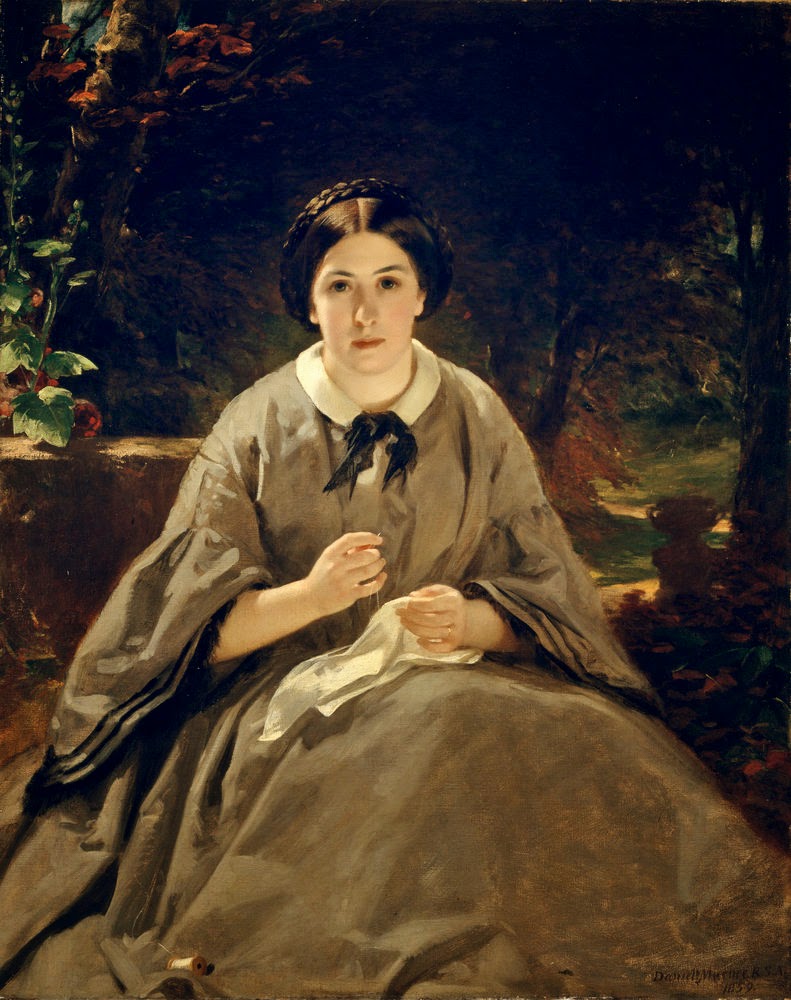
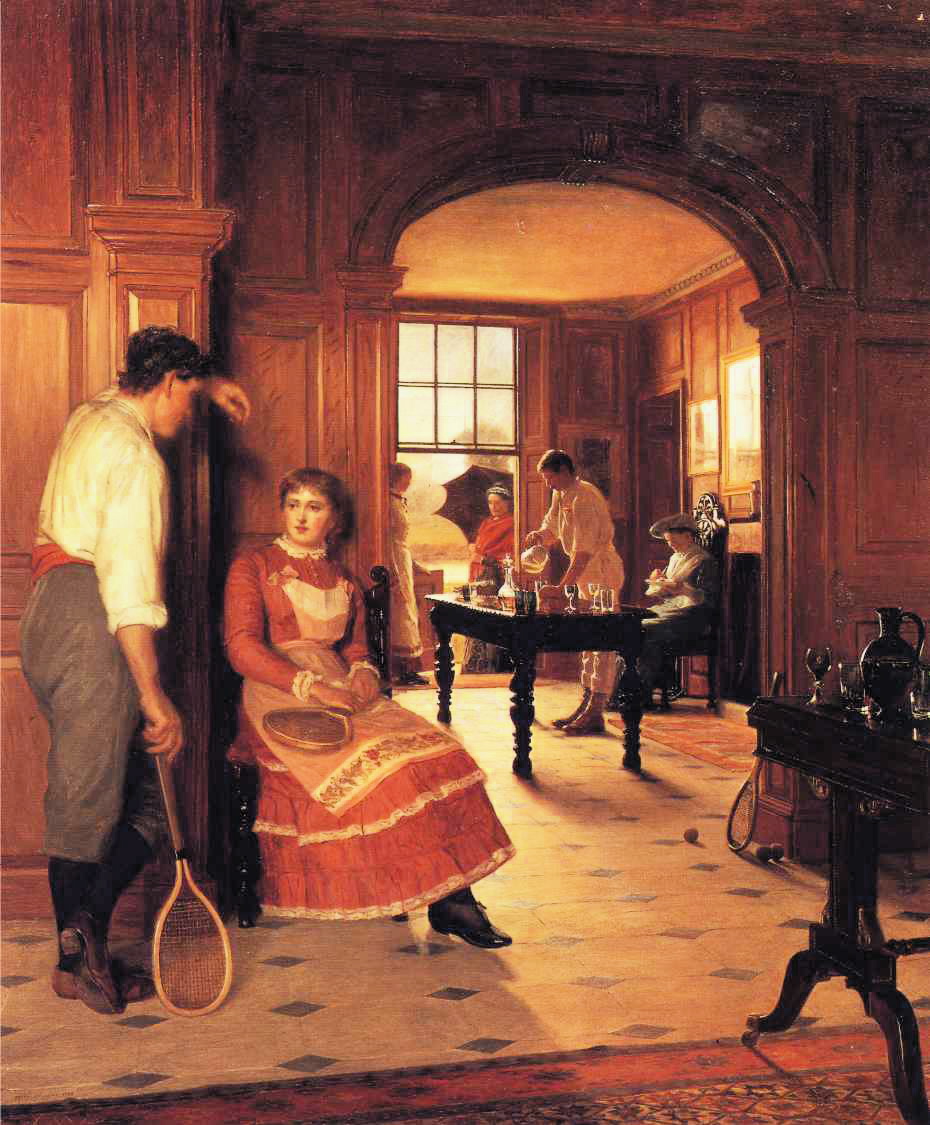
David Alfred Bywaters's Crossword Cavalcade & Fortnightly Victorian Novel Recommender. Every Saturday! Either a new language-torturing puzzle or an old novel by an unjustly neglected Victorian author. Why waste time on other amusements?

Novels

Novel 114: Rosa Nouchette Carey, Sir Godfrey's Grand-daughters (1892)
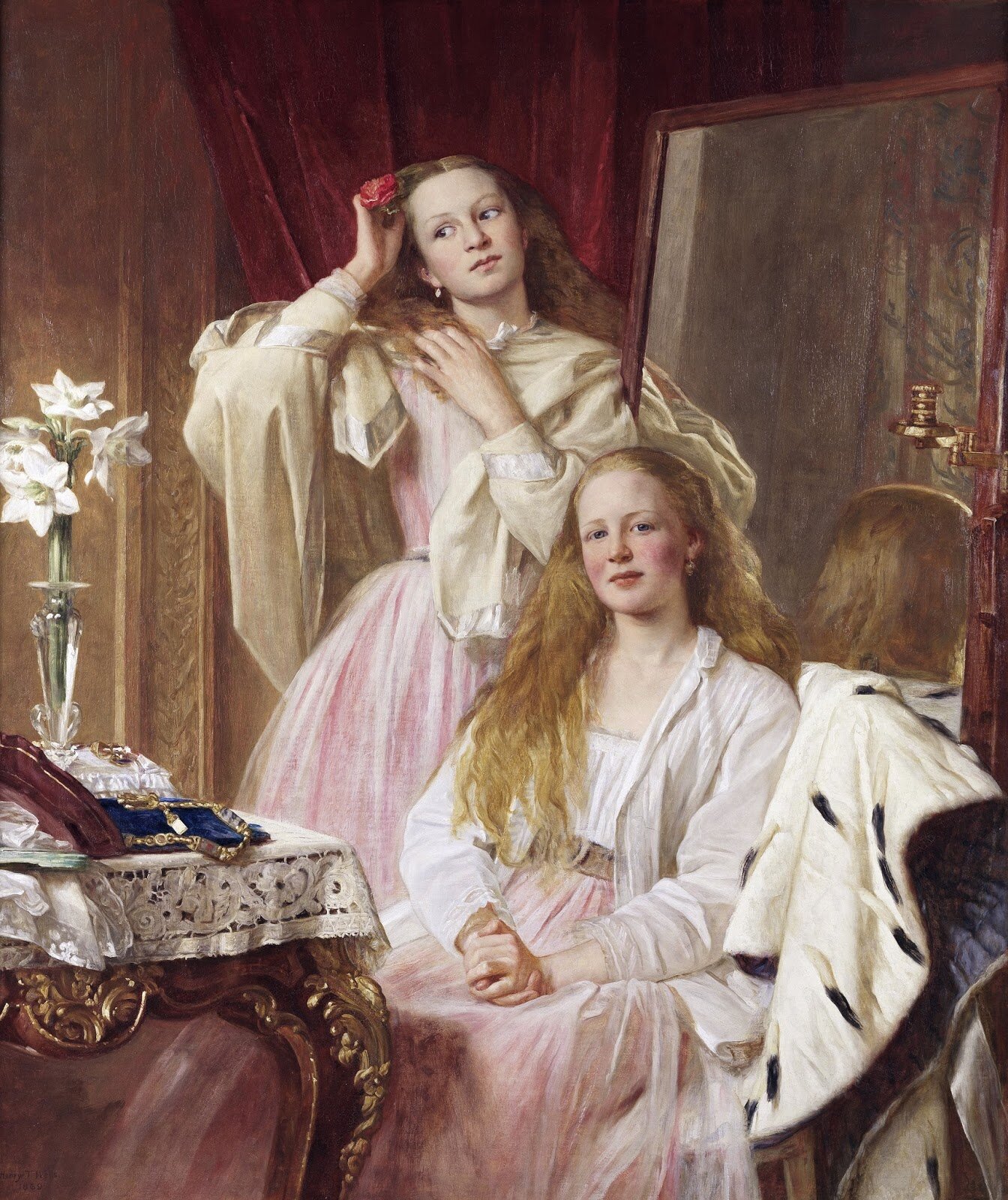
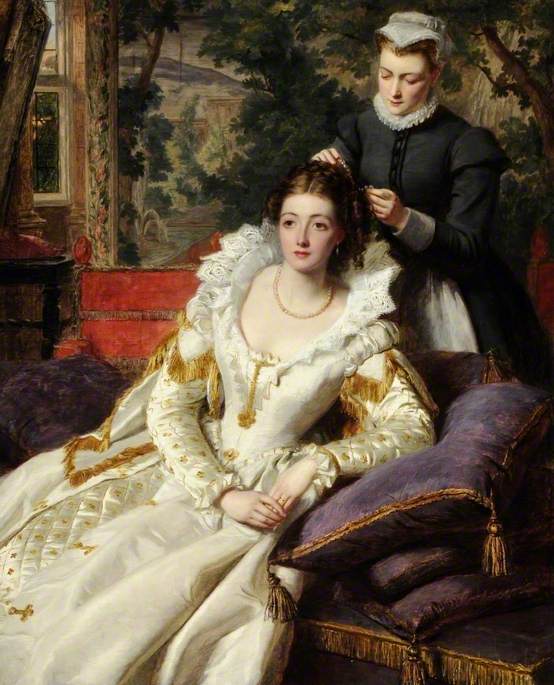
Henry Tanworth Wells, Emma and Federica Bankes of Soughton Hall

A young lady resists her grandfather’s plan for her to marry her cousin.


Rosa Nouchette Carey (1840-1909) wrote over 40 novels featuring virtuous women in domestic settings.  This one is certainly vulnerable to such dismissals as the Athenaeum's:  "nice and pretty young women . . . go through some pretty and romantic adventures with some exceptionally handsome and enterprising young men.” But despite its slow pace and its characteristic avoidance of the strange or surprising, it holds the attention: the style is free of sentimentality, and several characters are well and plausibly delineated.

“A quaint, simple tale of an English community. . . .  Throughout the story is natural and entertaining, the style sympathetic, and the study of character clear and good.”  Critic, November 5, 1892

It is “pre-eminently soothing"; a “quiet story of the life of rural gentlepeople . . . and the substance of the novel is well matched by the cultivated refinement of Miss Carey’s literary style”; it has “interest given by delicately truthful characterization rather than by exciting sequence of events. . . .  One of the pleasantest of recent contributions to domestic fiction; it is not lacking in humour, and there are passages of true and unstrained pathos.” Academy, December 4, 1892

Download this week’s novel:

v.1 https://archive.org/details/sirgodfreysgrand01care

v.2 https://archive.org/details/sirgodfreysgrand02care

v.3 https://archive.org/details/sirgodfreysgrand03care


Novel 113: Mrs. Alexander, Look Before You Leap (1865)

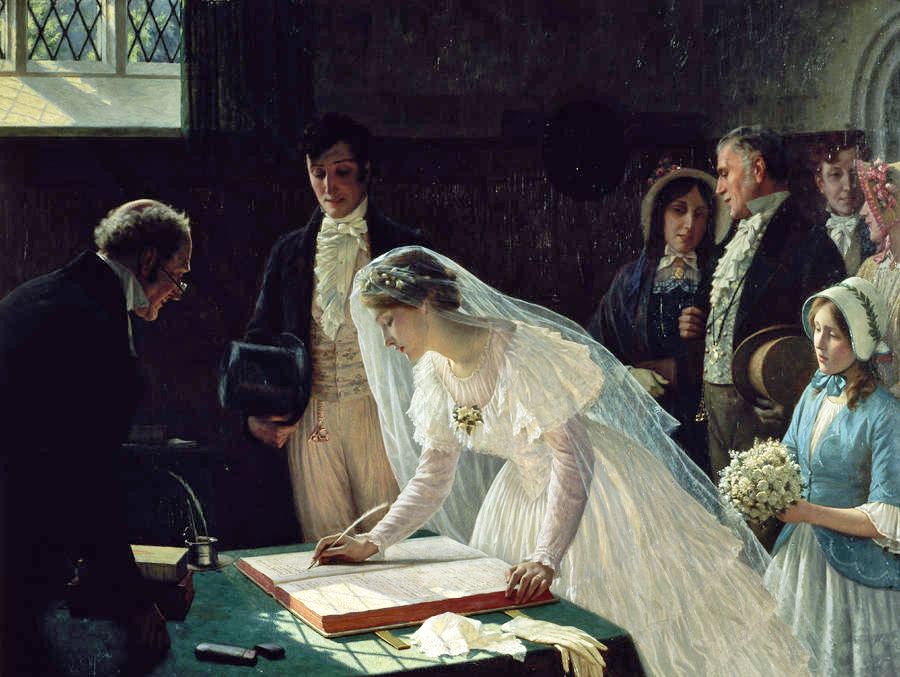
Edmund Blair Leighton, Signing the Register

A guardsman with gambling debts courts a woman he mistakenly supposes an heiress.


Here is another fine novel by the great “Mrs. Alexander” (see Novels 001, 063), with her customary well-paced plot, smooth style, and vivid characters.

“One of the lightest and prettiest stories a reader need wish to find on a summer’s day, or a winter’s day either. . . .  The story is cleverly told.”  Athenaeum, March 18, 1865

“A sprightly, stirring tale, though one that is decidedly ‘stagey,’ without, however, being vulgar, and for a novel of mere amusement, for railway reading, or any temporary distraction we have not met with a better.”  Spectator, August 19, 1865

Download this week’s novel:

v.1 http://access.bl.uk/item/viewer/ark:/81055/vdc_00000004A196#?c=0&m=0&s=0&cv=6&xywh=-58%2C-223%2C2748%2C2335

v2. http://access.bl.uk/item/viewer/ark:/81055/vdc_00000004A190#?c=0&m=0&s=0&cv=6&xywh=0%2C-69%2C2499%2C2124

Novel 112: Catherine Anne Hubback, The Rival Suitors (1857)

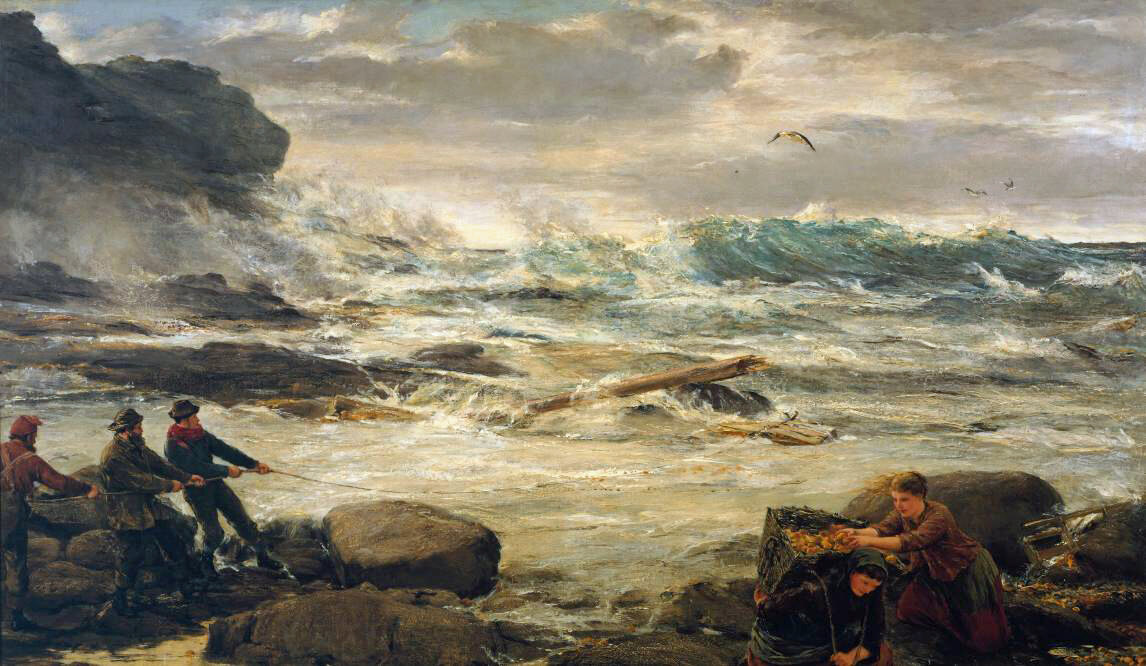
James Clarke Hook, Wreckage from the Fruiter

A virtuous young lady is courted by both an honest young coast-guard captain and a middle-aged landowner with a past.


Catherine Anne Hubback (1820?-1880?) was Jane Austen’s niece (the daughter of her brother Sir Francis—possibly more a drawback than an advantage in her career, since it led critics into invidious comparisons).  She wrote ten novels between 1850 and 1862.  This one begins well, though it eventually comes to grief amid melodramatic crimes implausibly concealed and even more implausibly revealed.  The second volume, where well-delineated characters are shown at amusing cross purposes, is the best.

“It is well written, carefully worked out, and very interesting; the morality is healthy, and, though highly wrought, is neither fantastic nor overstrained. . . .  The incidents of the discovery are too much forced, and the repetition of disasters at sea shows a want of invention . . . surprising in so clever a writer.”  Athenaeum, May 23, 1857

It is, “though not free from defects . . .  the best of all Mrs. Hubback’s works, and one which proves her to be nearly allied by genius, as she is by blood, to the first of English female novelists”; she “shows considerable ingenuity in the construction of the plot, and no small power of telling a story.  Then some of the characters are very powerfully sketched, and presented in a manner which displays great knowledge of human nature.”  Saturday Review, August 8, 1857

Download this week’s novel:

v.1 https://books.google.com/books?id=z5k9AQAAMAAJ&pg=PP5#v=onepage&q&f=false

v.2 https://books.google.com/books?id=8pk9AQAAMAAJ&pg=PP5#v=onepage&q&f=false

v.3 https://books.google.com/books?id=DZo9AQAAMAAJ&pg=PP5#v=onepage&q&f=false

Novel 111: Edward Dutton Cook, Sir Felix Foy, Bart. (1865)

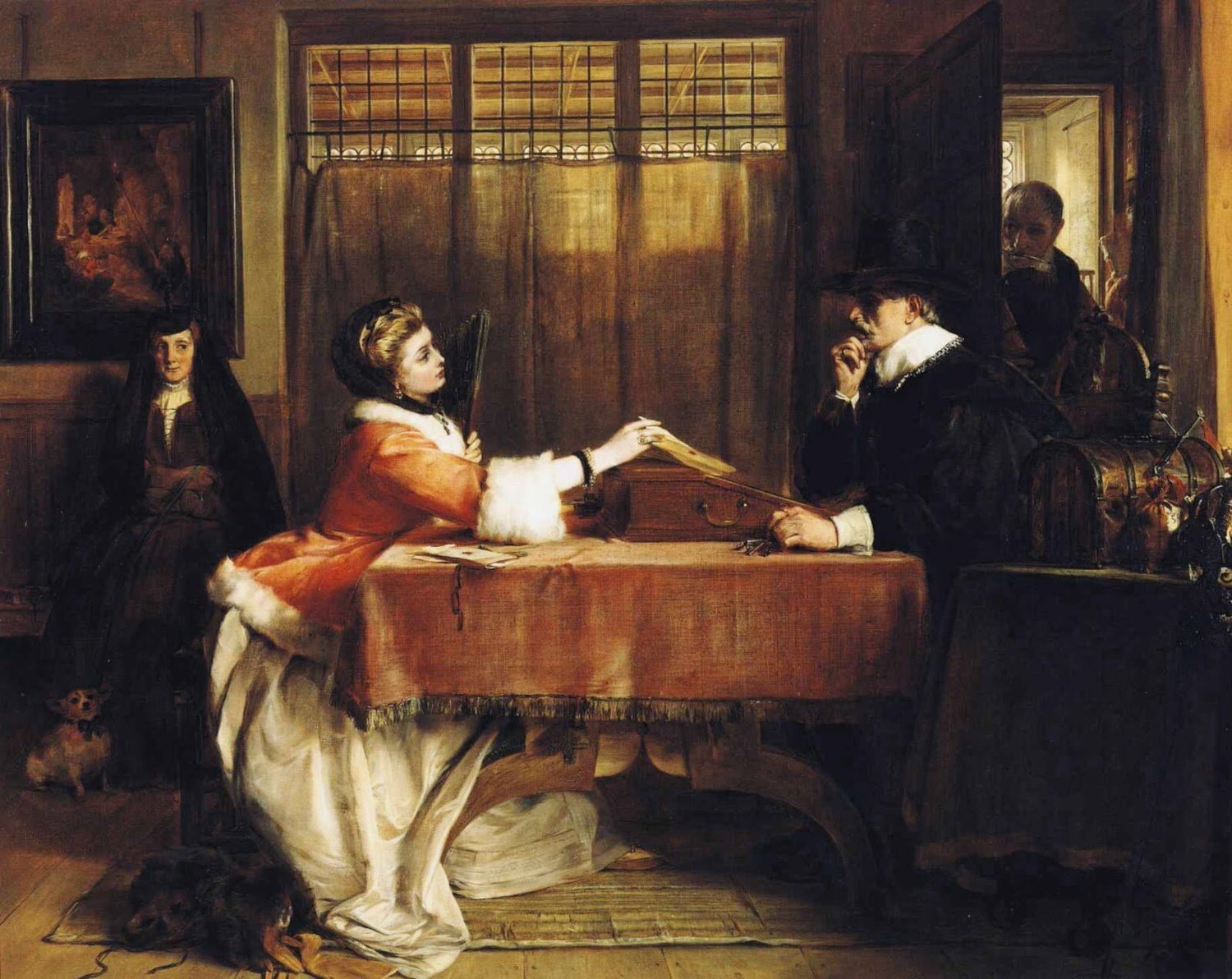
John Callcott Horsley, The Banker’s Private Room - Negotiating a Loan

A wealthy, aging baronet is not always kind to his poorer relations.


Here is another entertaining work of social comedy by Cook (see Novel 040), filled with memorable characters.

“In these days, when writers of prose fiction are wont to stimulate their readers with mystery and violence, from the first to the latest pages of their works, the story may be thought deficient in respect of agonizing horror and daring improbability; but in pleasant humour, natural mirth, and characters resembling the men and women of actual existence, it possesses qualities with which the ingenious contrivances of a mere literary puzzle will not endure comparison.” Athenaeum, May 20, 1865

“It . . .  may be read with leisurely enjoyment. . . . Nothing is attempted . . .  with which its author is not competent to deal, and the characters . . . are not rendered impossible by a desire to give them an undue share of originality.   They are such people as we might meet . . . and they behave very much as actual men and women do in real life. . . . The quiet humour which pervades it gives it a very pleasant flavour.” Saturday Review, June 19, 1865

“Mr. Cook is one of the pleasantest of our novel-writers.  His stories are always interesting, his style is remarkably easy and agreeable, and he combines with shrewdness of observation . . . geniality and kindly humour . . .  ‘Sir Felix Foy’ . . .  is unusually rich in studies of character—some of them very carefully thought over and worked out.  It is a story of everyday life, with nothing that is extravagant or sensational about it.” London Review, July 8, 1865

Download this week’s novel:

v.1 http://access.bl.uk/item/viewer/ark:/81055/vdc_00000004A31C#?c=0&m=0&s=0&cv=4&xywh=-1%2C-19%2C2518%2C2051

v.2 http://access.bl.uk/item/viewer/ark:/81055/vdc_00000004A322#?c=0&m=0&s=0&cv=4&xywh=0%2C-27%2C2538%2C2067

v.3 http://access.bl.uk/item/viewer/ark:/81055/vdc_00000004A328#?c=0&m=0&s=0&cv=4&xywh=-21%2C-1%2C2488%2C2027


Novel 110: Anne Manning, Poplar House Academy (1859)

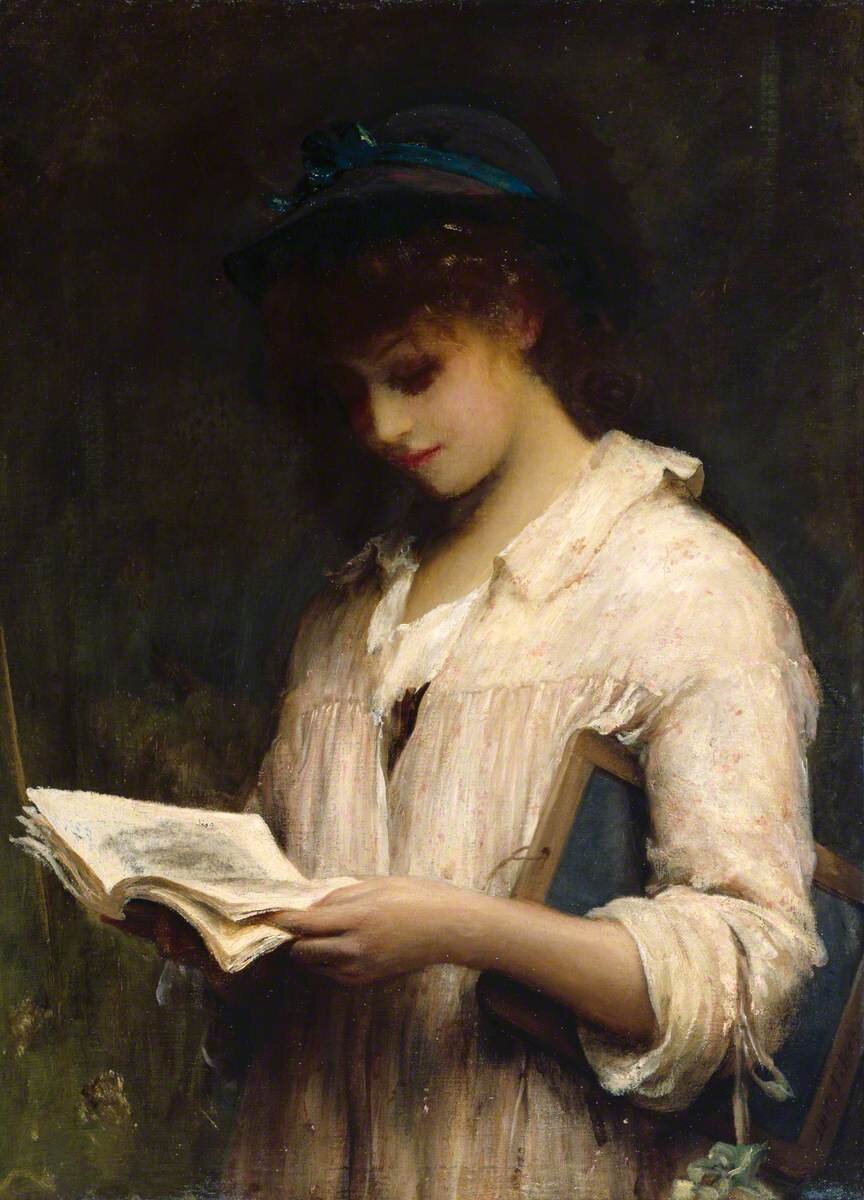
Sir Luke Fildes, A Schoolgirl

Abandoned by their father, three sisters open a school.


For Anne Manning see Novel 052

“Until now, we have never seen a work of fiction which seemed to deserve the title a Tale of Real Life, but we must thank the authoress . . . for having justified, in her present work, our belief that such a tale might be so told as to find many and grateful listeners.  About the vraisemblance, simplicity, and reality of the story there can be no question.  Its construction—it cannot be said to have a plot—is that of many and many an unwritten biography, and among its readers there will be not a few who will recognise it as little more than a sober and truthful portrait of their own existence. . . .  To those who read it on a quiet evening after a good day’s work—to those who read with a sober taste rather than with omnivorous mental appetite—it is likely to prove an agreeable and welcome variety, after the laboured piquancy of more pretentious works.  Those who know  . . . how wearisome a task novel reading may become, will probably agree with us in wishing that more of the novel-writers of our day were capable of imitating the good taste, simple style, and modest coloring which are the crowning merits of the pictures of English home life contained in these two little volumes.”  Saturday Review, April 9, 1859

“In the course of the tale this practised and agreeable writer inculcates many just and sound views as to the importance and dignity of the tuitional vocation when rightly apprehended.”  Critic, April 30, 1859

“There is a good sound English style, a kindly human sympathy, and a genial, warm and Christian spirit in the writings of this lady that make them deservedly popular, and this, her most recent work, is decidedly one of the most pleasant.”  Eclectic Review, May, 1859

Download this week’s novel:

v.1 https://archive.org/details/poplarhouseacade01mann

v.2 https://archive.org/details/poplarhouseacade02mann

Novel 109: Elizabeth Missing Sewell, Ursula (1858)

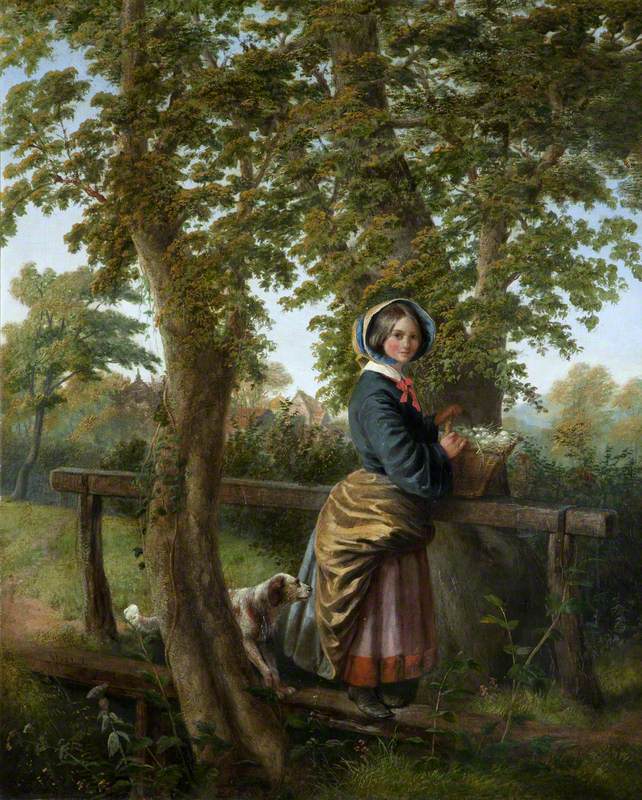
William Mulready, Young Girl with a Basket of Eggs

A farmer's daughter grows up admiring her brother and striving to be virtuous.


Elizabeth Missing Sewell (1815-1906) wrote some 13 novels, many, like this one, first-person narratives of a girl’s entry into adulthood.  The reader must endure some pious tedium, but in exchange gets a set of living, original characters and a fine-grained representation of life on a tenant farm—a refreshing change from the usual aristocratic setting.

“To those who have leisure and patience, Ursula may be recommended as a careful and able depiction of country scenery, of a peculiar kind of country life, and a painstaking delineation of various characters, but time and patience are indispensable to its relish.” Spectator, April 17, 1858

“The characters are drawn with truth to nature, and they give a colour and turn to the circumstances and incidents of the story rather than the circumstances to them, which is as it should be, for in real life the same incidents played by different characters would lead to widely different results.  Of course, the aim . . . is didactic; but . . . the book is genial and kindly, and the impression left on the mind is pleasant.”  Athenaeum, April 24, 1858

Sewell’s purpose is “to delineate character—to analyze the mixed motives of human conduct—to trace the effects of moral errors in the unhappiness and disappointment which spring from them, and of self-denying virtue in its consequent happiness and contentment.”  Literary Gazette, May 8, 1858

Download this week’s novel

v.1 https://archive.org/details/ursulataleofcoun01sewel

v.2 https://archive.org/details/ursulataleofcoun02sewel

Novel 108: Frances Eleanor Trollope, That Unfortunate Marriage (1888)

Philip Calderon, Preparing for a Walk

A lively but virtuous young lady, raised by her unfashionable grandmother, is introduced into society by a fashionable aunt.


Frances Eleanor Trollope (née Ternan) (see Novel 033) here provides another collection of deftly handled comic characters caught in Victorian contradictions of class and wealth.

The novel “deals with ordinary people and characters in a fresh and graceful way.  Nothing could be more hackneyed than the basis of the plot; but there are some delightfully natural characters, and the current of interest is calm and pure throughout.” Athenaeum, December 15, 1888

“That Unfortunate Marriage . . . yields to none of this lady’s previous works in point of faithful and observant portraiture, with all the quiet humour which accompanies thoroughly natural description of life and manners. . . .  One rises from the book with the feeling that one hardly remembers or cares what it has been about, in the delight of having formed a new and interesting circle of acquaintance, whose counterparts we know to exist in the world around us, and whose thoughts and ways have become so familiar that we could tell to a nicety what any of them would say or do in any given circumstances.”  Academy, January 5, 1889

Download this week’s novel:

v.1 https://archive.org/details/thatunfortunatem01troluoft

v.2 https://archive.org/details/thatunfortunatem02troluoft

v.3 https://archive.org/details/thatunfortunatem03troluoft

Novel 107: Margaret Oliphant, Whiteladies (1875)

Sir Luke Fildes, Naomi

An old woman is troubled about the succession of her ancestral estate.


Here is another novel by Margaret Oliphant (see Novels 007, 008, 056): the elderly, morally conflicted protagonist and the playful young woman who torments her are both outstanding creations.

“Mrs. Oliphant . . . avails herself of a most unpleasant plot to make a remarkably fine study of character.”  Bradford Observer, December 4, 1875

“The characters are generally well-drawn and diverting. . . .  As a study of ordinary people, the book evinces a skill almost wonderful.” Scribner’s, May, 1876

Download this week’s novel:

v.1 https://archive.org/details/whiteladies01olip

v.2 https://archive.org/details/whiteladies02olip

v.3 https://archive.org/details/whiteladies03olip

Novel 106: Elizabeth Glaister, The Perfect Path (1884)

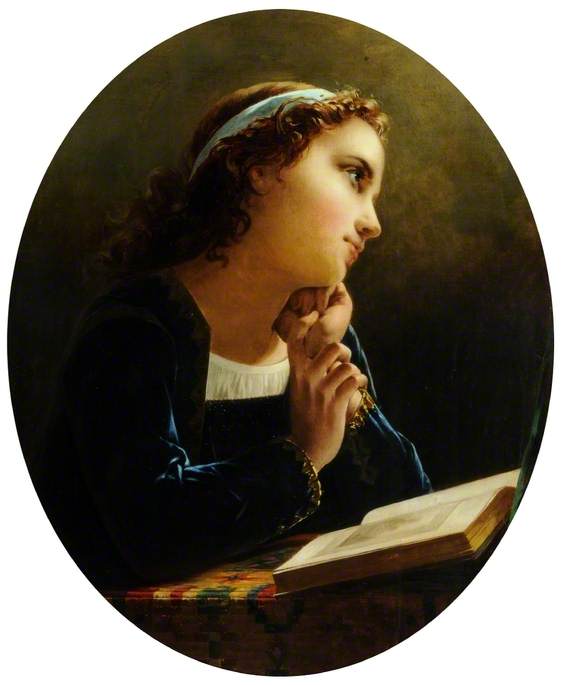
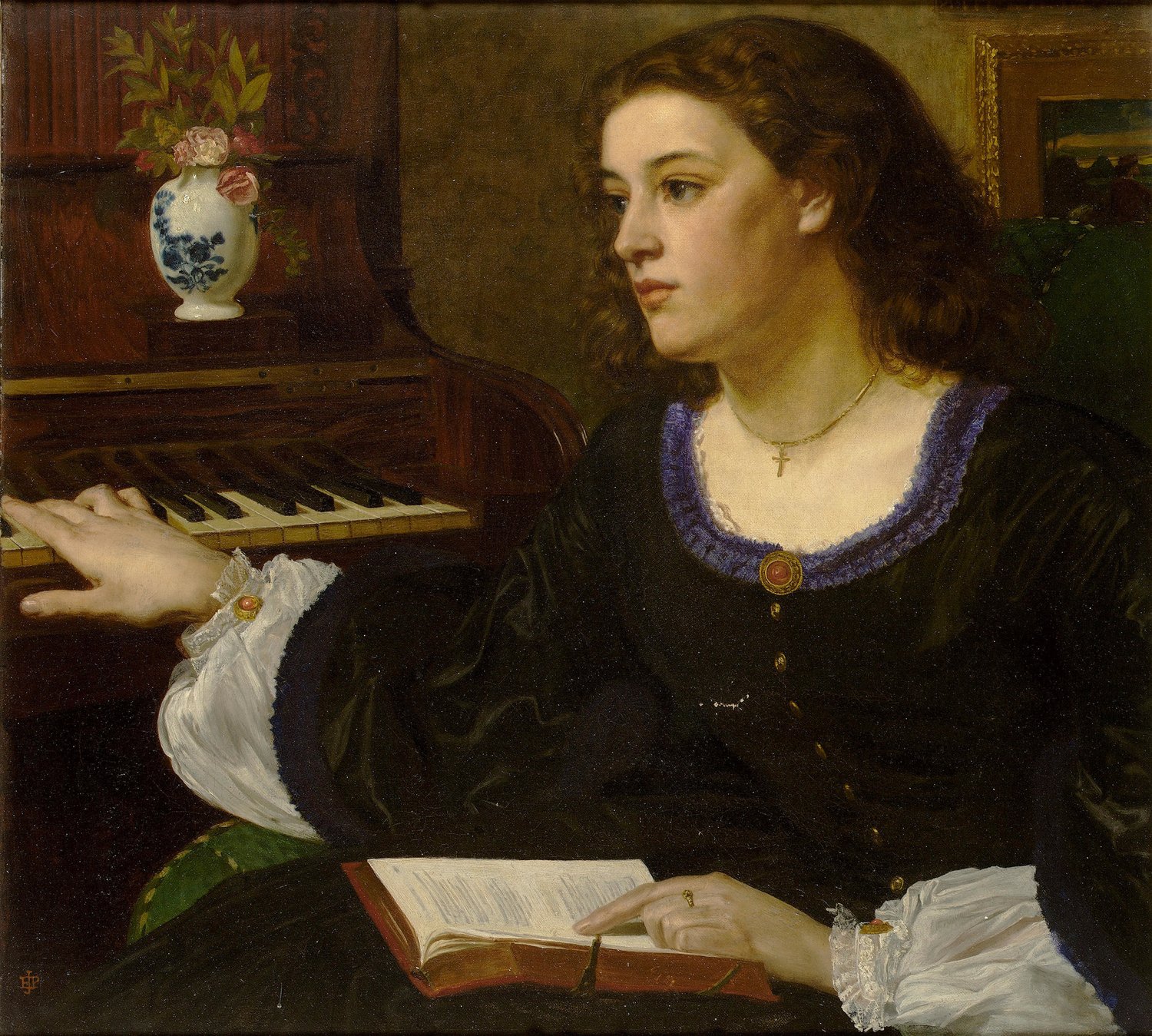
James Sant, Meditation

A gambler’s daughter wants to be good.


Elizabeth Glaister (1840-1892) wrote five novels between 1873 and 1890.  This one has a lively style and an unusual comic heroine.

“Although the title of ‘The Perfect Path’ suggests too strongly something in the nature of a religious novel—one of the most terrible forms of literature—it is in reality a very lively story, in which the author, by keeping well within her powers, has succeeded.  The heroine is very graphically presented and makes a charming figure.”  Athenaeum, February 16, 1884

“There are some good character studies in this entertaining story.”  Morning Post, February 27, 1884

Download this week’s novel:

v.1 https://archive.org/details/perfectpathnovel01glai

v.2 https://archive.org/details/perfectpathnovel02glai

Novel 105: Noell Radecliffe, Alice Wentworth (1854)

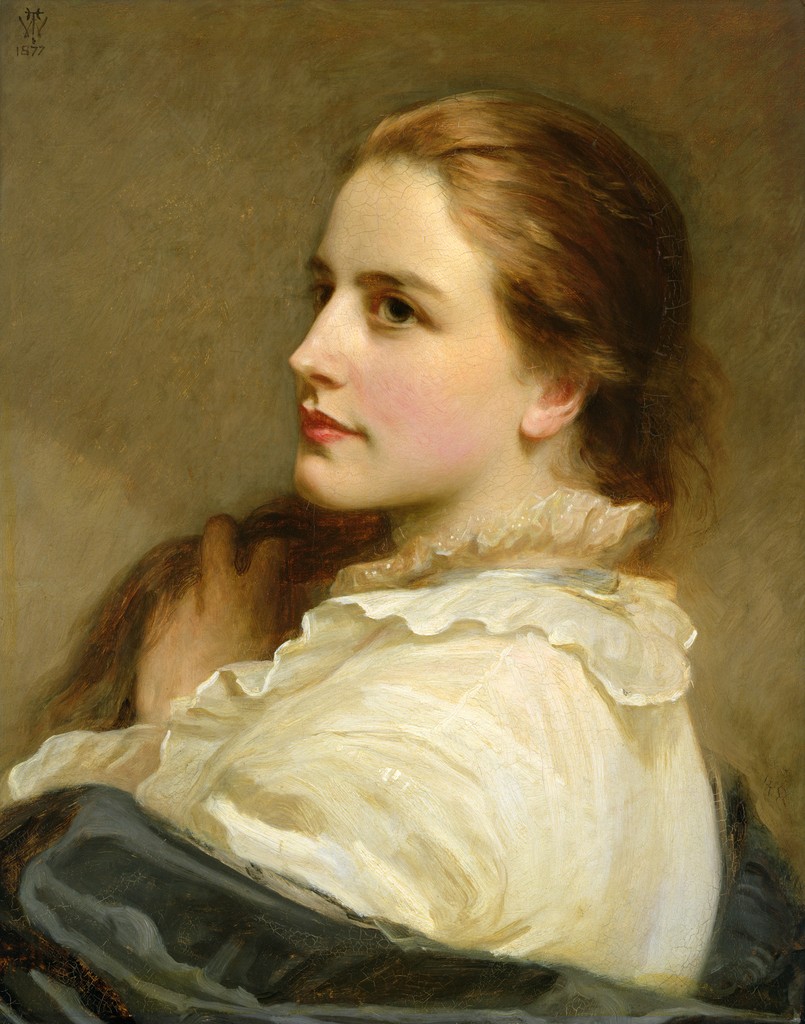
Henry Tanworth Wells, Alice

A well-meaning man is led into disaster by unfortunate sexual impulses.


Another tale of love and adultery, of good people at the mercy of bad ones, by the great Noell Radecliffe (see Novel 005), a writer as brilliant as she (he?) is forgotten.

“The character of the heroine . . .  is conceived with singular delicacy, and sustained with admirable consistency and spirit.  Other personages are introduced whom we recognise as portraitures of real life.  There is Horace Ferrers, whom we all know.  Arthur Darrell . . . is a man and not a conventional hero.  Lady Emily . . . is a picture drawn by a masterly hand, and made effective not by bold strokes and dashing outlines, but by a quiet completeness that gradually brings out the portrait distinct and perfect as a living thing.”  Critic, January 2, 1854

“Kind, good, simple, unforced, full of energy, full of feeling.”  Athenaeum, January 14, 1854

Download this week’s novel:

http://access.bl.uk/item/viewer/ark:/81055/vdc_0000000422CA#?c=0&m=0&s=0&cv=0&xywh=-582%2C-116%2C2595%2C2522

Novel 103: Charlotte Yonge, The Trial (1864)

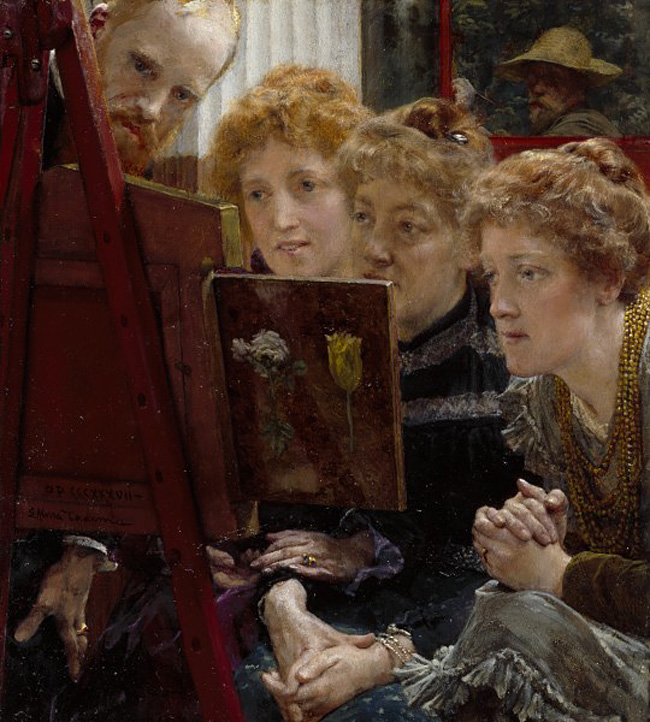
Sir Lawrence Alma-Tadema, A Family Group

A young man is falsely accused of murder.


This is the sequel to The Daisy Chain, of eight years before (Novel 053).  Here Yonge moves beyond the domestic, including not only a murder but also an American episode, in which a few of her characters seek prosperity in an Indiana swamp while the Civil War rages in the distance.

“With the old Pre-Raffaelite touch Miss Yonge paints her portraits, quietly, faithfully, and as completely as she can.”  Reader, June 18, 1864

Yonge “understands how to work the machinery of a large family—to show how the different members act and react on each other—in a probable and calculable manner.” Saturday Review, August 20, 1864

“In these days of exciting fiction, it is difficult to sustain public interest without doing violence to the more refined tastes of educated readers.  Much insight into human nature is needed, and no small amount of artistic power.  These desiderata are well supplied by the authoress of this story, and those who remember and admired her elegant style of writing will not be disappointed in her new book.” Manchester Guardian, September 6, 1864

“No one can deny that this lady draws the inner and outer life of a certain limited class of characters with a truth and reality almost unrivalled, or that her pictures of struggling middle-class interiors are finished with the fidelity of a Dutch painting.” Westminster Review, October, 1864

Download this week’s novel:

v.1  https://archive.org/details/trialmorelinksd03yonggoog

v.2 https://archive.org/details/trialmorelinksd01yonggoog

Novel 102: Emma Newman, Begun in Jest (1891)

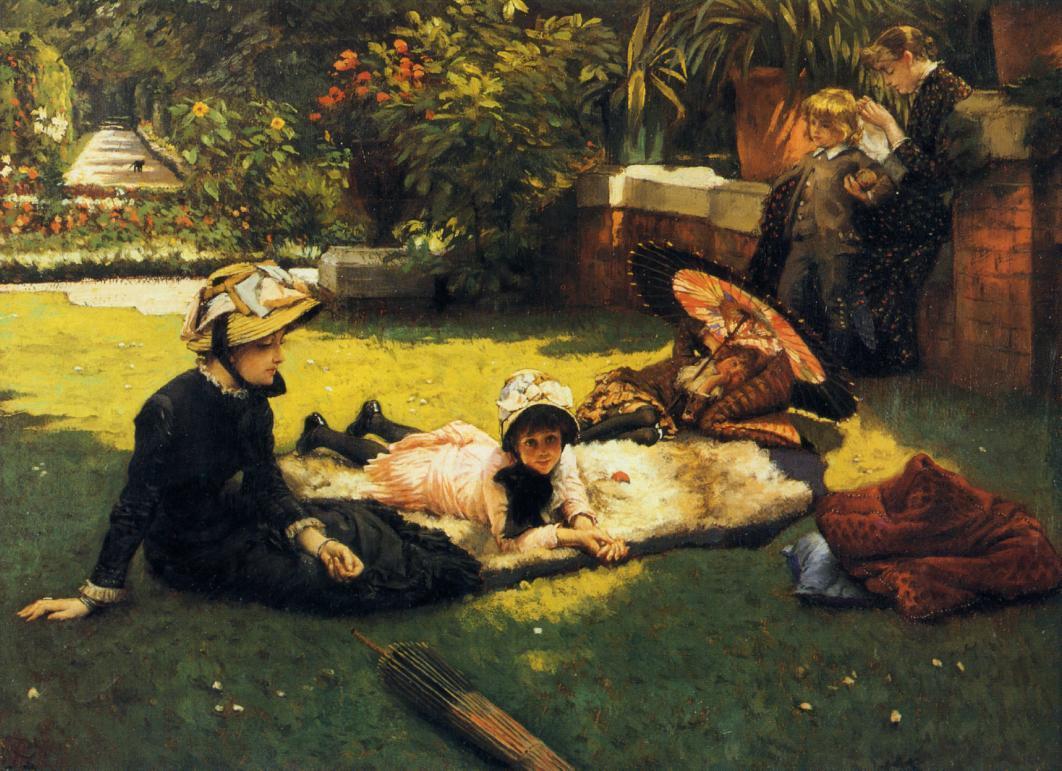
James Jacques Joseph Tissot, In the Sunshine

Disappointed in love, an heiress becomes a governess to prove herself.


Emma Newman (1831-1903) wrote some 13 novels between 1874 and 1897.  Here she provides many excellent scenes of social comedy, which more than counterbalance her plot’s implausible premise and a final pile-up of Victorian clichés.

“Mrs. Newman has built an exceedingly bright and clever story on the insecure foundation of obvious improbablility” but she manages it  “with ingenuity, grace, and humour.”  Saturday Review, December 26, 1891

“It is very odd that people in novels, who are otherwise more brilliant than people out of novels, always stop short at critical moments of saying or guessing or doing the right thing.  But if they acted with common sense there would be scarcely any novels written, and we should then have a dull world. . . . It only remains to say that there is not a dull page from end to end of the three volumes.”  Academy, January 9, 1892

Download this week’s novel:

v.1 http://access.bl.uk/item/viewer/ark:/81055/vdc_000000050E5C#?c=0&m=0&s=0&cv=4&xywh=-235%2C-1%2C2874%2C1974

v. 2 http://access.bl.uk/item/viewer/ark:/81055/vdc_000000050E62#?c=0&m=0&s=0&cv=4&xywh=-141%2C-1%2C2804%2C1926

v.3 http://access.bl.uk/item/viewer/ark:/81055/vdc_000000050E68#?c=0&m=0&s=0&cv=0&xywh=-1090%2C-125%2C3612%2C2481

Novel 101: A.J. Barrowcliffe, Normanton (1862)

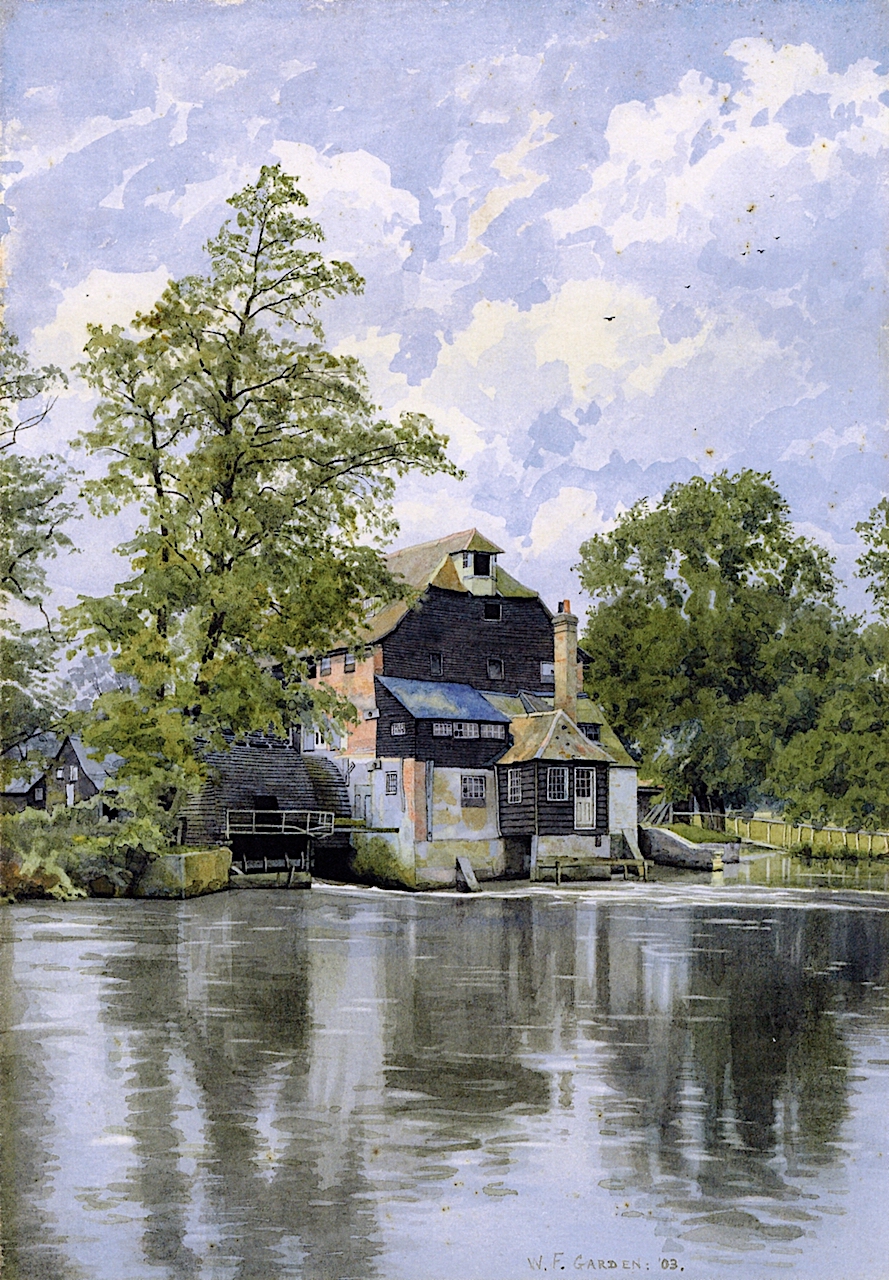
William Fraser Garden, Houghton Mill

In a country village, two cousins both love the miller’s daughter.


Albert Julius Mott (?-1870) wrote three novels between 1856 and 1862 under the pseudonym A.J. Barrowcliffe.  This, the last, has an intricate plot which runs its course over five days in a small village.

“The author . . . is able to breathe life into the creatures of his imagination, so that they perform his bidding naturally, and do not require the visible presence of his guiding hand.  He has a thorough sympathy with nature. . . .  And he has a keen insight into the complex machinery of the human mind. . . .  Moreover, he possesses no small share of humour.”  London Review, December 20, 1862

The author succeeds in “the production of a minutely finished and faithful picture of English country life. . . .  Mr. Barrowcliffe’s story is quite sufficiently interesting, and is developed with considerable skill; but certainly the most noticeable point in his book is the extreme polish and smoothness of his style.”  Spectator, December 27, 1862

“An honest purpose, a graceful style, and a certain novelty in construction, make this a very good story.”  Examiner, April 4, 1863.

Download this week’s novel:

http://access.bl.uk/item/viewer/ark:/81055/vdc_0000000451B6#?c=0&m=0&s=0&cv=0&xywh=-617%2C-130%2C2673%2C2592

Novel 100: Mary Louisa Molesworth, Leona (1892)

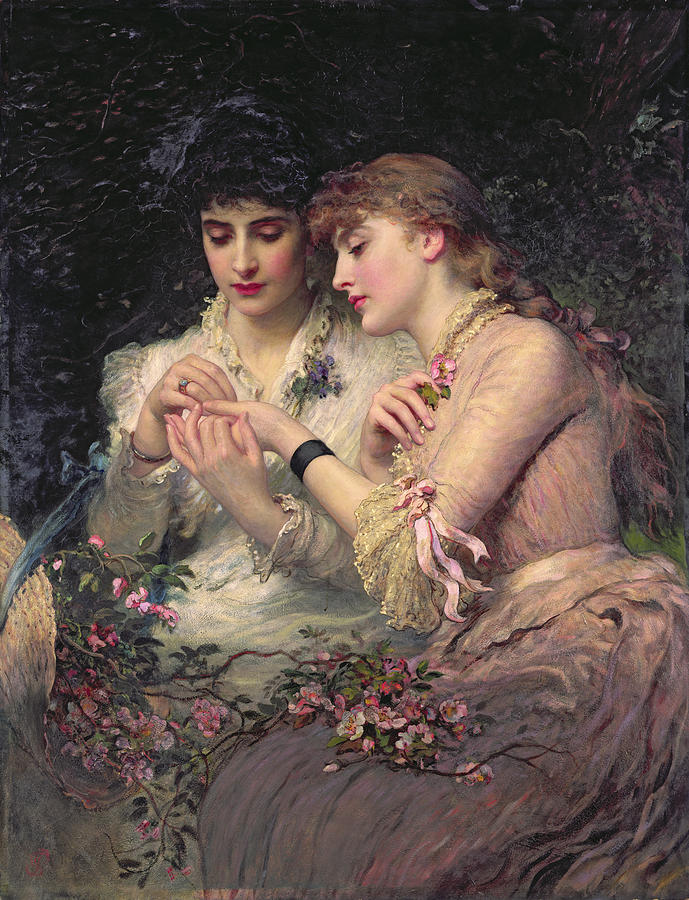
James Sant, A Thorn Amidst the Roses

Two cousins grow interested in the same man.


Here, to follow last week’s Mary Molesworth, is the Victorian period’s other Mary Molesworth, Mary Louisa Molesworth (1838-1921), a prolific author mainly of children’s books, though she also wrote novels for adults, like this one—a quiet story based on plausible, entertaining misunderstandings of character and purpose.

“It is a very enjoyable book. The characters of the young men and girls who are the principal persons in the little narrative drama are, in the main, admirably delineated; . . . and the conversation, which is an important element in a tale of this kind, is specially excellent.”  Academy, October 15, 1892

“The characters are well drawn, the incidents probable and well led up to, and the story interesting.  But the strong point of the work, after all, lies in the character drawing, especially in the subtle delineation of shades of diversity in disposition, amongst a family where all the members are chiefly remarkable for their amiability and worth.” Westminster Review, July 1893

Download this week’s novel:

http://access.bl.uk/item/viewer/ark:/81055/vdc_000000033A32

Novel 098: Elizabeth Stone, Mr. Dalton's Legatee, a Very Nice Woman (1850)

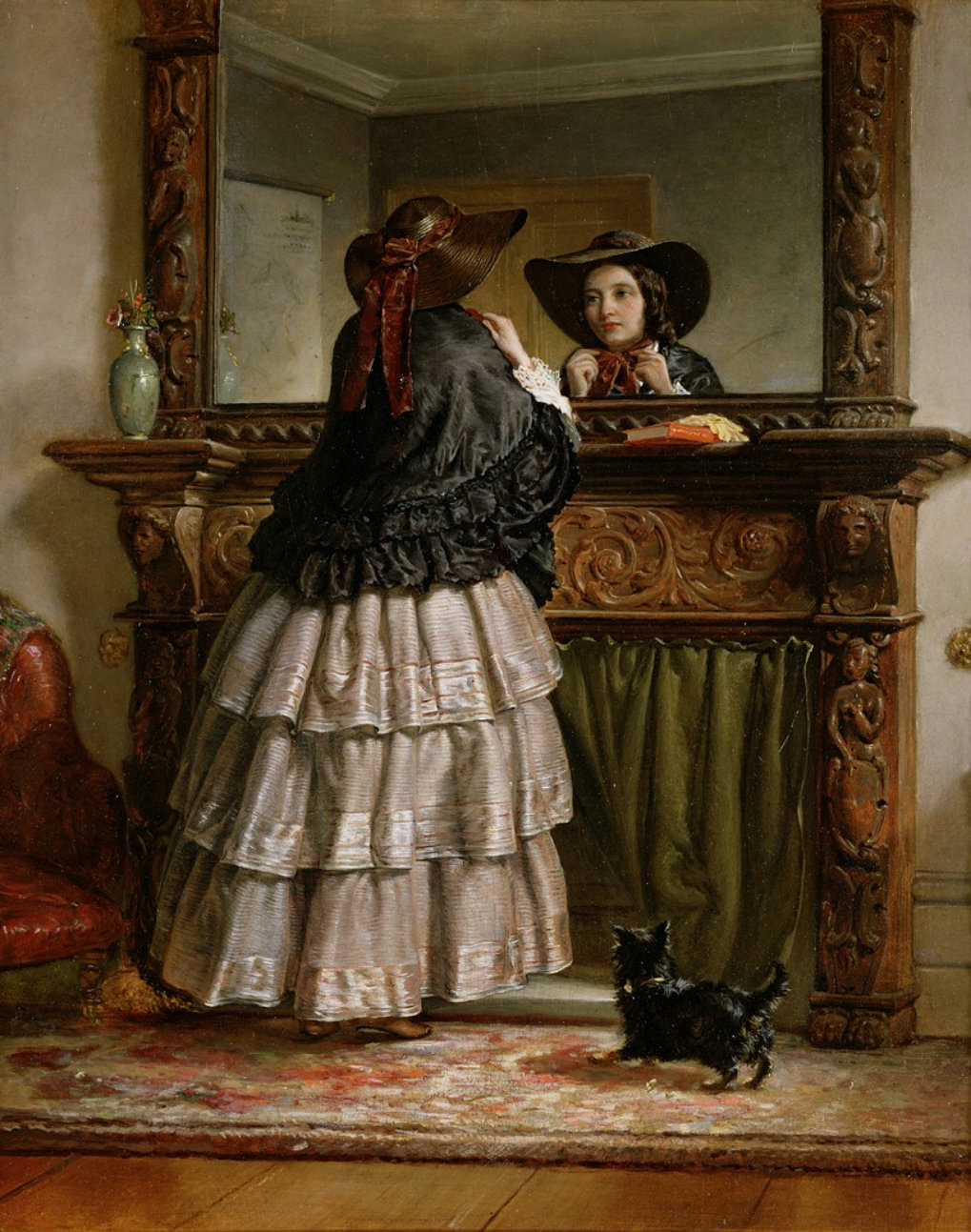
William Powell Frith, The Toilet

A disobedient daughter’s disinheritance leads to the enrichment of a socially ambitious woman.


In addition to historical works on such subjects as needlework, Elizabeth Stone (1803-1881) wrote five novels.  Here, the bad characters are excellent, especially the “very nice woman,” and the plot is amusing if you don’t mind a final pile of coincidence impressive even by contemporary standards.

“The apeing of fashion by vulgar people, the wretchedness it occasions to themselves, and the laughter it provokes in others, have ever been a favourite . . . theme with novelists . . .; but seldom have we seen it accomplished with more humour and truth than in the novel before us. . . .  Always vigorous, the writing is at times positively brilliant.  The descriptions are remarkably graphic, yet drawn without effort. . . .  The personages . . . are all . . . distinctly outlined, and most of them are manifestly sketches after nature.  Mrs. Stone has a keen observation, and a quick sense of the ludicrous.”   Critic, August 1, 1850

“Although ‘Mr. Dalton’s Legatee’ properly belongs to a class of books for which we have no particular affection—the fashionable novels—yet it is one of the best of its kind. The plot is intricate and interesting, and the characters amusing and well sustained.”  American Whig Review, October, 1850

Download this week’s novel:

http://solo.bodleian.ox.ac.uk/primo-explore/fulldisplay?docid=oxfaleph014517497&context=L&vid=SOLO&search_scope=LSCOP_ALL&tab=local&lang=en_US

Novel 097: Alexander Smith, Alfred Hagart's Household (1865)

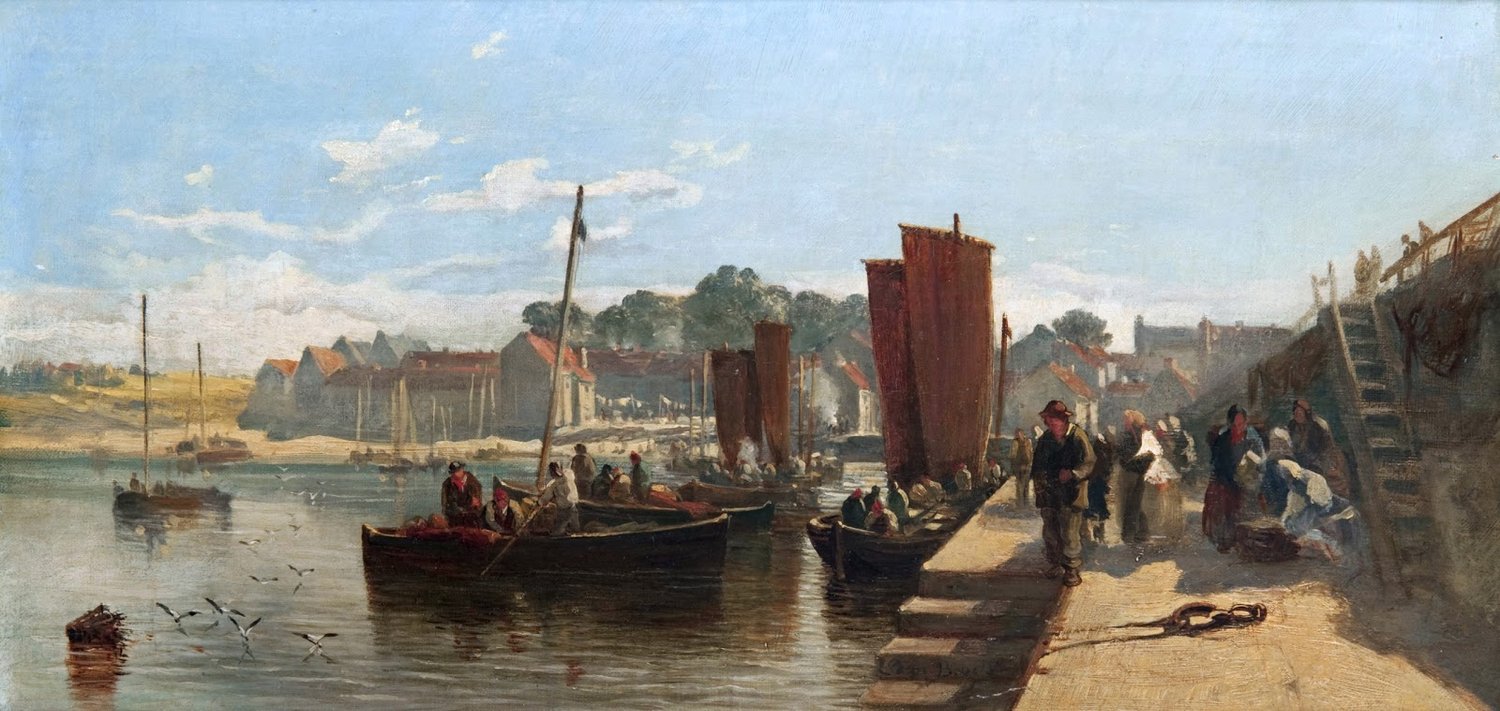
Samuel Bough, Port Glasgow Harbour

A drawing teacher has married one of his students, angering her proud Scottish family.


This is the sole novel of Alexander Smith (1829-1867), who was better known as a poet and essayist than as a novelist.  There isn’t much plot, just a collection of comic and pathetic incidents, but the style and characterization are excellent.

“There is little appearance of skill in constructing either story or actors, but there is perhaps the more art in such lack of appearance, and the more success from the absence of all straining after it.” Athenaeum, January 27, 1866

“Two or three characters are skilfully developed; there is not too much strained metaphor, and there is everywhere the thought and language of a man of much refinement and some genius, who aims high, and is studying to make the best use of his power.” Examiner, February 17, 1866

“The story of ‘Alfred Hagart’s Household’ is so simple that it would be dull if not for the skill with which it is told.  It offers a picture of quiet family life in which no glaring colour is used, no violent contrasts of light and shade are introduced.  There is no striking feature in it which can catch the eye at once; yet it possesses a charm which imparts a tranquil satisfaction to those who read it aright, and aftewards lingers pleasantly on their memory.”  London Review, May 5, 1866

Download this week’s novel:

v.1 https://archive.org/details/alfredhagartsho01smitgoog

v.2 https://archive.org/details/alfredhagartsho00smitgoog

Novel 096: Will Payne, The Story of Eva (1901)

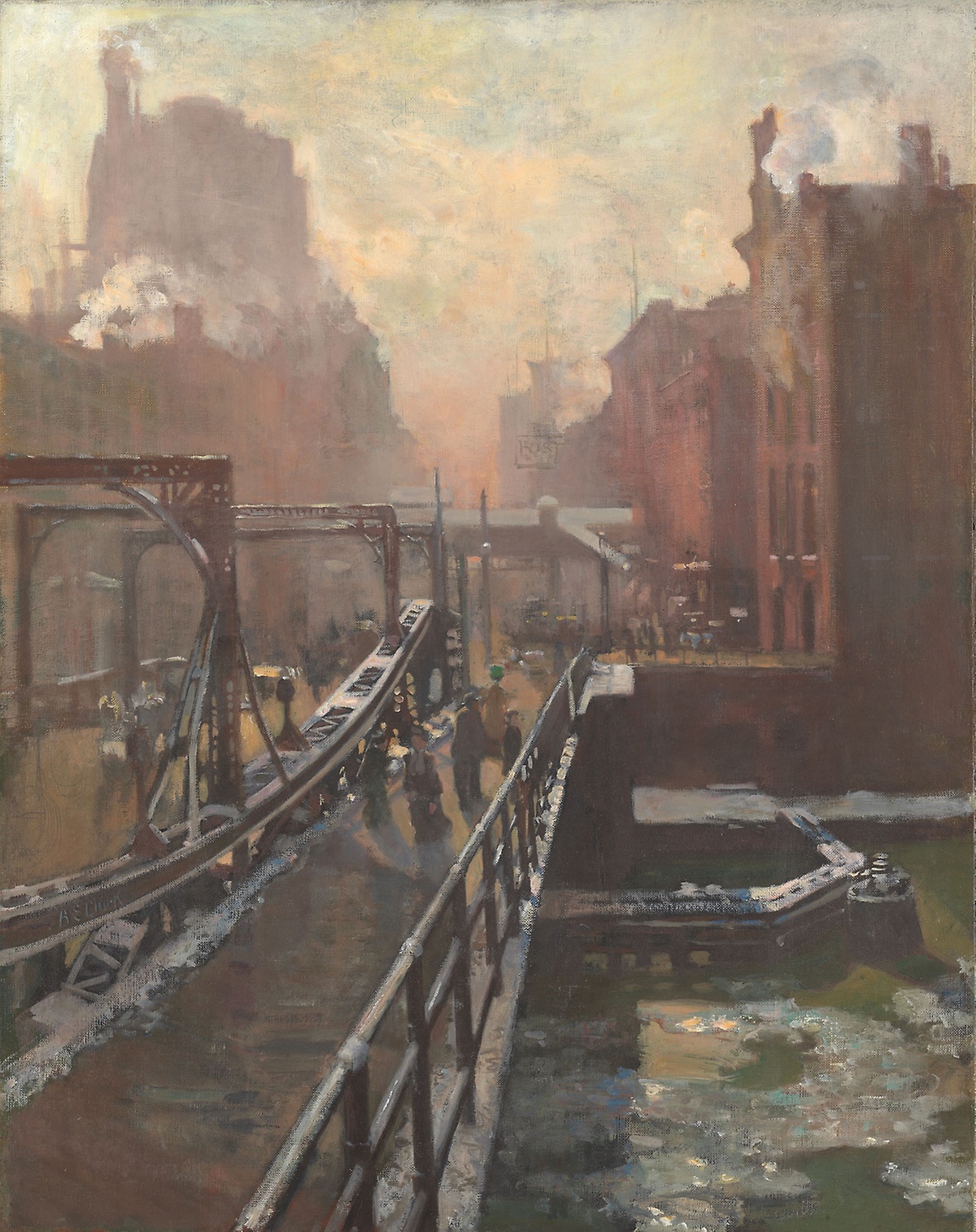
Alson Skinner Clark, The Coffee House

Having abandoned her adulterous husband, a young woman makes a life for herself in Chicago.


Will Payne (1865-1954) wrote nine novels between 1896 and 1929.  The description in the first half of the novel of a woman’s working life in turn-of-the-century Chicago is especially interesting.

“It has been said that Chicago is fatal to any imaginative gifts, and that no novel of that city has ever risen above mediocrity.  An exception must be made in favor of a new novel of strong realism which pictures several phases of Chicago life with remarkable vividness and yet contains much of the spiritual quality that relieves its materialism. . . . The story as a whole is admirably constructed and true to life. . . .  In all the passages that bear on the working girls of Chicago the author shows singular closeness of observation, mingled with much sympathy.” San Francisco Chronicle, June 30, 1901

“The book is readable, and interesting to any one who wishes to hear about the way of life of the middle classes of Chicago.”  Spectator, August 10, 1901

“Mr. Payne’s writing is not of the kind which arrests or startles.  Rather it compels attention to detail, to a word here, a phrase there; but the portrait which is left at the end is whole and in proportion, while the background is filled in with due regard to the high lights which the painter wishes to emphasise.” Saturday Review, September 14, 1901

Download this week’s novel:

https://books.google.com/books?id=yAVFAQAAMAAJ&dq=will%20payne%20story%20of%20eva&pg=PP7#v=onepage&q=will%20payne%20story%20of%20eva&f=false

Novel 095: Mrs. A.B. Church, Measure for Measure (1862)

Edward John Poynter, A Day Dream

A young lady is tormented by a secret sorrow.


About Mrs. A.B. Church nothing is known except that she wrote four novels between 1860 and 1881, of which this is the second.  The arbitrary mystification at the beginning is a bit annoying, but the novel improves greatly as it goes on; the portrait of the villain who appears in the latter half is especially good.

“Without being a striking story, ‘Measure for Measure’ is pleasing and interesting, and there is a refinement about the author’s style which might recommend an even less remarkable production.”  Morning Post, September 3, 1862

“This is a novel with a clever plot, skilfully and lightly telling its tale through the sort of conversation that a woman finds and makes . . . when she forms part of society in an English village near a small country town.” Examiner, September 6, 1862

Download this week’s novel:

v.1 https://archive.org/details/measureformeasur01chur

v.2 https://archive.org/details/Measureformeasur02churBwFIXED

v.3 https://archive.org/details/measureformeasur03chur

Novel 094: Christiana Jane Douglas, The Heir of Ardennan (1852)

Sir Daniel McNee, A Lady in Grey Prints

A poor but virtuous Scottish girl falls in love.


Christiana Jane Douglas (1822-1887) (later Mrs. Charles Greenall Davies) wrote some 10 novels between 1845 and 1885.  This one features excellent plotting and characterization—until both are sacrificed to eke out the last volume with a silly lovers’ misunderstanding.  (Such plot twists, in which well-meaning, intelligent characters jump to idiotic conclusions about each other that they never think to question or confirm, are the bane of Victorian fiction;  no doubt they were useful in keeping hero and heroine apart for the requisite three volumes.)

“The chief merit, and a great one it is, of ‘The Heir of Ardennan,’ is that we find a genuine, a true thing; nothing is introduced for effect, which violates nature or probability.  We find in this work, not only a singularly interesting story, but characters drawn with such a rare felicity, that it is hard to believe but that they are portraits from life.”  Bentley’s Miscellany, January 1, 1852.

“A feminine perception of small points in appearance and manners, minute in themselves but conducive in the aggregate to great truth and naturalness, forms the distinguishing feature of this novel.”  Spectator, January 31, 1852.

“Her delineation of character, her deep sense alike of the beautiful and of the ludicrous, and the skill with which she sketches the various peculiarities of her dramatis personae, are worthy of a high encomium.”  New Quarterly Review, April 1852.

Download this week’s novel:

http://solo.bodleian.ox.ac.uk/primo-explore/fulldisplay?docid=oxfaleph014412298&context=L&vid=SOLO&search_scope=LSCOP_ALL&tab=local&lang=en_US

Novel 093: G.M. Robins, The Ides of March (1892)

Edith Hayllar, A Summer Shower

An upright man unjustly judges the woman who jilted his friend.


Gertrude Minnie Robins (1861-1939) wrote some fifty novels, beginning in 1886.  This one cleverly handles a plausible series of misperceptions and misplaced loyalties.

“Miss Robins has achieved a real success in The Ides of March. . . .  The two principal personages . . . are drawn with unusual skill and vigour. . . .   There is not one weakly-drawn character in the whole story. . . .  Society in a sleepy cathedral city is happily hit off, and there are many wise as well as witty things in the course  of the three volumes.” Academy, January 16, 1892

“This is a curious and, we must say, ingeniously constructed story. . . .  The social sketches are good, and on the whole The Ides of March . . . is a novel that may be recommended.” Spectator, February 6, 1892

Download this week’s novel:

v.1 http://access.bl.uk/item/viewer/ark:/81055/vdc_000000050FB8#?c=0&m=0&s=0&cv=0&xywh=-995%2C-123%2C3439%2C2454

v.2 http://access.bl.uk/item/viewer/ark:/81055/vdc_000000050FBE#?c=0&m=0&s=0&cv=8&xywh=-96%2C0%2C2603%2C1857

v.3 http://access.bl.uk/item/viewer/ark:/81055/vdc_000000050FC4#?c=0&m=0&s=0&cv=0&xywh=-1003%2C-124%2C3448%2C2461