Wait! Come back! Not you!—the “L.” Everybody’s welcome here at David Alfred Bywaters’s Weekly Crossword Cavalcade—even you. As so often before, we at “The Cavalcade” have taken something unpleasant, a phrase that may perhaps evoke bitter memories, and made it—fun! (By “we” I mean, of course, “I.”)
In is out! That's the kind of upside-down, through-the-looking-glass sort of a wonderland world this bold new puzzle creates. And just so you don’t get too comfortable, at least one in . . . is still in! You won’t find that feature in many other puzzles.
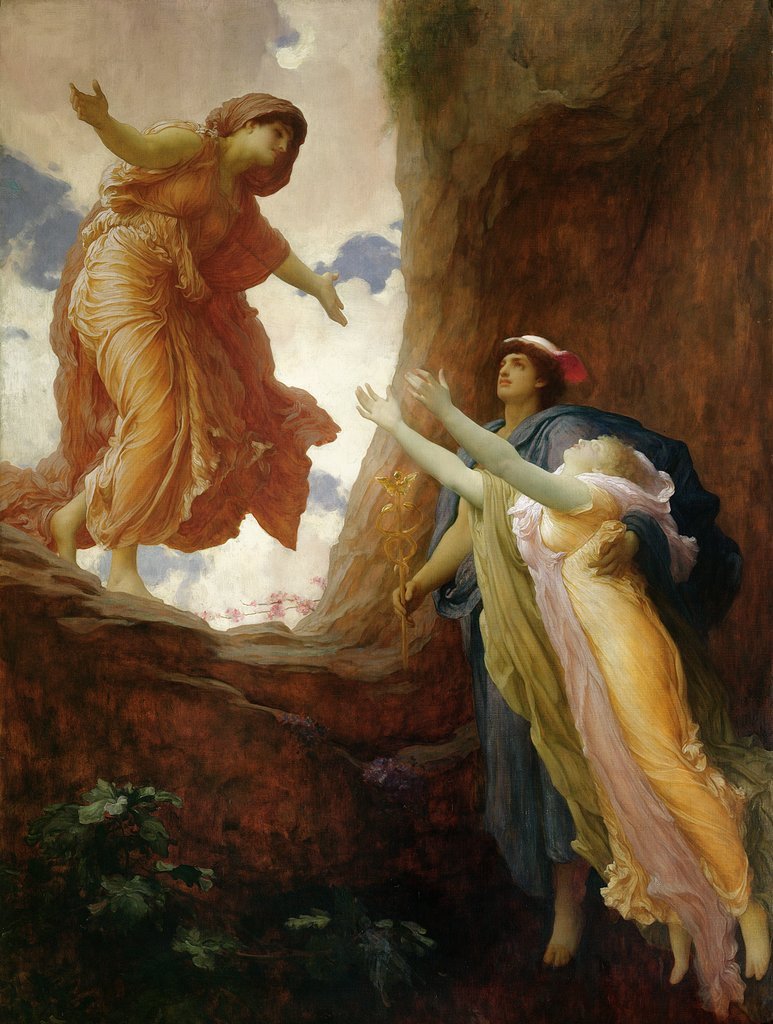
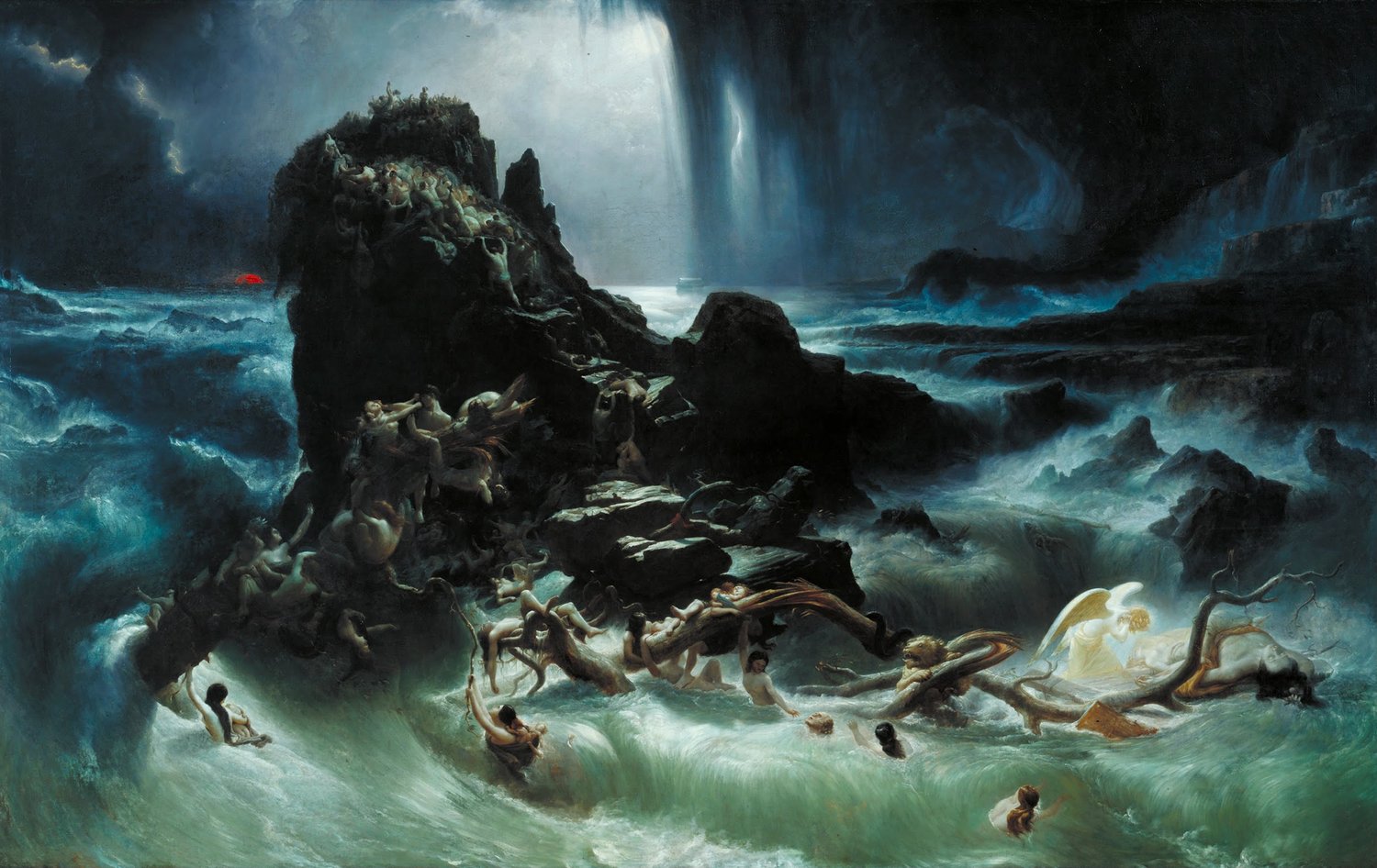
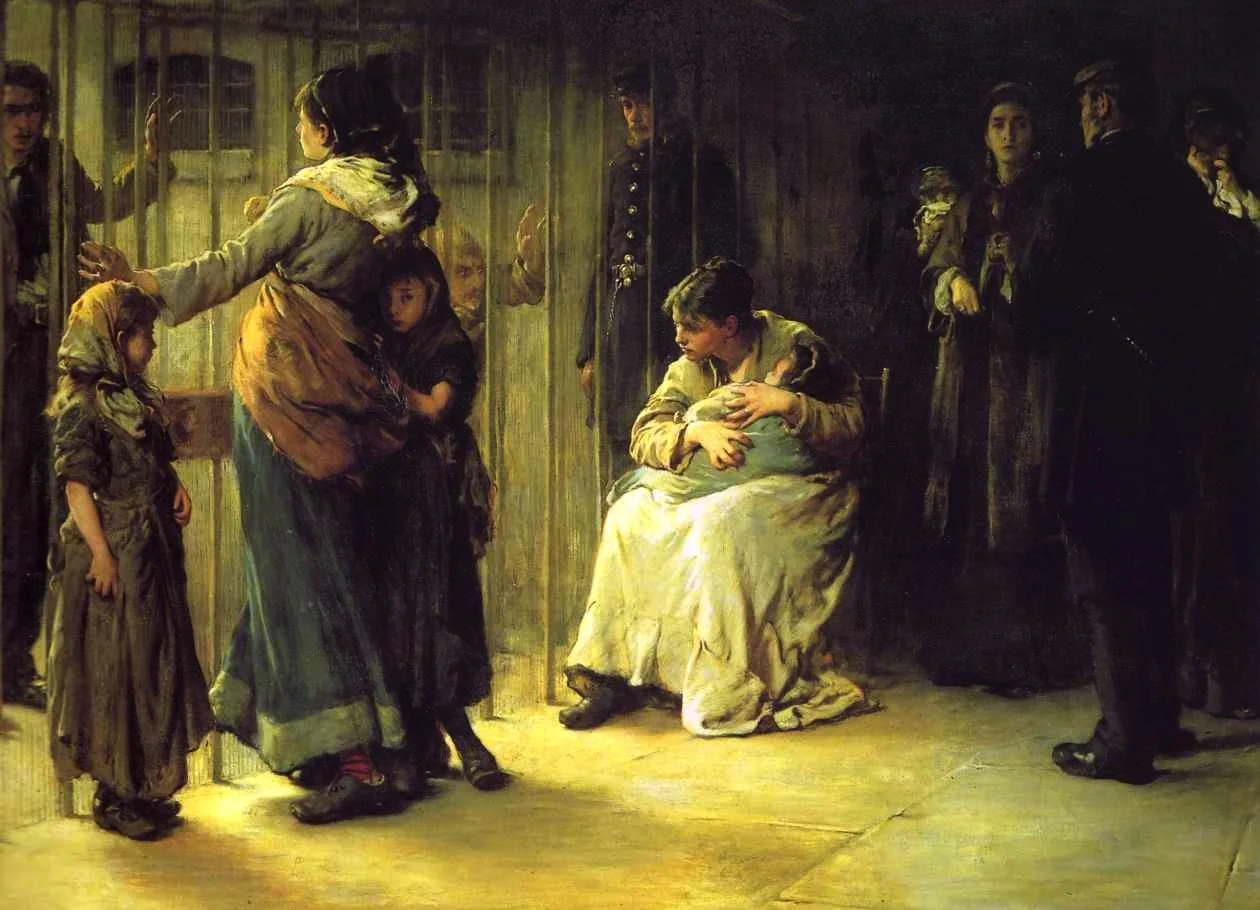
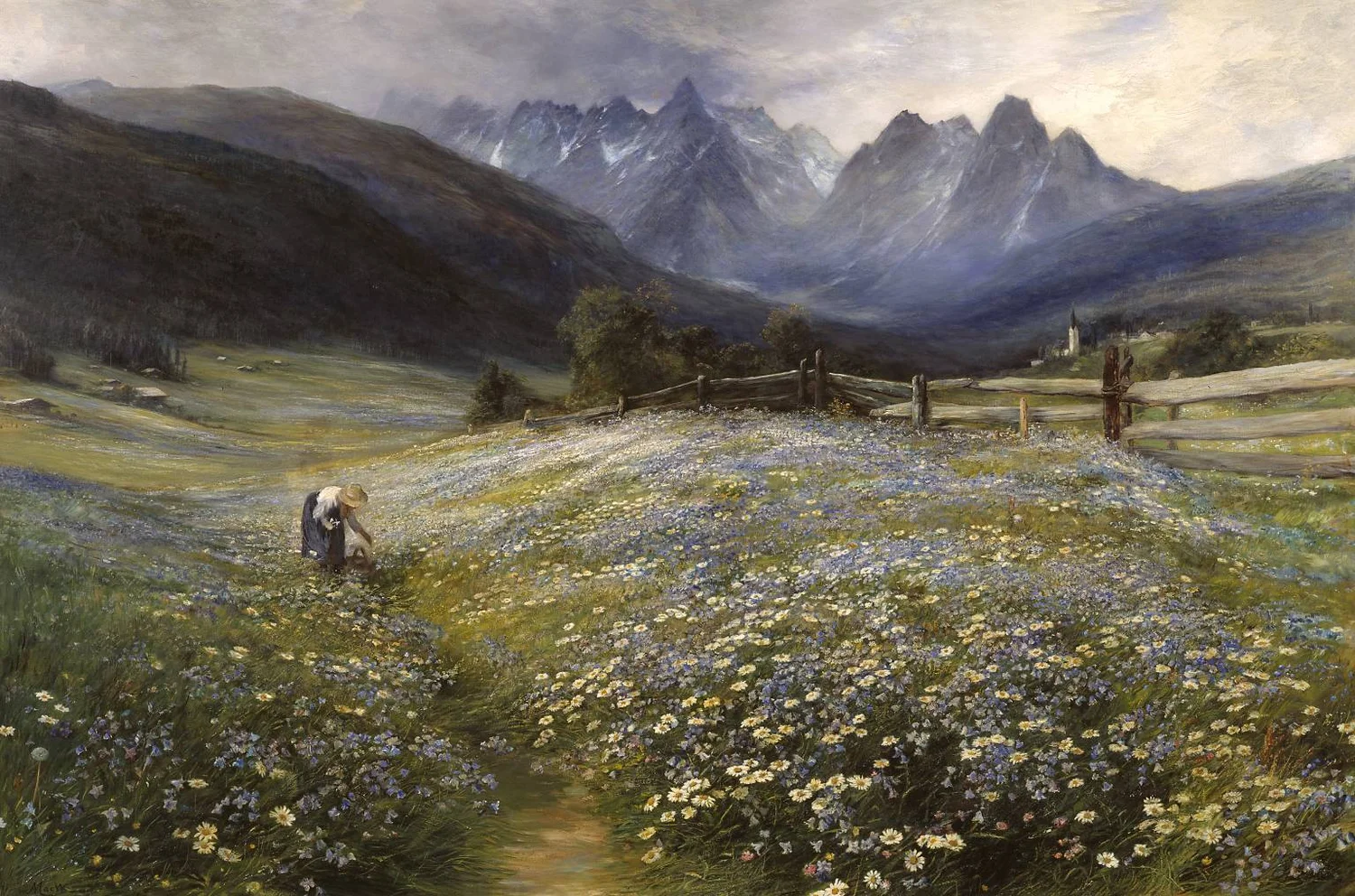
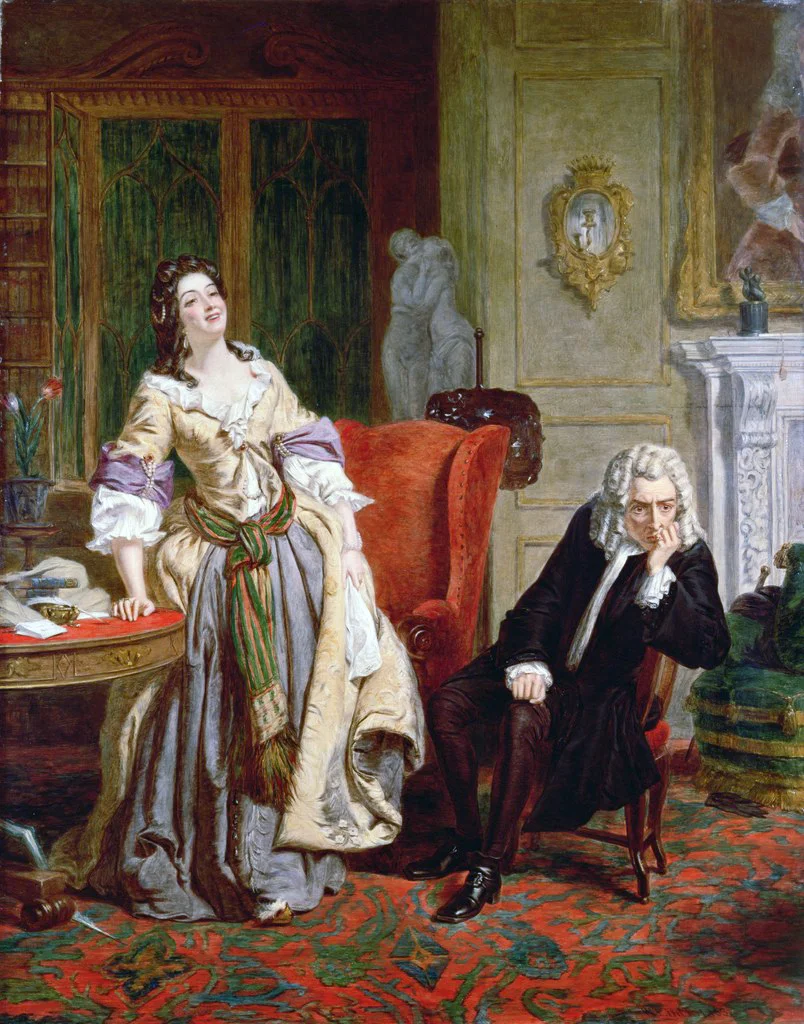
The above painting refers to a subtheme, daringly embedded in baffling cross-references.
I try, as much as possible (given my other aims) to avoid product names in my crosswords, because I want my crosswords to continue to provide enjoyment centuries hence, when all those products will be forgotten. And I especially dislike “fashion labels,” which encourage us to act from combined motives of personal vanity, financial recklessness, and mindless herd conformity. When this puzzle, however, insisted on one designer-label name, I figured I might as well “double down.” Solvers of the future will infer them from the crossings.
Feeling anxious? Why spend a fortune on talking cures or psychotropic drugs, when you have access on this website, free of charge, to cruciverbal-behavioral therapy (CBT)? Work this puzzle, and you’ll find yourself growing reconciled at last to life’s enduring misery and your own congenital inadequacies!
When I wrote the clues for this puzzle, the temptation to cross-reference was particularly difficult to resist. 10 Down, 33 Down, and 19 Across all refer to an activity that may be performed on 4 Down, 6 Down, 12 Down, 14 Across, 60 Across, and in fact anything 47 Down. But for your sake, gentle solver, resist I did.
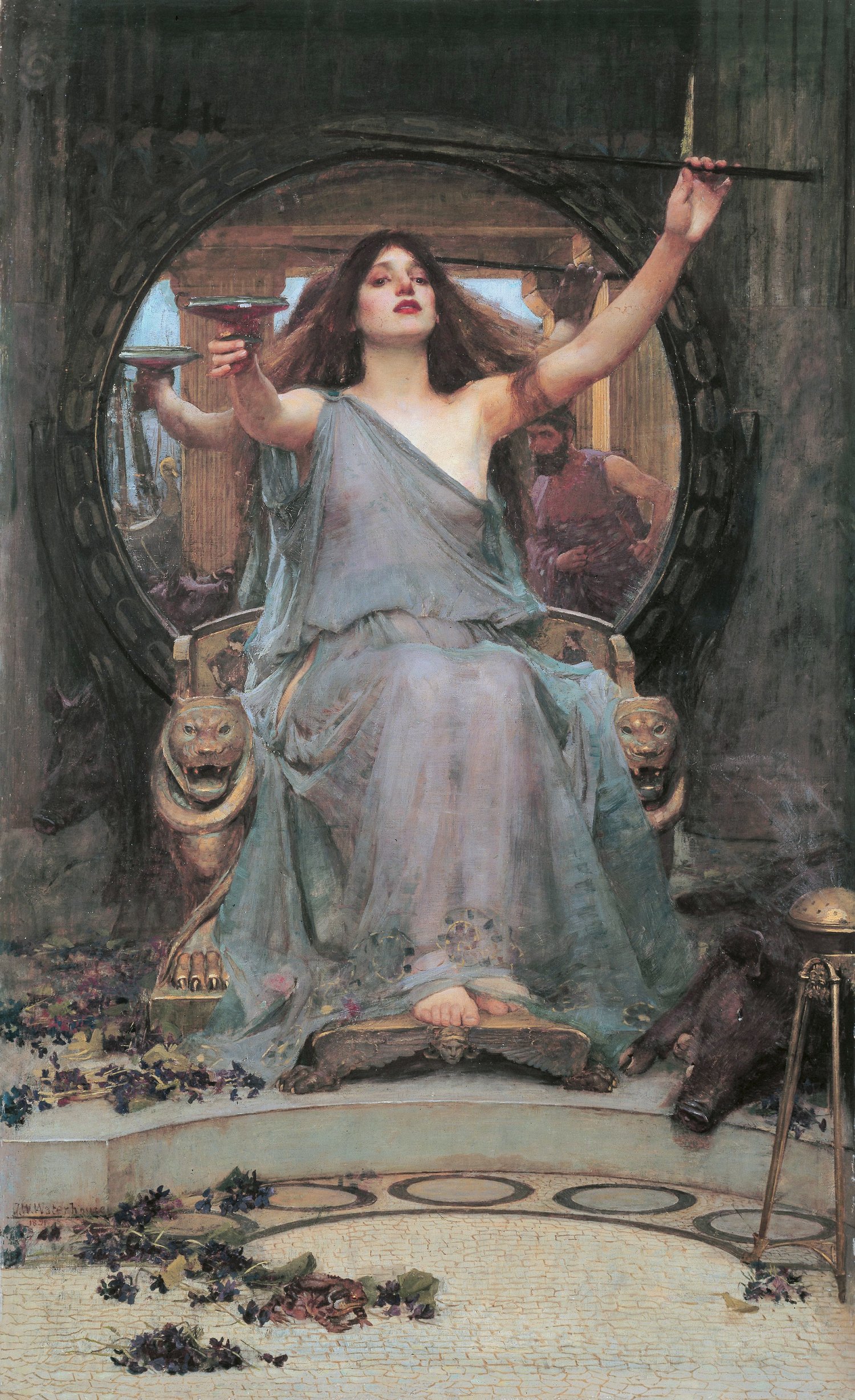
John William Waterhouse, Circe Offering the Cup to Odysseus
Do you worry that online media are creating illusory bonds and instilling obsessive habits that rob you of your authentic self? Of course you do! But not this website: on the contrary, I’m here to put you on your guard.
I’ve always been annoyed by the saying that this puzzle is built on; maybe after you solve it, you will be too. By the way—this puzzle is a pangram: every letter of the alphabet is represented. I don’t usually care about such things, but when I found I was only one very famous basketball star away, I thought—“why not?” Don't worry—he’s so very famous even I have heard of him, and I confess I’ve never sat through a whole basketball game live or televised. I have nothing against the sport particularly, but I can’t endure the sound of those squeaking shoes.
We’ve come to my 6th and final magic-spell-based puzzle. I made a 7th, featuring “Mythballs” (legendary dances) and “Doctor Why”(pointless British sci-fi series)—but I’ve decided to spare you the pain and myself the embarrassment. An 8th, with the revealer “ibex,” never got past the early planning stages.
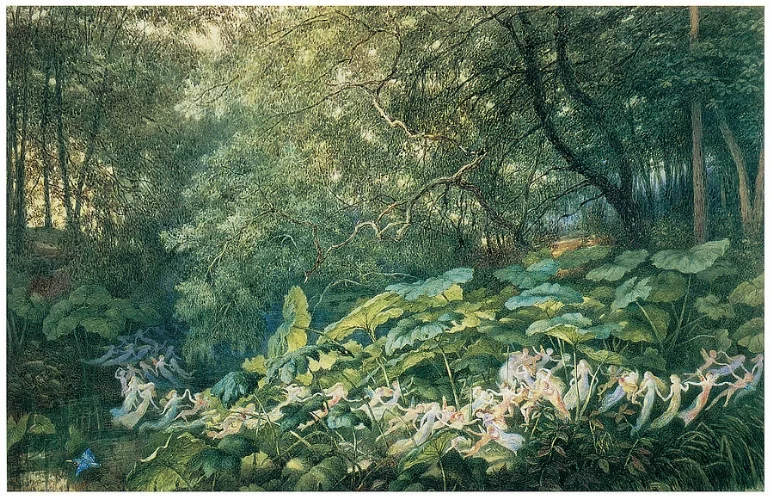
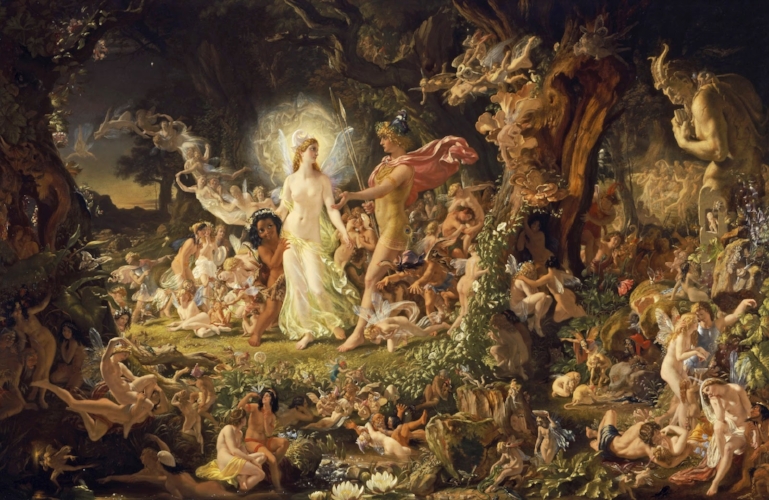
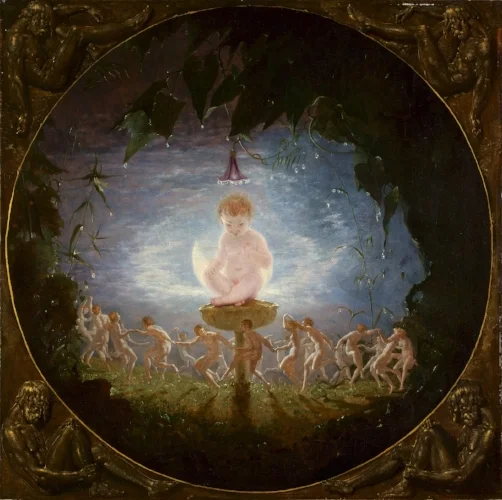
Sir Joseph Noel Paton, The Quarrel of Oberon and Titania
The more I think about the national anthem, the more annoyed I grow. Take just the half-line “Whose broad stripes.” Try to say it ten times rapidly. Can’t do it? Neither can I. It’s hideously cacophonous: "dstr" is not a songlike sound cluster. And the words are not even true. The stripes on the U.S. flag are actually less broad than the stripes on most flags, just because there are more of them: 13; whereas, for example, on the French tricolor there are 3—which, since they’re vertically oriented, are very broad indeed. The ratio of height to width for the average flag is 3 to 5. So say your flag is 5 feet, or 60 inches, wide. If you’re French, your stripes are fully 20 inches “broad” (60/3). If you’re American, your stripes are not even 3 inches “broad” (36/13). The Union Jack, the enemy’s flag for Francis Scott Key, had broader stripes than that. If flag stripe-breadth is the measure of national merit, the U.S. falls sadly short. But like all bad poets, Key is not even thinking of what he means.
As to 18 Down, and Wednesday’s holiday—would you be interested in my opinion of our national anthem? The music is good, the words are beyond awful. The tortured syntax! The stilted diction! And the whole thing about a flag’s decorative pattern (is there anything broader about the stripes, or brighter about the stars, than one finds in the stars or stripes of other countries’ flags? and if not, can’t we be proud of something actually worth being proud of?) and the not-all-that-interesting fact that said flag didn’t catch on fire during some battle or other. Maybe a bipartisan Congressional majority can find something reasonably anthemish by Robert Frost or Emily Dickinson or John Greenleaf Whittier or somebody, and we can retire this unmeaning doggerel?
There’s an odd notion afoot, among some crossword editors and reviewers, and possibly some solvers, that if you do a thing to a letter once in a crossword—delete it, replace it, turn it upside down, whatever—you have to do the same thing to that letter every time it appears, at least in the theme entries, if not in the whole puzzle. Everywhere and always, but in this series in particular, I proceed in proud disregard of that notion. If a magician turns her scarf into a parakeet, do you blame her if every scarf in the building, or the world, does not likewise turn into a parakeet? Wouldn’t you rather it be just the one scarf?
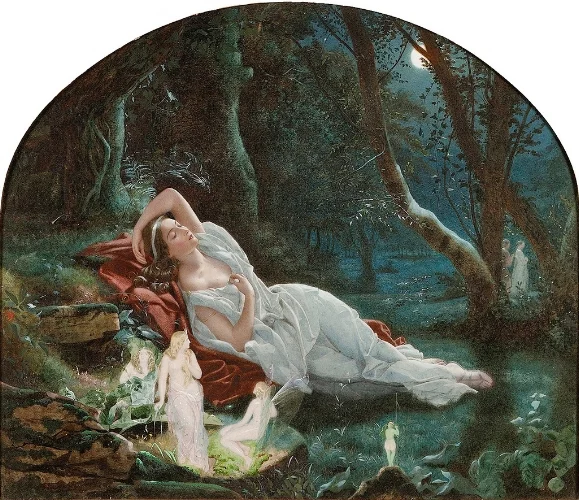
John Simmons, Titania Sleeping in the Moonlight Protected by her Fairies
10 Across was difficult to clue, in that there seems to be no one name for those little pads or screens with up and down arrows that you have to poke at in order to make some machine—the oven, the refrigerator, the furnace, etc.— do more or less of something. Does anyone prefer poking and poking at these arrows to simply turning a 10 Across?How do these idiotic design trends get started? And how can we stop them?
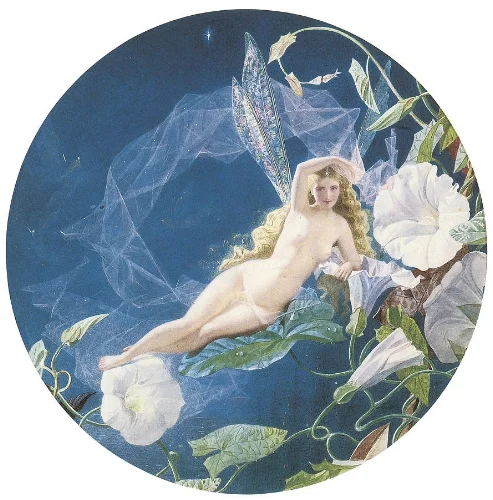
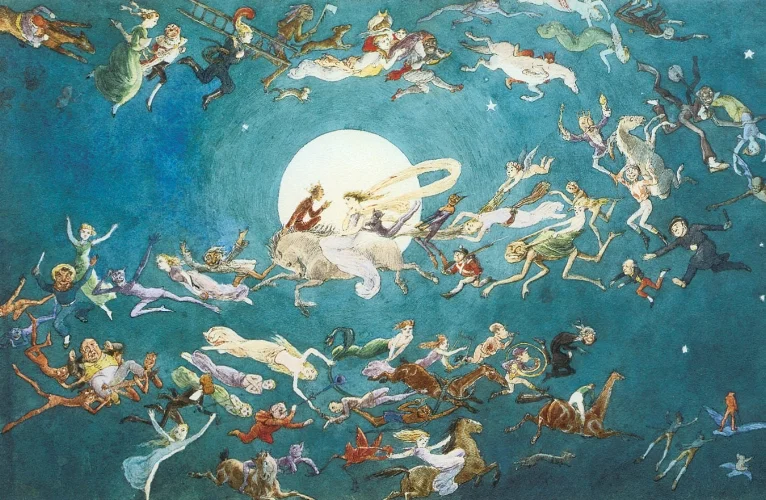
This is the first of six “It’s Magic” puzzles, all illustrated with Victorian fairy paintings. You will wonder how you ever endured the prosaic dullness of quotidian reality without such opportunities for escape into a world of magical make-believe.
To continue the quotation begun in 37 Down: Hamlet asks, “Who would bear the whips and scorns of time, / Th’ oppressor’s wrong, the proud man’s contumely, / The pangs of despised love, the law’s delay, / The insolence of office, and the spurns / That patient merit of th’ unworthy takes”—— if it weren’t (as Hamlet might, but doesn’t, go on to ask) for the opportunity to insert absurd phrases about such topics into crossword puzzles? I've already touched on some of them; I mean to cover them all eventually. Today I take up not exactly “the law's delay,” but litigation in general, one of civilized life’s most unpleasant possibilities.
Today we have the suffix with “buck,” and the detective-movie dog, and the ambient-music innovator. I wanted to “give a shout out,” as the youngsters say, to the sandwich cookie, and the killer whale, and Yoko ___, but what with all the theme answers, I couldn’t find room. Maybe next week!
Today’s puzzle is a prequel to the one published yesterday in the Los Angeles Times—that is, the theme of this puzzle is related to that of the other as cause to effect. I built the puzzle around 29 Across, the basis for which I have since learned is not so common a phrase as I had supposed. Google’s ngram viewer shows that the phrase reached a peak around 1820, held steady through 1910, and then began a precipitous decline. This is a pity, for the unhappy state of mind it tersely describes is a defining feature of human experience, one given frequent attention in Victorian novels, and one I’m delighted to reconceive, through the miracle of cruciverbalism, as a comically self-conceited anthropomorphic bird.
Tomorrow is Mother’s Day—time to give your mother a thoughtful present, like a free crossword, or a Victorian novel recommendation. My own mother endures the crosswords of my adulthood as patiently as she did the cross words of my childhood.
If this puzzle doesn’t make you groan, you have simply lost the ability to groan. I ought to be sorry about it, but I’m not. Well, I’m a little sorry to have had to use an old ad slogan for 21-Across. But that’s all. Otherwise, I’m proud of my work! I glory in it! I represent the avant-avant-garde of paronomasia. As Schoenberg was to Schubert, as Rothko was to Rembrandt, so am I to any old-fashioned punster who cares about such stodgy matters as actual homophonic similarity.