If I were sure this picture would always accompany this puzzle, I wouldn’t have bothered with any other clue for 73 Across. “Trees, clouds, cows, hill—why,” says the informed viewer, “this can only be the view at ____!”
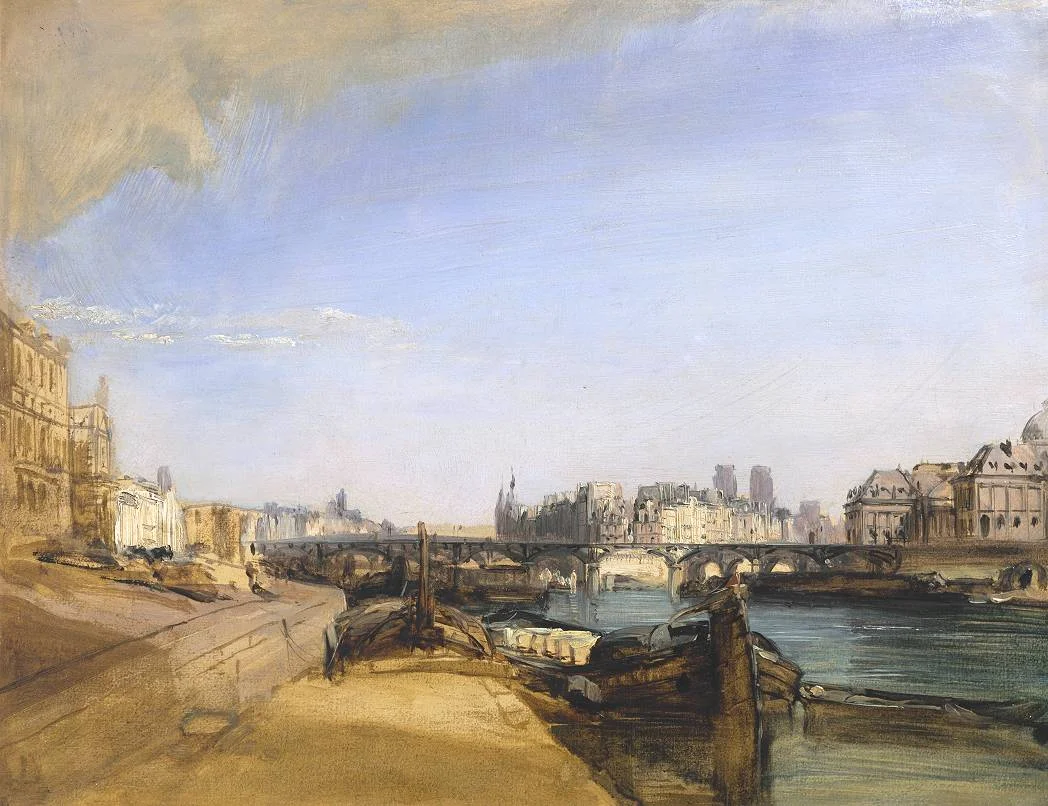
Richard Parkes Bonington, The Pont des Arts, Paris ca. 1826
This puzzle is amusing only if you know the French phrases on which it’s based. If you think you don’t, consult this helpful list ofSix French Phrases Every Crossword-Solver Should Knowbefore you start. Memorize these phrases and use them habitually in conversation, impressing your friends with your cosmopolitanism. Then, after some months have passed, and their use has become second nature to you, attempt the crossword below. You’ll find it’s well worth the time and effort.
There are few areas of popular culture I know less about than superhero comic strips and the movies based on them. In this I must be unusual, for they seem to come up frequently in crosswords, especially those in the New York Times. “Thor” is not just a Norse god but, apparently, a superhero. “Atom” is a diminutive superhero, “green” is superhero “ ___ Lantern”; “iron” is superhero “___ man.” Anyway, this puzzle is my little act of protest. It’s filled with superheroes of my own making, the sort of superheroes I’d like to read about. 22 Across, in particular, is the sort of superhero we need right now.
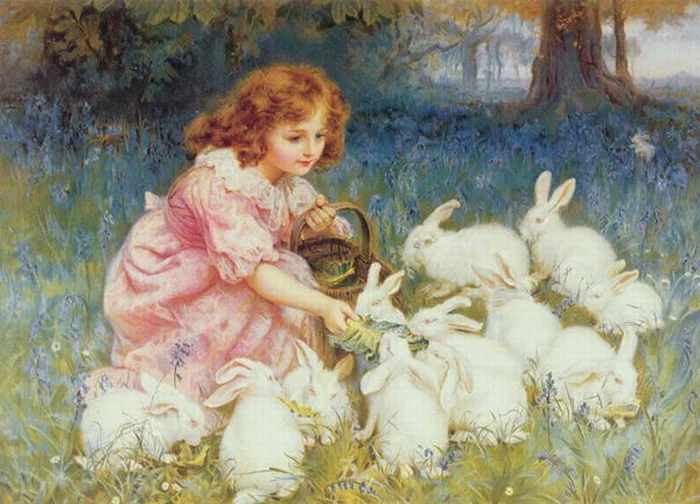
Easter—rebirth—fertility—rabbits—eggs—it’s spring! As an antidote, I’ve provided a crossword featuring barrenness, burglary, drunkenness, sorcery, disfigurement, and job loss. You’re welcome.
As every child knows, there were nine Muses: Calliope, Clio, Euterpe, Erato, Melpomene, Polyhymnia, Terpsichore, Thalia, and Urania. Erato is a crossword favorite, on account of her attractive vowels. However, Wikipedia informs us that there were originally only three Muses, representing Practice, Memory, and Song—and I have constructed this crossword with the purpose of giving some long-overdue attention to this neglected trio, especially its second member, featured in 54 Down, which is where I began work. I really wanted to fit in the other two—Melete and Aoide—but my theme got in the way.
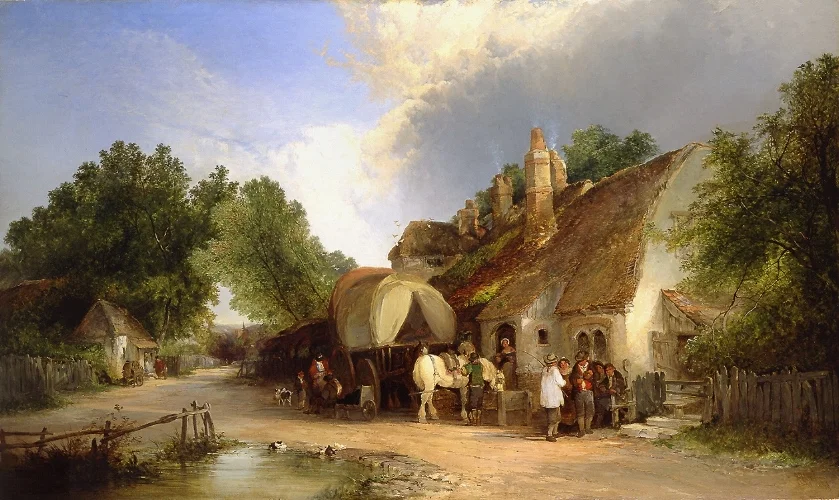
William Shayer and Edward Charles Williams, The Old Roadside Inn
The above Victorian painting alludes to the Victorian worker of 36 Down. The puzzle itself may seem uncharacteristically up-to-date, but don’t worry: the grasp of social media I display here is every bit as crude as the grasp of computer networking I displayed in last week’s puzzle.
I apologize in advance if 16 Across seems too risqué to some solvers. Just imagine what I might have done with 27 Across, if I were not committed to the highest standards of decency.
I have never been able to habituate myself to the simulated gore, on television and in the movies, for which the whole world seems to have such an insatiable appetite. Severed limbs, gushing blood, exploding heads—I don’t see the appeal. This crossword is my little act of protest.
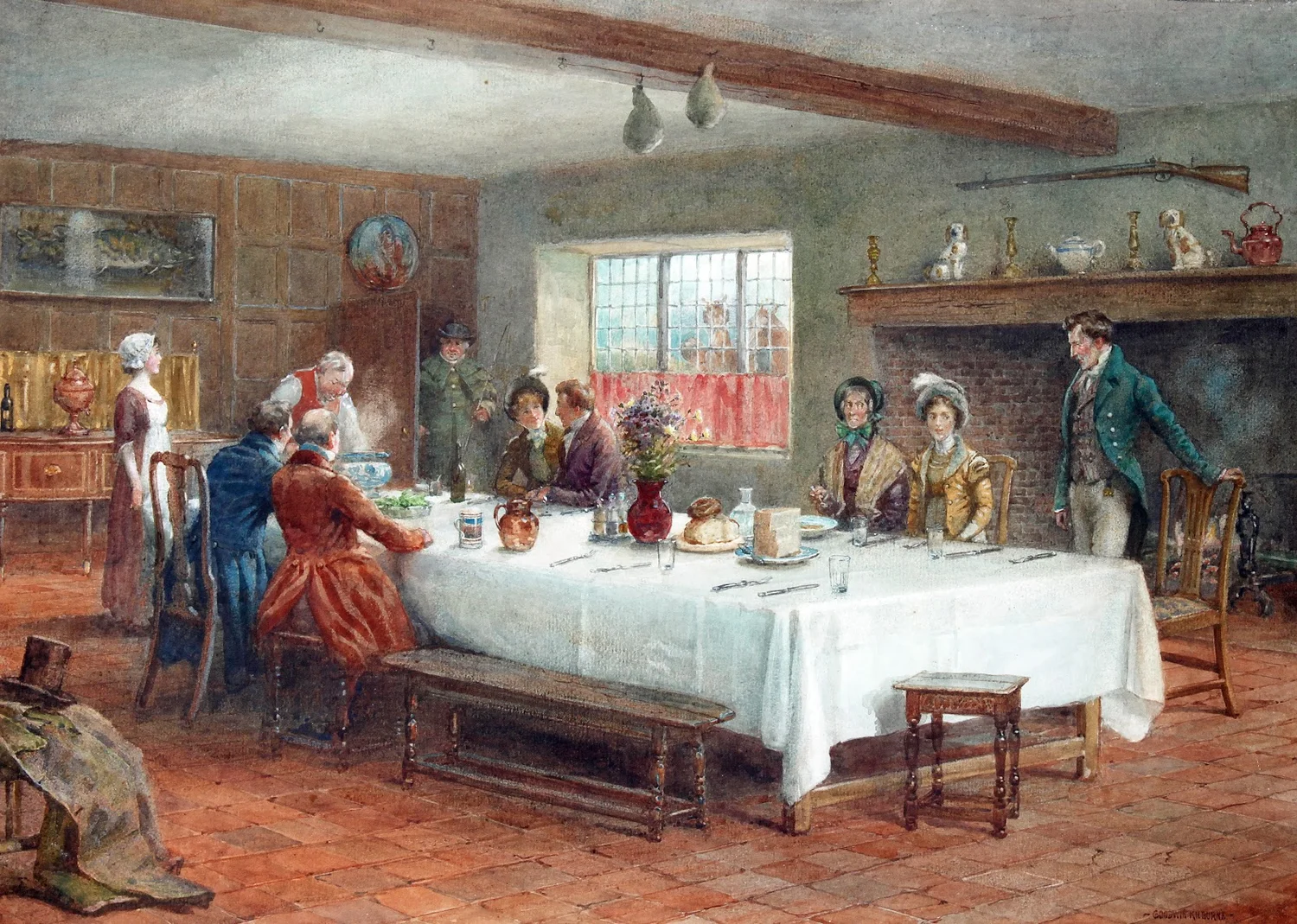
George Goodwin Kilburne, A Meal Stop at a Coaching Inn
The foodstuffs alluded to in this puzzle would not make for a particularly healthy or appetizing meal, but it might be better than the one in the picture above, which seems to consist of a salad, a roast with a chocolate doughnut (?) on top of it, and a giant slice of cake. Appetizing or not, however, I like this picture—the huge fish painting at the left, the horses looking through the window, the dog statues on the hearth, and the wary reactions of the pretty woman and her guardian, seated on the right, to the blotchy-faced man who seems to be inviting himself to join them.
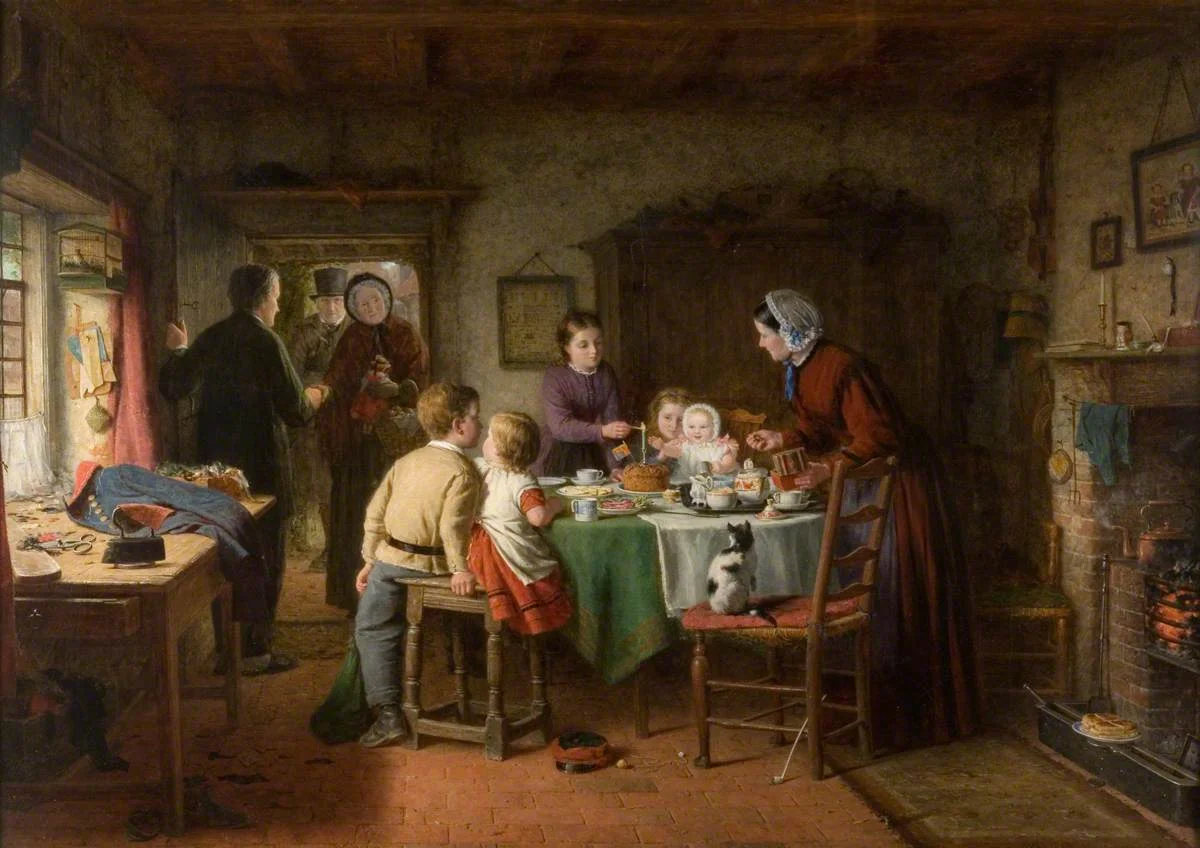
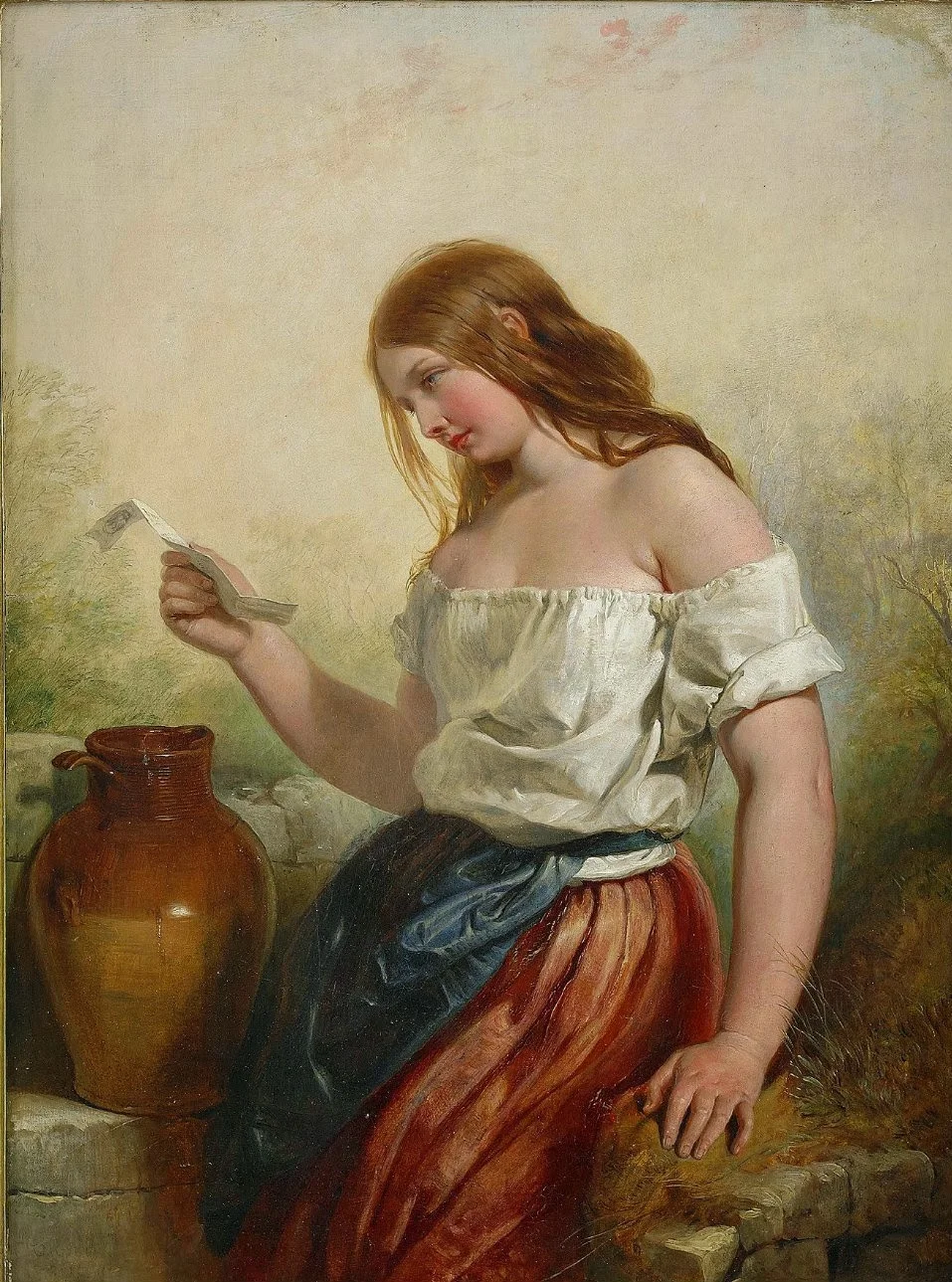
Today’s painting illustrates the predicament described in the puzzle’s entry for 49 Across—if you interpret the girl’s expression as conveying a kind of numb incredulity.
Last week’s humility didn’t last. But as crossword favorite Lao-Tse says somewhere (or was it Lao-Tzu?), true humility is proven by nothing so clearly as unmerited and unshakable self-regard.
A common crossword genre is the hidden-word puzzle: some word or set of related words is enclosed in common phrases, “stale,” for example, in “first alert” (clue: “Smoke alarm brand”). Fun stuff. But I prefer to enclose words in startling new phrases created not to hide those words, but to tax my ingenuity for clues that make sense of them, “amusing,” for example, in “hippopotamus in-group” (clue: “Semi-aquatic jungle clique”). It’s a matter of taste. In this puzzle I may have gone too far, however.
The rule-bound, rigidly symmetrical crossword form cries out, I think, for utter nonsense. This is a modest tribute to the nonsense poems of Edward Lear and Lewis Carroll.

![John Constable, View at [73 Across]](/images/John-Constable-View-at-73-Across.jpg)