David Alfred Bywaters's Crossword Cavalcade & Fortnightly Victorian Novel Recommender. Every Saturday! Either a new language-torturing puzzle or an old novel by an unjustly neglected Victorian author. Why waste time on other amusements?

Novels

Novel 071: Esther Bakewell, Glenwood Manor-House (1857)
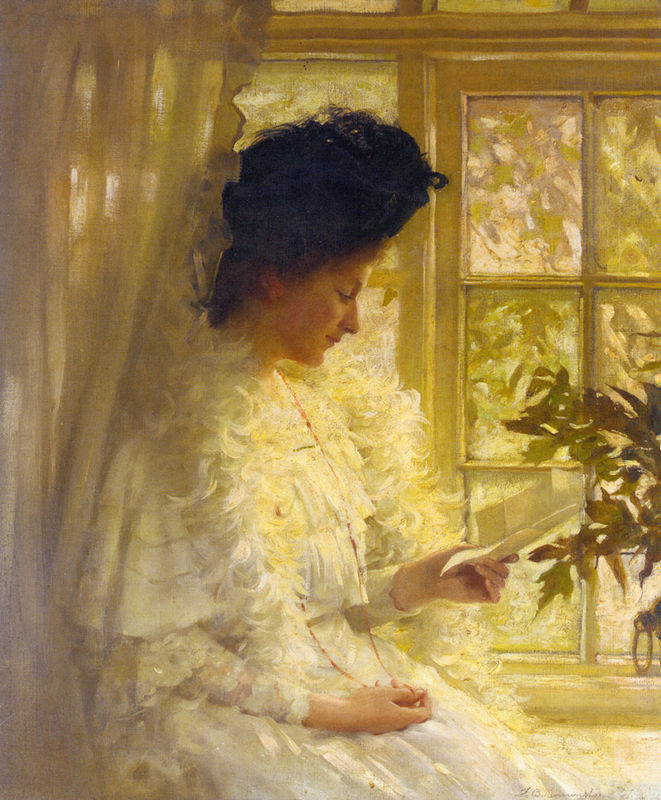
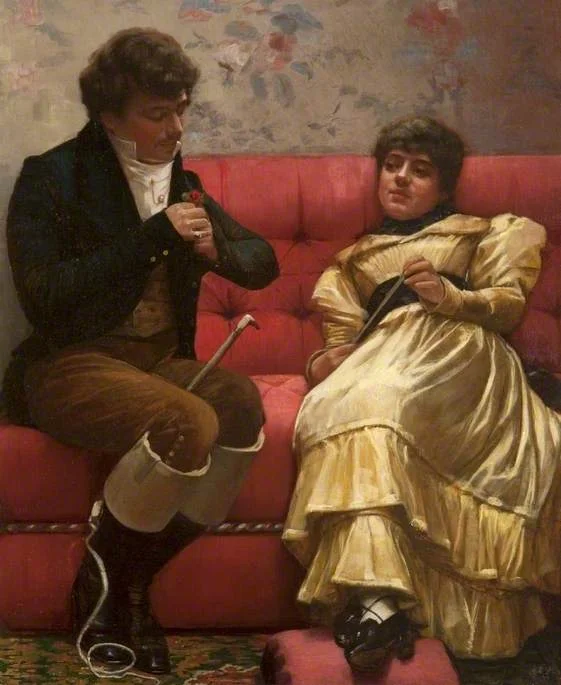
Thomas Benjamin Kennington, The Letter

A virtuous young lady living in poverty is employed as the companion of a rich woman on a Yorkshire estate.


Esther Bakewell (1798-1873), who also wrote a novel for children consisting entirely of one-syllable words (available on Gutenberg.org) seems to have written only one novel for adults—this one.  It offers an odd but amusing mixture of quiet domestic life with unlikely criminal scheming.

“This novel possesses merit far above the average. . . .  There is a certain amount of character in the book, there are plenty of incidents, and some of the situations are excellent, the more so from the fact that they are situations which really belong to the novel and not to the drama.”  Illustrated Times, July 25, 1857

 “The action of this volume never flags; some of the persons introduced are of classes perfectly well known, yet presenting points of idiosyncrasy that single them out from the mass, and impart a strong individual character.”  Morning Post, September 5, 1857

Download this week’s novel:
http://access.bl.uk/item/viewer/ark:/81055/vdc_00000004780E#?c=0&m=0&s=0&cv=0&xywh=-796%2C-132%2C3078%2C2636

Novel 070: Elizabeth Daniel, Esther Dudley's Wooers (1874)

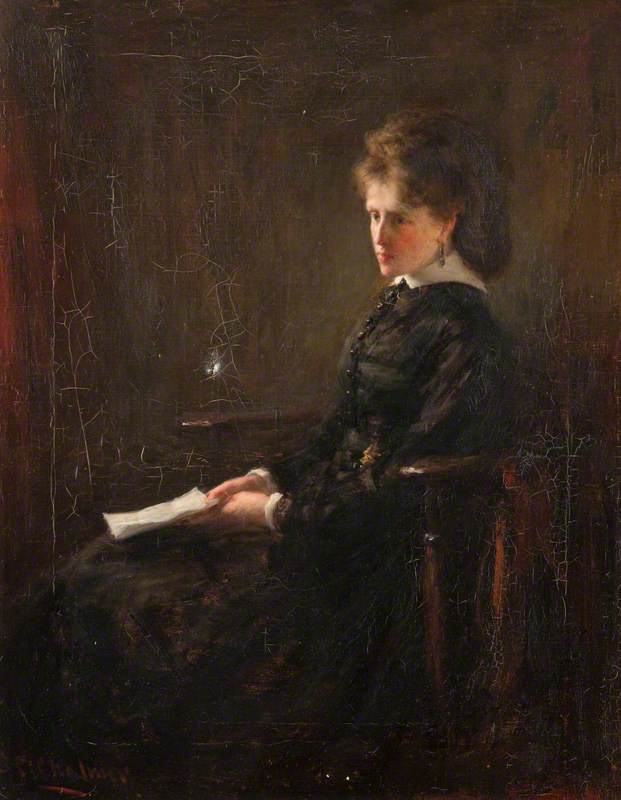
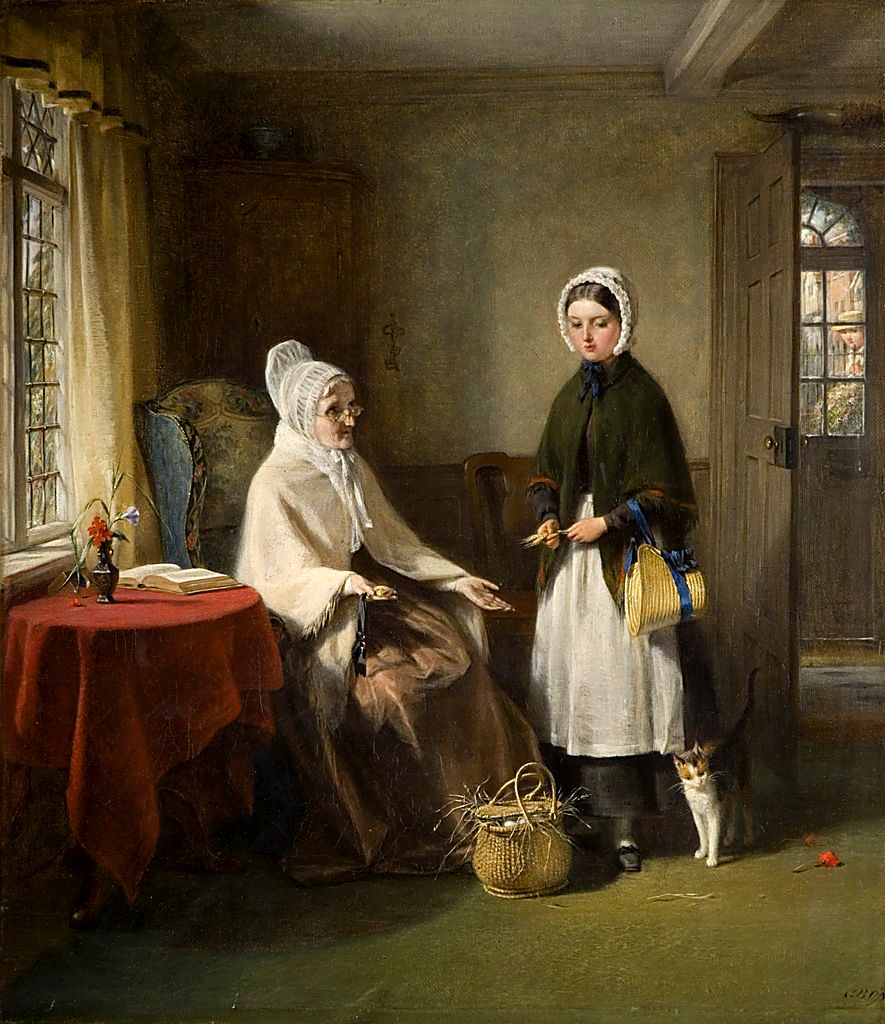
George Bernard O'Neill, The Reproof

A proud young lady, newly orphaned, goes to live with an elderly cousin in a northern backwater and adapts with difficulty to local society.


Elizabeth Daniel (1823-1878), was the wife of promising Scottish novelist Robert Mackenzie Daniel until, in 1846, he went mad, dying the following year.  Thereafter she wrote some thirty novels of her own; this, appearing late in her career, is a quiet character study.

“Mrs. Mackenzie Daniel has proved in a satisfactory manner that a story may be interesting without being sensational, religious without being morbid, moral without being dull, a study of character without being a marvel of psychological surgery.  While capable of taking a bright view of individuals, she does not yearn and gush about the divinity of the human race; and in exhibiting the occasional infirmities to which flesh is subject, she does not think it necessary to discover in the mass of mankind the existence of crude lumps of moral nastiness.”  Athenaeum, May 2, 1874

“A very readable novel.  The story is  well told; the characters are drawn with considerable cleverness.”  London Daily News, May 23, 1874

Download this week’s novel:

v.1 http://access.bl.uk/item/viewer/ark:/81055/vdc_00000004B9B4#?c=0&m=0&s=0&cv=0&xywh=-936%2C-124%2C3300%2C2471

v.2 http://access.bl.uk/item/viewer/ark:/81055/vdc_00000004B9BA#?c=0&m=0&s=0&cv=8&xywh=-89%2C0%2C2661%2C1992

v.3 http://access.bl.uk/item/viewer/ark:/81055/vdc_00000004B9C0#?c=0&m=0&s=0&cv=8&xywh=-115%2C0%2C2644%2C1979

Novel 069: Anne Marsh-Caldwell, Emilia Wyndham (1846)

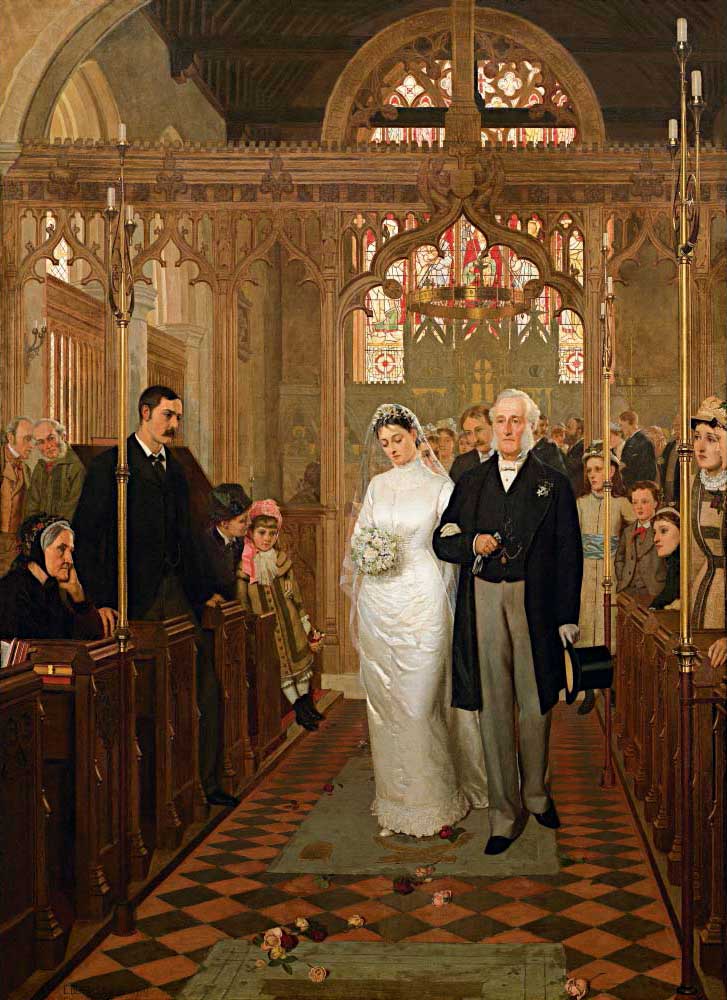
Edmund Blair Leighton, Till Death Do Us Part

A virtuous young lady, left in poverty, marries a stiff old lawyer.


Anne Marsh-Caldwell (1791-1874) published some 26 works of fiction between 1834 and 1867; her high moral tone exemplifies what most people associate with the word “Victorian.”  Here, however, she successfully portrays complex characters in interestingly difficult situations.

“A masterpiece . . .,  a most beautiful tale, with a charming, tender moral. . . .  The characters are real, the incidents unforced, and the whole story a delightful combination of the natural, the passionate, and the wise.”  Examiner, April 11, 1846

It “goes far, in our opinion, towards realizing the idea of a perfect novel.  Its conception is new and striking, its characters are strongly marked and consistently sustained, and they are developed in conversation and action rather than in description.  The book is full of amusing pictures of life and manners, while it lays open the deepest feelings of the mind and heart.  The interest never flags, and yet the narrative is always simple, natural, and vraisemblable.” Christian Remembrancer, October, 1847

Download this week’s novel:
v.1 https://archive.org/details/emiliawyndham01mars

v.2 https://archive.org/details/emiliawyndham02mars

v.3 https://archive.org/details/emiliawyndham03mars

Novel 068: David Christie Murray, Joseph's Coat (1881)

George Paul Chalmers, Old Letters

A young man, heir to a fortune, offends his mother and flees his country with the connivance of his greedy uncle, leaving his secret wife behind.


I return to David Christie Murray (see 009).  This, his second novel, was a great critical and popular success; its villains are particularly enjoyable.

“It is excellent alike as writing and as invention.  The style is one of uncommon vivacity and intelligence. . . .  About his work, too, there is a happy and attractive flavour of novelty.  His characters and incidents are for the most part new and fresh.”  Academy, November 5, 1881

“‘Joseph’s Coat’ is one of the best novels we have met with for a long time.  It shows not only a rare power of understanding and drawing character, but the perhaps rarer power of constructing a plot of first-rate interest. . . .  The character of young George is . . . a masterly study.”  Athenaeum, November 19, 1881

It provides “a psychological inquiry into the nature of the class variously called knaves, scamps, or scoundrels.  It is a study in the various shades of roguery.  The author . . . evidently enjoys the work of delineation, of tracing ill-doing to its source, and detecting the scamp while he is still in favour with honest but less discerning people.”  Saturday Review, June 10, 1882

Download this week’s novel:
v.1 https://archive.org/details/josephscoat01murr/

v.2 https://archive.org/details/josephscoat02murr/

v.3 https://archive.org/details/josephscoat03murr/

Novel 067: Frances Cashel Hoey, Out of Court (1874)

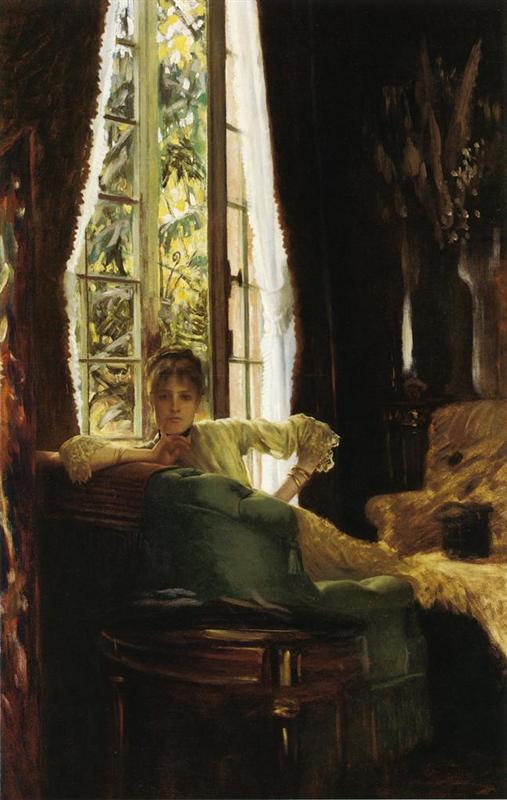
James Jacques Joseph Tissot, Woman in an Interior

A good man marries unwisely.


Frances Cashel Hoey (née Frances Sarah Johnston) (1830-1908) published some 13 works of fiction between 1868 and 1886 and collaborated with Edmund Yates on several others.  She was a Catholic convert, and one of her purposes here is to condemn divorce; several contemporary reviewers agree that this does not impair the novel’s literary quality.

“This novel, remarkable in many ways, is especially so for its skilful delineation of character.  All the principal personages and many of the subordinate ones stand out so distinctly before us that we have their images in our minds and are able to picture them to ourselves in the various attitudes they are made to assume, and to understand perfectly the motives which underlie their actions… On the whole we must say of this novel that it is as powerful as it is well written and well imagined.  It is original in its tone and its modes of thought, and to all who can enjoy a good study of human nature, and who love to see follies, weaknesses, and sins unflinchingly exposed and as scornfully denounced, must afford a treat but seldom offered to them in these days of weak, washy novelties and meaningless love stories.” Morning Post, April 16, 1874

“So well kept up is the interest from the first page to the last, that her readers forgive her the three volumes...and the story is not at all too long for its requirements. . . .  The peculiar charm of the book is its liveliness, the go and movement on every page; yet the workmanship is careful and correct all through, and the characters possess a distinct individuality of their own which is seldom met with now-a-days.” Times, August 21, 1874

Download this week’s novel:
v.1 http://access.bl.uk/item/viewer/ark:/81055/vdc_000000042C66#?c=0&m=0&s=0&cv=4&xywh=-181%2C-171%2C2942%2C2173

v.2 http://access.bl.uk/item/viewer/ark:/81055/vdc_000000042C6C#?c=0&m=0&s=0&cv=4&xywh=-110%2C0%2C2668%2C1970

v.3 http://access.bl.uk/item/viewer/ark:/81055/vdc_000000042C78#?c=0&m=0&s=0&cv=4&xywh=-158%2C-176%2C2992%2C2209

Novel 066: Lucy B. Walford, The Baby's Grandmother (1884)

Archibald J. Stuart Wortley, Lilian Eldée

A well-intentioned middle-aged man, in love with a middle-aged woman,  finds himself in a painful moral dilemma.


Here is another excellent novel by the prolific and talented Walford (see Novel 018), with an unconventional heroine and several other complex characters.

“The heroine is a charming creation, and as original as she is charming. . . . The characters are drawn with Mrs. Walford’s well-known skill, and there is many a touch in her delineation of the heroine that could only have been given by an accomplished novelist who has...the sympathetic imagination of a true artist.”  Athenaeum, August 23, 1884

“There must be something deficient in the mind of any person who does not find it full of humour and vivacity varied by true pathos, and also by distinct traces of tragic power.” Spectator, August 23, 1884

“This is one of the most fresh and delightful stories recently published in English literature. . . .  The book has humor and vivacity, with pathos and enough tragedy to relieve its lighter portions.  The narrative is quiet and not very eventful, but it has the charm of flowing logically out of the clash and collision of character.” Eclectic Magazine, October, 1884

“To buoyant spirits and a fresh imagination the author unites a piquancy of style which is fairly irresistible.  Her characters are life-like yet unhackneyed, she has an artistic grasp of plot, and excels in her conversations, which are thoroughly natural, spontaneous, and flowing.” Dublin Review, April 1885

Download this week’s novel:
v.1https://archive.org/details/babysgrandmother01walf

v.2 https://archive.org/details/babysgrandmother02walf

v.3 https://archive.org/details/babysgrandmother03walf

Novel 065: Charlotte Riddell, Too Much Alone (1860)

Sir William Quiller Orchardson, The Chinese Cabinet

An orphaned gentlewoman is married and then neglected by her hard-working chemist husband.


Charlotte Elizabeth Riddell (1832-1906) wrote over fifty works of fiction between 1856 and 1900, often set, like this one, among middle-class denizens of London.

“A well-conceived, well-wrought-out story, which has an air of human truth and reality about it which novels do not often possess.” Athenaeum, March 17, 1860.

“A thoroughly good novel” distinguished by “its downright reality”; practical scientists in charge of factories are brought “living before us, in very flesh and blood, not a blotch or stain overlooked.”  Spectator, March 31, 1860

Download this week’s novel:
v.1 http://access.bl.uk/item/viewer/ark:/81055/vdc_000000049DA6#?c=0&m=0&s=0&cv=4&xywh=2%2C374%2C2173%2C1604

v.2 http://access.bl.uk/item/viewer/ark:/81055/vdc_000000049DAC#?c=0&m=0&s=0&cv=4&xywh=-263%2C-171%2C3050%2C2252

v.3 http://access.bl.uk/item/viewer/ark:/81055/vdc_000000049DB2#?c=0&m=0&s=0&cv=4&xywh=-143%2C0%2C2779%2C2051

Novel 064: Anna Harriet Drury, Friends and Fortune (1849)

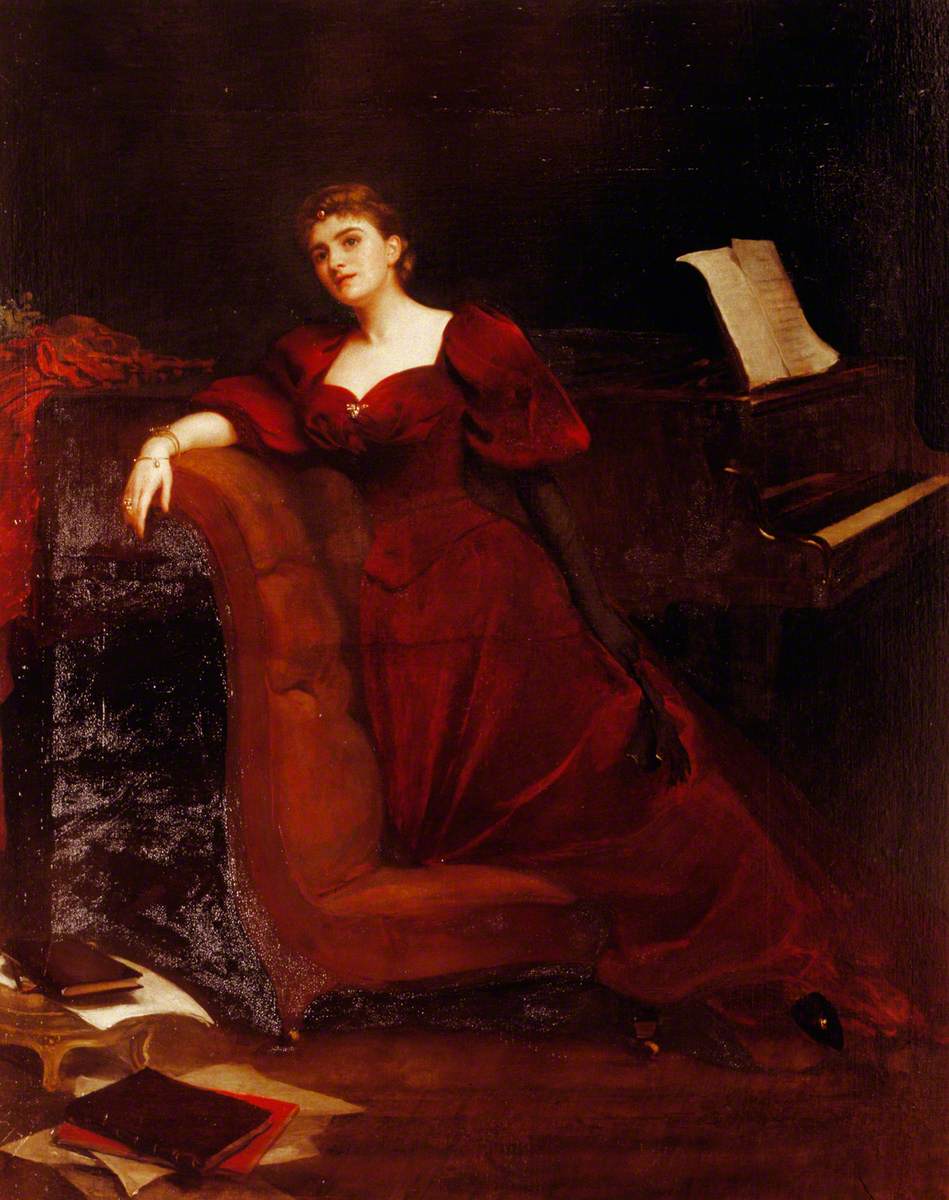
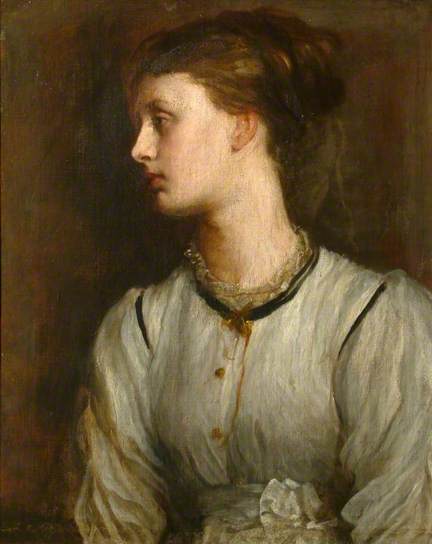
George Frederic Watts, Miss May Prinsep

To test her relatives, an heiress switches identities with her companion.


Anna Harriet Drury (1824-1912) wrote some 16 novels between 1849 and 1891.  This one, despite intermittent downpours of religiosity, provides some excellent social comedy.

“It is at once amusing and instructive, genial and healthful. . . .   Miss Drury’s style is peculiarly correct and elegant.  She writes, indeed, simple, honest, unaffected English, quite refreshing after the artificial semi-barbarous Teutonic gibberish of the day. . . .  Miss Drury . . . has a natural dramatic faculty—the power of entering into the feelings of others, and speaking in their persons.” English Review, March 1849

“Her perceptions are lively and keen, and her powers of delineating manners and character might well be compared with those of authors ‘of mark and likelihood.’  Her style is racy, animated, and easy, often pointed and epigrammatic. . . .  The story is told in a pleasant and genial spirit; and although pervaded . . . by an earnest religious tone, it is so far from being bilious or melancholic that many a hearty laugh is to be enjoyed at the strokes of humour scattered through its lively pages.  If Miss Drury is a serious thinker, . . . she has also a relish for a joke, and a keen perception of the ludicrous.” Morning Chronicle, April 14, 1849

Download this week’s novel:
https://archive.org/details/friendsandfortu00drurgoog

Novel 063: Mrs. Alexander, Ralph Wilton's Weird (1875)

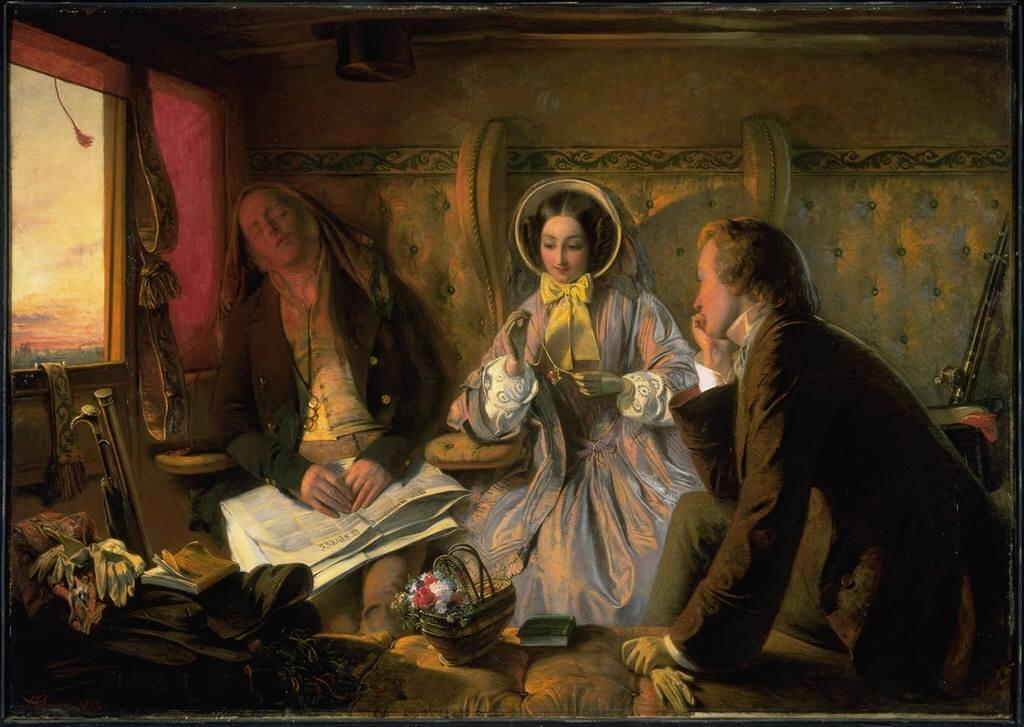
Abraham Solomon, First Class, The Meeting

An aristocratic officer, threatened with disinheritance unless he marries well, is attracted to a mysterious girl.


Here is another, shorter novel by Mrs. Alexander (See Novel 001), with an easily guessable but entertaining plot and an interestingly complex heroine.

“In spite of the plot being . . . commonplace, the story runs well in the artistic hands of the author; the characters are definite, the heroine charming, and the result agreeable to the reader.”  Athenaeum, April 3, 1875

“The characters . . . are well sketched”; “the story, though slight, is . . . one which from its brightness and play of fancy is sure to please.”  Morning Post, June 4, 1875

Download this week’s novel:
v.1 https://archive.org/details/ralphwiltonswei01hectgoog/page/n4

v.2 https://archive.org/details/ralphwiltonswei00hectgoog/page/n4

Novel 062: Anne Elliot, Edith Romney, M.D.

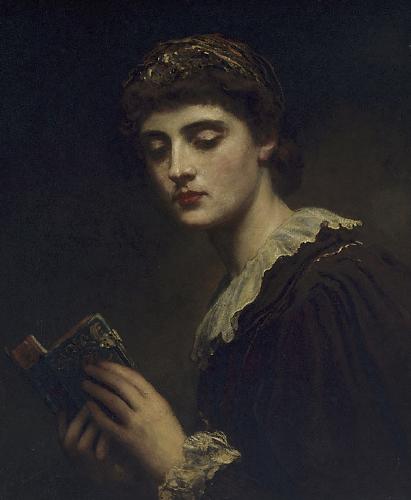
James Sant, Lesbia
James Sant, Lesbia

A female doctor attempts to establish a practice in a provincial town.


Anne Elliot (1856-1941) wrote 13 novels, of which this was the first, between 1883 and 1903.  Like her protagonist here, she was a doctor’s daughter; the novel’s representation of the plight of a Victorian woman seeking a professional career, though somewhat undermined by its dénouement, is vivid and touching.

“A fresh and clever story. . . .  Several of the subordinate characters, though little more than sketches, are vividly drawn, and the whole tone of life in a prosperous, but highly Philistine, provincial town is cleverly caught.” Academy, October 20, 1883

“The writer of this novel is manifestly very much in earnest.  There is an unmistakeable reality, a ring of genuine passion, in her complaints of the folly and caprice which deny to her heroine her legitimate career.”  Spectator, November 10, 1883

Download this week’s novel:
v.1 https://archive.org/details/dredithromneyan02elligoog/page/n11

v.2 https://archive.org/details/dredithromneyan00elligoog/page/n4

v.3 https://archive.org/details/dredithromneyan01elligoog/page/n8

Novel 061: M.E. Braddon, Lost for Love (1874)

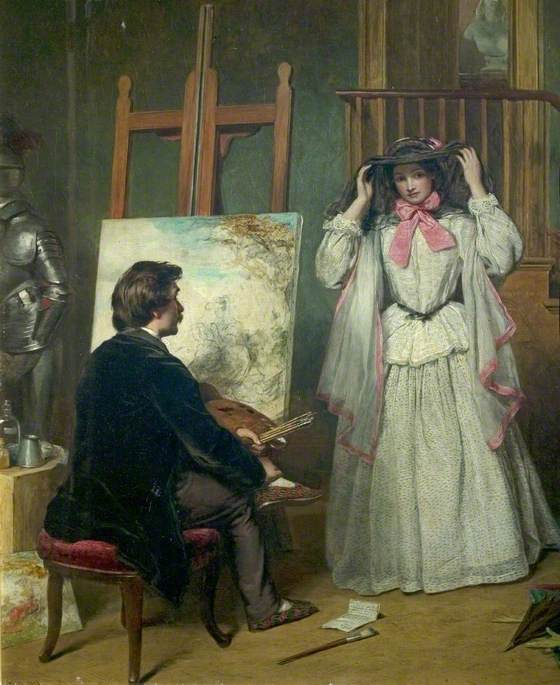
William Powell Frith - The Artist’s Model

A rising doctor, a beautiful heiress, an impulsive young painter, and a poor city girl are entangled by love and betrayal.


The great M.E. Braddon (see Novel 004) was among the most often and unjustly maligned of Victorian novelists.  Contemporary critics never tired of blaming her for Lady Audley’s Secret (1862), as the worst consequence of an unhealthy vogue for “sensation novels.”  And her improbable plots are easy to mock.  At the same time, they are consistently engrossing; while her characters are vivid and often surprisingly complex, her settings evocative, and her style subtle, witty, and exact.

“When our fault-finding is done with we thank Miss Braddon for a treat.  Her novels are always agreeable reading and have as much genuine merit as would set up a dozen of her rivals.  Her descriptions of Voysey Street and other districts are delightful.”  Sunday Times, September 27, 1874

“The real secret of her success is that her people are exactly the same kind of commonplace, everyday folk as we are ourselves, and as our friends are.”  Observer, September 27, 1874

Download this week’s novel:
v.1 (Tauchnitz ed.) https://archive.org/details/bub_gb_5HAdetMocuQC/page/n5

v.2 (Tauchnitz ed.) https://archive.org/details/bub_gb_lNzrF7wZ5JsC/page/n7

Novel 060: Anne Beale, Gladys the Reaper (1860)

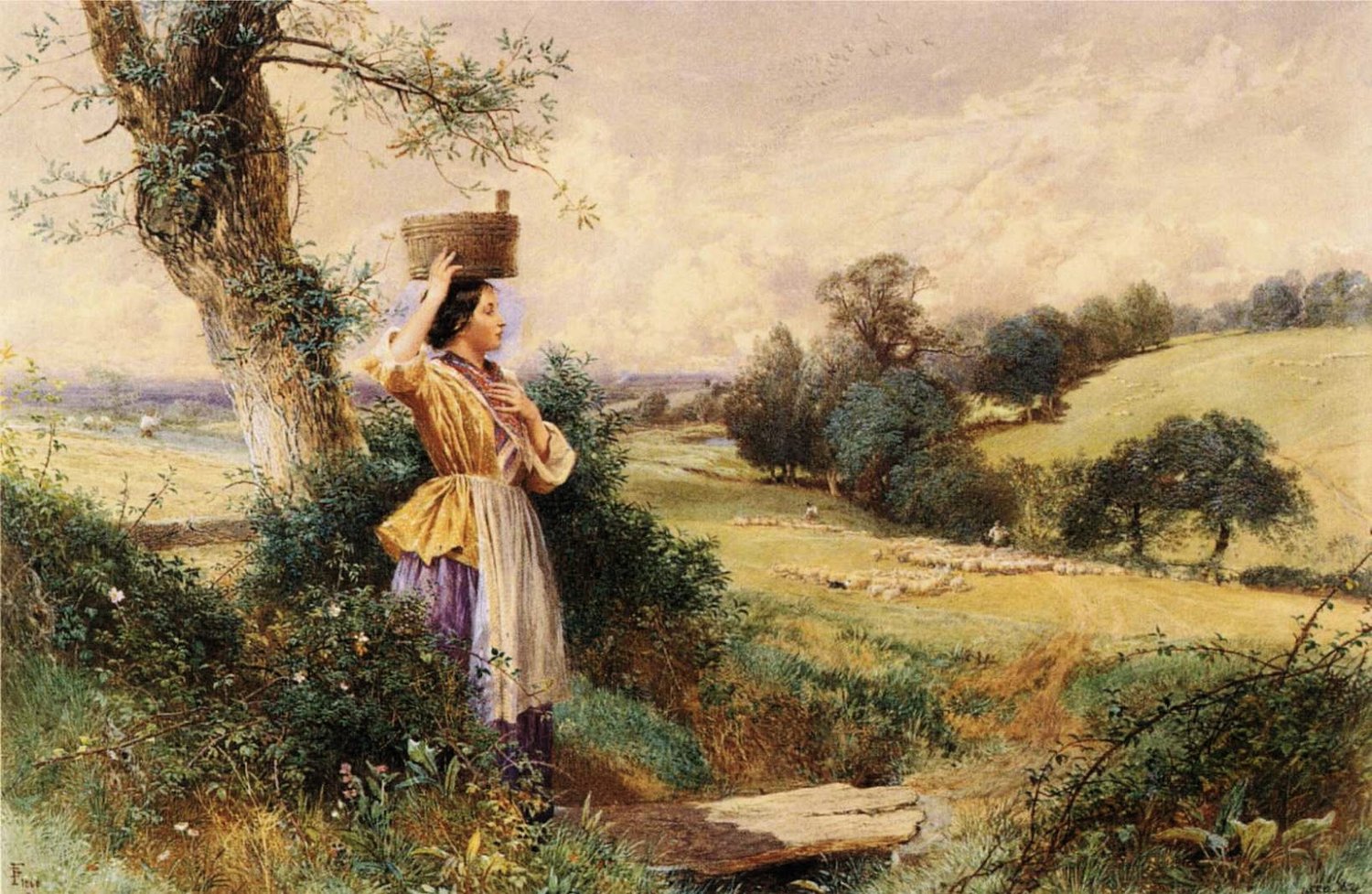
Myles Birket Foster, The Milk-maid

An Irish orphan seeks her Welsh relations.


Anne Beale (1816-1900) wrote some twenty novels between 1844 and 1891.  This one, set in her native Wales, has vivid characters and an endearingly contrived plot (though the treacle does run a little thick in the last volume).

A “half-pastoral Welsh story”; the plot “may be said perhaps rather to have been well felt than cunningly devised.  It is unquestionably interesting, but a quiet sense of what is good and beautiful in life is the chief grace of the tale.”  Examiner, October 27, 1860

“An interesting, natural story, written with evident care and pains.” Athenaeum, November 10, 1860

Download this week’s novel:

v.1 https://archive.org/details/gladysreaperbya03bealgoog

v.2 https://archive.org/details/gladysreaperbya02bealgoog

v.3 https://archive.org/details/gladysreaperbya00bealgoog

Novel 059: Justin McCarthy, Linley Rochford (1874)

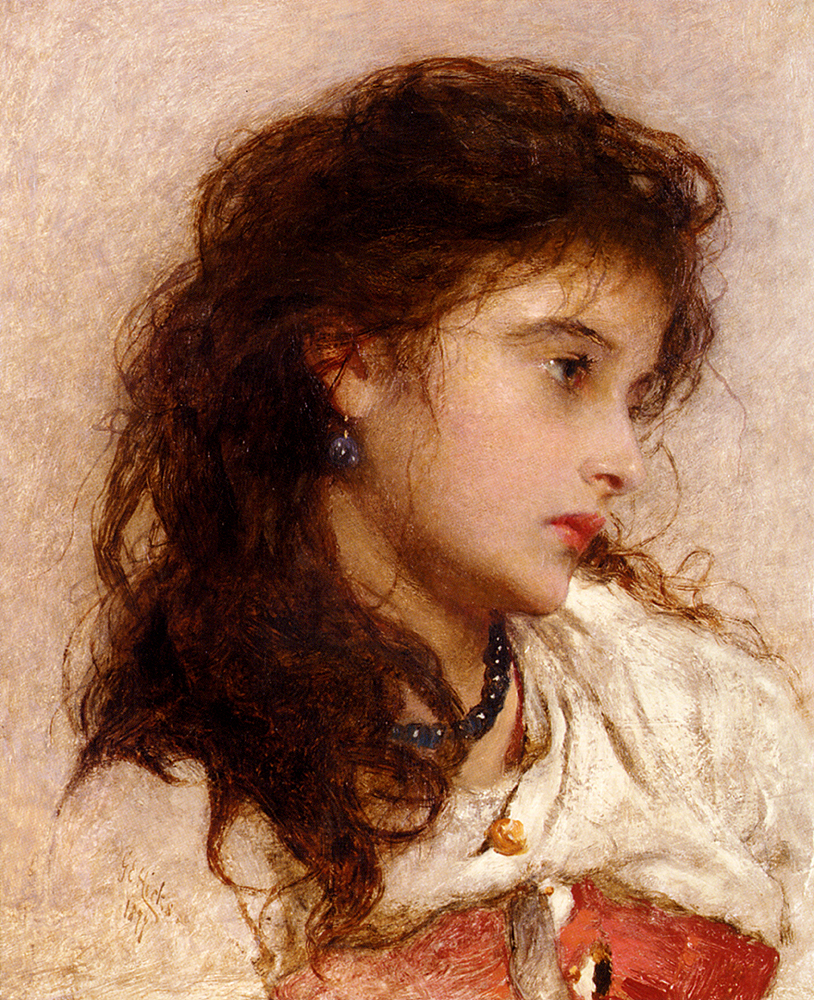
George Elgar Hicks, A Gypsy Girl

A marriage goes wrong.


Justin McCarthy (1830-1912), an important Irish politician as well as a journalist and novelist, published some 25 works of fiction between 1866 and 1901.  The contrast here between the attitudes of the husband and wife towards life and each other is particularly well delineated.

“Mr. McCarthy’s language is correct and well chosen: the events of his story bear each its due and proportionate share in working it out; his scene is not over-crowded with characters, and those whom he introduces are reasonable, probable, and consistent with themselves.” Athenaeum, October 10, 1874

“Besides their general truthfulness to nature, there is mostly to be discovered playing round the several characters that lambent flame of humour which is serviceable in lighting up particular traits and idiosyncracies, and setting them clearly in the reader’s eye.” Examiner, October 17, 1874

“A close observer and excellent delineator of character, Mr. McCarthy contrives to combine in his portraits reality and originality, and while he does not disdain to mention trifling incidents and minute but distinctive traits, he never wearies by prolixity.”  Morning Post, October 22, 1874

Download this week’s novel:

v.1: http://access.bl.uk/item/viewer/ark:/81055/vdc_000000048C36#?c=0&m=0&s=0&cv=0&xywh=-1144%2C-246%2C3754%2C2524

v.2: http://access.bl.uk/item/viewer/ark:/81055/vdc_000000048C72#?c=0&m=0&s=0&cv=6&xywh=-246%2C0%2C2958%2C1988

v.3: http://access.bl.uk/item/viewer/ark:/81055/vdc_000000048C8A#?c=0&m=0&s=0&cv=6&xywh=-217%2C0%2C2994%2C2012

Novel 058: Julia Day, The Old Engagement (1851)

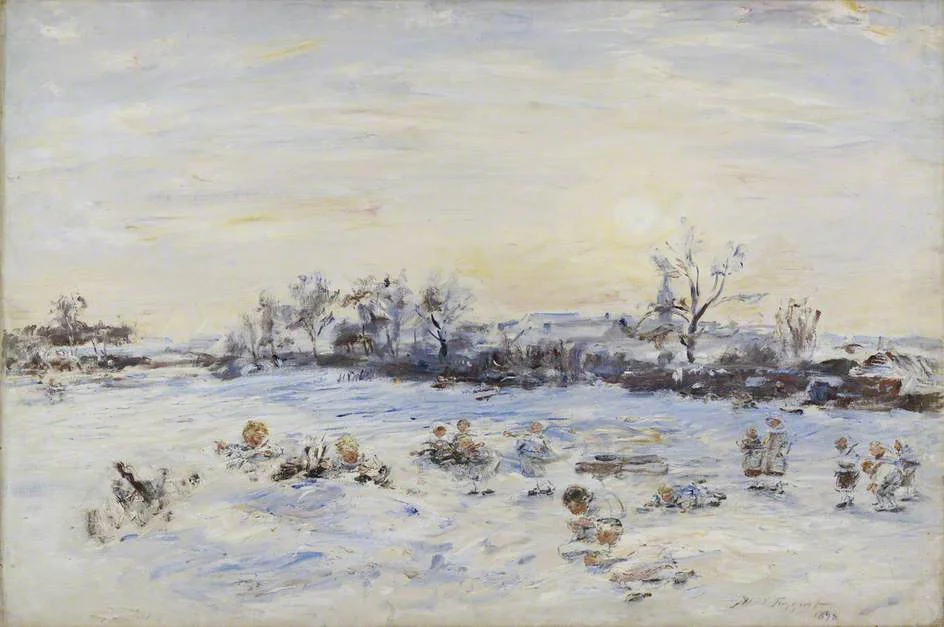
William McTaggart, Christmas Day

A middle-aged woman on a visit to a friend meets again the man who loved her in youth.


Nothing is known of Julia Day except that she wrote two novels, of which this was the first.  Its unusual lack of conflict is oddly refreshing, its characters—and the society they collectively evoke— vivid and lifelike.

“One of the most cheerful books that we ever read, . . . full of cordiality and comfort and delicate little markings of character.” Athenaeum, November 29, 1851

“As well-knit and compact a story in a small compass as we ever remember to have seen. This tale is a perfect gem in its way, the materials and the workmanship, to employ the chapmen's phrase, being worthy of each other. The events are so perfectly natural, the characters are drawn with such truth and vivacity, and the whole is set before us with such beautiful, unlaboured grace of style, that we are rapidly, but insensibly, carried from the first page to the last, with a feeling at the end, we must acknowledge, of disappointment that we have not more. . . . Though the space be small in which they have to display themselves,” the characters “are painted with a minuteness and finish worthy of a literary velvet Brueghel.” Bentley’s Miscellany, 1852

“A pleasant book, well written, and full of wholesome morality.” American Whig Review, September, 1852

Download this week’s novel:

http://access.bl.uk/item/viewer/ark:/81055/vdc_00000003D5D8#?c=0&m=0&s=0&cv=0&xywh=-807%2C-129%2C2986%2C2562

Novel 057: Constance Fenimore Woolson, Anne (1882)

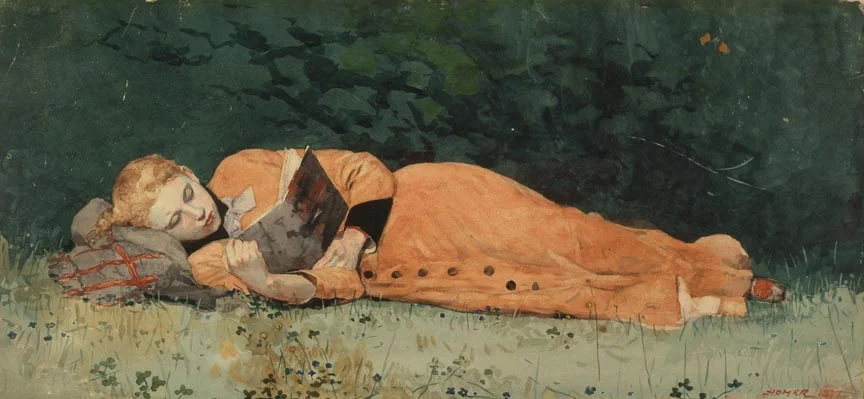
Winslow Homer, The New Novel

A woman grows up on Michigan’s Mackinac Island, then moves east.


Constance Fenimore Woolson (1840-1894), the  grandniece of James Fenimore Cooper, published some six novels.  This one shows much variety:  regionalist detail at the beginning, social satire in the middle, melodrama (and the Civil War) at the end.

“We venture to say that Anne is one of the most remarkable works of fiction that has appeared for many years.  It is remarkable for its own sake—for animation of plot and variety of character; and it is remarkable also as holding a place midway between the old American novel of incident and the modern American novel of analysis.”  Academy, July 21, 1882

“The reader is held under the delightful impression, not that he is to find something in the next chapter to reward him, but that every turn and eddy in the stream will be worth his attention. . . .  As to characters, they crowd the stage with an assemblage of powerfully-drawn actors, each marked with unmistakable individuality.”  Independent, Sept. 7, 1882

Download this week’s novel:

https://archive.org/details/annenove00wool

Novel 056: Margaret Oliphant, The Unjust Steward (1896)

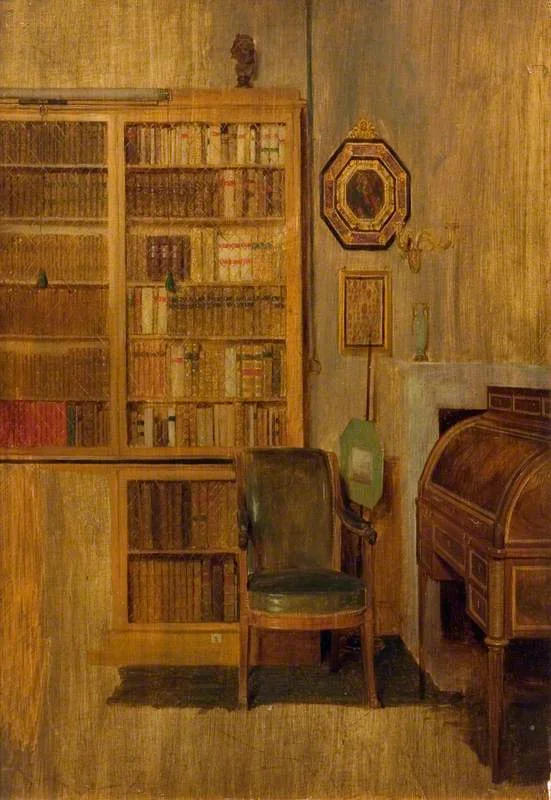
Sir David Wilkie, A Bookcase

A poor clergyman places himself in a moral quandary.


This is one of the last of Oliphant’s hundred-some novels (for others see Novels 007 & 008).  She had been publishing for almost half a century and had come to seem old-fashioned.The Academy’s critic, for example, after confessing a “sneaking fondness” for Oliphant, points out that she “began to write before the days when fiction became an art, and no doubt her conceptions of the possibilities and obligations of her calling are, in comparison with modern lights, limited.” This false perception of the culture of 1849 says a lot about that of 1896.  Anyway, old or not, Oliphant provides here a searching analysis of a complex, ambivalent, self-deceived character’s struggles to reconcile the moral with the expedient.

We are “transported by the writer’s easy art into an old-world atmosphere, redolent of the true flavour of a social humour not quite forgotten, but sufficiently removed from the commonplace banalities, the sexual problems, and the topical ingenuities of the day.”  Athenaeum, December 19, 1896

Oliphant’s “stories are always characterised by an old-world courtliness and a wonderful sympathy with the thoughts and feelings of old and young alike.  Everything she puts her pen to is thoroughly entertaining.”  Liverpool Mercury, December 23, 1896

Download this week’s novel:

http://access.bl.uk/item/viewer/ark:/81055/vdc_00000004248C#?c=0&m=0&s=0&cv=0&xywh=-722%2C-129%2C2990%2C2565

Novel 055: Annie Keary, Janet's Home (1863)

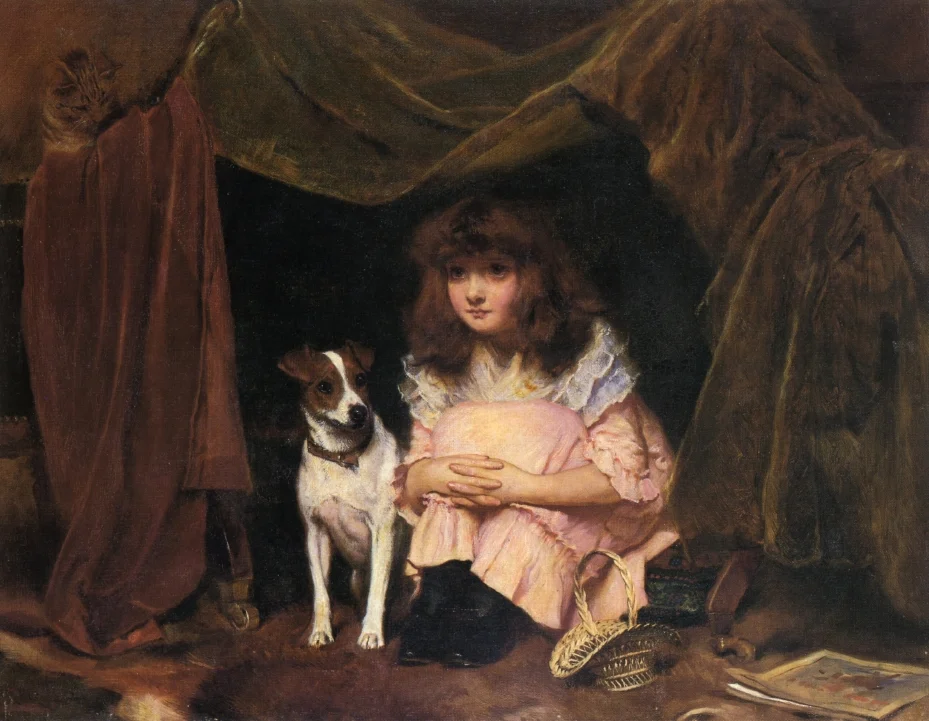
Charles Burton Barber, The Hiding Place

The lives of a scholar, his disinherited Welsh wife, and their four children.


Annie Keary (1825-1879) wrote some ten novels between 1856 and her death.  The early chapters of this one, recounting the narrator’s emergence from childhood, are especially effective.

“Lovers of incident may find it tedious; but it is a book of much earnest and deep thought. . . .  Each portrait is complete.” Reader, Nov. 14, 1863

It has “a simple, realistic power that enlists our sympathies at once.”   The story “is slight in itself, but receives weight and dignity from the subtle insight into character exhibited by the authoress.” London Review, Dec. 19, 1863

“Not only is the narrative carried on with the utmost simplicity, but it is not indebted for a single particle of the effect to anything beyond the legitimate action and probable complications of simple and natural causes.” Saturday Review, January 9, 1864

Download this week’s novel:

http://solo.bodleian.ox.ac.uk/primo-explore/fulldisplay?docid=oxfaleph014525999&context=L&vid=SOLO&search_scope=LSCOP_ALL&tab=local&lang=en_US

Novel 054: W.E. Norris, Thirlby Hall (1884)

John Lavery, A Conquest, a Heart for a Rose

A young man becomes entangled with a scapegrace cousin and a charming adventuress.


This was Norris’s fourth novel, and like his third, No New Thing (see Novel 002)—and like the author’s 60-some other novels and story collections—it features a witty, lucid style and carefully defined, memorable characters.  So by 1884 the most prestigious critics are already getting tired of him.  “Exceedingly tedious,” says the Athenaeum; the Academy finds only the first volume meritorious; the Saturday Review dismisses the whole as “too clever.”  Nothing annoys professional critics so much as the consistent excellence that explains itself, doesn’t develop into something new, and so leaves them nothing to say.

“It is distinguished by a singular mellowness of tone and perfection of style, as well as by its power to enchain the reader’s interest from first to last.  The author’s way of regarding society is agreeably dispassionate; he is satirical without being sardonic, and treats wrongdoing with a severity that is free from despair.”  Chicago Tribune, February 9, 1884

“Easy description, keen observation of the foibles of people, and presentment of characters in excellent relief.” New York Times, February 11, 1884

“One of the most interesting novels that we have come across for a long time, pleasant to read as regards both substance and style, clear and fresh in its delineations of character, and thoroughly healthy in tone throughout. . . .  Mr Norris’s finished sketches are not less accurate than easy, and . . . have a vigour and originality not often traceable in the fiction of the day.”  Observer, May 18, 1884.

Download this week’s novel:

http://solo.bodleian.ox.ac.uk/primo-explore/fulldisplay?docid=oxfaleph014580025&context=L&vid=SOLO&search_scope=LSCOP_ALL&tab=local&lang=en_US

Novel 053: Charlotte Yonge, The Daisy Chain (1856)

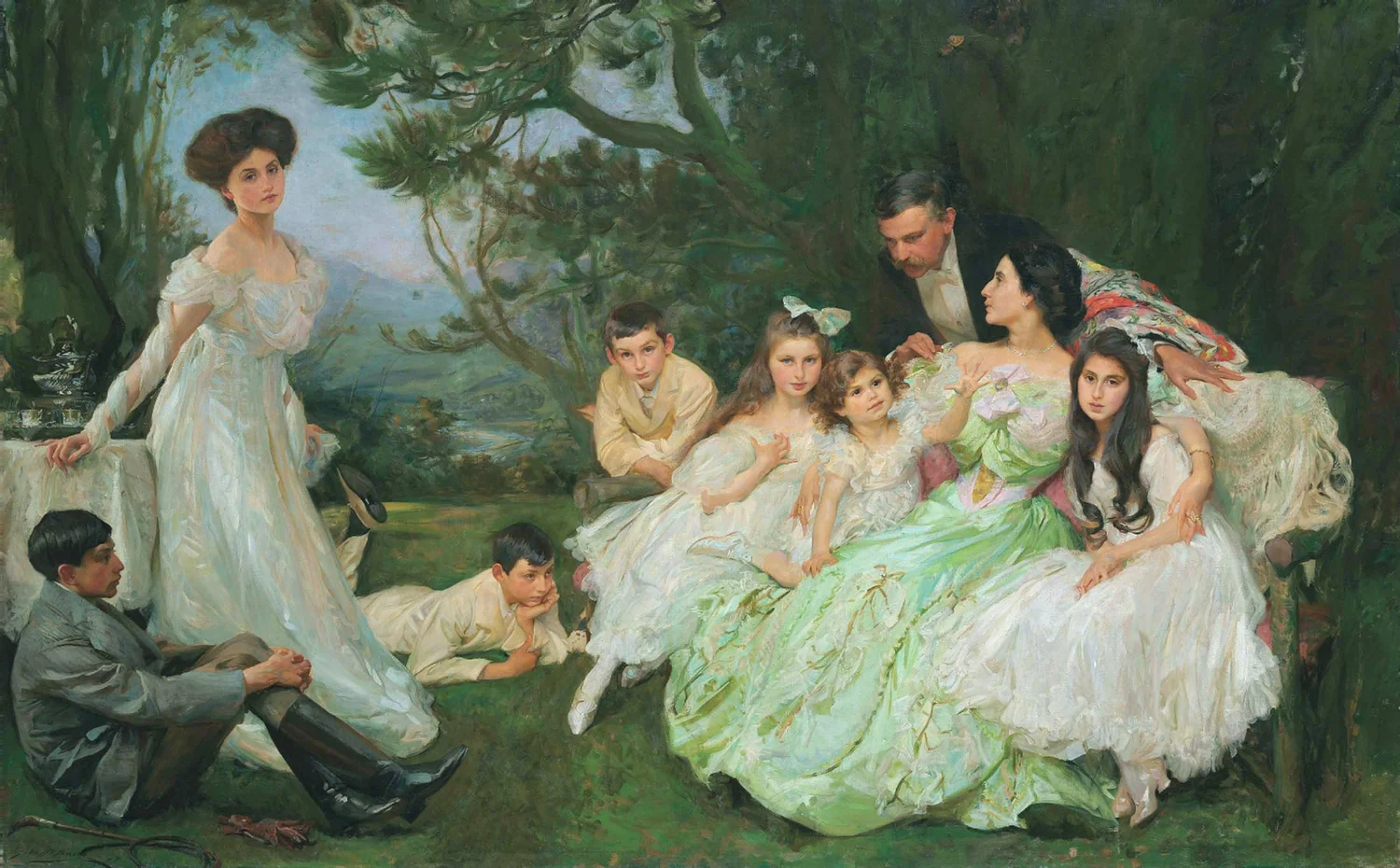
John Henry Frederick Bacon, The Golden Butterfly, The Harvey Family

The eleven motherless children of a town doctor grow up.


I have featured over 50 novelists during this website’s first year;  I now return to some favorites, and first to Charlotte Yonge (Novel 003).  She is not utterly forgotten—there is a websitedevoted  to her work, run by a club which also publishes a journal—but in a properly ordered world she would have at least as many readers as, say, Charles Dickens.  If her religiosity seems tedious to the modern reader (as it did even to many of her contemporaries), so does  Dickens’s sentimentality.  But like Dickens she creates a vivid, unforgettable world like that of no other writer, one in which the sympathetic reader cannot spend too much time. This is the first of the long (it is half as long again as the average three-volume Victorian novel) “family chronicles” that represent her most distinctive work.

“Each character speaks so naturally for itself that the reader seems to be one of the ‘Chain,’ and sitting in family conclave round the hearth. . . .  So many young heroes and heroines with their instructors” allow Yonge “ample opportunities for exercising her peculiar genius for minute sketches of character.” Athenaeum, April 5, 1856

“This work is . . . a minutely detailed, and highly finished picture of one of our dear English homes, with its loves and losses, trials and triumphs.  Here our authoress is in her element, depicting home scenes, and home ease and freedom: she evidently delights in the little social kingdom she creates.  This lady is alone in the beauty with which she delineates children’s characters”; they are “real flesh and blood, treading their paths with stumbles and falls like the rest of us.” British Quarterly Review, July 1856

The characters “become as familiar to us as real acquaintances. . . .  Reading the ‘Daisy Chain’ is like taking a walk through a plain country, which does not appear romantic at first sight” and feeling “the sense of living joy which animates creation.” New Quarterly Review, July 1856

Download this week’s novel:

http://access.bl.uk/item/viewer/ark:/81055/vdc_000000043BD8#?c=0&m=0&s=0&cv=6&xywh=-90%2C-246%2C2791%2C2394

Novel 052: Anne Manning, The Ladies of Bever Hollow (1858)

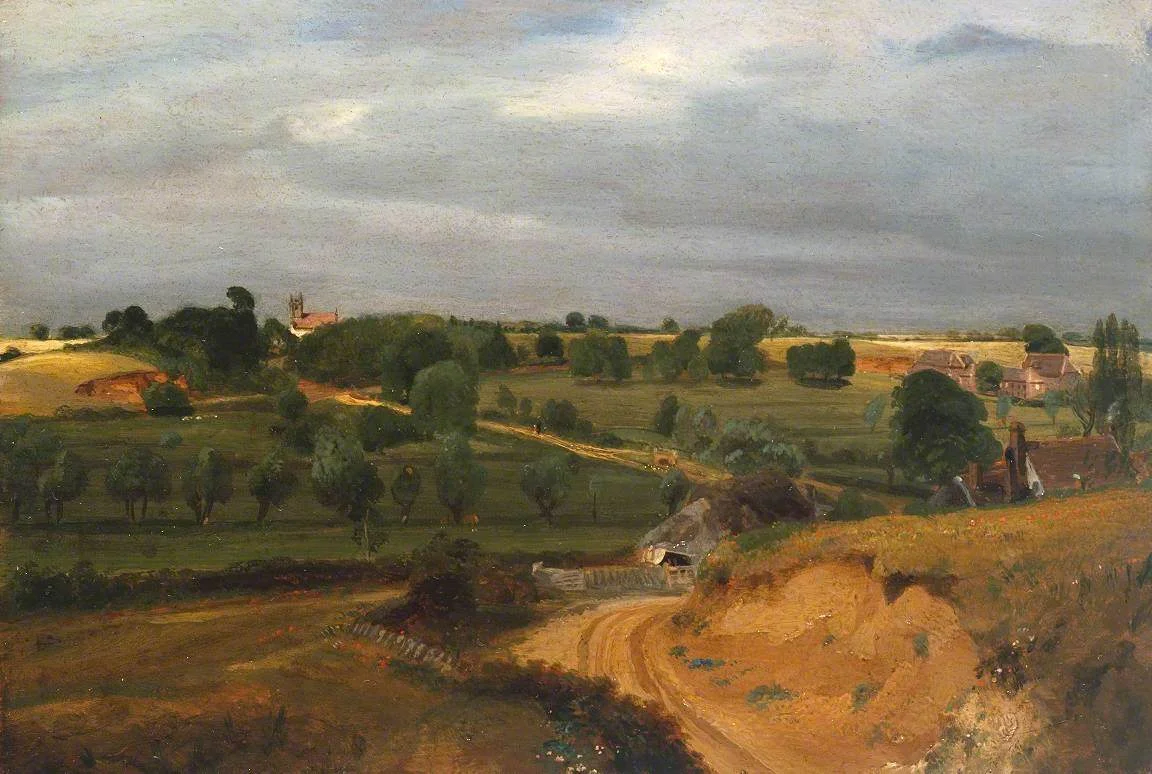
John Constable, Brightwell Church and Village

A refined invalid lady, living with her healthy sister, helps younger neighbors with their problems.


Anne Manning (1807-1879), author of over forty novels, made her reputation with historical stories narrated in period style; this, however, has a contemporary setting:  subtly realized characters are quietly placed in serio-comic conflict.

“A charming story, healthy and genial, and with a simplicity of construction befitting a story of English country life.” Sharpe’s London Journal, July, 1858

“Thoroughly English . . . a physician might successfully recommend the perusal of these volumes to any patient . . . instead of a change of air. . . .  The characters are drawn from nature . . . not the old property-characters from the novelist’s stores.”  Manning is “a literary Gainsborough.”  Athenaeum, July 3, 1858

“It may do some thoughtless people good to learn how much of beauty and of interest can be found or fancied in the lives of two old maids.”  London Review, October, 1858.

Download this week’s novel:

v.1: https://archive.org/details/ladiesofbeverhol01mann

v.2: https://archive.org/details/ladiesofbeverhol02mann