David Alfred Bywaters's Crossword Cavalcade & Fortnightly Victorian Novel Recommender. Every Saturday! Either a new language-torturing puzzle or an old novel by an unjustly neglected Victorian author. Why waste time on other amusements?

Novels

Novel 051: Susan Morley, Aileen Ferrers (1874)
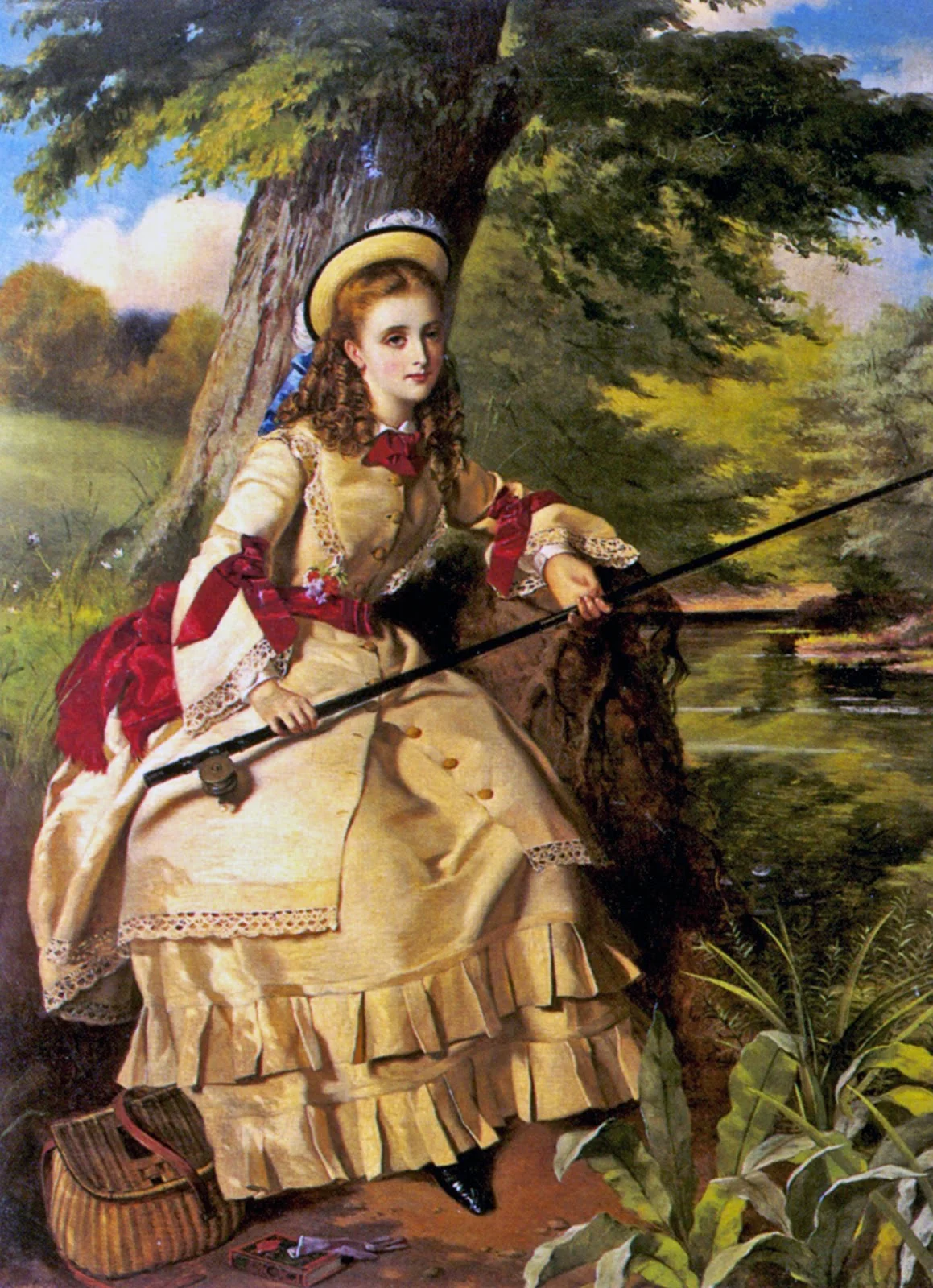
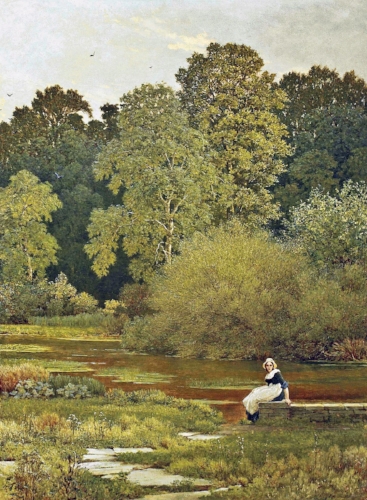
William Maw Egley, A Young Lady Fishing

A sixteen-year-old girl, newly engaged to a gamekeeper, is suddenly adopted by a long-lost aristocratic aunt.


Susan Morley (according to Adrian Room’s Dictionary of Pseudonyms she was Sarah Frances Spedding, 1836-1921) published five novels between 1874 and 1888.  Nothing more is known of her.  In this, her first novel, the style, pacing, characterization, and setting are all impressively assured, and the plot dilemma interestingly handled.

“Its unforced pathos and simple language, its delicate contrasts of light and shade, its knowledge of dramatic effect with true insight into human nature, combine to render it an uncommon book . . . a singularly graceful story, told in . . . a singularly pure and unaffected style.” Academy, June 20, 1874

“It is a charming prose idyll, well and simply told; its seeming simplicity being the result of consummate art.  Tender, pathetic, and truthful to nature, it . . . is no ephemeral novel.  As a study of character it cannot fail to take a high place in literature.  Moreover there is a completeness and finish about it, even as a mere tale, which is quite refreshing.  In her delineations of character Miss Morley is peculiarly exhaustive without being tedious.  Fearful lest our unqualified admiration might have run away with our critical judgment we have carefully and dispassionately sought for a flaw in this graceful story, but have found none.  Its style, diction, and purity of thought combine to render it one of the most perfect novels it has ever been our good fortune to meet with.” Morning Post, August 31, 1874

“What strikes us . . . is the tact with which Miss Morley manages her characters” and “the common sense view which Miss Morley takes of life.”  Westminster Review, October 1874

Download this week’s novel:
v.1 http://access.bl.uk/item/viewer/ark:/81055/vdc_00000004EC84#?c=0&m=0&s=0&cv=6&xywh=-275%2C0%2C3168%2C1977

v.2 http://access.bl.uk/item/viewer/ark:/81055/vdc_00000004EC8A#?c=0&m=0&s=0&cv=0&xywh=-1266%2C-126%2C4013%2C2505

Novel 050: J. Sheridan Le Fanu, Uncle Silas (1864)

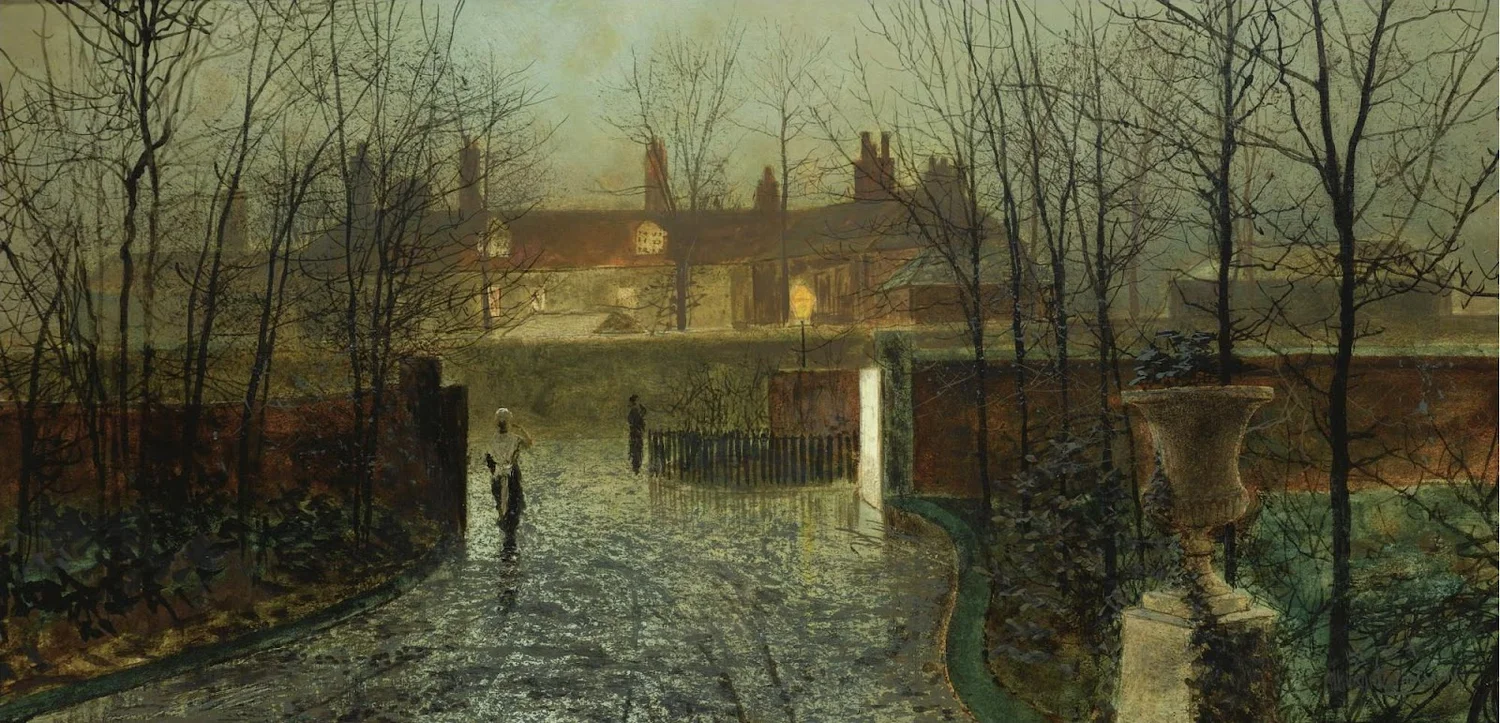
Atkinson Grimshaw, Arriving at the Hall

A shy young heiress is left in the care of her uncle, a suspected murderer.


J. Sheridan Le Fanu (1814-1873), an Irish journalist and novelist, wrote some 20 novels beginning in 1845; he specialized in the creation of eerie atmosphere.

Though sometimes strained and improbable, this novel “is rather to be taken as a highly wrought romance than as a picture of mere every-day life and its issues.  Enough that the novel is well-written, paints some strongly-wrought dream figures, and one or two very well-drawn characters of real substantial life, that it also excites curiosity, and sustains a very strong interest from the beginning to the end."  Examiner, December 24, 1864.

“Mr. Le Fanu has the gift of working upon the imagination of his readers, until every description of still life—a room, a picture, a piece of furniture, the entire house—becomes instinct with significance. . . .  The author’s artistic imagination touches every object, however small or apparently insignificant, giving them a meaning like a song without words.” Athenaeum, January 7, 1865.

La Fanu “is feverishly intent on producing a series of Rembrandt effects. . . .  Seen through this ghostly medium, all the characters, from the principals to the merest supernumerary, appear more or less weird or unearthly.”  Saturday Review, February 4, 1865.

Download this week's novel:

https://archive.org/details/unclesilastaleof00lefa_0

Novel 049: Julia Cecilia Stretton, Mr. and Mrs. Asheton (1859)

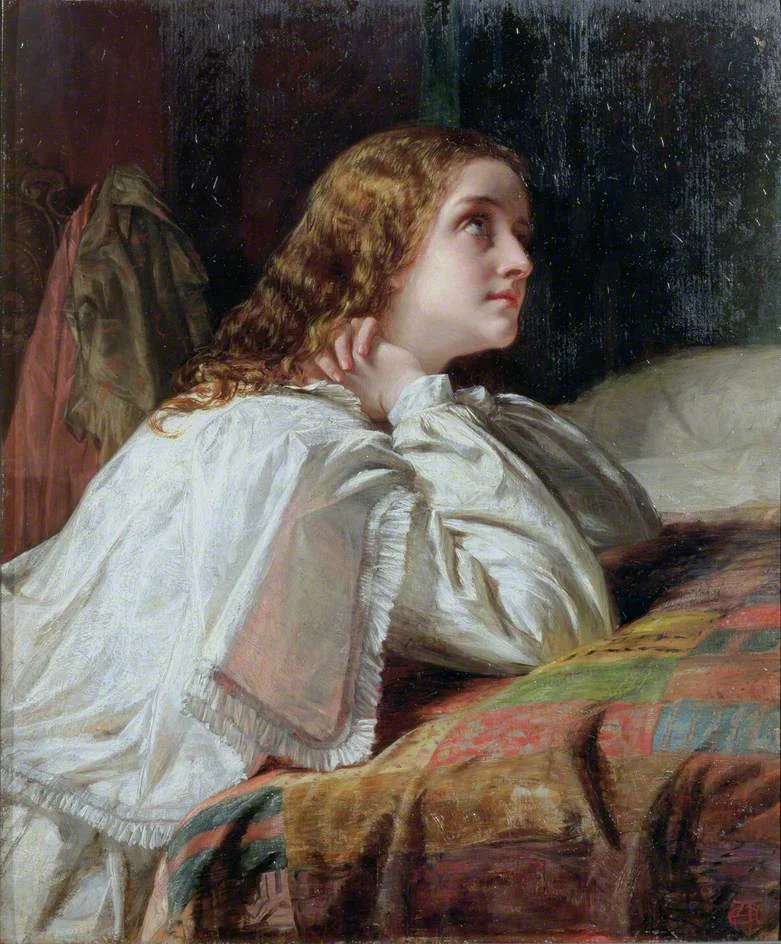
Alfred Elmore, Supplication

A virtuous young lady marries a proud aristocrat.


Julia Cecilia Stretton (1812-1878) wrote some eleven novels in middle age, between 1855 and 1869. In this, a good style and several entertaining minor characters make up for a sometimes strained plot with a sentimental conclusion.

It is “impossible to get through its first chapter without experiencing an unwonted degree of interest which will grow” as the reader proceeds.  “The author departs . . . from established custom in not making marriage the climax of the story.” Spectator, November 12, 1859

“A novel of great merit, exhibitng the constructive faculty of the author in a very high degree, and written in an easy, practised style.” Observer, November 14, 1859

“Very agreeable . . . full of interest, and totally without . . . affectation.”  Literary Gazette, November 26, 1859

Download this week’s novel:

v.1 https://archive.org/details/mrmrsasheton01stre

v.2 https://archive.org/details/mrmrsasheton02stre

v.3 https://archive.org/details/mrmrsasheton03stre

Novel 048: Frank Smedley, Frank Fairlegh (1850)

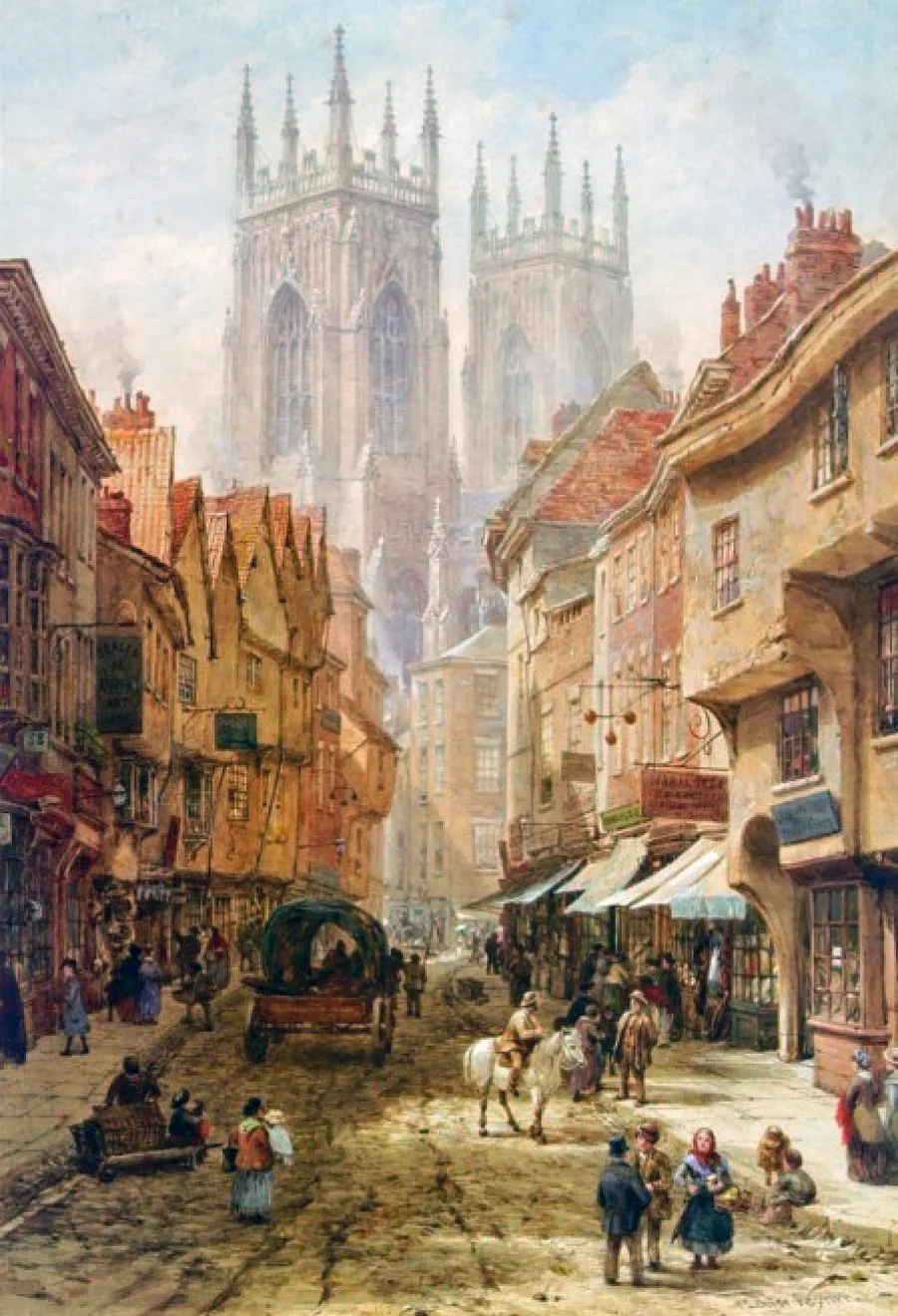
Louise Rayner, Oxford

Four pupils of a private tutor have adventures, grow up, and meet various fates.


Frank Smedley (1818-1864), a journalist and editor, wrote only four novels before succumbing to ill health in middle age.  This, his first (serialized 1846-48) features amusing (if flat) characters, a pleasant style, and an often silly but usually entertaining plot. (The novel, by the way, is partly set in Cambridge, not Oxford—but I like this painting.)

The characters “are nicely and unaffectedly marked. They . . . get into scrapes in a manner sufficiently easy and natural.”  The author’s “style is clear of trick and vulgarity” and “his scenes are alive.”  Athenaeum, April 27, 1850

 A “humorous and right-minded”  novel “full of Pickwickian fun.” The plot “contains sufficient of adventure to carry it on with due interest,” and the characters “are well contrasted and developed.”  It will suit “the merry and wise of the old school of English readers.”  New Monthly Magazine, June, 1850

Download this week’s novel:

https://books.google.com/books?id=YENWAAAAcAAJ&pg=PP2#v=onepage&q&f=false

Novel 047: Lady Charlotte Bury, The Manoeuvring Mother (1842)

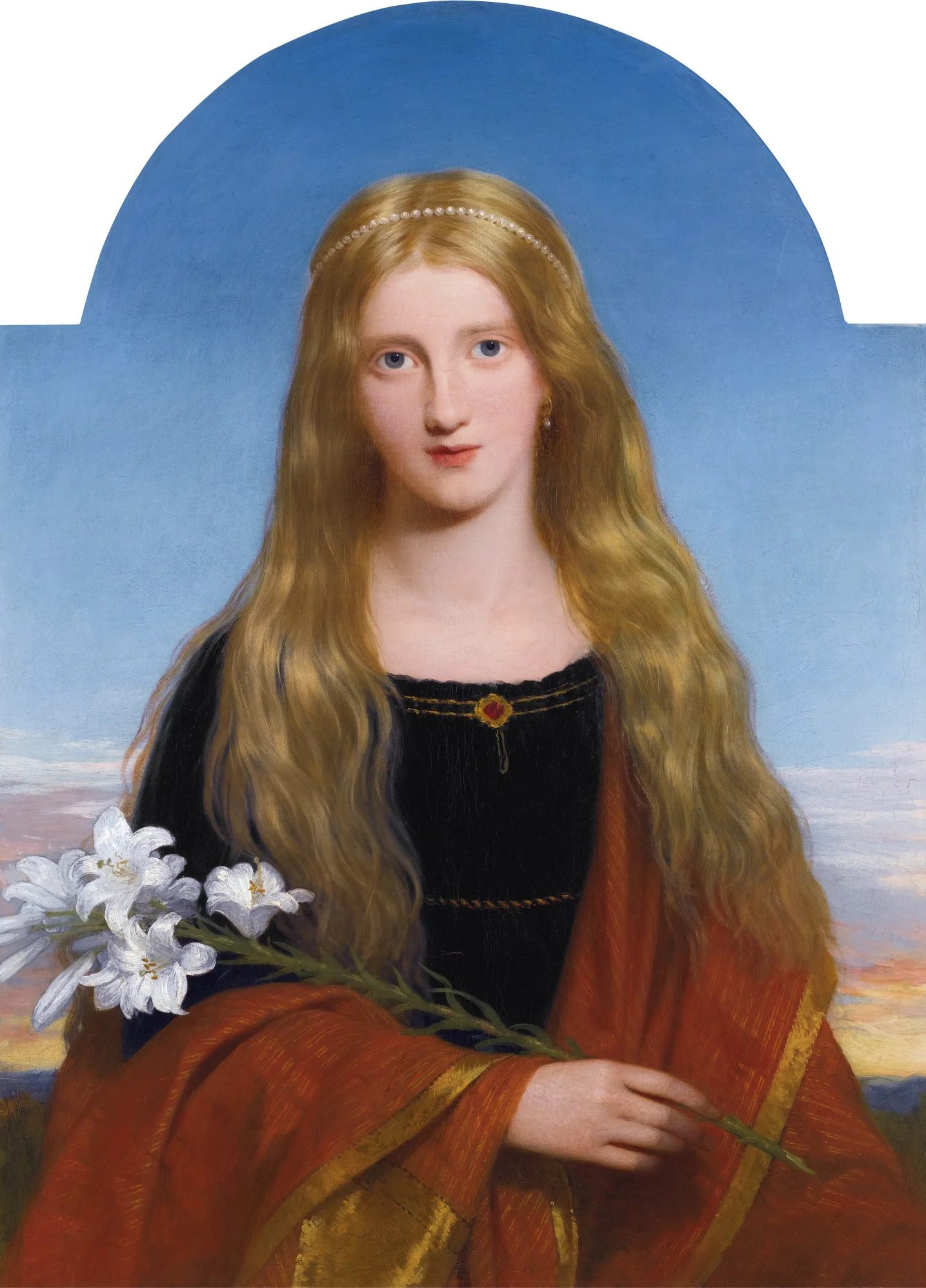
Charles Lock Eastlake, The Lily—Portrait of Miss Bury (Lady Charlotte Bury's daughter)

An ambitious gentlewoman has five daughters whom she means to marry as aristocratically as possible.


Lady Charlotte Bury (1775-1861), daughter of the sixth Duke of Argyll and herself the mother of nine children, wrote, in addition to poems and scandalous memoirs, some sixteen novels.  In addition to the complex, convincing title character she provides here a leisurely series of subplots—a few of them exaggerated, but many successfully comic, and some genuinely moving.

Bury shows a “full and wise reliance on nature as it exists in itself” and a “happy skill in putting the commonplaces of life and character in an uncommonplace point of view”; the resulting novel is “ true to English life and nature as they actually exist in our own day.” New Monthly Magazine, July, 1842

“She is many degrees nearer to Miss Austen, than any of her contemporaries.”  Athenaeum, July 2, 1842

“The quiet unexaggerated pictures, the lively dialogues, the nice discrimination of various kinds of weakness, the contrasts of folly and vice, the dangers of a false education and a half morality, were chiefly noticeable in the writer’s first production, and present themselves in this with unabated freshness." Examiner, July 9, 1842

Download this week’s novel:

v. 1 https://archive.org/details/manuvringmother01bury

v. 2 https://archive.org/details/manuvringmother02bury

v.3 https://archive.org/details/manuvringmother03bury

Novel 046: Arthur C. Conder, The Seal of Silence (1901)

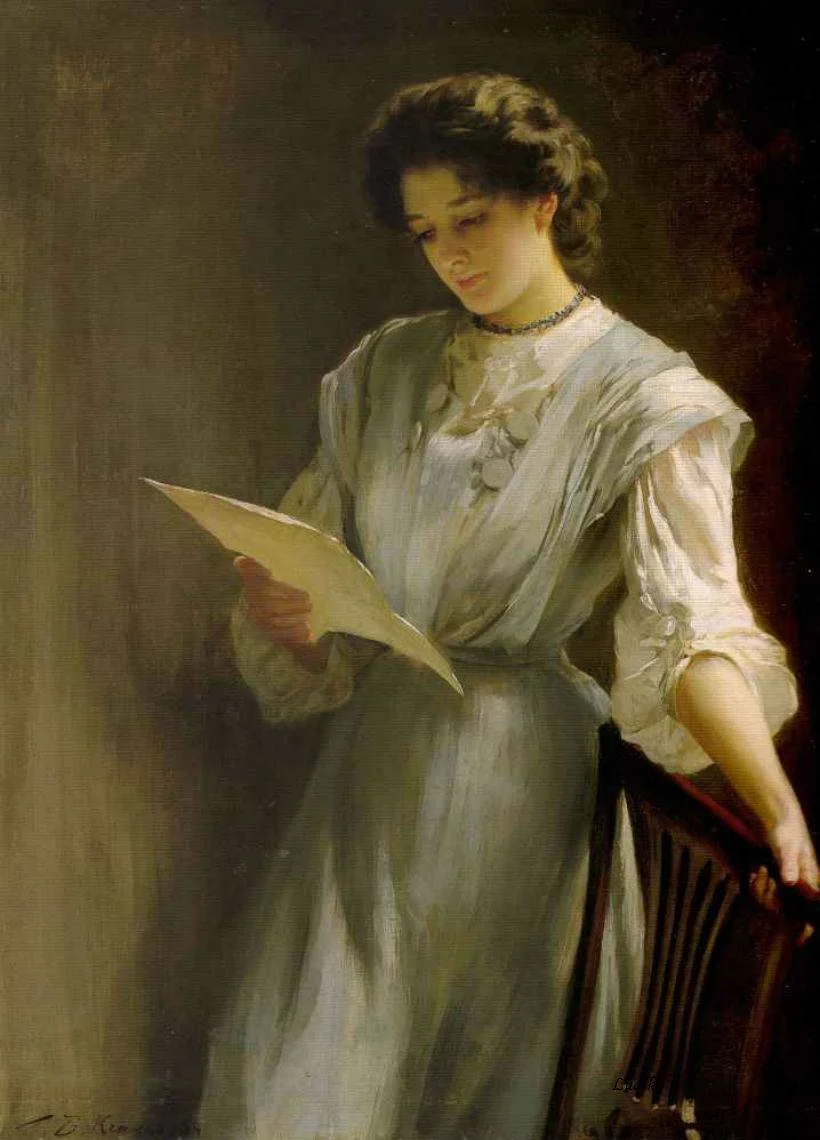
Thomas Benjamin Kennington, Reading the Letter

Two cousins, one mercurial, the other slow but sure, quarrel over a woman, with surprising, mostly comic, consequences.


Arthur R. Conder (1876-1901), barely out of college when he wrote this novel, died shortly after its completion of heart failure.  Read it, and you will join contemporary reviewers in their regret that he did not live to enjoy a long career.

“The plot is entirely diverting if not altogether probable. . . .  The writer regards his characters with a whimsical sympathy and has been able to make them eccentric and lovable at the same time. . . .   The quaint architecture of this little book is beyond criticism—compact, peculiar, facetious.”  Chicago Tribune, July 18, 1901

“It is full of quiet humor, keen characterization and a certain freshness which is all too rare among the novels of the day.”  Baltimore Sun, August 15, 1901

“The plot . . . is good, and the interest is well maintained; but it is in the freshness of the treatment, the briskness of the narrative, the excellent characterisation—a certain individualizing of every-day characters—that the great charm and merit of the book lie.”  Bookman, October 1901

Download this week’s novel:

https://archive.org/details/sealsilenceanov00condgoog

Novel 045: Beatrice May Butt, Alison (1883)

Thomas Francis Dicksee, Distant Thoughts

A virtuous young lady marries a scholarly older man who needs help caring for his late sister’s children.


Beatrice May Butt (1856-1918) published some fifteen works of fiction between 1876 and 1908; in this she offers a quiet plot, some vivid characters, and a subtle sense of personal relationships.

“A pretty story, with a happy blending of the poetical and the prosaic.” Times, November 9, 1883

“Those who like a quiet story, without sensationalism of any kind, but yet, at the same time, an admirable study of the inner life and its affections, will find undoubted pleasure in this work. . . .  The author’s style is smooth and pleasant, and occasionally rises into dignity and pathos.”  Academy, November 10, 1883

“The heroine’s pure and affectionate though passionate nature is well exhibited.”  Athenaeum, December 1, 1883.

Download this week’s novel:

v. 1: http://access.bl.uk/item/viewer/ark:/81055/vdc_00000004AFFA#?c=0&m=0&s=0&cv=6&xywh=-31%2C0%2C2547%2C1856

v. 2: http://access.bl.uk/item/viewer/ark:/81055/vdc_00000004B7FE#?c=0&m=0&s=0&cv=6&xywh=-59%2C0%2C2627%2C1915

v.3:http://access.bl.uk/item/viewer/ark:/81055/vdc_00000004B000#?c=0&m=0&s=0&cv=6&xywh=-95%2C-1%2C2651%2C1933

Novel 044: Eliza Lynn Linton, Patricia Kemball (1874)

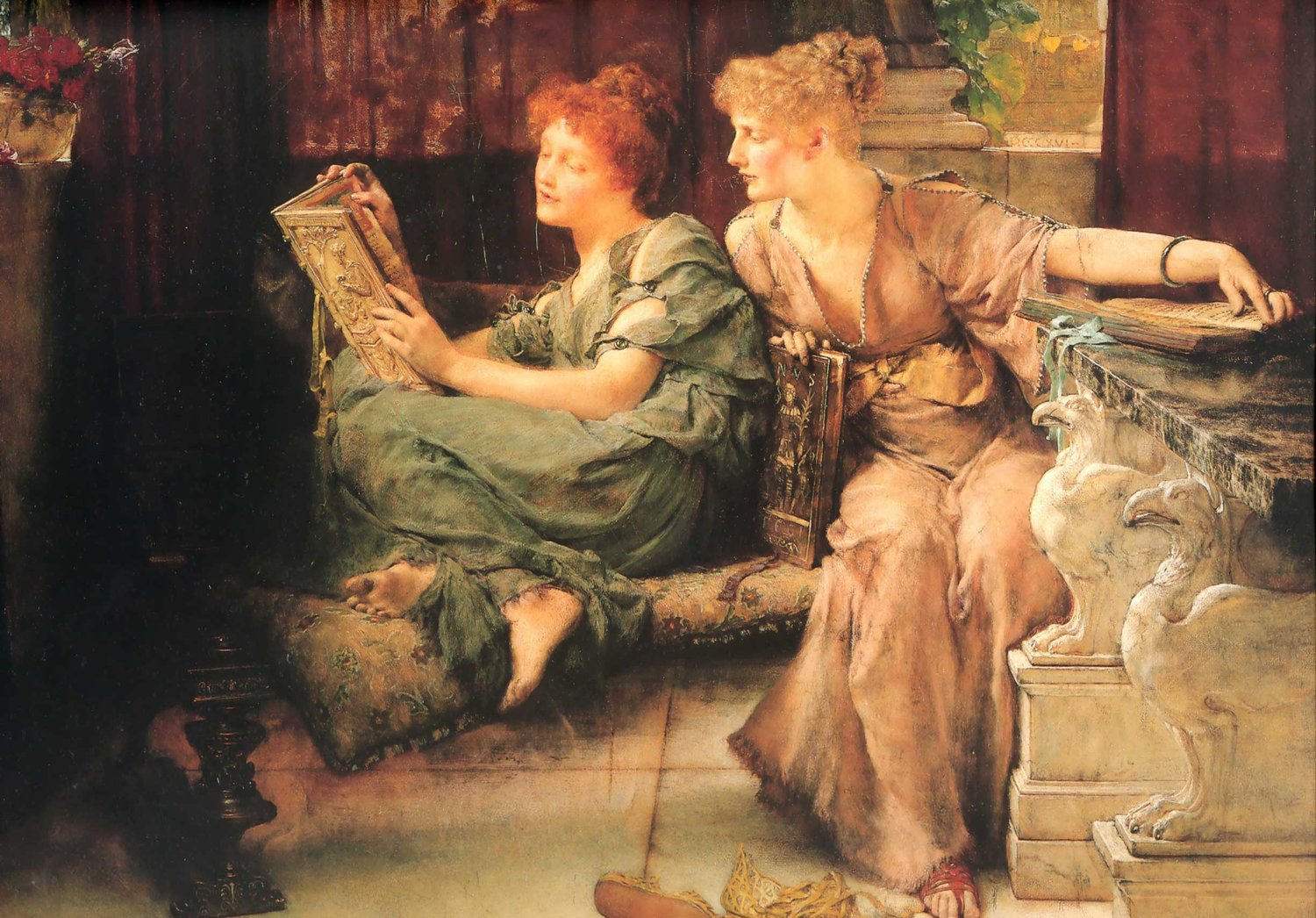
Sir Lawrence Alma-Tadema, Comparisons

A forthright, virtuous young lady is forced by the death of the sea-captain uncle who raised her to move to the home of another uncle, a vulgar millionaire, in whose household lives also another niece, beautiful but devious.


Eliza Lynn Linton (1822-1898), who wrote some 27 novels beginning in 1846, was well known as a journalist and social critic as well as a novelist: her  essays on “the girl of the period”—a vain, loud creature obsessed with fashion and indifferent to domestic virtue—were notorious.  Here she arranges some vividly hateful, yet believable, characters in a gripping plot.

“An acute and serious study of certain phases of English society . . . written in a very clear, lively, and interesting style, with a pleasant effervescence of satire and epigram”; it has “enough . . . of graphic portraiture and witty observation to furnish materials for half-a-dozen novels of the everyday kind.” Saturday Review, November 21, 1874

“A very clever and well-constructed story” which “climbs at the last to a very powerful and well-managed situation. . .  The characters are distinct, the individuality of each man and woman being put together bit by bit with pains and care.”  Times, December 5, 1874

 “A rousing heart-stirring novel. . . .  Even those readers who do not care for social questions, will enjoy Mrs. Lynton’s excellent character-drawing.”  Morning Post, December 18, 1974

Download this week’s novel:
https://archive.org/details/patriciakemballn00lind

Novel 043: Thomas Cobb, The Bishop's Gambit (1901)

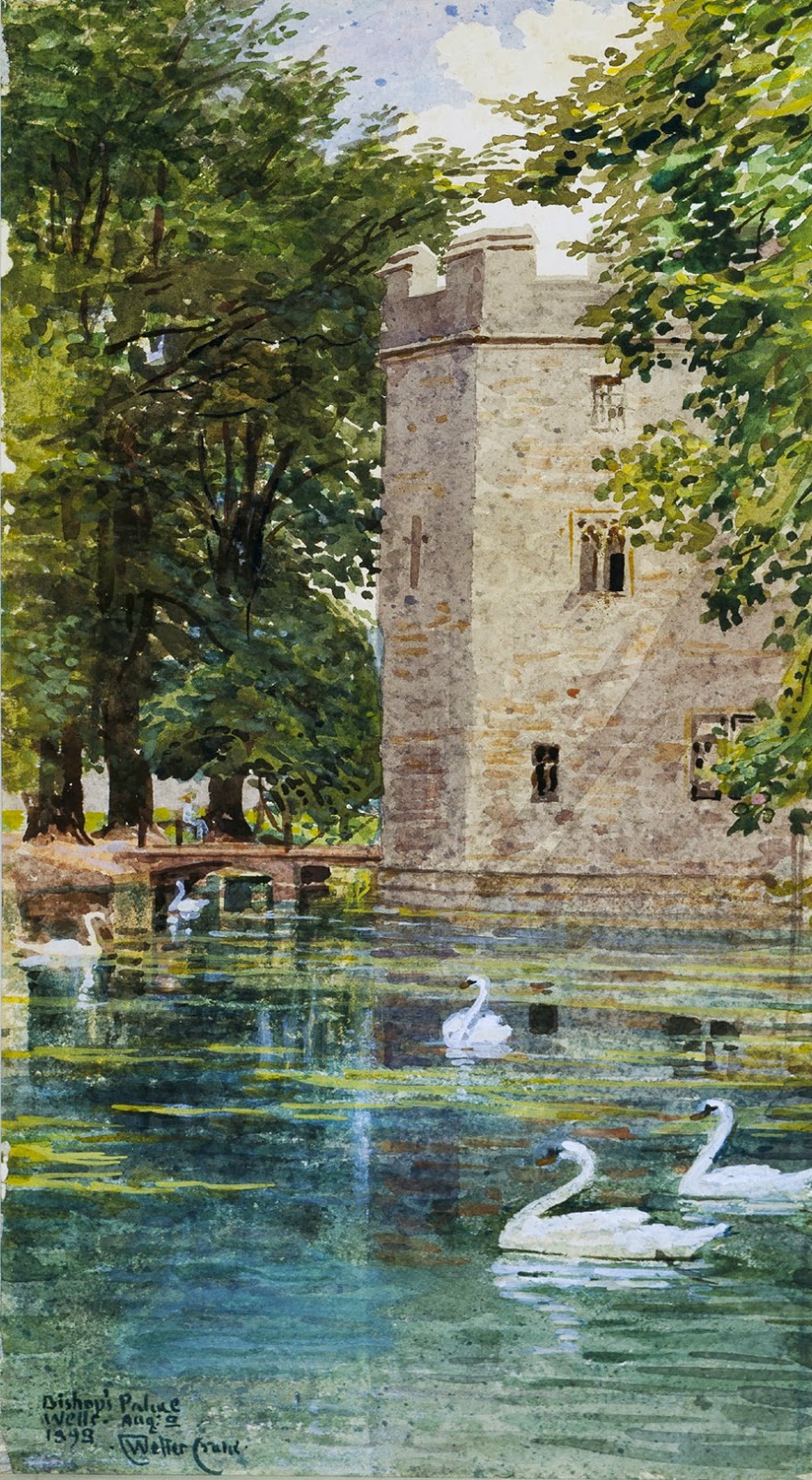
Walter Crane, The Moat and Bishop’s Palace, Wells Cathedral
Walter Crane, The Moat and Bishop’s Palace, Wells Cathedral

A bishop’s daughter’s fiancé is accused of adultery in a divorce case.


Thomas Cobb (1854-1932) wrote some 86 works of fiction beginning in 1887. He specialized in breezy comedies like this one.

“A book of ingenious complications and bright dialogue . . . the story is human and pure comedy.”  Academy, February 2, 1901

The author “is saving us the trouble and humiliation of always going to France for good light fiction.  There are few English authors who have the art of being light without being empty.” This novel “shows no falling off in interest and vivacity. . . .  We read it on the South Eastern Railway, and forgot where we were.”  Speaker, February 16, 1901

It has “a clever, novel plot in its way” with “an air of light comedy.”  Athenaeum, February 23, 1901

Download this week’s novel:
http://solo.bodleian.ox.ac.uk/OXVU1:LSCOP_OX:oxfaleph014873955

Novel 042: Anonymous, My Lady (1858)

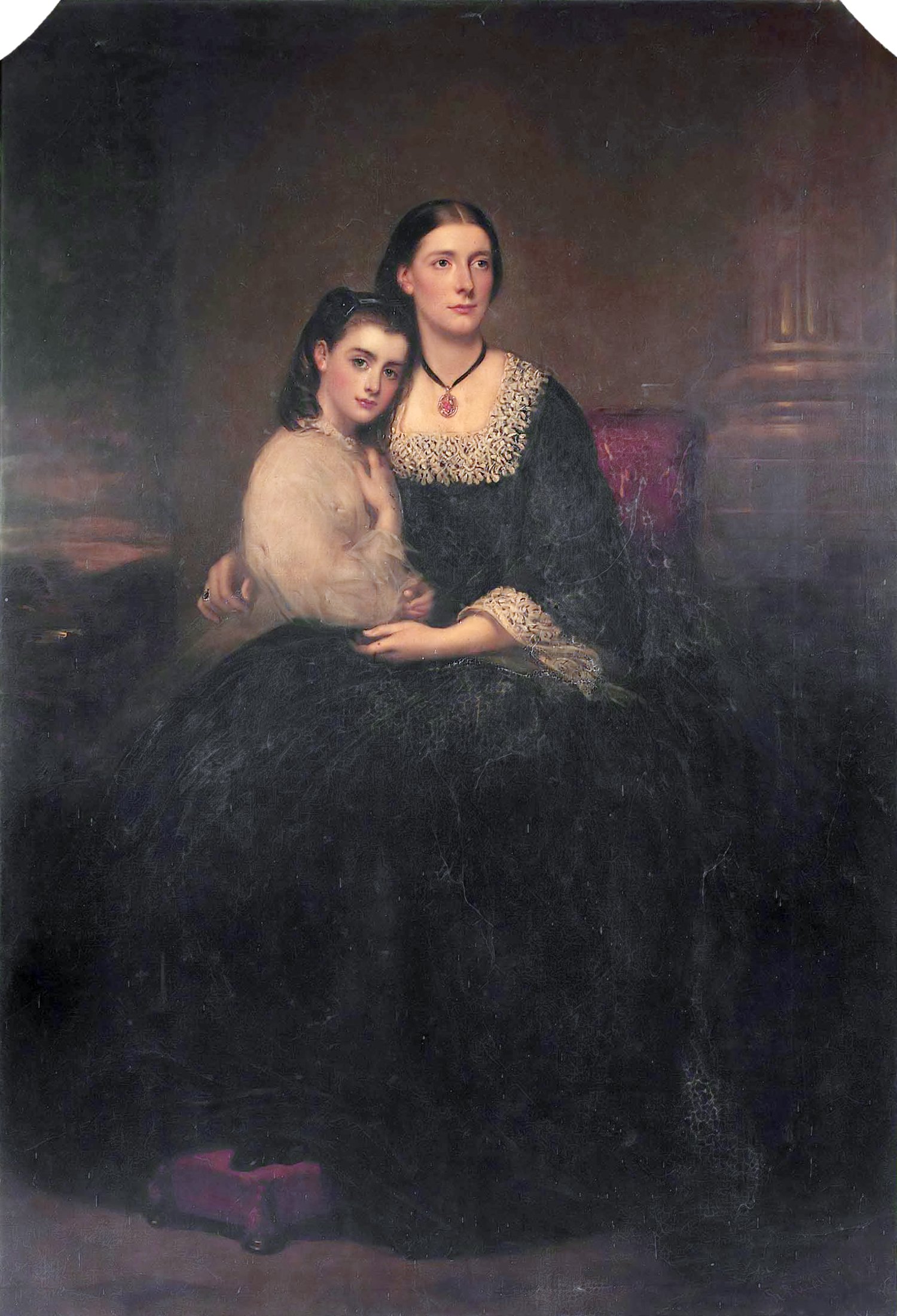
Richard Buckner, Emily, 1st Viscountess Hambleden, and her Daughter

A woman and her children are left in trouble after the husband and father absconds with another woman.


The anonymous author is known to have written two novels, of which this was the first.  Some sources (I don’t know the origin of the claim) identify her with Emma Willsher Atkinson, the author of last week’s novel; Troy Bassett finds no basis for this, and the novel seems to me by another hand entirely.  Read both and make up your own mind.  Whoever she (or he) may be, she (it seems the likelier choice) provides an involving, sophisticated analysis of the consequences of Victorian marital failure.

It is “told . . . with great strength of feeling, is well written, and has a plot that is by no means commonplace.” Examiner, September 16, 1858

It has “the freshness of inexperience.”  Though the plot “verges upon melodrama,” the characters are “distinctly drawn, and often wear an appearance of individuality.” Spectator, October 2, 1858

“The subject and structure of the story are well chosen and well planned, the conversations are natural, and the characters neither hackneyed nor untrue.”  Literary Gazette, October 23, 1858

“It is not in every novel we can light upon a style so vigorously graceful—upon an intelligence so refined without littleness, so tenderly truthful, which has sensibility rather than poetry; but which is also most subtly and searchingly powerful.”  Dublin University Magazine, April. 1859

Download this week's novel:

https://archive.org/details/10491482.1530.emory.edu

Novel 041: Emma Willsher Atkinson, Extremes (1859)

Frederick Daniel Hardy, The Clergyman's Visit

An earnest, shy young man with Tractarian leanings takes up a curacy in a Yorkshire village.


Emma Willsher Atkinson (1826-1900) is known to have written only one novel—this one.  Despite some sentimentalism and didacticism (especially near the end), she gives us several striking characters and sharply defined social and moral dilemmas.

The author “has performed a very difficult task creditably”; she “has not shrunk from showing that extremes with a little friendly mediation will sometimes meet.’“ Leader and Saturday Analyst, October 15, 1859

"The novel may offend readers of either extreme, being itself of none, yet it is wholesome and kindly in its tone.  It is a little touched with excess of feminine sentiment, but at the same time has feminine perceptions of character, and is not without humour” Examiner, November 26, 1859

Download this week's novel:

v.1 http://access.bl.uk/item/viewer/ark:/81055/vdc_00000004AEC2#?c=0&m=0&s=0&cv=0&xywh=-1434%2C-131%2C4339%2C2610

v.2 http://access.bl.uk/item/viewer/ark:/81055/vdc_00000004AEC8#?c=0&m=0&s=0&cv=0&xywh=-1442%2C-129%2C4273%2C2570

Novel 040: Edward Dutton Cook, Paul Foster's Daughter (1861)

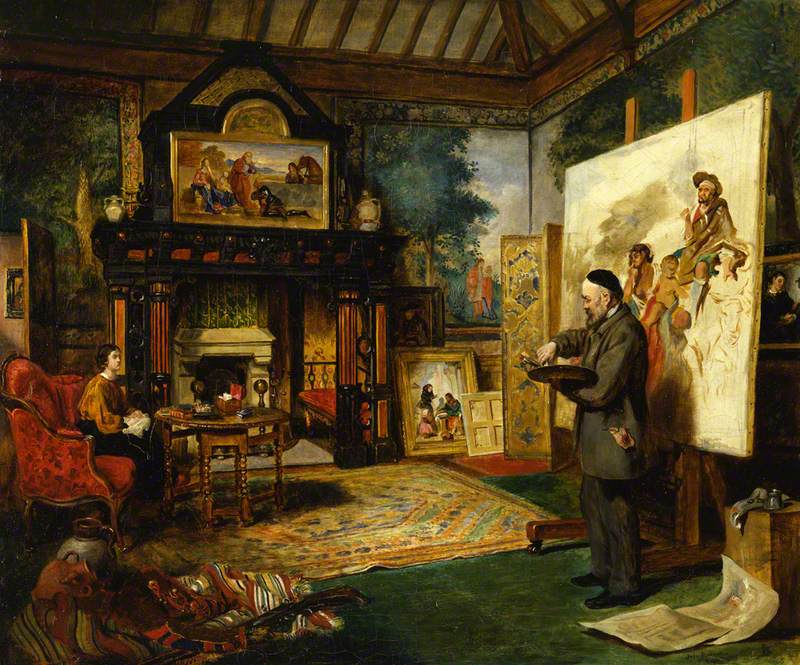
John Ballantyne, John Phillip in His Studio

A solicitor’s son, destined by his father for a legal career, prefers painting and writing.


Edward Dutton Cook (1831-1883), himself a solicitor’s son who studied painting, wrote some eleven novels between 1861 and 1877; this, his first, represents Bohemian London in a lively style.

Cook “depicts the various phases of Bohemian life with perfect truthfulness...and considerable humour; and, at the same time, with a consistent delicacy of touch” that will protect “the most susceptible reader.”  Spectator, July 20, 1861

“It is not often that a novel so witty, wise, and healthful in spirit offers itself for perusal.... There is not much plot in the book, but great play of character. . . .  The book is spirited and the style easy.” Athenaeum, August 3, 1861

“The incidents and explanations cluster cleverly at the climax, and the best teaching abounds, whilst there is not the least shadow of lecturing or preaching.”  Illustrated Times, October 21, 1865

Download this week’s novel here:

v.1 https://archive.org/details/paulfostersdaugh01cook

v.2 https://archive.org/details/paulfostersdaugh02cook

v.3 https://archive.org/details/paulfostersdaugh03cook

Novel 039: Margaret Hunt, Mrs. Juliet (1892)

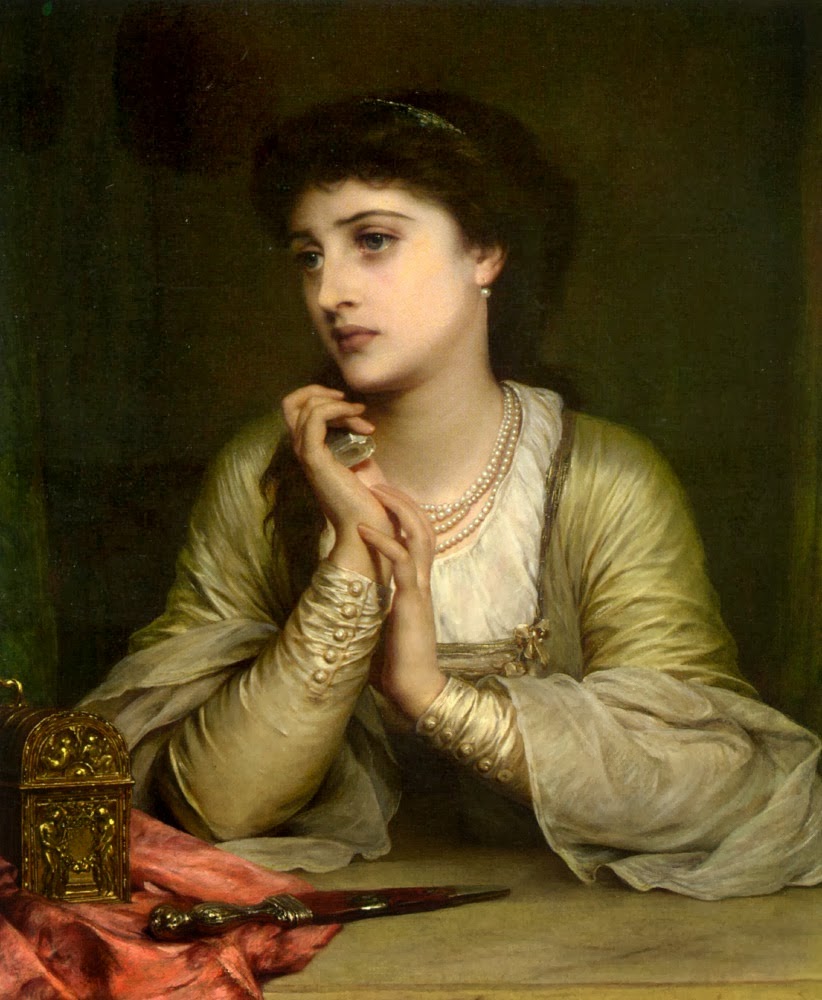
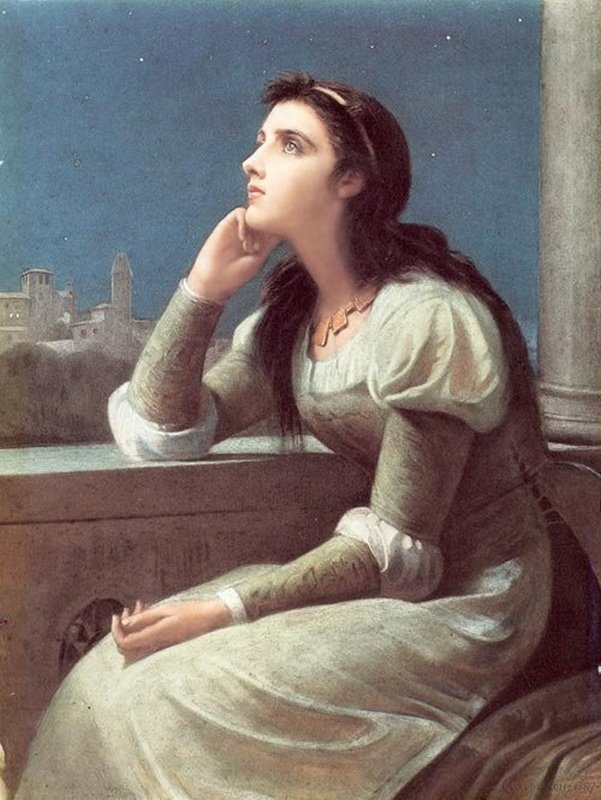
Philip Calderon, Juliet
Philip Calderon, Juliet

A virtuous young lady, secretly married, is forced to live with her rich, vulgar, art-collecting aunt.


Margaret Hunt, née Raines (1831-1912), who sometimes wrote as Averil Beaumont, sometimes as Mrs. Alfred Hunt (her husband was a well-known painter) produced about a dozen novels beginning in 1872, the last completed by her daughter Violet, also a novelist, and the consort of Ford Madox Ford, the best known novelist of the three.  This novel, the gripping plot of which begins in domestic comedy and ends in sensationalistic mystery, represents its varied and amusing characters in a brisk style.

Despite themes long familiar from “tri-voluminous fiction, the author . . . has managed to produce a fresh, attractive, and decidedly entertaining story.” Athenaeum, December 31, 1892

“Mrs. Alfred Hunt is a writer whose narratives go along smoothly enough, and whose persons have the breath of life.”  Saturday Review, January 21, 1893

The heroine’s troubles “are related with a vivacity which goes far to relieve their dismalness. . . . The story is a very good one, with plenty of excitement in the matter of plot, and at least one admirably drawn character.”  Spectator, March 25, 1893

Download this week’s novel:
v.1 http://access.bl.uk/item/viewer/ark:/81055/vdc_00000004DCAC#?c=0&m=0&s=0&cv=0&xywh=-1624%2C-120%2C4644%2C2389

v.2 http://access.bl.uk/item/viewer/ark:/81055/vdc_00000004DD00#?c=0&m=0&s=0&cv=6&xywh=-657%2C347%2C2911%2C1498

v.3 http://access.bl.uk/item/viewer/ark:/81055/vdc_00000004DD4E#?c=0&m=0&s=0&cv=6&xywh=-693%2C-1%2C3791%2C1951

Novel 038: Henry Cuyler Bunner, The Midge (1886)

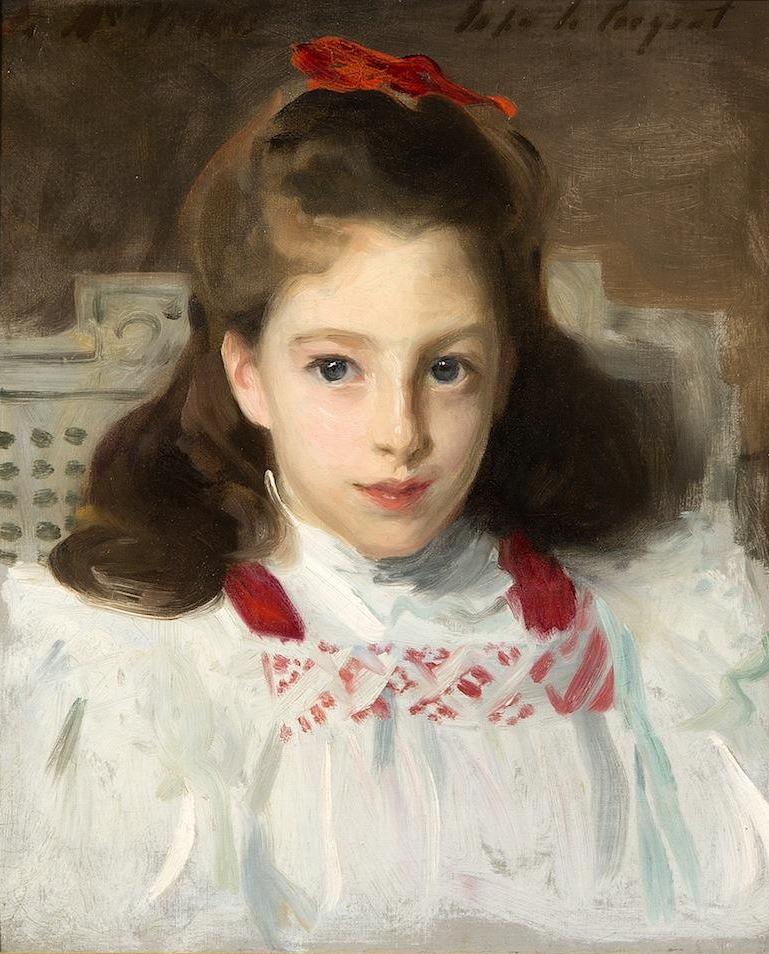
John Singer Sargent, Portrait of Miss Dorothy Vickers

An eccentric New York bachelor adopts an orphaned French-English waif.


Henry Cuyler Bunner (1855-1896) was better known for his stories and plays than his two novels.  This, the first, is a brief comedy of situation, delightful except for its odd ending.

“A slight yet charming study of life in the French quarter of New York."  Eclectic Magazine, July, 1886

The plot is “gracefully and artistically handled”;“the story is rich in sensitive passages, both humor and pathos being well portrayed.”  Advance, October 7, 1886

Download this week’s novel:
https://archive.org/details/midgemidge00bunnrich

Novel 036: Emily Eden, The Semi-Detached House (1858)

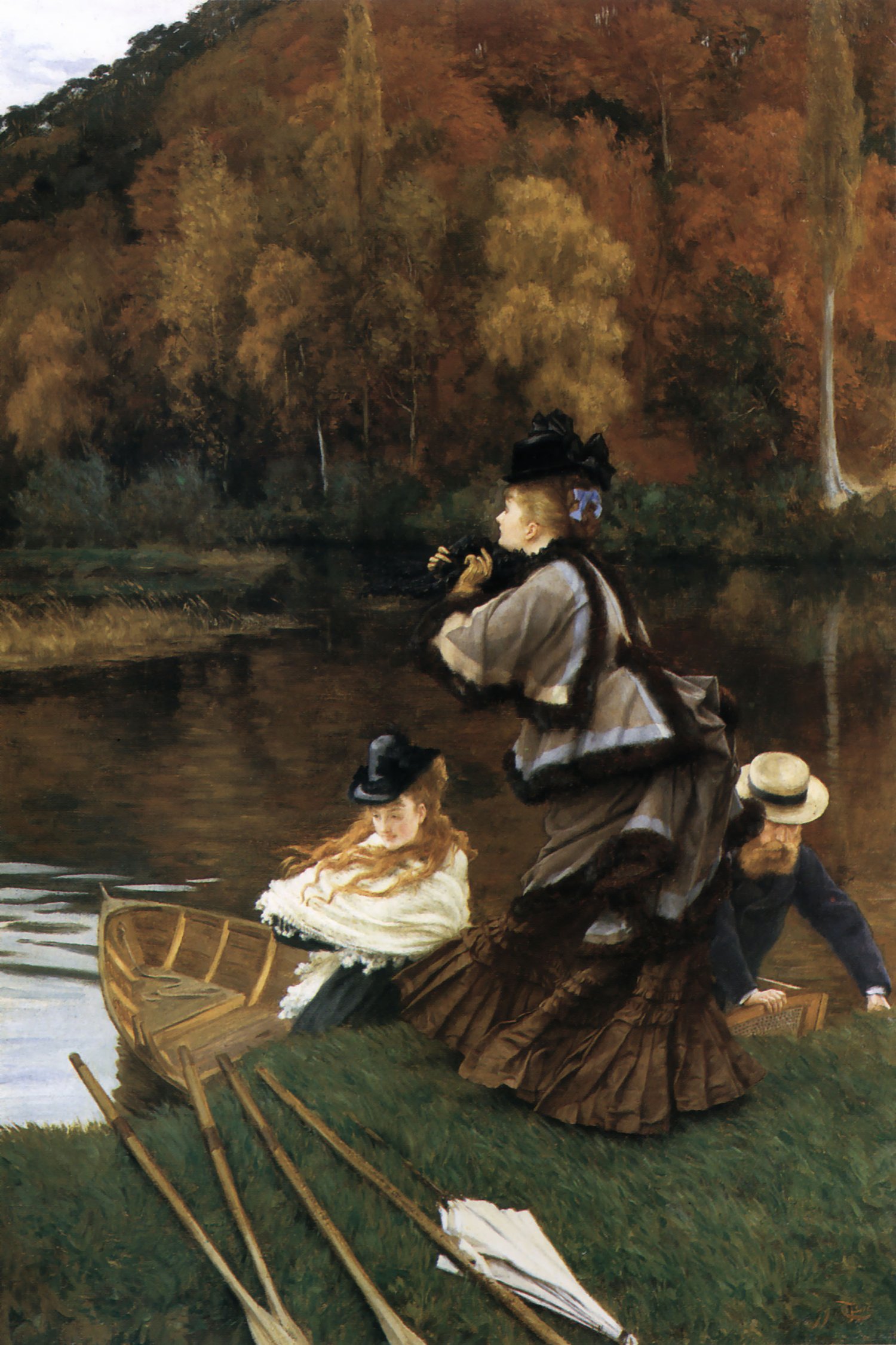
James Tissot, Autumn on the Thames

An aristocratic young lady, prevented by her pregnancy from accompanying her diplomat husband overseas, shares a “semi-detached house” with a middle-class family.


Emily Eden (1787-1869), daughter of a baron and sister of an earl, wrote only two novels, of which this quiet, pleasant work of social comedy is the second, though the first to be published.

“A piece of real life, sketched by a spectator full of shrewd sense and a genial spirit of fun.”  Spectator, August 6, 1858

“The purpose of this book, in so far as it has a purpose, is to teach us to take life easily and frankly . . . that we should not be too much pleased at speaking to persons of superior rank, nor too anxious to avoid those who may be below us”; the story is slight, but has “sparkling dialogue . . . good subsidiary characters, and . . . cheerful and habitual good sense.”  Saturday Review, August 27, 1858

“Character painting so entirely unpretending in its manner, and so perfect of its sort, as that which gives to this novel its value as a work of art, is not often to be found.”  Examiner, August 27, 1858

Download this week's novel:

https://archive.org/details/semidetachedhous00eden

Novel 035: Mrs. E.J. Burbury, Florence Sackville; or, Self-Dependence

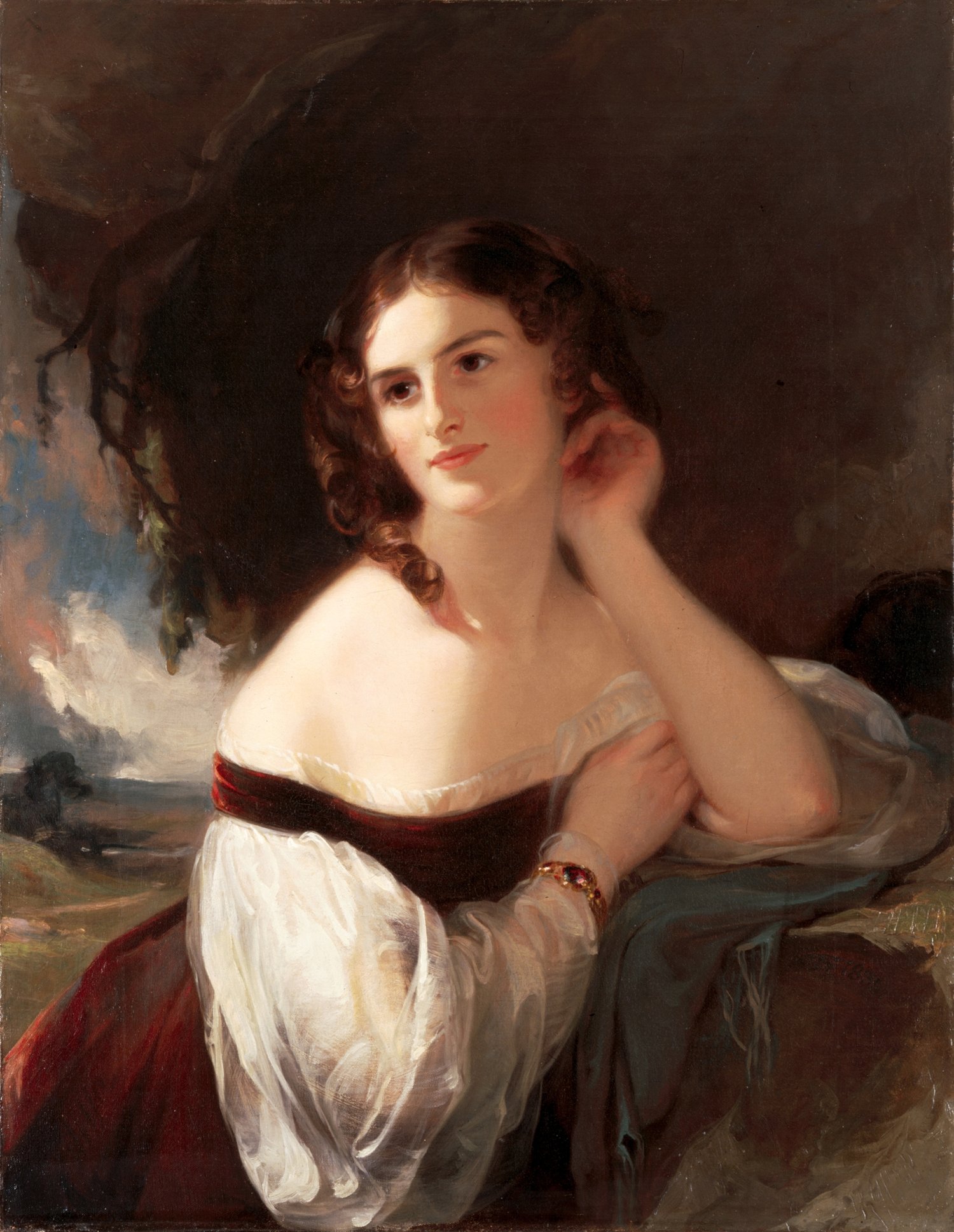
Thomas Sully, Fanny Kemble

Financial vicissitudes drive a virtuous young lady to  support herself and her family by acting in a provincial theater.


Nothing is known of Mrs. E.J. Burbury, author of only this single novel.  She appears to have tried to fit into it every noteworthy experience she ever had, whether working in theater (the miserable conditions of which, especially for women, are vividly portrayed), or driving through Oxford by moonlight.  It makes for fascinating reading, despite some mawkishness.

The author has a “clear appreciation of humour and of pathos—a firm hand in noting down the boundary lines and salient features of character, and a constancy . . . to the . . . purpose of her story.”  Athenaeum, November 11, 1851

"It is refreshing to take up a romance and to find it is not altogether an unmitigated profitless ‘love story’. . . .  Mrs. Burbury’s style is vigorous and effective, and the scenes she depicts, the characters she delineates, and the conversations she supposes, bear the stamp of a truthfulness, a penetration, and a depth of feeling, which would do honour to one who had been longer before the public.  That part of the story which relates to the theatrical career Florence is with repugnance compelled to adopt . . . is handled in a fearless and masterly style.”  New Quarterly Review, January, 1852

Download this week’s novel here:

http://solo.bodleian.ox.ac.uk/OXVU1:LSCOP_OX:oxfaleph014284777

Novel 034: Anthony Trollope, Cousin Henry (1879)

William Powell Frith, The Family Lawyer

A weak-spirited young man is led into trouble by his uncle’s multiple wills.


Anthony Trollope (1815-1882) is too well known to require introduction here; in fact he ought not to be here at all, except on the theory that, though not forgotten, he is nonetheless not often given his due, as the greatest of all novelists.  Anyway I have included him so as to complete my set of literary Trollopes.Cousin Henry exhibits in brief what makes Anthony Trollope the greatest of all novelists: his full and accurate representation of human nature.  He shows here the complicated workings of a commonplace mind bent on justifying an act of selfish injustice.

“The analysis of character is so exhaustive, and makes us so familiar with all his ins and outs, that we get to feel as if we were in some way to blame for him, or as if we ourselves might possibly have been Cousin Henry in (we hope) some very remote state of being.” Spectator, October 18, 1879

“The minute dissection of commonplace characters has long been the special feature of Mr. Trollope’s writings.  The present story excels both in minuteness and commonplace.”  Athenaeum, October 18, 1879

“His insight into the making and constitution of a poor creature is comprehensive and masterly.”  Saturday Review, October 25, 1879

Download this week’s novel here:

v.1 https://archive.org/details/cousinhenrynovel01trolrich

v.2 https://archive.org/details/cousinhenrynovel02trolrich

Novel 033: Frances Eleanor Trollope, A Charming Fellow (1875)

George Dunlop Leslie, Riverside, Wallingford, Berkshire

A handsome and popular young man, raised in genteel poverty by a doting mother, hopes to better his condition.


Frances Eleanor Trollope (1835-1913) was T.A. Trollope’s second wife, and therefore sister-in-law to Anthony Trollope and daughter-in-law to Frances Milton Trollope; she was also the sister of Ellen Ternan, Charles Dickens’s special friend.  She wrote a dozen or so novels between 1866 and 1892; here she delineates, with playful irony, a complex social environment made up of people who misunderstand themselves and each other.

“Mrs. Trollope has the family knack of investing commonplace life with dramatic interest”; “in the details of the drama, often both humorous and pathetic . . . the reader will find . . . evidence of considerable observation, expressed with unusual force.”  Athenaeum, January 1, 1876

“Of the minor characters, who are many, the assertion may be sweepingly made that they are all good.  Mrs. Trollope shows a really remarkable power of drawing character.” Academy, January 1, 1876

“There is a great deal of very nice and delicate work in this novel”; the title character is “extremely well done.”  Saturday Review, January 8, 1876

“Very much above the ordinary run of novels” with “three sketches of character that must be pronounced masterly.” The title character “is natural and consistent, a perfect specimen of the compatibility of winning manners and faultless temper with thorough badness of heart.”  Graphic, February 12, 1876

Download this week’s novel here:

v.1 https://archive.org/details/acharmingfellow01trolgoog

v.2 https://archive.org/details/acharmingfellow02trolgoog

v.3 https://archive.org/details/acharmingfellow00trolgoog

Novel 032: Cecilia Frances Tilley, Chollerton: A Tale of Our Own Times (1846)

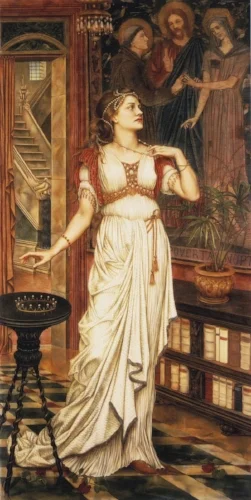
Evelyn de Morgan, The World's Wealth (The Crown of Glory)

An orphaned young lady of firm Tractarian principles, having gone to live with some distant cousins, is wooed by a baronet and admired by a clergyman


Cecilia Frances Tilley (1816–1849), Frances Trollope’s daughter, Anthony and T.A. Trollope’s sister, Henry Milton’s niece, wrote only one novel before dying of consumption in her early thirties.  Though marred somewhat by religious lecturing, Chollerton exhibits the family facility with character, plot, and style.

A “specimen of the lesser novel”: the “story sufficiently probable; the characters natural . . . the style easy, and rather elegant.”  Spectator, August 15, 1846

Though of the objectionable class of “controversial fictions,” this is “beyond measure the best”: “the plot is well constructed, the incidents flow naturally one from another, the characters are conceived vividly and sustained with skill.” And it is less “tainted with illiberality than any similar work we have seen.” Critic, October 24, 1846

Download this week’s novel:
https://archive.org/details/chollertonatale00tillgoog

Novel 031: Henry Milton, Rivalry (1840)

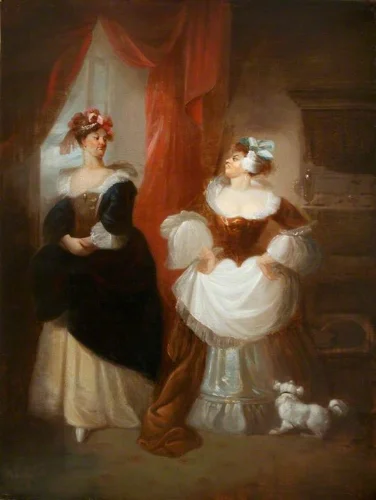
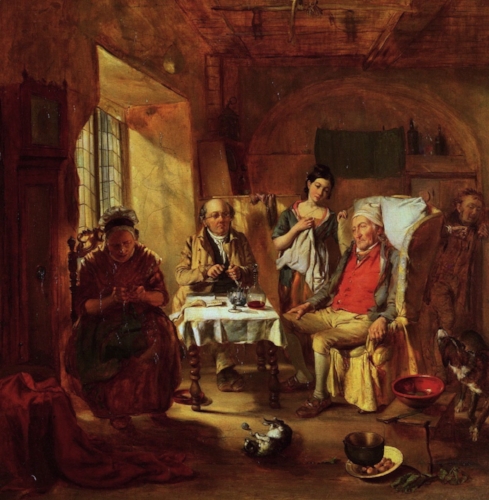
Robert Smirke, The Rival Waiting Women

Two middle-aged women vie for a bachelor; meanwhile, a virtuous young lady is besieged by scoundrels.


Henry Milton (1784–1850), Frances Trollope’s brother, Anthony and T.A. Trollope’s uncle, wrote only two novels, of which this is the first.  It amusingly combines farce and melodrama.

He is like his sister in providing “the same literal truth in the descriptions of common life; the same tendency to caricature in the humorous, and to melodramatic exaggeration in the serious parts.”  The Spectator, May 2, 1840

“His talent is equal for the serious or the comic, the one, however, sometimes verging into the melodramatic, the other occasionally approaching the burlesque.” The Morning Post, May 9, 1840

Written in “an easy and agreeable style,” the novel shows a “lively sense and good humour, . . . excellent knowledge of ordinary life,” and “nice discrimination of character in its ludicrous as well as its quiet aspects.” The Examiner, May 31, 1840

Download this week’s novel:
v.1 https://archive.org/details/rivalry01milt

v.2 https://archive.org/details/rivalry02milt

v.3 https://archive.org/details/rivalry02milt