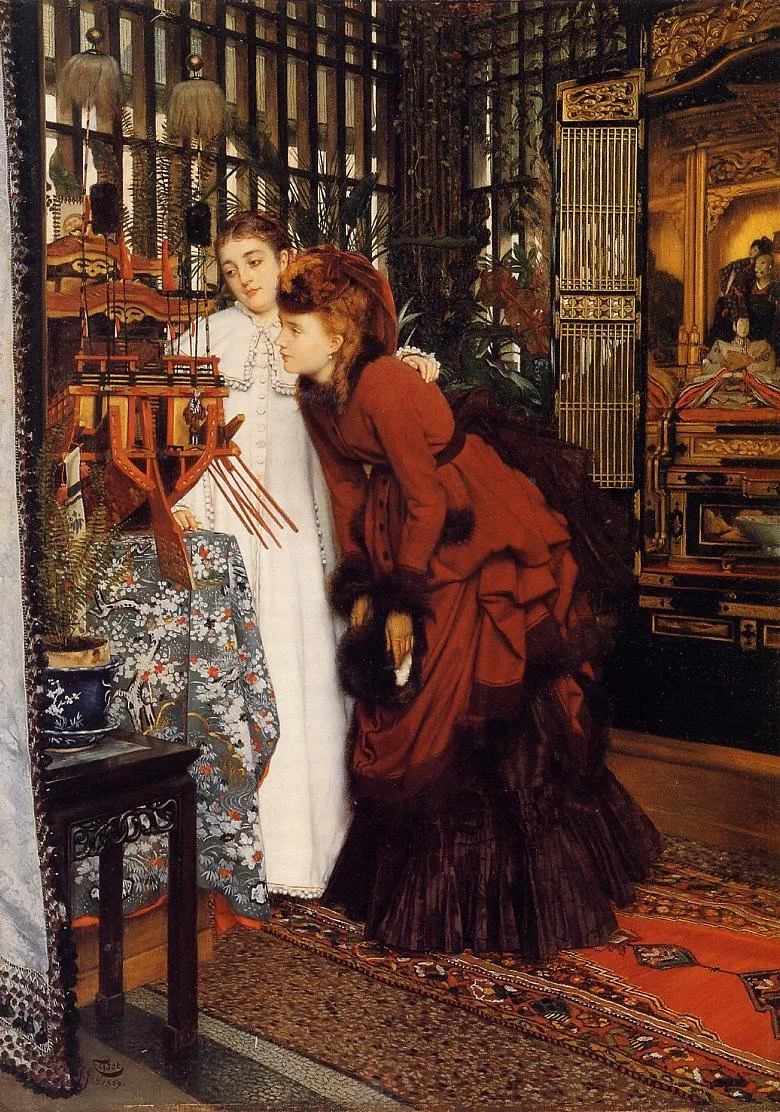
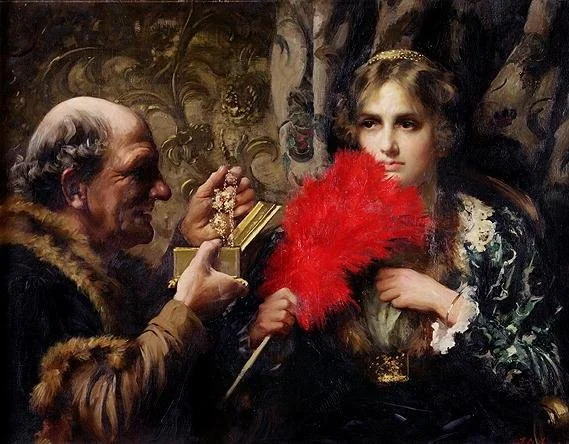
David Alfred Bywaters's Crossword Cavalcade & Fortnightly Victorian Novel Recommender. Every Saturday! Either a new language-torturing puzzle or an old novel by an unjustly neglected Victorian author. Why waste time on other amusements?

Novels

Novel 284: C.H.D. Stocker, Between the Acts (1884)
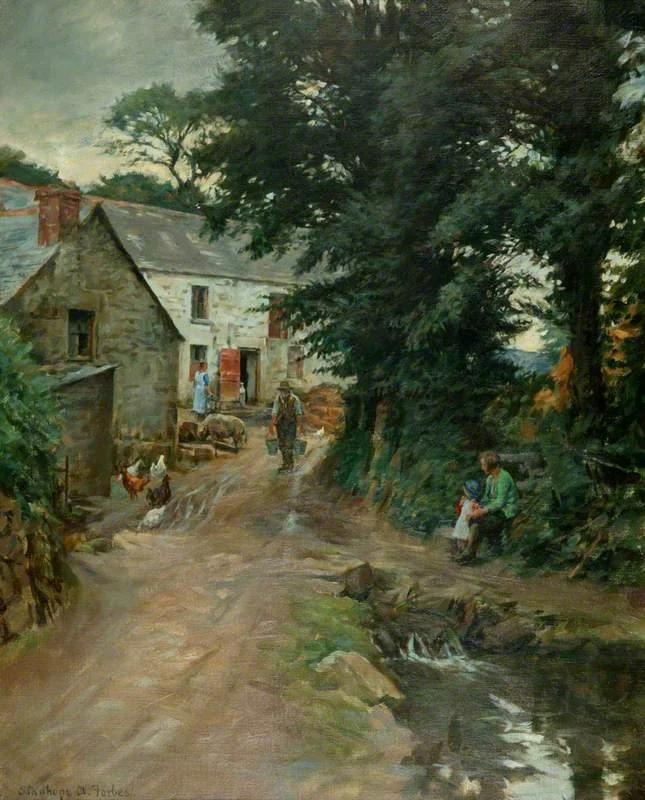
Stanhope Alexander Forbes, Farmyard

An artist’s wife and eleven children try to make ends meet in a country cottage.


I can discover nothing about C.H.D. Stocker; this is her only novel (I choose a feminine pronoun only because the protagonist is a woman).  And that is a pity, for her witty, incisive style and scenes of comic household disorder are just brilliant.

“Miss Stocker’s novel is very good indeed.” The plot is “by no means original. . . .  But the really good work which makes itself conspicuous and delightful throughout Miss Stocker’s three volumes is the lifelike portraiture. . . .  English children of the ‘happy family’ order have rarely been drawn with more geniality and truth.” Athenaeum, December 6, 1884

“A capital piece of work. . .  There are some happy descriptions both of the country and of London . . . and Miss Stocker’s style is spontaneous and unusually correct. . . .  On the whole . . . Miss Stocker has used an old situation . . . with effect.”  Academy, December 13, 1884

“This novel, utterly without pretension, and belonging for the most part to the domestic order of fiction, is bright and amusing . . . , really pleasant reading.”  Morning Post, December 28, 1884

Stocker “can imagine striking situations and use them with a certain dexterity.  But, above all, he has a very genuine sense of humour.”  Saturday Review, February 7, 1885

Download this fortnight’s novel:

v.1 https://archive.org/details/betweenactsnovel01stoc
v.2 https://archive.org/details/betweenactsnovel02stoc

v.3 https://archive.org/details/betweenactsnovel03stoc

Novel 282: E.S. Maine, Scarscliff Rocks (1875)

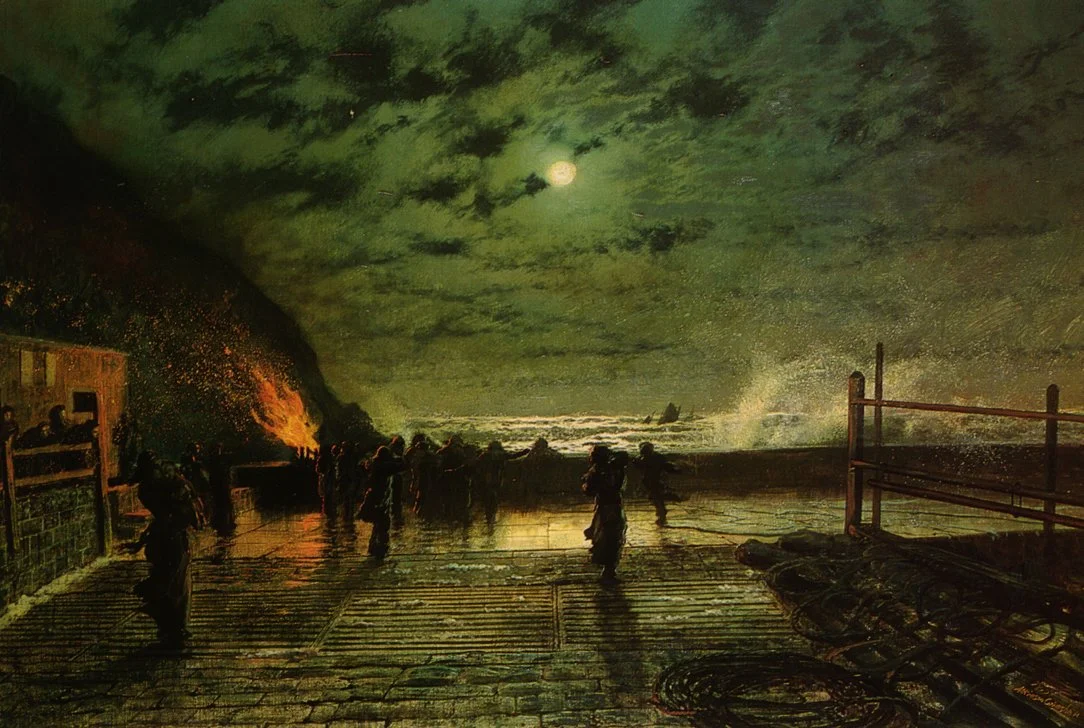
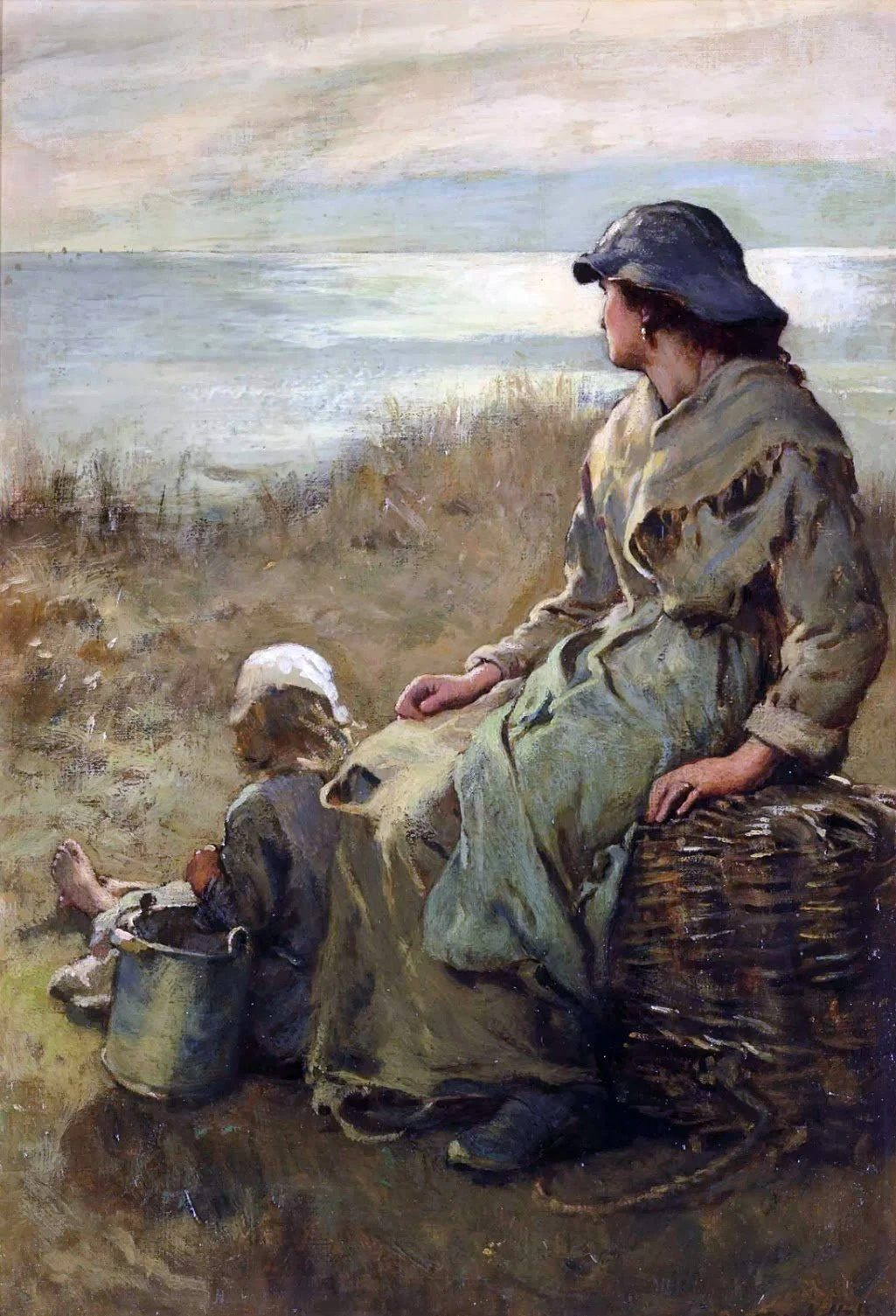
Frank Holl, Waiting the Return of the Boats, Cullercoats, Northumberland

A woman flees empty social triumphs to live in an isolated town with her clergyman father and there meets a mysterious man.


For E.S. Maine, see Novel 141

“Scarscliff Rocks is a story of considerable merit. . . .  The most salient merit of the book is in the carefully studied contrast of the two chief female characters, which are both well conceived and elaborated. . . . The plot . . . has been skilfully handled, and not overwrought, as it might readily have been.” Academy, June 26, 1875

“It has the old air of story-telling about it, and not that of ‘studies’ of this, that, and the other. . .  The author has successfully depicted commonplace characters without making them bores.”  Spectator, August 21, 1875

A contrasting view:

“What all such tales as ‘Scarscliff Rocks’ want, and there are generally at least a dozen of them every quarter, is dramatic power.  We have sensational instead of dramatic scenes.  The characters are generally fairly drawn, but are often dull when they are not sensational.” Westminster Review, October, 1875

Download this week’s novel:

https://solo.bodleian.ox.ac.uk/permalink/f/89vilt/oxfaleph014280404 (Right-click (or control-click, if you have a Mac) on the “view digitized copy” links to download the novel’s three volumes in pdf form)

Novel 281: F. Anstey, Vice Versâ (1882)

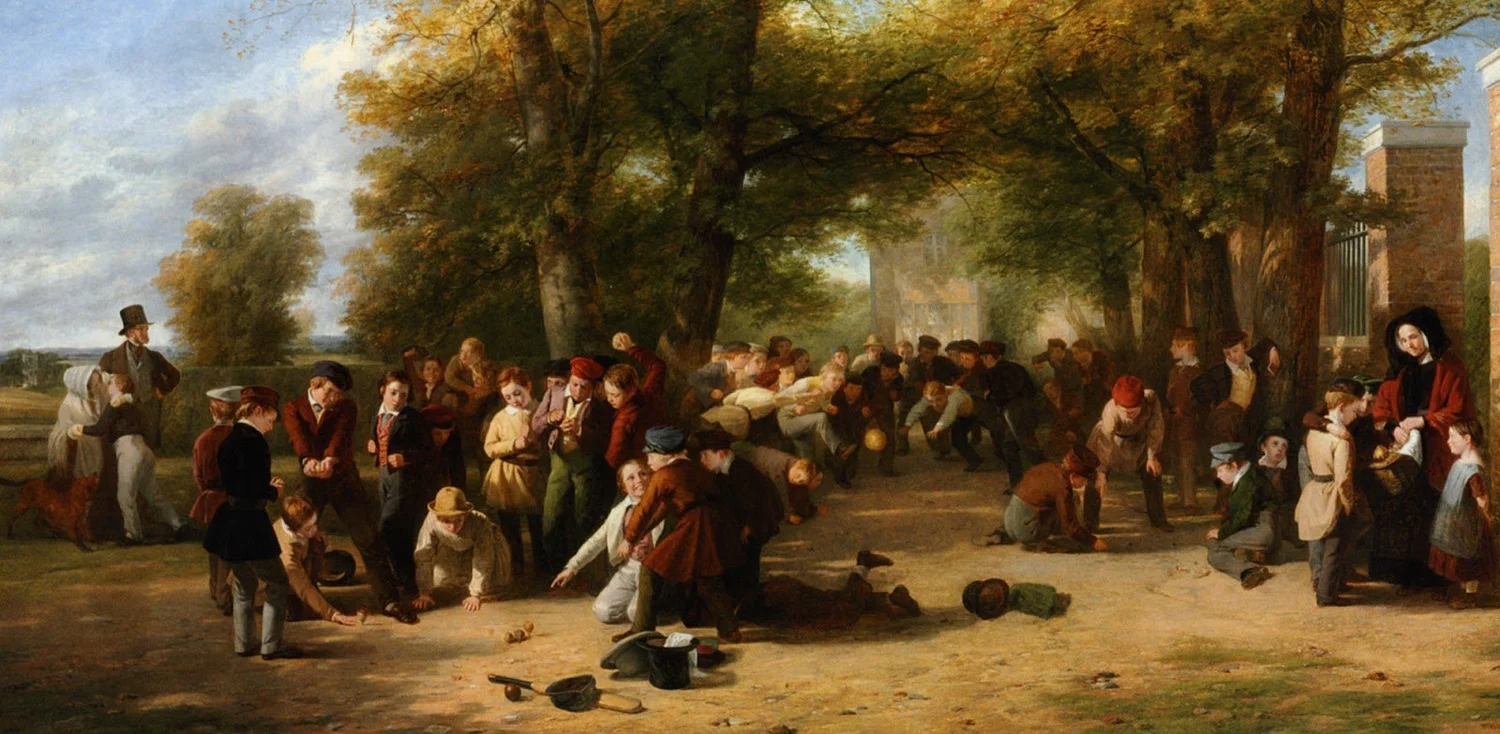
Thomas Webster, A School Playground

A staid middle-aged merchant is made by a magic stone to exchange bodies with his schoolboy son.


F. Anstey, born Thomas Anstey Guthrie (1856-1934), wrote regularly for the humor magazine Punch, and twenty works of fiction, most based, like this one, on fanciful comic premises.

“A perfectly sober and serious book, in the reading of which a sober man may laugh without shame from beginning to end.”  Saturday Review, July 15, 1882

“It is a long time since we have read anything more truly humorous.”  Spectator, August 26, 1882

“A capital bit of sustained humor.”  New York Times, October 29, 1882

Download this week’s novel:

https://archive.org/details/viceversaorlesso00anst

Novel 280: Mary Elizabeth Braddon, To the Bitter End (1872)

John Callcott Horsley, The Pride of the Village

A rising barrister, on a country vacation, falls in love with a farmer’s daughter.


For Braddon, see Novels 004, 061, 115, 170, 222, and 223.

“It is carefully written, and even rewritten, and yet is full of all the old rough vigour and dash, the keen sense of the many pleasures and enjoyments of life, the love of green fields and blue skies, and pleasant gardens, and the quick impatience of all that is hollow and conventional.”  Athenaeum, September 21, 1872

“Its plot, not ill-conceived, is well worked out, and told with appropriate humour and appropriate pathos.  Several of the characters are clearly defined, and . . . there is originality and fresh vigour in its presentment.” Examiner, October 12, 1872

A contrasting view:

Braddon’s “admirers will probably run through the work with a certain vacant satisfaction, while ever and anon, like dim reminiscences of a previous stage of existence, will dawn on their misty consciousness a vague idea that they have seen all this before.”  Manchester Guardian, September 25, 1872

Download this fortnight’s novel:

https://solo.bodleian.ox.ac.uk/permalink/f/89vilt/oxfaleph014626003 (Right-click (or control-click, if you have a Mac) on the “view digitized copy” links to download the novel’s three volumes in pdf form)

Novel 279: Lucy B. Walford, The One Good Guest (1892)

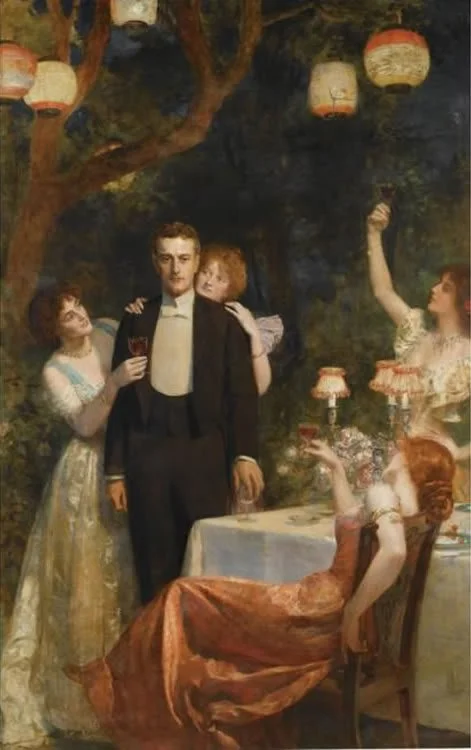
John Collier, The Garden Party

A young sister and brother encounter social difficulties on their country estate.


Here is yet another novel by Walford, for whom see Novels 018, 066, 121, 174, and 227.

“The tale is told with the spirit that always characterizes Mrs. Walford’s stories.” Critic, July 16, 1892

“A thoroughly interesting story, a trifle sensational, well written, full of life and movement.”  Independent, September 8, 1892

A contrasting opinion:

It “is not markedly original, amusing, or attractive to our thinking.  The young folks and their doings do not greatly interest one, though there is some freshness about them, and, in their fashion, they are natural and human enough. . . .   The story is slight, the treatment slighter, but it will pass.” Athenaeum, September 24, 1892

Download this fortnight’s novel:

https://archive.org/details/onegoodguest00walfgoog

Novel 278: Mrs. Alexander, A Choice of Evils (1894)

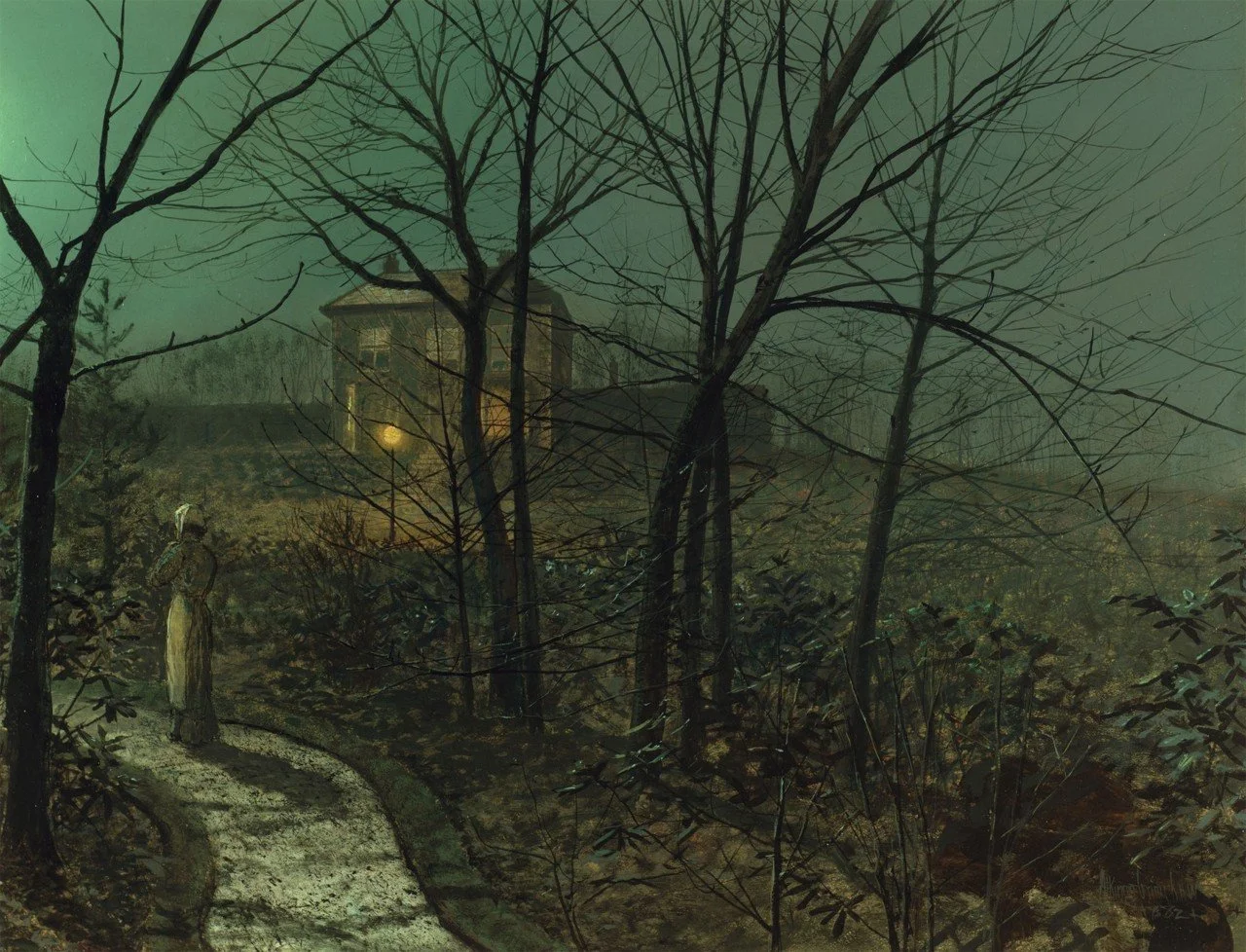
Atkinson Grimshaw, Woman on a Path by a Cottage

A poor gentlewoman makes what seems a perfect marriage with a local squire.


Here is another fine novel by Mrs Alexander, for whom see Novels 001, 063, 113, 168, and 221.

“Mrs. Alexander . . . draws the portrait of a woman with a fine if not sympathetic nature, and her graphic pen sketches with clever ease the varied characters that surround her central figure.”  Morning Post, October 30, 1894

“Mrs. Alexander is a story-teller who thoroughly enjoys her work. . . .  She evidently believes in the vitality of her stories, has her people clearly before her eyes, and does her work in so unflagging a manner that the reader perforce resigns himself into her hand, takes a hearty interest in her performance, and has a good time of it. . . .  ‘A Choice of Evils’ is an entertaining book, because of its clever telling, and the people in it behave naturally, and grapple with the remarkable facts of their lives in a sensible manner.” Standard, November 28, 1894

A contrasting view:

“In spite of the ability of the book, we do not feel attracted by it.” Spectator, October 27, 1894

Download this fortnight’s novel:

v.1 https://archive.org/details/choiceofevilsnov01alex/

v.2 https://archive.org/details/choiceofevilsnov02alex/

v.3 https://archive.org/details/choiceofevilsnov03alex/

Novel 277: Coulson Kernahan, Scoundrels & Co. (1899)

John Atkinson Grimshaw, In Peril

A writer accidentally joins a group of professional terrorists and frustrates their plots.


John Coulson Kernahan (1858-1943), a journalist and critic as well as a novelist, wrote a dozen or so works of fiction; this one is notable for its rapid succession of thrilling incidents and its witty style.

“A most ingeniously imagined series of adventures.”  Bookman, August, 1901

“Mr. Kernahan’s detective stories are rather different from anyone else’s.  This sort of literature usually attracts either by being very horrible or by being very ingenious—or by both.  Mr. Kernahan is not quite either; he seldom tries to be blood-curdling, and then generally fails; while both his characters and his incidents are too frankly impossible to earn him a reputation for ingenuity.  What, then, is the secret of his success?  It appears to lie in his briskness and geniality, in the attitude of tolerant alacrity with which he is always ready to oblige . . . his readers.” Manchester Guardian, March 27, 1901

Download this fortnight’s novel:

https://archive.org/details/scoundrelsco00chicgoog

Novel 276: Clementina Black, Orlando (1880)

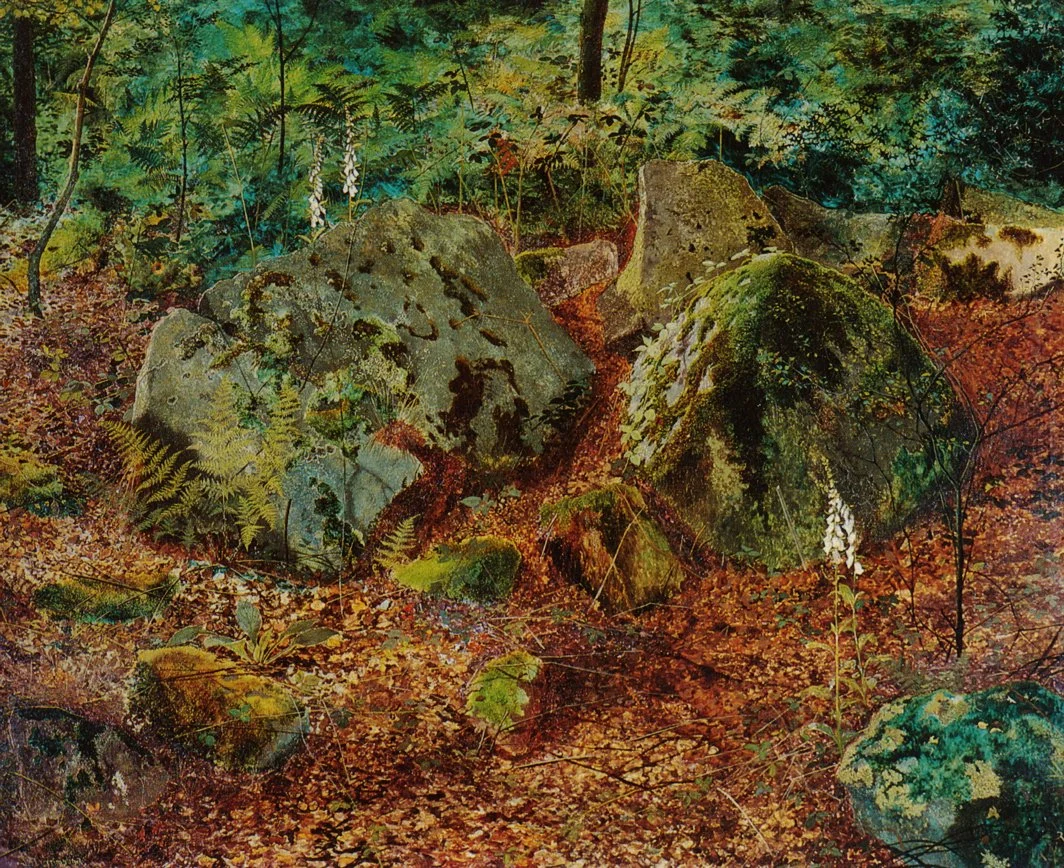
John Atkinson Grimshaw, A Mossy Glen

A good man loves a good woman betrothed to a bad man.


Clementina Black (1853-1923), whose sister was the translator Constance Garnett, was a feminist and labor activist as well as the author of a dozen or so works of fiction.

“There is a pathetic charm in Miss Black’s stories which must compel the sympathy of her readers”; this is “distinctly a clever, wholesome, and affecting romance.” Athenaeum, January 17, 1880

“We can . . . speak well of Orlando, and, but for certain longueurs in it, we could speak very well. . . .  There is some freshness about most of the characters. . . .  The book is rather one of those which one reads with a pleasant and equable feeling of satisfaction than one of those which deserve the terms ‘enthralling,’ ‘entrancing,’ ‘engrossing,’ or any other of the usual laudatory participles.  But of its kind it is very far from unsuccessful.”  Academy, January 24, 1880

“Miss Black has woven an interesting and touching story out of simple and natural materials.” Saturday Review, April 10, 1880

Download this fortnight’s novel:

v.1 https://archive.org/details/orlando01blac

v.2 https://archive.org/details/orlando02blac

v.3 https://archive.org/details/orlando03blac

Novel 275: Oswald John Frederick Crawfurd, The World We Live In (1884)

James Sant, Contemplation

After five years in Baluchistan, a man returns to Scotland to pursue the woman he loves, now widowed.


Oswald John Frederick Crawfurd (1834-1909), aside from writing some ten novels, was British consul at Oporto from 1866-1890.

“A very good story, told with skill, taste, and what in music is called brio. . . . The talk is excellent, various, natural . . . ; characteristic, so that we know the talkers, and make mental portraits of them.” Spectator, July 5, 1884

“A capital novel.  It is lively and sparkling throughout, and one can only regret that it is so short.” Athenaeum,  July 5, 1884

Download this fortnight’s novel:

https://books.google.com/books?id=qvEaAAAAYAAJ&newbks=1&newbks_redir=0&dq=crawfurd%20the%20world%20we%20live%20in&pg=PP10#v=onepage&q&f=false

Novel 274: Thomas Bailey Aldrich, The Stillwater Tragedy (1880)

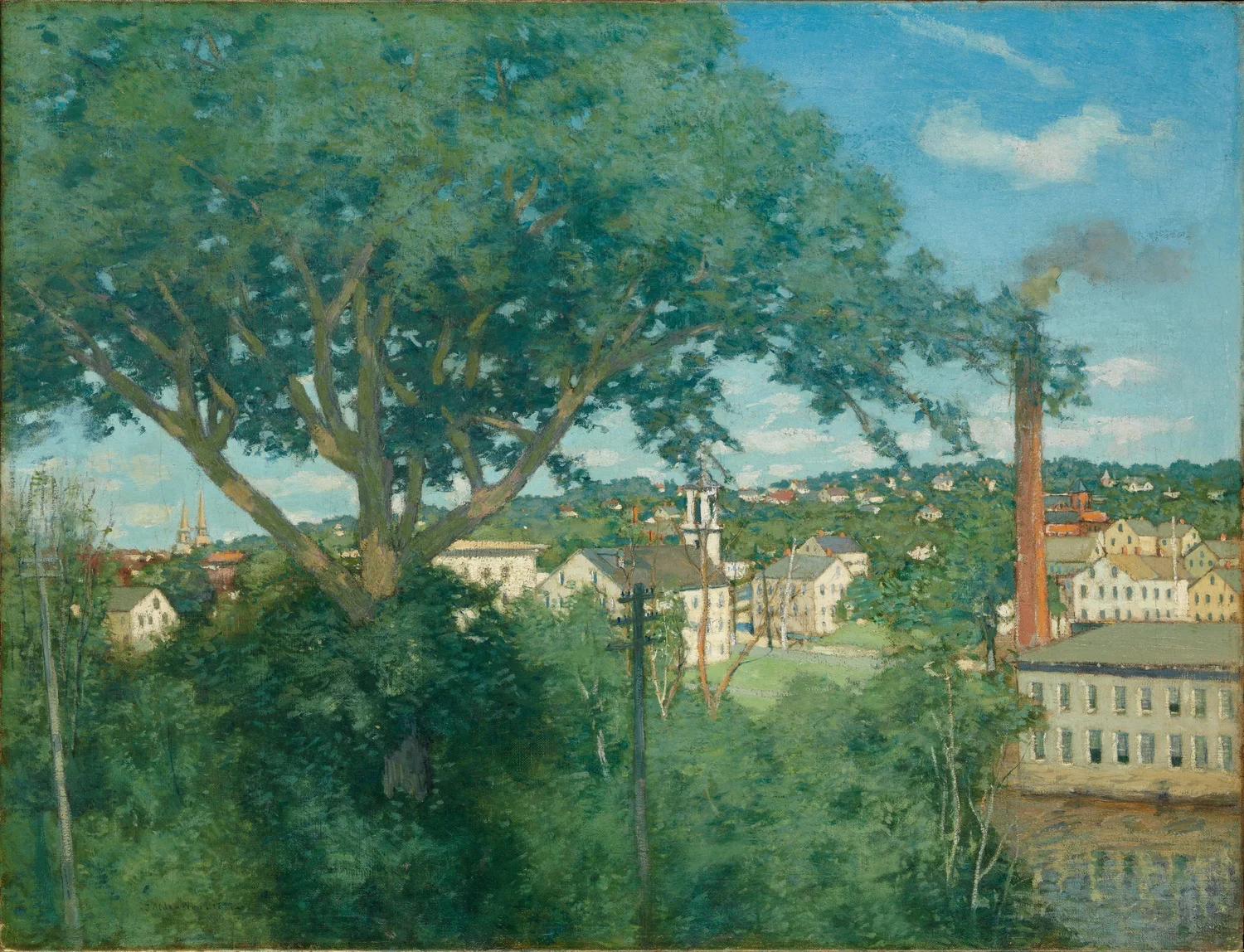
Julian Alden Weir, The Factory Village

In a New England town plagued by labor troubles, a detective searches for a murderer.


Thomas Bailey Aldrich (1836-1907), editor of the Atlantic Monthly from 1881-1890, published a dozen or so works of fiction, in addition to much poetry and criticism.The Stillwater Tragedy features a murder mystery and a labor strike.

“The faithful potrayal of life in a manufacturing village; the distinct and vivid etchings of character; the graceful turns of fancy and humor; the simple and wholesome love affair; the naturalness, purity, and equipoise with which the story is told, all mark it as one of the best of Aldrich’s prose performances.” Louisville Courier-Journal, September 3, 1880

“The book is something much better than a novel of the familiar detective class. . . .  the plot is not used as a mere framework on which to display the delicately drawn pictures by which Mr. Aldrich has long been known and admired; the incidents of the story are used not only to illustrate but to develop the characters of the chief personages. . . .  The book has a symmetry of form and an evenness of texture which show the hand of the true artist.” New York Tribune, September 12, 1880

A contrasting view:

“It is all very clever, astonishingly clever.  But it is a kind of cold, cynical brilliancy which in a short story may be very entertaining, but which in a novel soon palls upon one’s taste.” Scribner’s, November 1880

Download this fortnight’s novel:

v.1 https://archive.org/details/stillwatertraged01aldriala

v.2 https://archive.org/details/stillwatertraged02aldriala

Novel 273: Peter Hay Hunter and Walter Whyte, My Ducats and My Daughter (1884)

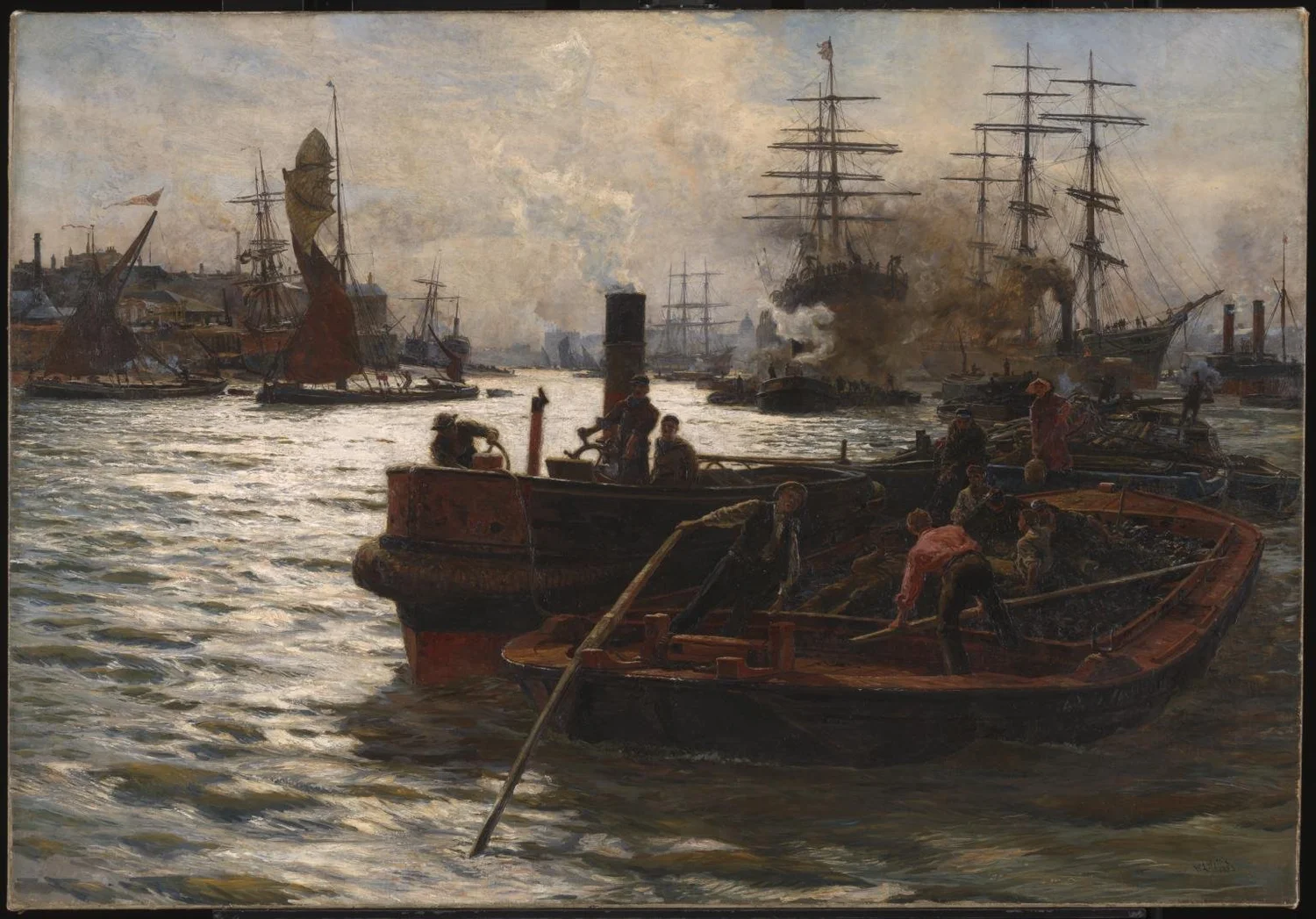
William Lionel Wyllie, Toil, Glitter, Grime and Wealth on a Flowing Tide

The poor nephew of a Scottish industrialist pursues a career in journalism.


I can discover nothing about Walter Whyte. Peter Hay Hunter (1854-1909), a minister in the church of Scotland, wrote some seven novels. This one is particularly interesting for its carefully realized setting, a badly polluted Scottish industrial town.

It is “both in point of conception and execution . . . above the average of the ordinary novel”; “the style is vigorous and unaffected” and the author “possesses a considerable fund of shrewd humour.”  Athenaeum, May 17, 1884

“It is written in clear, flowing, idiomatic English; the plot, without being trite and commonplace, is consistent and probable; there are three or four very well drawn characters in it.” Academy, May 24, 1884

“It is evidently written by a man who knows the world. . . .  The style is sufficiently lively to keep the reader wide awake. . .   The more finished characters are carefully and consistently drawn.” Saturday Review, July 12, 1884

A contrasting view:

“While the book is amusing, the story is ill-constructed, and its materials of almost venerable antiquity.” Spectator, July 12, 1884

Download this fortnight’s novel:

v.1 https://archive.org/details/myducatsmydaught01hunt

v.2 https://archive.org/details/myducatsmydaught02hunt

v.3 https://archive.org/details/myducatsmydaught03hunt

Novel 272: Catherine Crowe, The Adventures of a Beauty (1852)

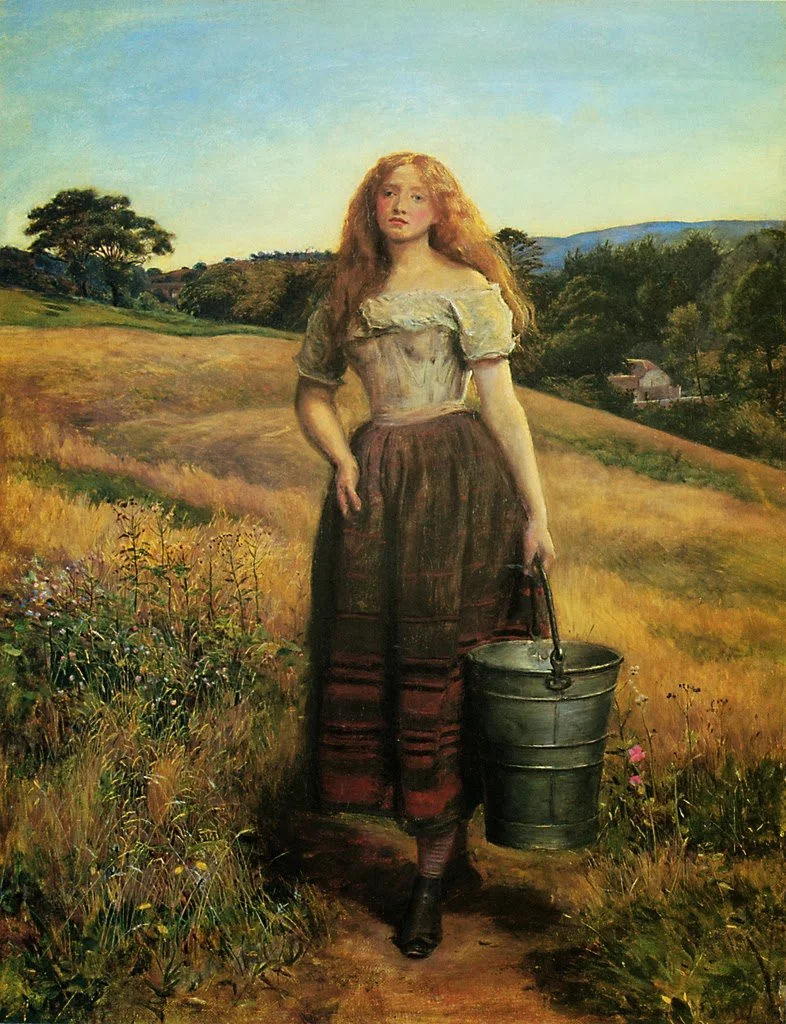
John Everett Millais, The Farmer's Daughter

A farmer’s daughter secretly marries a baronet’s heir.


For Crowe, see Novel 023.

“There are few writers who possess an equal ability with Mrs. Crowe, of throwing her characters into complications, and dextrously disentangling them.”  Bentley’s Miscellany, January, 1852

It may be “enjoyed as one enjoys the feats of a conjuror who can make a card fly out of the pack into a gentleman’s pocket or a lady’s reticule, and restore it to its proper place.” Westminster Review, April, 1852

Download this fortnight’s novel:

https://archive.org/details/10892458.1980.emory.edu

Novel 271: Frances Cashel Hoey, Griffith’s Double (1876)

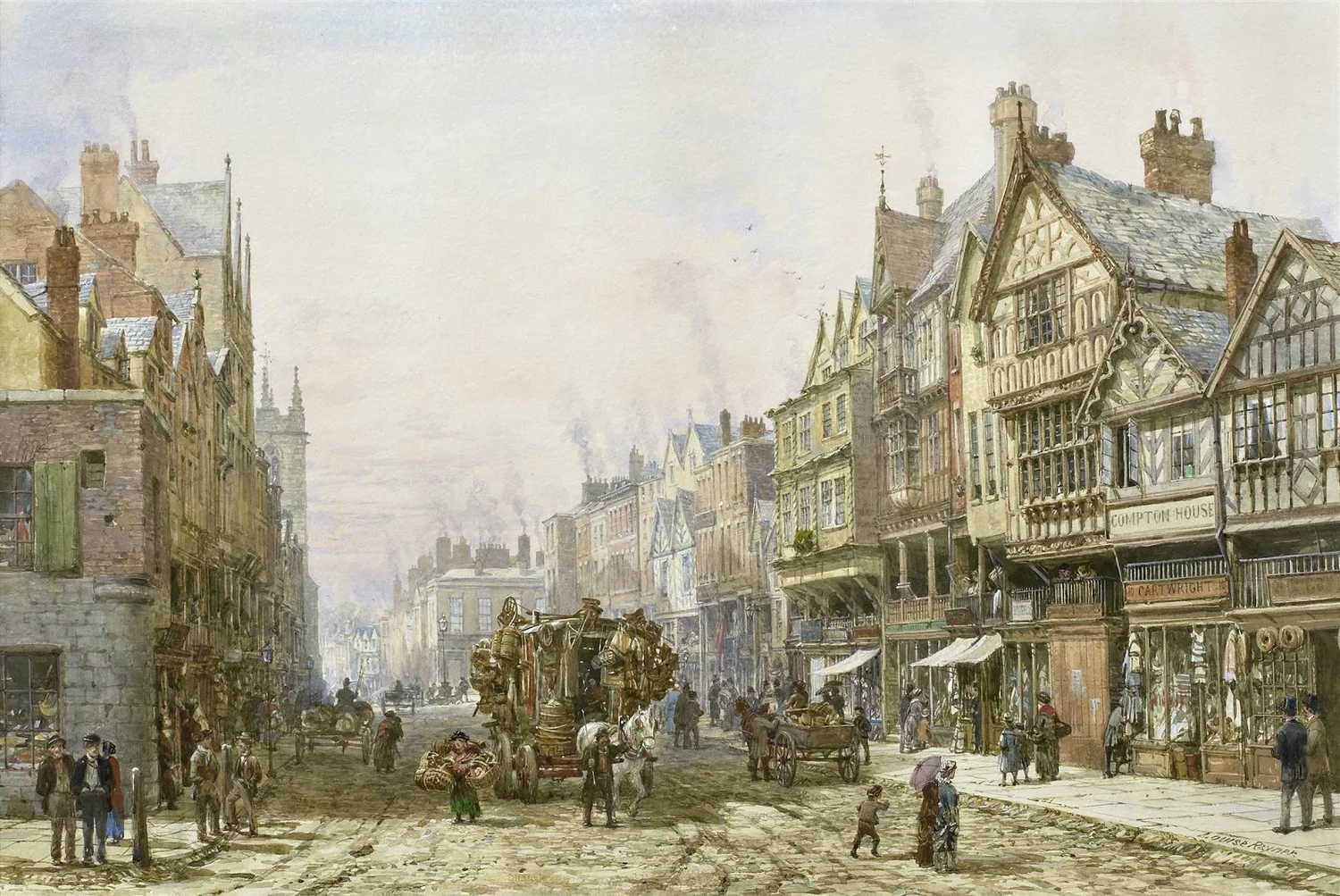
Louise Rayner, Chester

An adventurer schemes to marry an Australian heiress.


For Cashel Hoey, see Novels 067, 153.

The novel “deserves the success which is earned by a well-thought-out and elaborate plot, a clear style, and incidental tokens of both humorous and pathetic insight.” Athenaeum, August 5, 1876

“This is a very clever novel.  But . . . there are sins against credibility in these volumes, and sins against art. . . .  There may be graphic sketches of scenery and character . . . but the mind of the reader becomes bewildered when there is a mass of detail of the most intricate description, which takes away his capability to follow the real purport of the story.  We think that in the novel before us Mrs. Cashel Hoey has jumped from crag to crag of invention with wonderful agility, but others will find a difficulty in keeping up with her during these really marvellous feats. . . .  The story is well written, and much ingenuity is displayed in its conception and evolution.”  Examiner, August 26, 1876

“The plot of ‘Griffith’s Double’ is complicated beyond all necessity.  The real strength of the book lies in its very pleasant and kindly tone, and in the quiet humour of the descriptions of life in the country town of Wrottesley.”  Pall Mall Gazette, September 5, 1876

Download this fortnight’s novel:

v.1 https://access.bl.uk/item/viewer/ark:/81055/vdc_00000003FB82#?c=0&m=0&s=0&cv=6&xywh=-336%2C0%2C3190%2C1952

v.2 https://access.bl.uk/item/viewer/ark:/81055/vdc_00000003FB88#?c=0&m=0&s=0&cv=6&xywh=-368%2C-1%2C3261%2C1995

v.3 https://access.bl.uk/item/viewer/ark:/81055/vdc_00000003FB8E#?c=0&m=0&s=0&cv=0&xywh=-1322%2C-125%2C4063%2C2485

Novel 270: Annie Edwardes, A Blue-Stocking (1877)

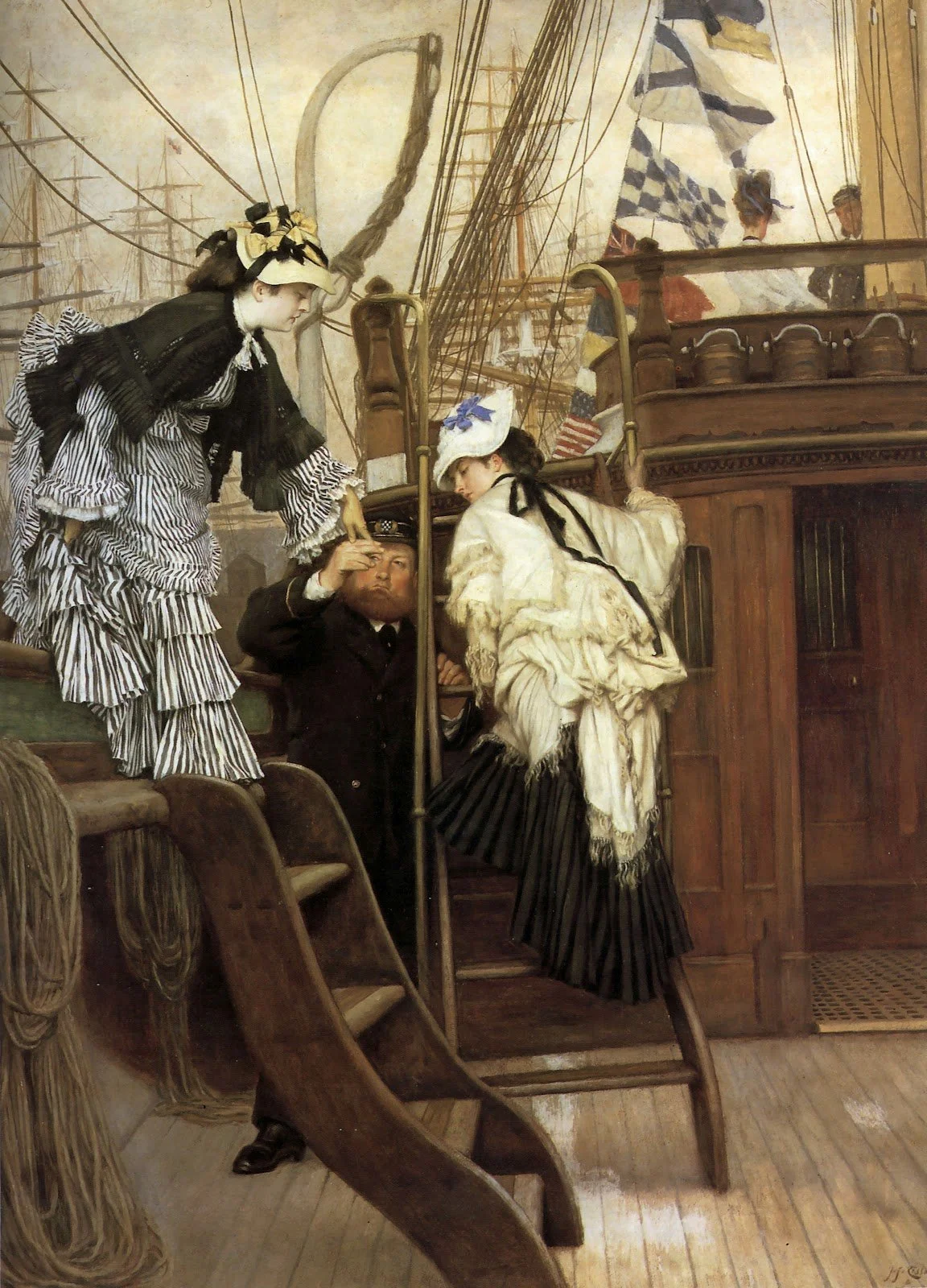
James Jacques Joseph Tissot, Boarding the Yacht

In Jersey, a gentleman rescues a young widow’s child from drowning.


For Edwardes, see Novels 158 and 212.

“Mrs. Edwardes is at her best in this book.  It has . . . the quiet humour which we have missed in her later works.”  Spectator, October 20, 1877

“It is pleasant, bright, and inoffensive.”  Saturday Review, November 24, 1877

Download this fortnight’s novel:

https://solo.bodleian.ox.ac.uk/permalink/f/89vilt/oxfaleph014766163

Novel 269: Frances Milton Trollope, The Vicar of Wrexhill (1837)

James Jacques Joseph Tissot, In Church

A widow falls under the spell of an Evangelical clergyman.


Here is another novel by Trollope, for whom see Novels 029, 079, 138, 189, 190, and 191.

“This is certainly the best novel that Mrs. Trollope has produced, as regards dramatic execution and development of character.  It . . . shows how the highest and best feelings of our nature may be turned by evil guidance and misdirected enthusiasm.”  Literary Gazette, September 16, 1837

“Never has the affectation of piety been more mercilessly lashed. . . .  Her object—a laudable one, as every one must admit, has been to show the pernicious effects of sectarian bigotry. . . .  This, Mrs. Trollope has done with unexampled vigour and ability.”  Sunday Times, September 17, 1837

A contrasting view:

“To invent a succession of domestic atrocities, and then fasten them upon a particular class of religionists, proves nothing but that the author is an exceedingly illogical and absurd person. . . .  In truth this work is very disagreeable. . . .  Every thing in it is represented in excess . . . ; and the spirit of the whole is that of a perverse and tortuous mind, full of venom. . . .  Other authors contrive to get out of themselves—to lose themselves in the fiction. . . .  Mrs. Trollope never does this; she is always present to us in her books; we feel her influence in the bitter taunt, the vulgar spleen, the ill-natured reproof, the scurrilous criticism, and the giggling cant of good-breeding.” Court Magazine and Monthly Critic, October 1837

Download this fortnight’s novel:

v.1 https://archive.org/details/vicarofwrexhill01trol

v.2 https://archive.org/details/vicarofwrexhill02trol

v.3 https://archive.org/details/vicarofwrexhill03trol

Novel 268: Noell Radecliffe, Sybilla Lockwood (1864)

Edmund Blair Leighton, Courtship

An heiress, married for her money by one bad man, is tempted by another.


For Radecliffe, see Novels 005, 105, and 157.

“The people in Sybilla Lockwood are more like . . . ‘humans’ than people in stories usually are.” Saturday Review, July 30, 1864

“The novel is a very extraordinary one.  The subject is . . . adultery. . . . We cannot think ‘Sybilla Lockwood’ at all fitted for general reading. . . .Otherwise the execution, though not brilliant, is singularly faultless.  The motives and the conduct of the different characters bear a rational relation to each other.”  Spectator, August 13, 1864

A contrasting view:

“There is not in ‘Sybilla Lockwood’ sufficient weight of interest to carry the reader through the private affairs of the numerous characters. . . .  The novel is badly constructed, being merely a bundle of personal histories, with no plot or story to bind them together.” Athenaeum, September 10, 1864

Download this fortnight’s novel:

v.1 https://access.bl.uk/item/viewer/ark:/81055/vdc_00000004A970#?c=0&m=0&s=0&cv=4&xywh=-60%2C-1%2C2737%2C2082

v.2 https://access.bl.uk/item/viewer/ark:/81055/vdc_00000004A976#?c=0&m=0&s=0&cv=4&xywh=-113%2C0%2C2609%2C1984

v.3 https://access.bl.uk/item/viewer/ark:/81055/vdc_00000004A982#?c=0&m=0&s=0&cv=4&xywh=-93%2C-1%2C2674%2C2034

Novel 267: Frances Eleanor Trollope, Like Ships Upon the Sea (1883)

David Roberts, Rome, View on the Tiber Looking Towards Mounts Palatine and Aventine

A young Englishwoman visits Rome and falls in love.


For Trollope see Novels 033, 108, and 202.

It “possesses one of the first requisites for a novel in being interesting.  It is not too long.  The scene is laid in Italy, and the book contains just enough of history and politics to give the story a spice above that of the ordinary society novel; and though there is little plot, there is enough to elicit some very clever character-drawing.” Critic, June 2, 1883

“There is a good deal of originality in the mixture of characters, and the author shows that she must have a considerable knowledge of the ways and thoughts of the Italians of to-day.  The story . . . is told effectively and with nice feeling in the author’s pleasant and graceful style.”  Athenaeum, July 7, 1883

Download this week’s novel:

https://archive.org/details/likeshipsuponsea00troluoft

With the new year, this website will become David Alfred Bywaters’s Crossword Cavalcade and Fortnightly Victorian Novel Recommender.  Beginning January 7, 2023, new novel recommendations will appear on alternate Saturdays.  You get half as much, for the same no price!

Novel 266: Margaret Oliphant, May (1873)

William McTaggart, The Ballad

A virtuous young lady is displaced by her brother’s widow from her home on her family’s ancient Scottish estate.


Here is yet another novel by Oliphant (see Novels 007, 008, 056, 107, 152, 205, and 206.)

“One of the best novels of the year. . . . Nothing can be happier than the development of three characters in the second volume.” Athenaeum, April 19, 1873

“We hesitate not to say that May Heriot is one of the very finest characters in the wide range of English fiction.  And yet there is nothing unnatural about her—you feel that there have been, and are, just such good Scotch gentlewomen as May Heriot.” British Quarterly Review, July 1873

A (somewhat) contrasting view:

“If only she could have reduced the number of death-beds and mourning scenes with which it abounds, it would have been a very good novel indeed.” Examiner, May 5, 1873

Download this week’s novel:

v.1 https://archive.org/details/may01olip

v.2 https://archive.org/details/may02olip

v.3 https://archive.org/details/may03olip

Novel 265: Annie Carruthers, The Pet of the Consulate (1882)

James Jacques Joseph Tissot, Young Ladies Looking at Japanese Objects

To escape the drudgery of teaching in Chicago, a young lady exchanges identities with a friend, then becomes engaged and moves to Japan.


Nothing seems to be known of Annie Carruthers, who published another novel or two after this one, without much apparent success.  And yet (if one forgives the improbable plot twists, and ignores the admiring descriptions of the heroine’s fabulous outfits that laughably intrude at the most dramatic moments) it is altogether good, depicting a bad marriage made worse by the setting of a claustrophobic European outpost in Hakodate, Japan.

“A worldly, sensible, and rather cynical story, sufficiently well told to be read with pleasure, . . . really above average in merit, and something more than simply readable.” Athenaeum, April 15, 1882

“Some portions of the book are interesting as giving a faithful view of the life of the isolated English settlement” in Japan. Academy, April 22, 1882

Download this week’s novel:

https://solo.bodleian.ox.ac.uk/permalink/f/89vilt/oxfaleph014138903 (Right-click (or control-click, if you have a Mac) on the “view digitized copy” links to download the novel’s three volumes in pdf form)

Novel 264: Anthony Hope, The Indiscretion of the Duchess (1894)

Thomas Benjamin Kennington, Temptation

An English gentleman stays at the home of a French duchess in the duke’s absence; unexpected consequences, involving a beautiful singer and a valuable necklace, ensue.


Here is another breezy but involving novel by Hope (see Novel 124).

“It is dramatic and thrilling, and keeps the reader aroused from cover to cover.  It is also charmingly written. . . .  No one can help becoming engrossed in the book.  But it is not a story with a purpose.”  Congregationalist, November 22, 1894

“The interest is, by turns, pleasantly sentimental or strongly exciting.  There are strange happenings in every chapter. . . .  The element of dramatic suspense is skillfully contrived and well sustained.  The story is wildly ‘improbable,’ but it is purposely so.  The improbable has a wholesome tonic effect when the literary malady called ‘realism’ is epidemic.” New York Times, November 24, 1894

A (somewhat) contrasting view:

If Hope “does not excite us much, or stir our deeper emotions, he at least succeeds in keeping us amused and awake.  It would be absurd to talk about literature in connexion with such a book . . . and it would be uncharitable to deny that it is of more than average merit regarded as a means of intellectual entertainment of quite as high a kind as collecting crests or taming white mice.  We must have something to read after dinner, and we might just as well turn the leaves of The Indiscretion of the Duchess as struggle with the evening paper.”  Saturday Review, December 1, 1894

Download this week’s novel:

https://archive.org/details/indiscretionofdu00hoperich