David Alfred Bywaters's Crossword Cavalcade & Fortnightly Victorian Novel Recommender. Every Saturday! Either a new language-torturing puzzle or an old novel by an unjustly neglected Victorian author. Why waste time on other amusements?

Novels

Novel 262: Edward Dutton Cook, Over Head and Ears (1868)
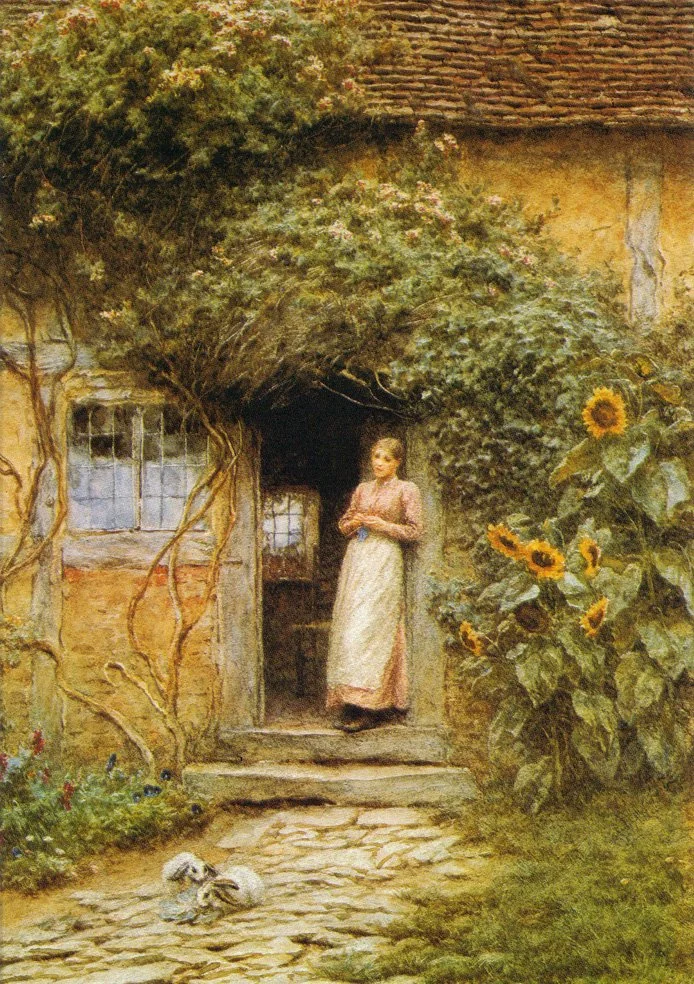
Helen Allingham, At the Cottage Door

A wealthy solicitor’s son is secretly engaged to be married.


Here is another clever and lively novel by Cook, for whom see Novels 040, 111, and 166.

“Much of the painting it contains is not inferior to Mr. Trollope’s. . . . The novel has scarcely any poor work in it, and no bad, trashy work.”  Spectator, October 3, 1868

“Mr. Cook has done a new and somewhat daring thing” in his plot, and “has, moreover, achieved this new and somewhat daring thing in a style and with a completeness of success that . . . put him amongst our best living novelists.  This high praise is given . . . after cool reconsideration of the numerous merits of the story;  its skilful construction, uniform freshness and sprightliness of diction, wholesomeness of interest, and . . . the unconstrained humour of its somewhat superficial but thoroughly truthful delineations of character.” Athenaeum, October 10, 1868

A contrasting view:

“Mr. Cook stands just outside the circle of penny romanticists—one half-penny beyond them, so to speak. . .  It would be difficult to imagine a slighter story, yet Mr. Cook spins and spins with a hundred-spider power, and clothes the poor bit of plot in three volumes. . . .  The thing is a literary cobweb. . .  one of the most vicious specimens of the porous, no-thinking, windy school of novelists that we have seen for many a day.   A course of such reading would in a few years materially increase the amount of national imbecility.”  London Review, October 21, 1868

Download this week’s novel:

v.1 http://access.bl.uk/item/viewer/ark:/81055/vdc_00000005B16A

v.2 http://access.bl.uk/item/viewer/ark:/81055/vdc_000000059BCE

v.3 http://access.bl.uk/item/viewer/ark:/81055/vdc_0000000369A8
Novel 261: Charlotte Yonge, Hopes and Fears (1860)

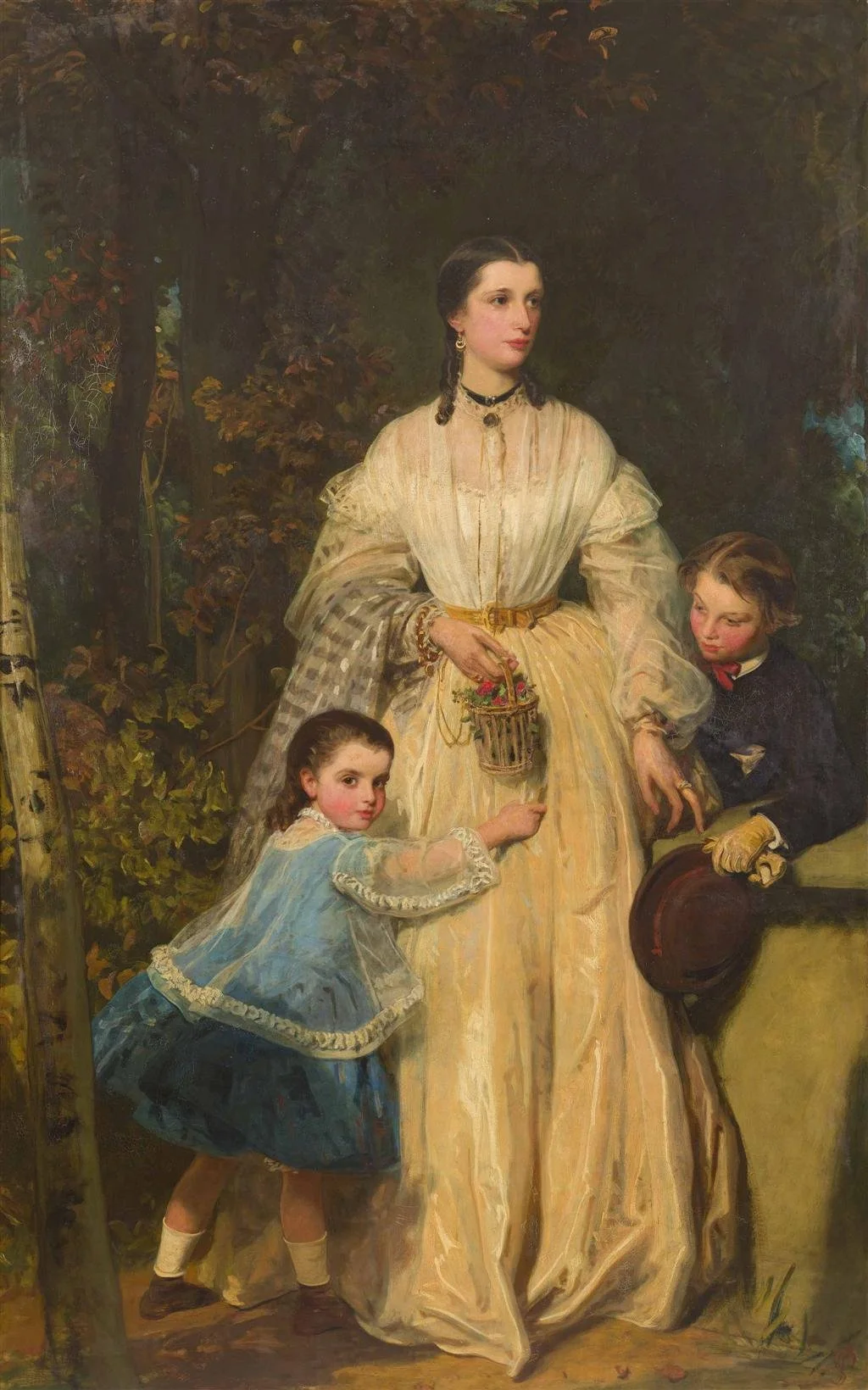
James Sant, Mary Fothergill and her children Richard and Mary

A woman devotes her life to a former lover’s orphan children.


Here is another novel by Yonge (see Novels 003, 053, 103, 155, 210) who, in the matter of character delineation, is, I will recklessly assert, the greatest of all novelists ever.

“Miss Yonge has . . . been remarkably successful in sustaining to the end the interest of the story, and we do not often meet with a novel in which it is less easy to predict beforehand what will become of each of the principal characters.” Literary Gazette, November 3, 1860

“The union of a chivalrous sense of honor with a keen perception of the ludicrous, and of dainty literary tastes with strictly High-Church principles, and the fondness alike for practical duties and errant fancies, seem as essential to the character of the author of ‘Hopes and Fears’ as to that of the heroine.  Novel readers . . . will find the story full . . . of the same quiet humour and the same high moral principles” as all Yonge’s novels.  North American Review, April, 1861

A constrasting view:

“Without the help of a genealogical tree, we are completely at a loss to understand the plot of the story, for we are carried through no less than four generations of one family, and are favoured with the history of all their relations, connexions and friends. Moreover . . . nearly every person mentioned in the book is known by a very unfair number of nicknames, which only makes confusion worse confounded. . . .  The moral of the story seems to prove (whether intentionally or not we cannot say) that if children are duly instructed in religious principles, and receive a careful education they will probably turn out good-for-nothing, worthless characters; but if sufficiently neglected . . . there is every hope that they may ultimately become praiseworthy and valuable members of society, even, perhaps, zealous, hard-working High-Church clergymen.” Athenaeum, November 3, 1860

Download this week’s novel:

v.1 https://archive.org/details/hopesfearsorscen01yong

v.2 https://archive.org/details/hopesfearsorscen02yong

Novel 260: William Edward Norris, Marcia (1890)

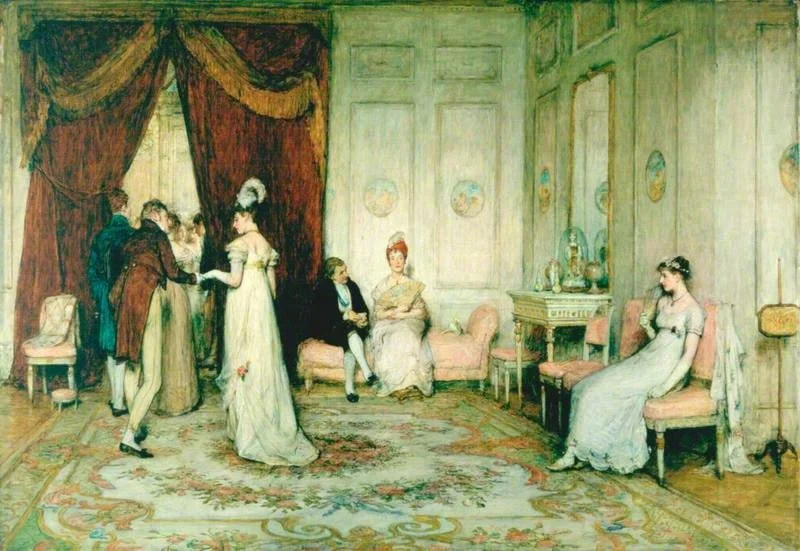
Sir William Quiller Orchardson, A Social Eddy

A woman behaves badly as wife and mother.


Here is another novel by the great W.E. Norris, for whom see Novels 002, 054, 104, 156,  and 209.

“Few novelists of Mr. Norris’s fertility proceed from good to better.  But it is a fact that in Marcia he has reached what is so far his greatest effect in art. . . .  Never has Mr. Norris been in better form; never has he been so acute and observant; never has he employed his really admirable convention to better purpose. . . .  The style is smooth and equable without being monotonous and fatiguing, and almost every page contains some remark which, though it may not have the sting or the bite, has more than the veracity and charm, of most epigrams.” National Observer, December 20, 1890

“The book strikes us as one of the cleverest which Mr. Norris has yet produced, though, until towards the end, hardly the most agreeable.  The study of every-day people which it contains is so good as to be rendered painful during the first two volumes by its very excellence; for the men and women are so like to life, that they bring home to one the pettinesses and unworthinesses of human nature with disagreeable force. . . .  Fortunately, however, the third volume makes amends.”  Spectator, January 17, 1891

A somewhat contrasting view:

It is “more readable than many of the current novels, but it is not up to the author’s standard.  It is dragged out by the introduction of a multitude of petty details which do not add to the interest of the story in the least.”  San Francisco Chronicle, February 1, 1891

Download this week’s novel:

v.1 https://archive.org/details/marcia01norr

v.2 https://archive.org/details/marcia02norr

v.3 https://archive.org/details/marcia03norr

Novel 259: Bithia Mary Croker, Married or Single? (1895)

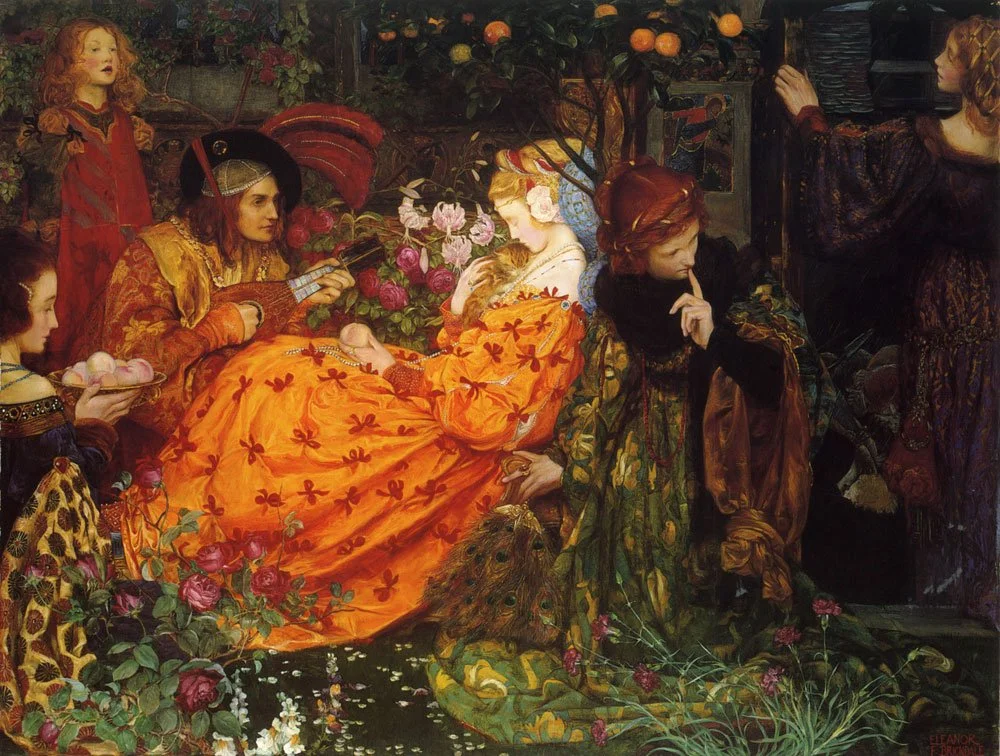
Eleanor Fortescue-Brickdale, The Deceitfulness of Riches

A boarding-school pupil-teacher, abandoned by her father and compromised by her jealous employer, is rescued by a poor young barrister.


Here is another novel by Croker, for whom see Novels 013, 073, 129, and 183.

“Mrs. Croker is always a lively and spirited writer. . . .  There are passages of natural humour and also of pathos here to hold the reader’s attention.” Academy, January 8, 1896

Some more or less contrasting views:

“The human nature in the book is wrong from the beginning to end. . . .  But if you can get over the utterly false psychology, the bare outline of the tale as given here will show you that there is incident enough to make a lively story.”  Bookman, February 1896

The heroine is in “a fine situation, possessing unlimited possibilities, possibilities which would weigh heavily on the mind of a conscientious young author; but they sit lightly on Mr. Croker, and he canters ahead untroubled by the claim of subtleties, for which we are grateful, judging his power from the display he makes of it in the story.  Mr. Croker writes in an undistinguished, not to say common, style, and the three volumes show no artistic merit whatever.  But he is not pretentious, and he is not dull, and though we are not dying to read another of his novels, we did read this one right through without wanting to stop.”  Saturday Review, March 14, 1896

Download this week’s novel:

https://archive.org/details/marriedorsingle00crok

Novel 258, Mrs. Alfred Sidgwick, The Professor’s Legacy (1905)

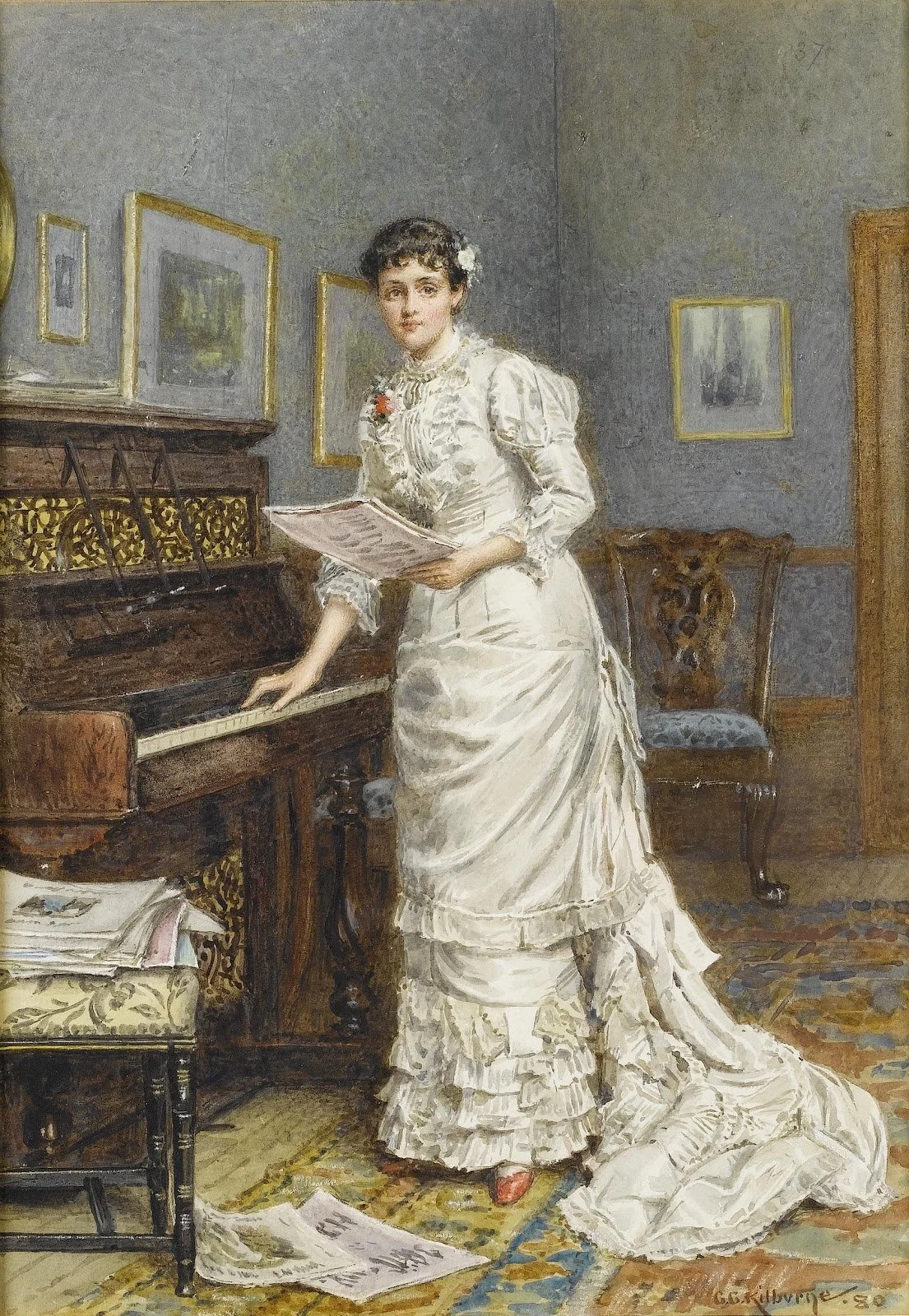
George Goodwin Kilburne, A Young Woman at a Piano

A wealthy English scientist is appointed guardian to his late German collaborator’s beautiful daughter, who is otherwise at the mercy of a scheming aunt.


Here is another novel by Sidgwick (see Novels 082, 142, 200), vivid and well crafted as usual.

“Reticent and light of touch as our author is, you are never allowed to forget how deep are the depths of passion that lie beneath this humorous, shrewd surface-play.  ‘The Professor’s Legacy,’ in fact, is one of the most interesting and well-told novels of the season, and it should be one of the most popular.”  Academy, October 28, 1905

“The tale is a good one in its quiet way, told with much humor and much excellent character study.  The scenes too, shifting from a German university town to a country place in England, afford an opportunity for varied pictures of life and manners.”  New York Times, November 25, 1905

“Her sharply contrasted and clear-cut portraits of various social types are done with admirable verve.” Spectator, December 15, 1905

Download this week’s novel:

https://archive.org/details/professorslegac00sidggoog

Novel 257: Robert Grant, The Confessions of a Frivolous Girl (1880)

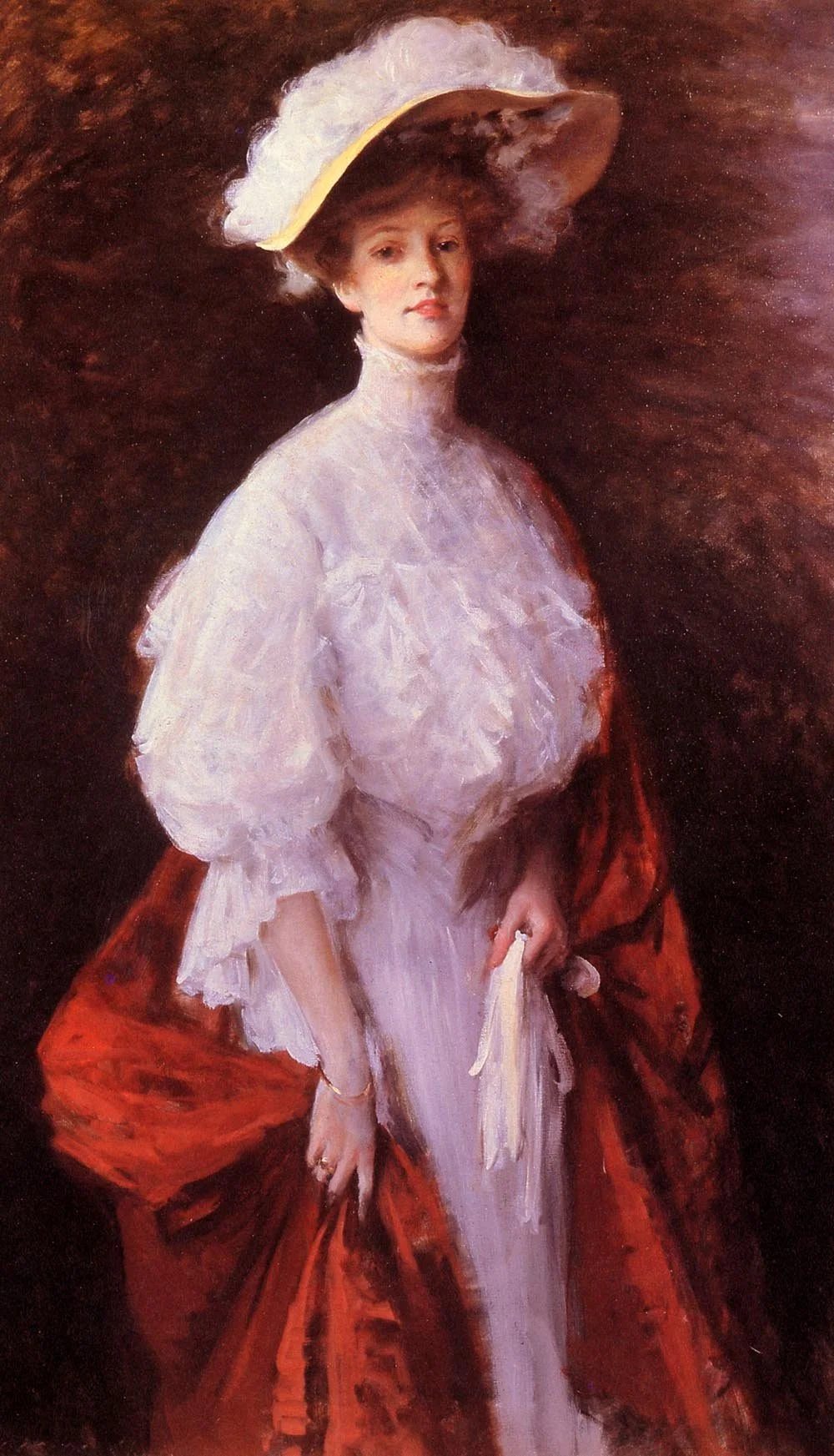
William Merritt Chase, Portrait of Miss Frances V. Earle

A New York heiress is courted by various young men.


Robert Grant (1852-1940) wrote some fifteen novels, of which the last appeared in 1931.  This was his first, a light-hearted representation of the sad quandaries facing a fashionable young woman of the period.

“Mr. Grant writes without affectation, and appears to know New York society well; his book is decidedly attractive and lively.”  Athenaeum, October 29, 1881

“The naïve account which the young lady gives of her triumphs is exceedingly amusing. . . .  Very lifelike and amusing are her incidental sketches of the four gentlemen who specially honour her by their preference.”  Spectator, November 5, 1881

A contrasting view:

“It is a long time since we met with a book—if, indeed, this is not entirely by itself—which credited our fair American cousins with so much vulgarity and so many little petty intrigues.”  Academy, February 26, 1881

Download this week’s novel:

https://archive.org/details/confessionsoffri00gran

Novel 256: Lucy Clifford, The Dingy House at Kensington (1881)

Rose Barton, Old Chelsea Wall, London

A virtuous young lady has two lovers and a miserly father.


Sophia Lucy Jane Clifford turned to fiction to support herself after the death of her husband.  She published several successful novels under her married name (Mrs. W.K. Clifford); this one makes up for its lovers’-misunderstanding plot with its excellent style and interesting characters.

“Character forms the main interest. . . .  Despite crude and ineffective passages, it repays perusal.”  Spectator, October 29, 1881

“The chief charm of the tale lies in the character of the heroine, one of the most natural girls with whom recent fiction has made us acquainted. . . .  The author possesses a lively style, keen observation, considerable powers of description, and a decided turn for epigram.”  Athenaeum, November 11, 1881

The “chief incident on which the story turns is both feeble and improbable; but, for all that, The Dingy House at Kensington is a very good novel.”  Saturday Review, December 17, 1881

Download this week’s novel:

https://solo.bodleian.ox.ac.uk/permalink/f/89vilt/oxfaleph014733351

Novel 255: James Payn, A Confidential Agent (1880)

John Atkinson Grimshaw, View of Heath Street by Night

A frustrated inventor is unhappy in his job as jeweler’s agent.


Here is another novel by Payn (see Novels 011, 081, 211), who is as entertaining as ever.

Payn “relieves the artifice of his stories with a good deal of human nature, generally of the genial kind, and is gifted with humour of the irrepressible order.” Spectator, November 13, 1880

“Mr. Payn’s fertility of invention and freshness of style are wonderful.”  Saturday Review, November 27, 1880

“A well contrived story, full of incident, and sufficiently intricate to mystify the reader.” Athenaeum, December 11, 1880

Download this week’s novel:

v.1 https://archive.org/details/aconfidentialag03payngoog/

v.2 https://archive.org/details/aconfidentialag02payngoog

v.3 https://archive.org/details/aconfidentialag00payngoog

Novel 254: Annie Thomas, Called to Account (1867)

John Callcott Horsley, The Poet's Theme

Three couples question their mutual commitments.


Annie Thomas (1838-1918) wrote some 70 novels in 40 years and became perhaps the most critically vilified of all Victorian novelists.  Referring to her routinely by her married name, Mrs. Pender Cudlip (as though they scorned to be taken in by her title pages), the reviewers excoriated her twice yearly for her supposed outrages against style and morality.  “The English is slipshod and the story uninteresting, . . . the whole tone is petty, coarse, and vulgar throughout,” said The Academy ofA Narrow Escape (1875); “Two as worthless volumes as we have read for some time,” said The Athenaeum of The Maskleynes (1875); “There is certainly no pleasure, and we cannot think there is any profit, in reading a novel of this kind, it is so thoroughly cynical in conception and execution,” said The Spectator, of Blotted Out (1876); and so on, for novel after novel, year after year.  This one appeared early in her career, before the pattern was established; in fact its reviews were fairly positive—and well deserved: its representation of the ambivalence of several of its characters toward each other is subtle and convincing.

“The characters being real, the reader will find his interest powerfully excited.” Spectator, June 15, 1867

“There is a lightness of touch, a delicacy of finish, and a general refinement which makes this novel pleasanter than its predecessors. . . .  The merit of the book consists in the interest turning upon the play of character rather than incidents.” Athenaeum, July 6, 1867

Download this week’s novel:

v.1 http://access.bl.uk/item/viewer/ark:/81055/vdc_00000003EB68#?c=0&m=0&s=0&cv=0&xywh=-772%2C-128%2C3009%2C2543

v.2 http://access.bl.uk/item/viewer/ark:/81055/vdc_00000004223A#?c=0&m=0&s=0&cv=0&xywh=-764%2C-127%2C2983%2C2521

v.3 http://access.bl.uk/item/viewer/ark:/81055/vdc_00000003EB6E#?c=0&m=0&s=0&cv=0&xywh=-778%2C-125%2C2949%2C2492

Novel 253: Harriet Jane Trelawny, Sister (1879)

Margaret Sarah Carpenter, The Sisters

An unselfish young lady tends her alcoholic father, comatose mother, and three younger sisters.


Harriet Jane Trelawny (1821-1879) published only one novel, this one, just before her death in her late fifties. It’s a pity she didn’t start earlier or live longer, as this is a very good novel, in its quiet way, even if, like last week’s, it features that durable Victorian type, the self-sacrificing sister.

“It is a domestic story of a superior kind. . . .  The language is pure, and this is the more satisfactory because the narrative is not stiff and awkward, but has the freedom too often secured at a sacrifice of grace, if not correctness. . . .  The author . . . can reproduce the natural manner, expressions, acts, and expedients of ordinary men and women.”  Athenaeum, October 25, 1879

A contrasting view:

“Sister is by no means an ill-meant effort, and shows a good deal of misdirected cleverness.  The author has unfortunately tried to copy two bad models at the same time—the garrison-flirtation novel and monster-of-self-sacrifice old-maid story.” Academy, December 6, 1879

Download this week’s novel:

v.1 http://access.bl.uk/item/viewer/ark:/81055/vdc_000000032AE4#?c=0&m=0&s=0&cv=0&xywh=-1102%2C-126%2C3668%2C2518

v.2 http://access.bl.uk/item/viewer/ark:/81055/vdc_000000032AEA#?c=0&m=0&s=0&cv=0&xywh=-1097%2C-125%2C3630%2C2493

Novel 252: Isabel Goldsmid, ’Tis an Old Tale, and Often Told (1839)

Alfred Elmore, On the Brink

A virtuous young lady, engaged to one man, falls in love with another.


Isabel Goldsmid wrote two brief books—this one in 1839, and a Christmas story, “Shadows and Sunshine,” in 1850.  The latter begins “Christmas!—hallowed Church, blessed home festival!”—and so it would seem unlikely that its author is the Isabel Goldsmid (1788-1860) who married her first cousin, Sir Isaac Lyon Goldsmid, a leading banker and social reformer known among other things for advancing the cause of Judaism in Victorian England.  But I haven’t found any traces of any other Isabel Goldsmid.  The novel offers a first-person narrator (introduced by a censorious editor) who oddly combines romantic sentiment and detached amusement.

“The single volume before us has many claims to our indulgence. . . The tale is  a boná fide love-story, feelingly told.”  Literary Gazette, March 23, 1839

“The subject chosen by our authoress . . . is as old as the world itself . . . yet the handling and the general arrangement evince an original genius.  There is a quiet humour and shrewd observation in many parts which speak of an acquaintance with varied society, and the power of turning opportunities to account.  That important social qualification, good-humoured satire, appears to be her leading characteristic, yet there is much of real feeling touchingly expressed.”  Morning Post, April 2, 1839

A (somewhat) contrasting view:

“The incidents . . . are hackneyed, but the authoress has wisely kept clear of all the clap-traps of superhuman generosity, and impossible reconciliations.  She has painted life, not exactly as it is, but that portion of it to be found in the vale of tears and shadows.”  Athenaeum, April 2, 1839

Download this week’s novel:

https://solo.bodleian.ox.ac.uk/permalink/f/89vilt/oxfaleph014598204

Novel 251: Margaret Agnes Paul, Dorothy (1856)

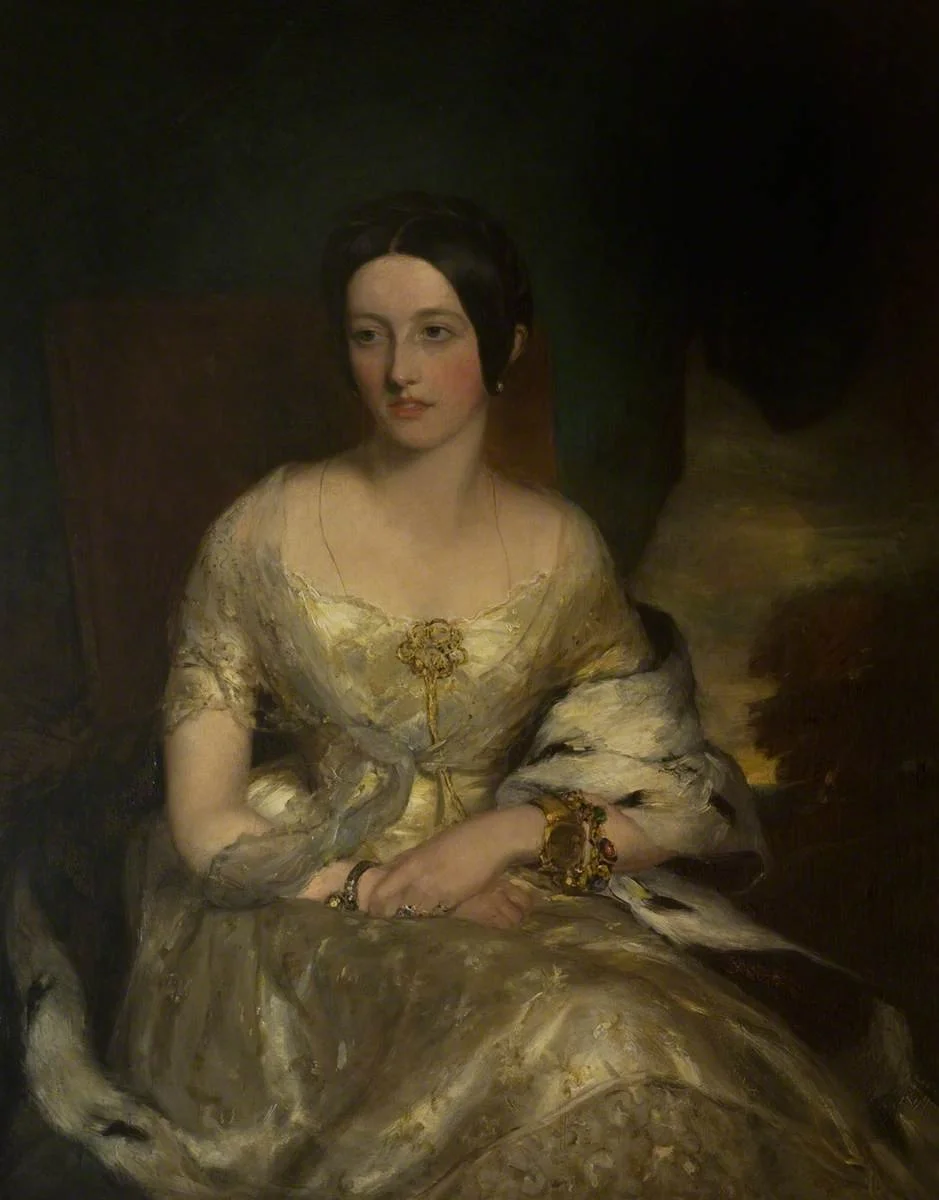
Sir Francis Grant, Lady Susan Hamilton

A self-willed girl faces adversity.


Here is another novel by Paul (see Novels 025, 136, 198), featuring as usual carefully realized scenes of ordinary life.

“A pleasant, graceful book, written moreover in an earnest spirit.”  Examiner, January 5, 1856

“A good and agreeable specimen of this kind of story; with sufficient variety of interesting occurences and well-drawn persons, a knowledge of society if not of life, and an unhackneyed moral.”  Spectator, January 5, 1856

A (slightly) contrasting view:

“‘Dorothy’ is an excellent little story.  There are no exciting incidents nor highly-wrought sentiments, but a great deal of excellent delineation of character. . . .  A little more dash and vivacity and a greater variety of incident would be desirable in the author's future stories.  ‘Dorothy’ is too still and uneventful to interest the general reader as much as the talent it displays merits.”  Athenaeum, January 26, 1856

Download this week’s novel:

https://solo.bodleian.ox.ac.uk/permalink/f/89vilt/oxfaleph014184126

Novel 250: Ulick Ralph Burke, Beating the Air (1879)

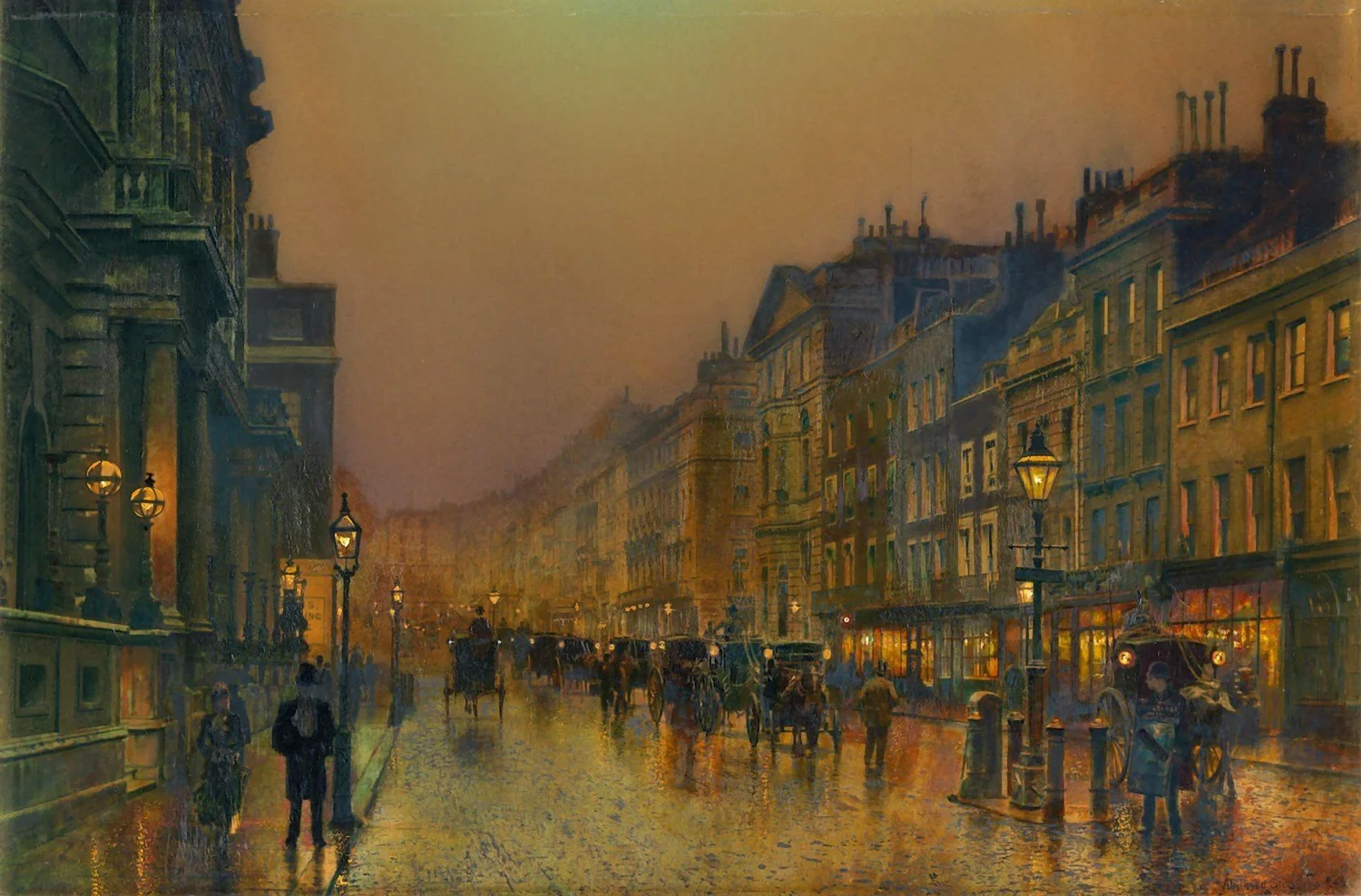
John Atkinson Grimshaw, London, St. James’ Street

A young aristocrat is unexpectedly forced to make his own way in life.


Ulick Ralph Burke (1845-1895), barrister and historian of Spain and Mexico, wrote two novels, of which this was the first.  His somewhat rambling plot gives him plenty of scope for satiric representation of English and Anglo-Indian society.

“The plot is interesting and well constructed, and there is a pleasant variety in the dramatis personae. . . .  The style, too, is crisp and occasionally epigrammatic. . . .  The characters . . . have . . . a distinct individuality.”  Athenaeum, November 15, 1879

“We are indebted to Mr. Burke for a good novel, and a wholesome hero.”  Spectator, December 6, 1879

A (somewhat) contrasting view:

“Beating the Air is not a strong book, but it is well meant, and, in its mild way, is far from being unpleasant.”  Academy, November 22, 1879

Download this week’s novel:

v.1 https://archive.org/details/beatingair01burk/

v.2 https://archive.org/details/beatingair02burk/

v.3 https://archive.org/details/beatingair03burk/

Novel 249: Margaret Roberts, A Younger Sister (1892)

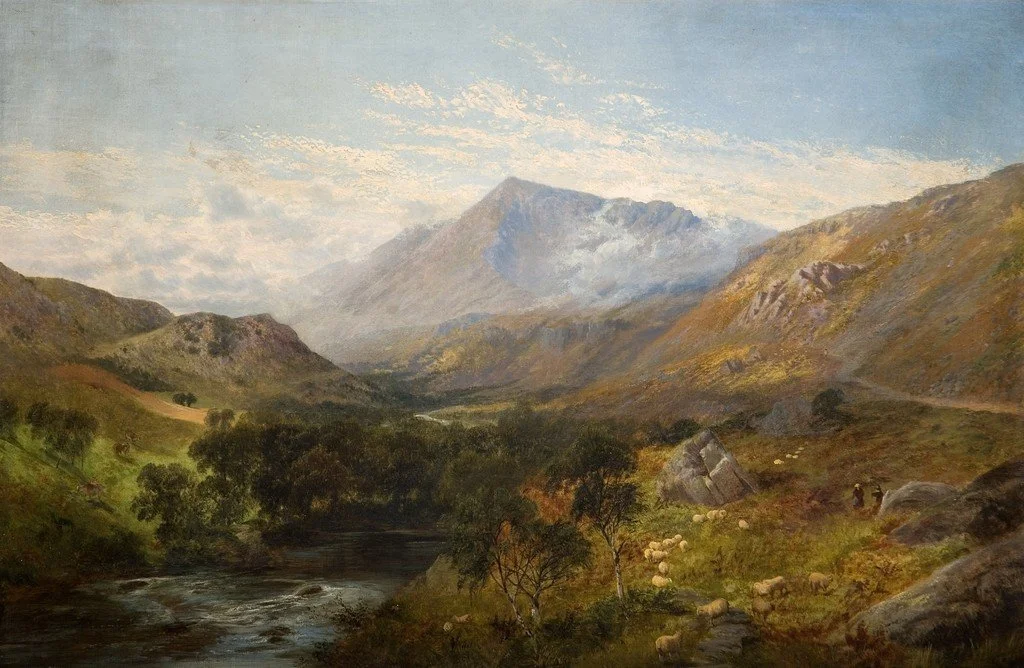
George Vicat Cole, Near Borrowdale, Cumberland

One daughter of a country squire in the Lake District longs to see the world; the other is content to stay at home.


Margaret Roberts (1833-1919) wrote nearly thirty novels between 1857 and 1897; this is one of the last.  The heroine’s self-indulgent father is an especially well-done character.

Roberts “always gives us good work and always casts an unfailing charm over what she writes.”  Manchester Guardian, May 10, 1892

“As a whole the sketch is worthy of the delicate hand” of the author.  Academy, June 18, 1892

A contrasting view:

“Small beer.”  Saturday Review, June 11, 1892

Download this week’s novel:

http://access.bl.uk/item/viewer/ark:/81055/vdc_000000033BFA#?c=0&m=0&s=0&cv=0&xywh=-887%2C-127%2C3237%2C2534

Novel 248: Sir Edward Bruce Hamley, Lady Lee’s Widowhood (1853)

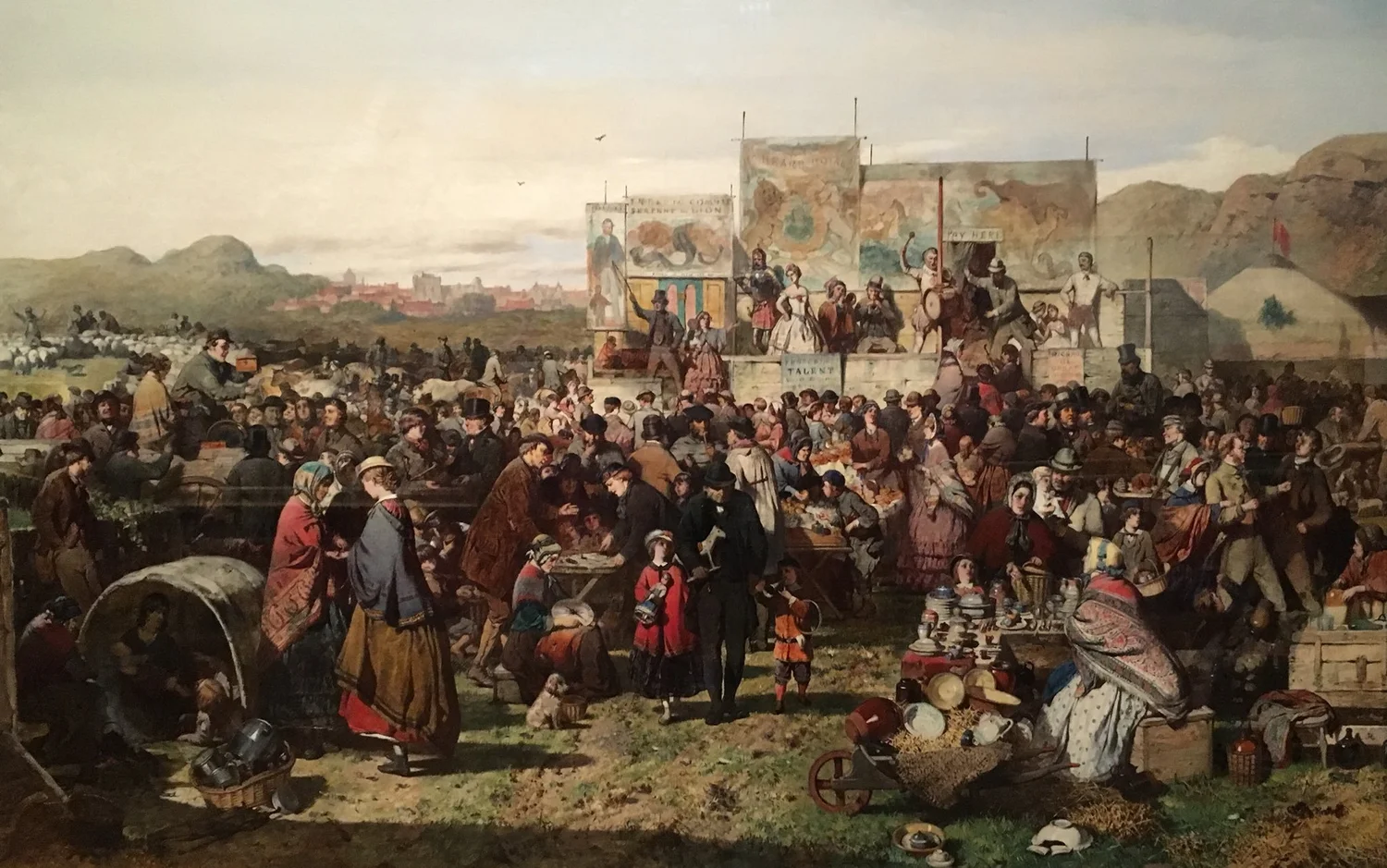
John Ritchie, A Border Fair

A virtuous young widow is left at the mercy of her late husband’s unscrupulous uncle.


Lieutenant-General Sir Edward Bruce Hamley (1824-1893), the younger brother of last week’s novelist, likewise supplemented a military career with literary efforts.  This, his only novel (serialized in 1850, issued in book form in 1853-54), features, in addition to some sentimental ladies and gentleman officers, an amusingly bad alcoholic gambler.

“‘Lady Lee’s Widowhood’ is unquestionably one of the wittiest and pleasantest things that the press of our day has given to the public. . . .  It furnishes the largest return of enjoyment for twenty-five cents that can be found in any bookstore in the country.”   Southern Literary Messenger, December 1853

A (somewhat) contrasting view:

“This is a pleasant book. . . .  The characters (with the exception of Colonel Bagot Lee) are not very complex specimens of human nature, but they are brightly coloured, and drawn with spirit.  The character of Colonel Lee is of a higher class, and well worked out. . . .   The story . . . drags somewhat at times, but it is withal a bright, healthy book, with a dash of hearty humour in it.”  Athenaeum, February 18, 1854

Download this week’s novel:

v.1 https://archive.org/details/ladyleeswidowho01hamlgoog

v.2 https://archive.org/details/ladyleeswidowho00hamlgoog

Novel 247: William George Hamley, The House of Lys (1879)

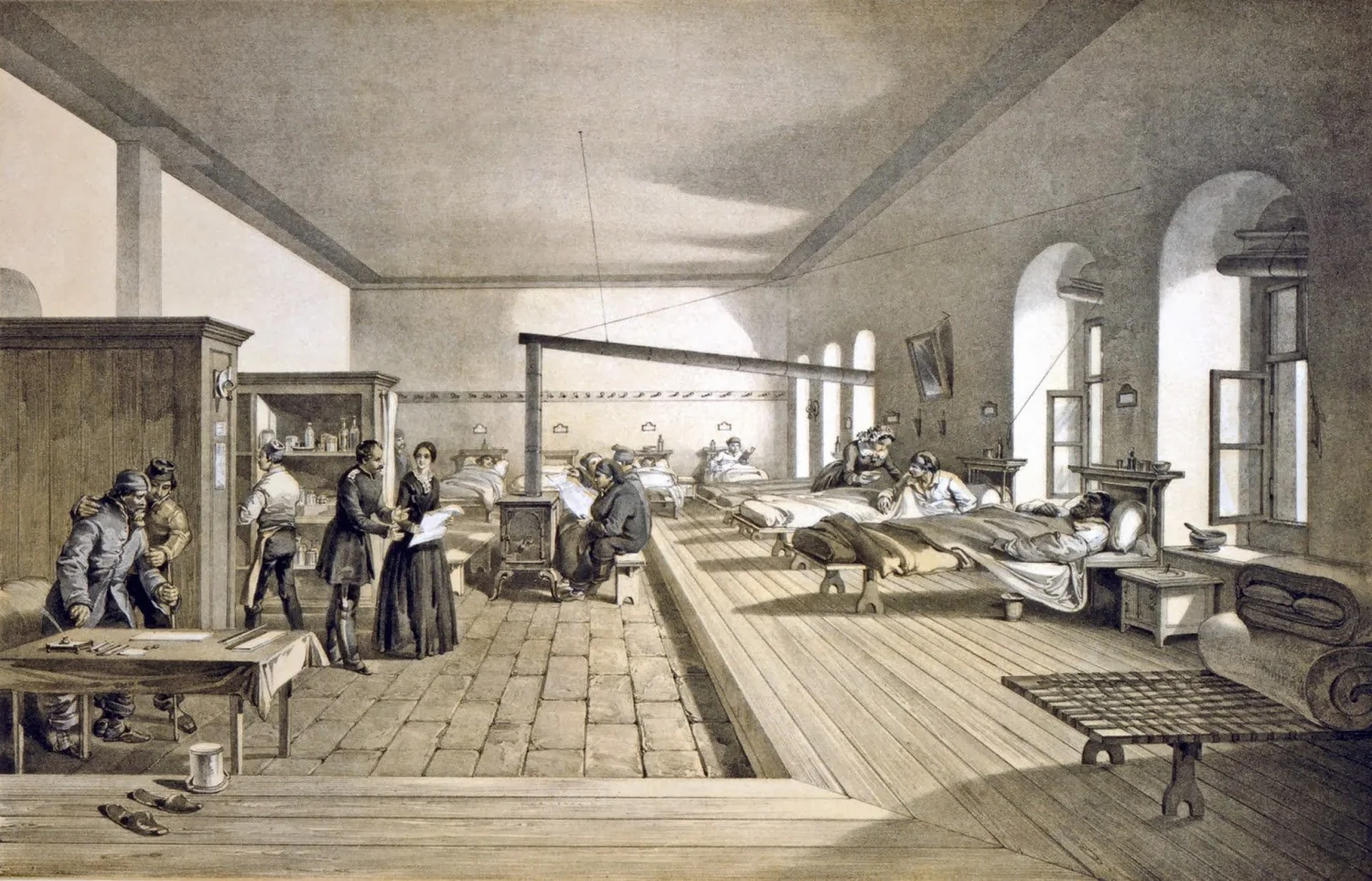
William Simpson, One of the Wards of the Hospital at Scutari, 1856

A gentleman grows interested in a poor girl, then fights in the Crimea.


Major-General William George Hamley (1815-1893), having retired from the army in 1872, wrote three novels between 1878 and 1882, of which this is the second.  Its conflicted, morally developing hero and the less glorious side of Victorian army life are both well represented.

The “real interest of the book” consists in “the style and thought, sometimes almost too elaborately allusive, in the well-drawn sketches of military life in the Crimea and elsewhere” and in “the very best exemplification of the undesirable type of elderly military man we have ever met with—at least in fiction.” Examiner, May 24, 1879

“What with fun, love, and adventure, there is no flagging in the book from first to last, and General Hamley is to be congratulated on having written an extremely entertaining novel.”  Saturday Review, June 14, 1879

Download this week’s novel:

v.1 https://archive.org/details/houseoflysoneboo01haml

v.2 https://archive.org/details/houseoflysoneboo02haml

Novel 246: Anne Marsh-Caldwell, Lettice Arnold (1850)

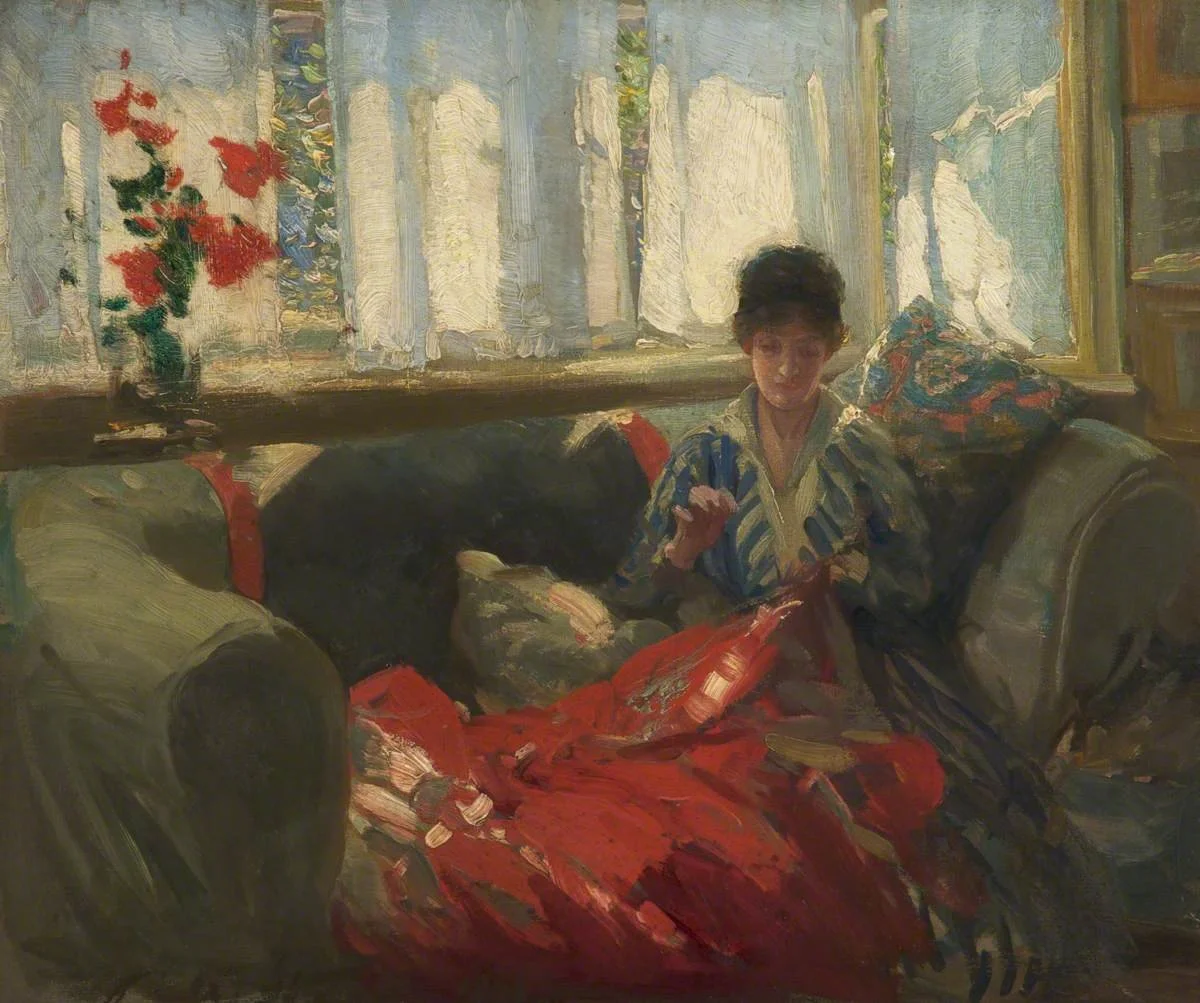
Philip Wilson Steer, Woman Sewing

Two genteel sisters, one virtuous, one beautiful, are left in poverty, to make a living as seamstresses.


For Marsh-Caldwell, see Novels 069, 187.  Despite the obvious didactic purpose of the contrast between the novel’s sisters, its characters are lifelike and its plot involving.

“We like the tale for its delicate shading of individual characters chosen from the most every-day life.”  Literary World, August 3, 1850

The author “has depicted, with her usual vigorous and truthful colouring” the wretched lives of seamstresses.  Critic, November 15, 1850

A (somewhat) contrasting view:

“‘Lettice Arnold’ is the work of a woman—a woman who has great facility of composition, and considerable imagination, but little judgment.  It is literally ‘stuffed full’ of prejudices, especially against light literature as it is produced in France”; but it “is well written; and . . . it is one of the few novels which can be perused with pleasure and resumed without pain.” Observer, November 4, 1850

Download this week’s novel:

v.1 https://archive.org/details/letticearnoldtal01mars

v.2 https://archive.org/details/letticearnoldtal02mars

Novel 245: Alexander James Beresford-Hope, Strictly Tied Up (1880)

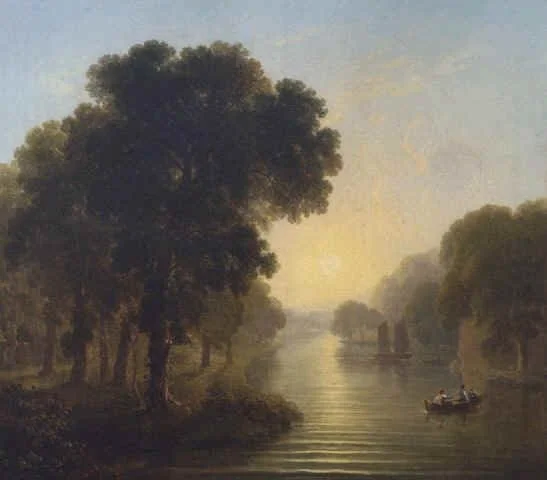
James Arthur O’Connor, View on the Shannon

Finding herself a social failure, an aging countess courts popularity by adopting her niece.


Alexander James Beresford-Hope (1820-1887), a well-known politician and patron of architecture, took up novel writing late in life, producing this and its sequel (The Brandreths) a couple of years later. His spirited delineation of his hapless characters is entertaining, if a little ruthless.

“The author . . . loves to look on the lively side of things, and his novel may be described as a comedy of life and character.  All his personages are more or less conspicuous by some eccentricity, foible, or amiable weakness; his incidents and complications are generally humorous, and the drollery is brought to a climax in the dénouement.” Saturday Review, October 16, 1880

“Thoroughly and in every sense a novel, conceived in a light and happy vein, and scarcely even demanding a serious thought from beginning to end.” Athenaeum, October 23, 1880

A contrasting view:

It is “lively enough as regards some passages” but “there is not a single character capable of creating a genuine interest in the mind of the reader. . . .  It seemed somewhat coarse all through, and left a nasty taste in the mouth.”  Academy, November 20, 1880

Download this week’s novel:

https://solo.bodleian.ox.ac.uk/permalink/f/89vilt/oxfaleph013992560 (Right-click (or control-click, if you have a Mac) on the “view digitized copy” links to download the novel’s three volumes in pdf form)

Novel 244: Edward Everett Hale, Ups and Downs (1873)

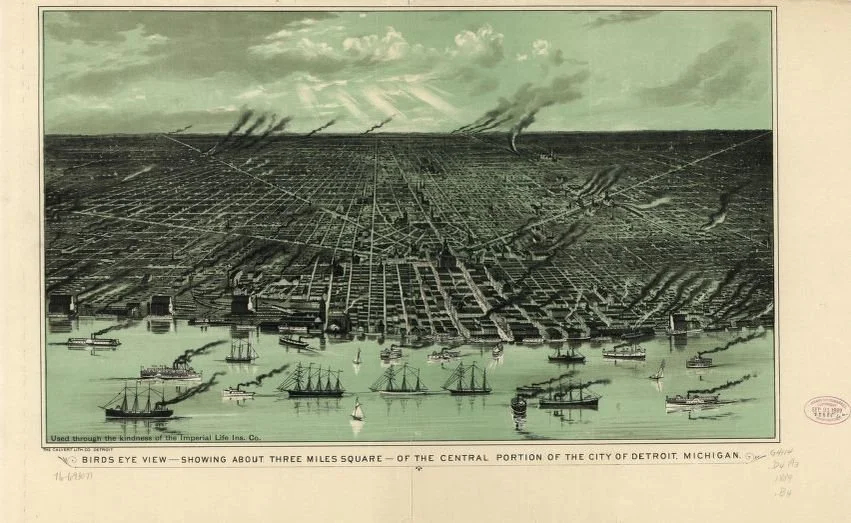
Calvert Lithographing Co., Birds Eye View of the City of Detroit, c.1889

After the sudden collapse of his uncle’s business, a young man works to establish himself in Detroit; meanwhile, a young German immigrant girl finds work as a governess in Milwaukee.


Edward Everett Hale (1822-1909), a Unitarian minister and prominent American social reformer, also wrote several novels.  This one,  though sometimes marred by its author’s enthusiasms, has some lively characters and several interesting settings.

A “quiet story of domestic life in America . . . ,  a life as homely and picturesque as any that Mrs. Gaskell or George Eliot has described.”  Saturday Review, October 25, 1873

“A very characteristic story of American life . . . written with humour and pathos.” Spectator, November 29, 1873

Download this week’s novel:

https://archive.org/details/upsanddownsanev00halegoog

Novel 243: John Cordy Jeaffreson, Live it Down (1863)

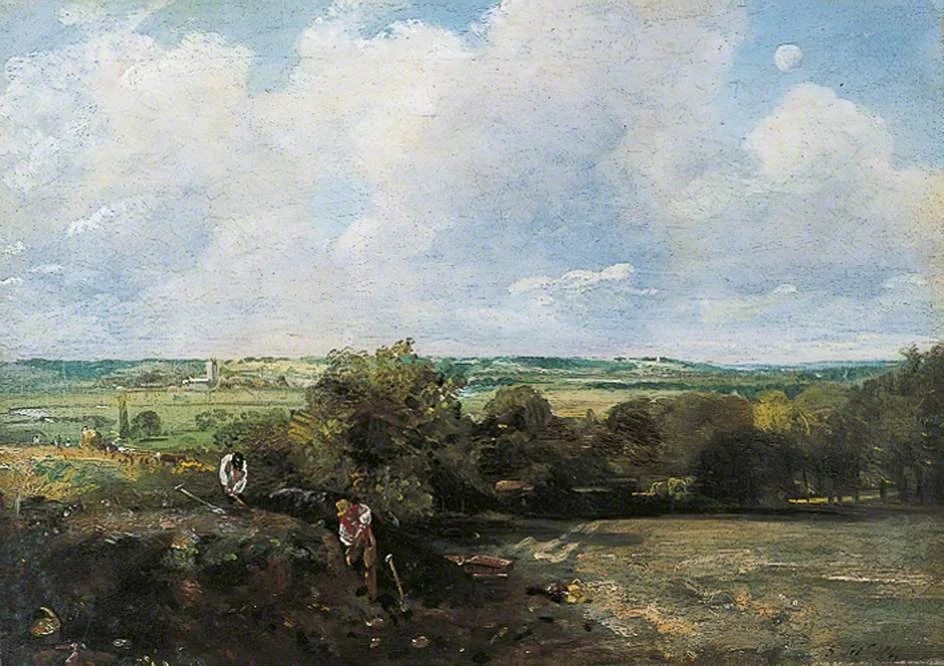
John Constable, The Vale of Dedham, Suffolk

In an old-fashioned Suffolk town, c.1820, as social and religious habits change, an aristocratic family is troubled by a dark secret.


John Cordy Jeaffreson (1831-1901) wrote, in addition to much nonfiction, fourteen novels between 1854 and 1890.  An over-attention to historical and regional setting and a surplus of morality and sentiment are redeemed here by some well-defined characters and a good plot.

“The story is interesting throughout; the characters stand well on their feet, and are real human beings marked with individual character.” Athenaeum, March 28, 1863

It is “a good, sound novel.  It may not be vividly interesting; but it is clever, truthful, and observant.”  Literary Times, April 28, 1863

A (somewhat) contrasting view:

Though “told in a manner which . . . it would be easy to criticize, . . . still it succeeds . . . in exciting the interest . . . and some of the characters are drawn with no little delicacy and discrimination.  Still the book is, in its general effect, a provoking one, for it might so easily have been made much better than it is.  The simple process of leaving out altogether about two-thirds of the first volume would have wrought wonderful improvement in the novel.   Not only is the first part of the story drawn out to an extent which is at once extremely wearisome and entirely useless, but Mr. Jeaffreson appears, in the earlier portion of the work, to have not unfrequently forgotten that he was telling a story at all.” Spectator, May 23, 1863

Download this week’s novel:

v.1 https://archive.org/details/liveitdownastor02jeafgoog

v.2 https://archive.org/details/liveitdownastor00jeafgoog

v.3 http://access.bl.uk/item/viewer/ark:/81055/vdc_000000048444#?c=0&m=0&s=0&cv=321&xywh=97%2C211%2C1937%2C1195