It “has the merit, so rare among contemporary writers of fiction, of doing something quite unusual, something that was worth doing, and accomplishing it with considerable success.” Spectator, July 9, 1859
“A powerful and well-sustained story of strong and somewhat morbid interest”; though “as well done as it could be” it “has a close, stifling atmosphere about it.” Athenaeum, July 16, 1859
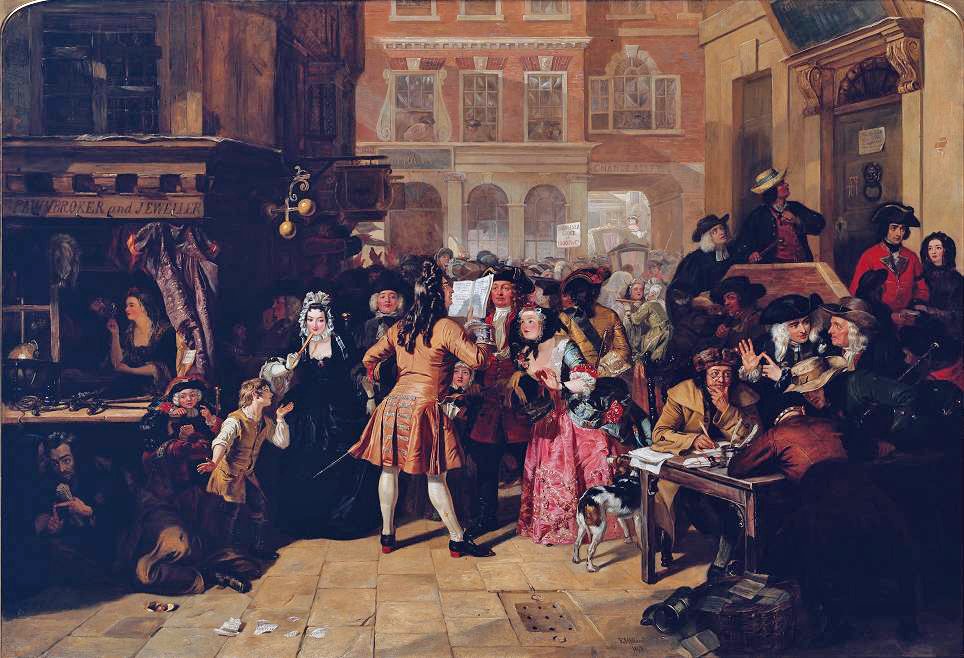
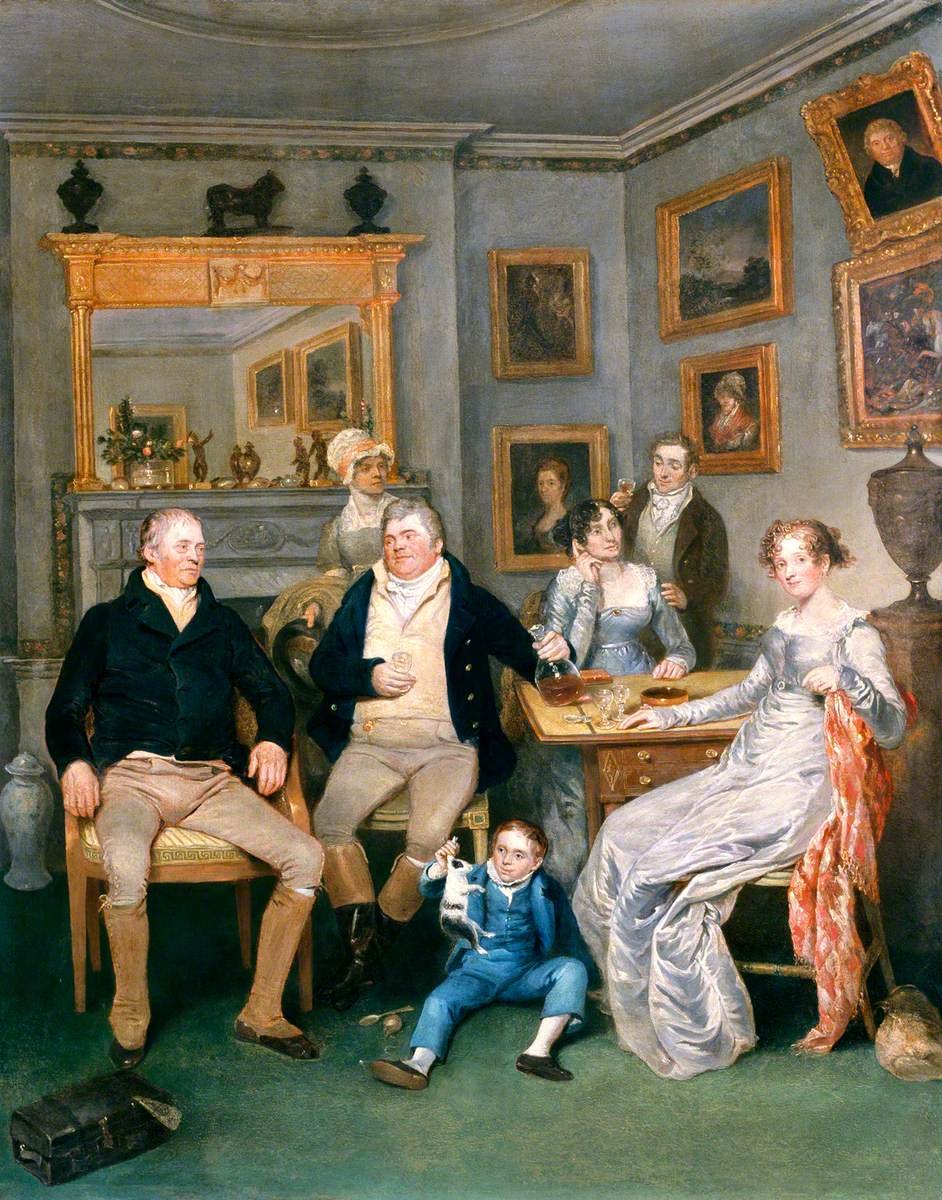
Edward Matthew Ward, The South Sea Bubble, a Scene in ’Change Alley in 1720
It’s time for David Alfred Bywaters’s Crossword Cavalcade and Fortnightly Victorian Novel Recommender to launch its initial public offering. True, our profit margins are in negative territory as yet, but prospects for growth are enormous; and the infusion of cash we’re expecting from our stock sale will allow us to (1) develop and implement an AI solution that will reduce our labor costs by ninety-nine percent, and (2) purchase enough social media influence to increase our eyeballs a thousand million times. I’ll be issuing a prospectus shortly; you’ll want to get in on the ground floor.
Some five years ago (seeCrossword 127) I found it very fishy that my crosswords were not appearing in The New York Times. Since then, they have continued not to appear there, and no doubt you too are wondering how that could be. It’s not that I’m not sending crosswords to the Times (though I admit it has been awhile since I’ve done so). And it’s not that the crosswords I’m sending don’t deserve publication—anyone can see that they’re much superior to many, perhaps most, that have appeared there of late years.
So what’s this really about? Well, have you ever noticed that, if you zoom in on a digital black-and-white picture until its pixels look like squares, those squares together, in 15 x 15 sets, resemble crossword grids? Okay, so it stands to reason that if you take several crossword grids, arrange them together, and then zoom out, you’ll get something that looks like a black-and-white picture. Now, have you ever thought that maybe the Times crosswords of the past few years can be arranged so as to make such a picture, for those who are in on the secret, that they might in fact have been constructed for that purpose? And have you ever wondered what that picture might reveal? I don’t dare to be more explicit, but I will say this: there’s definitely something fishy going on here.
An uncivilized Australian niece comes to live with an English country gentleman and his selfish wife.
Esmé Stuart was the pen name of Amélie Claire LeRoy (1861-1934), who wrote over 60 novels beginning in 1876. This was the first of a series, followed by Harum Scarum’s Fortune (1909) and Harum Scarum Married (1918).
The heroine is “fresh and good-hearted, and her exploits are decidedly entertaining.” Spectator, May 30, 1896
“Fun, and froth, and amusement”; “a brilliant little family sketch.” Athenaeum, July 18, 1896
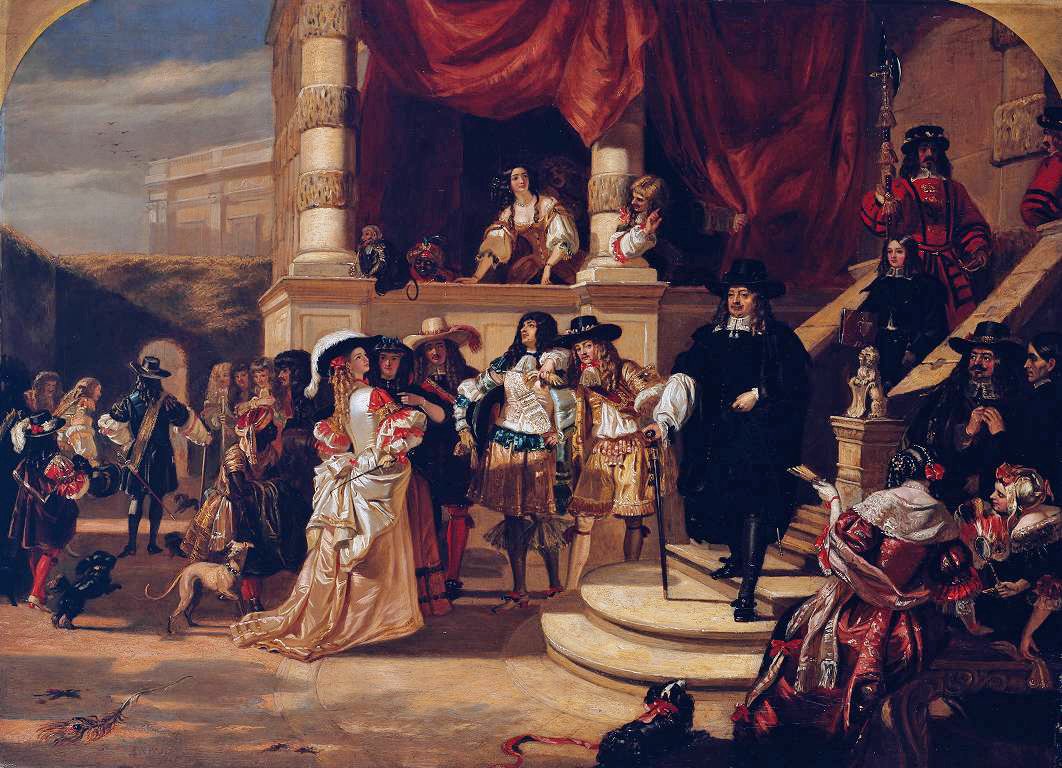
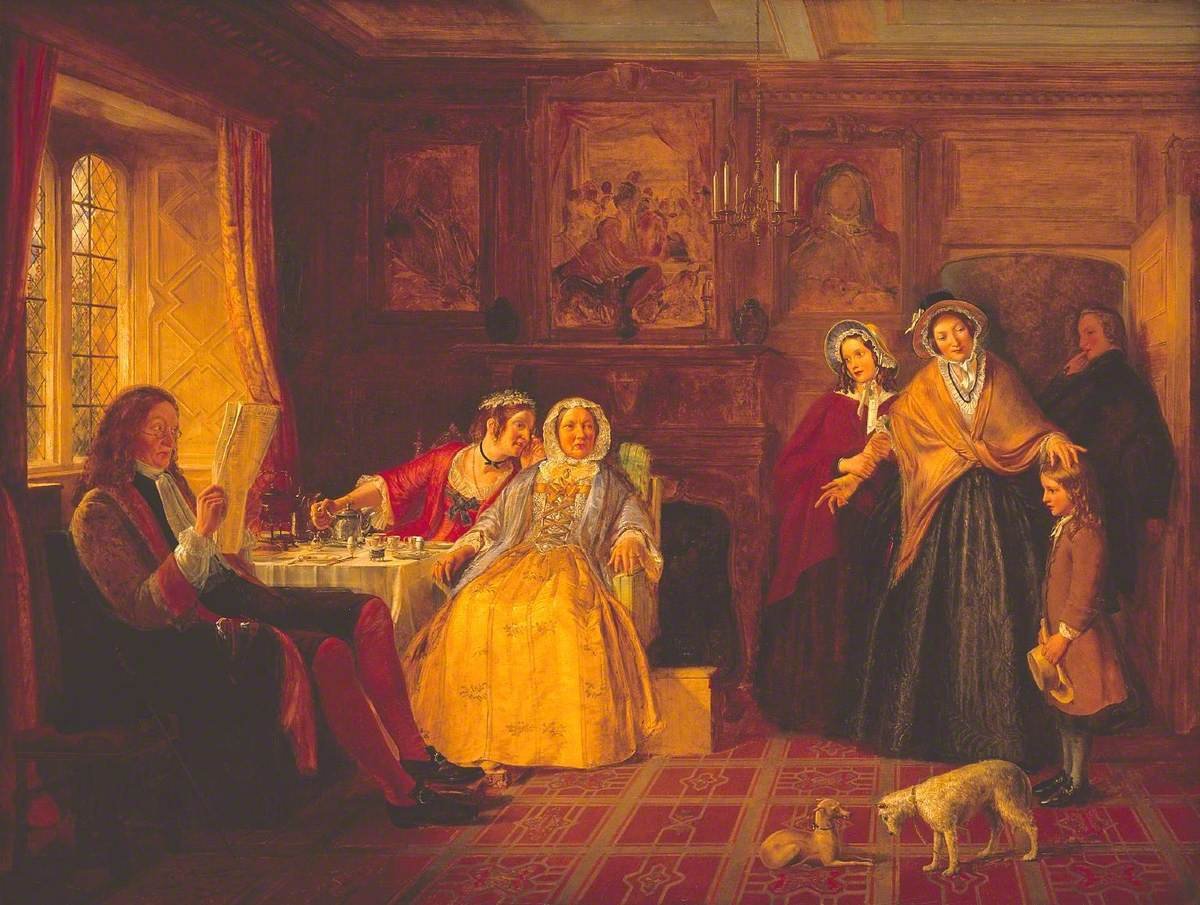
Edward Matthew Ward, The Disgrace of Lord Clarendon, after his Last Interview with the King - Scene at Whitehall Palace, in 1667
It’s been nearly ten years since I published my first crossword—ten years of awards too numerous to mention, of adoring media plaudits, of untold wealth and fame. A backlash was inevitable. Some now find my crosswords too funny, some not funny enough. I am accused here of Positivism, there of Negativism. My wordplay, it is alleged, has rewired the brains of the young, rendering them unable to bear the responsibilities of adulthood. Well, what can I do? I owe it to my many remaining admirers—to you, loyal solver—to continue doing what I do better than anybody else: that is, to make the best crosswords ever made!
The author “does not hit upon any particularly new situations, and most of his men and women are what his readers will recognize as stock characters. . . . But there is no lack of freshness and fidelity in this story . . . whilst the author’s mildly cynical style will be as pleasant as ever to such as have acquired a taste for it.” Athenaeum, October 17, 1891
It is “distinctly clever and interesting, and Mr. Norris’s way of telling it is irresistibly amusing. . . . It is Mr. Norris’s ‘way.’ The cynicism that is at bottom so kind, . . . the pessimism which hopes for the best, make his point of survey of life most entertaining. There is an element of self-complacence in being made to laugh at fellow-creatures so good-naturedly. In this particular story however there is more than laughter,” e.g., pathos in delineation of some characters. Saturday Review, October 31, 1891
A contrasting view:
It is “far too cynical”; and its cynicism not supported by “the observed facts of life”; its women are implausibly calculating, and Norris “destroys the charm” of their “portraits without imparting to them the reality which is sometimes a compensation for ugliness.” Spectator, November 28, 1891
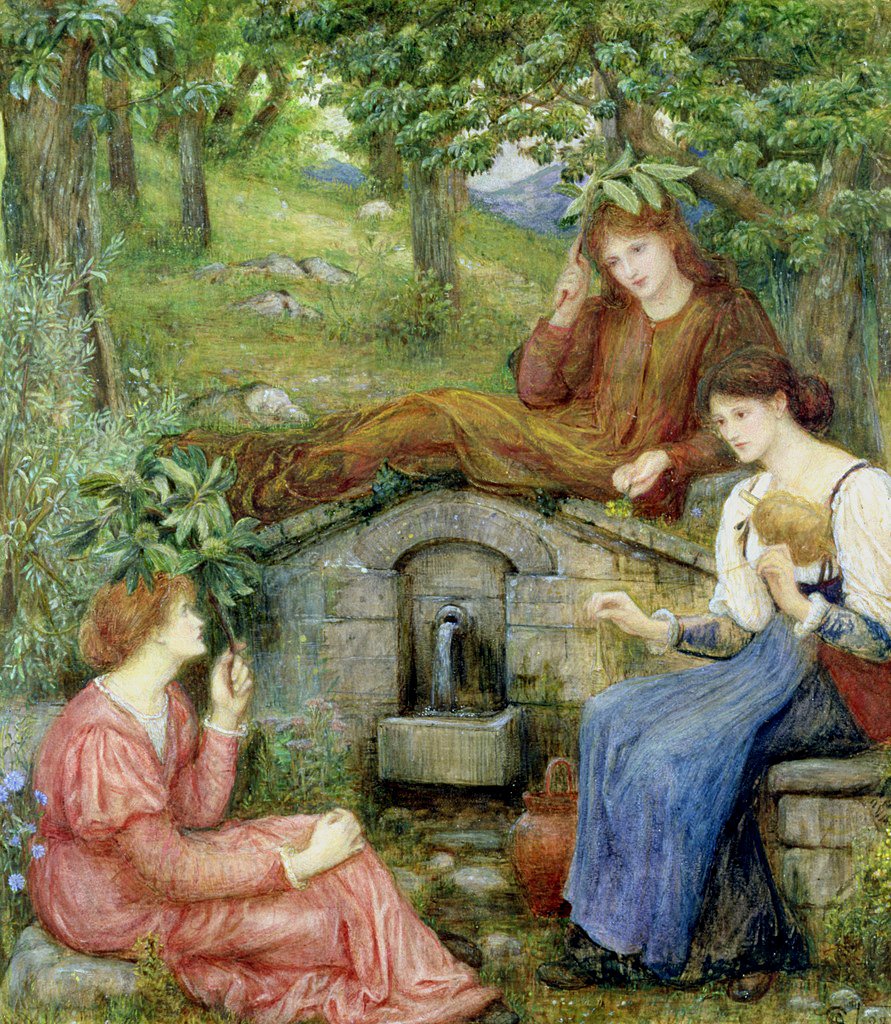
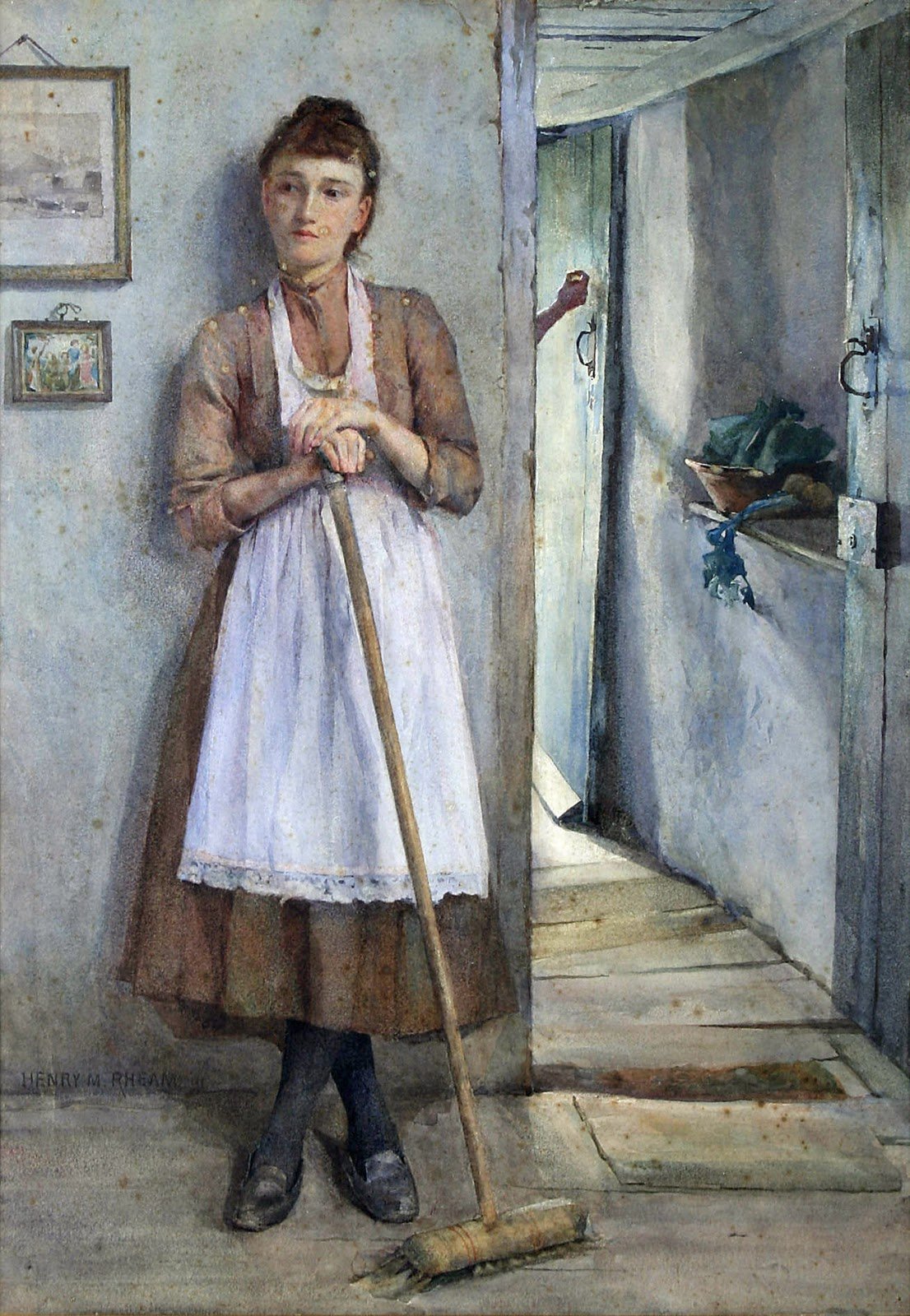
Marie Spartali Stillman, By a Clear Well, Within a Little Field
All is not well. After an exhaustive analysis of current society, politics, and culture, that is my conclusion. Conflict is more violent, immorality more shameless, ugliness uglier, and badness worse than it ever was before or, if the world survives, ever will be again. We live in really and truly desperately terrible, horrible times. But here’s a crossword.
Hunt “writes extremely well, and often forcibly. She lays down her plan well beforehand, and carries it out without hurry and in good proportions”; “we are glad, on the whole, to commend this novel almost unreservedly.” Spectator, December 4, 1875
A somewhat contrasting view:
The plot is “managed with a great deal of ingenuity” but the characters are “well known to the hardened novel-reader.” Academy, November 13, 1875
It appears that artificial intelligence (AI) can do your job better than you can, and so you won’t be asked to do it anymore. But so what? You’ll have all the more time to solve crosswords and read Victorian novels. And if you should run out of crosswords to solve, or Victorian novels to read, never fear; AI can produce more of them. Of course, if you’re dependent on income derived from your job for food, shelter, clothing, and such things, there will be some drawbacks.
The son of a miserly father, supposed dead, returns unexpectedly.
Sir Walter Besant (1836-1901) wrote some ten novels with James Rice (1844-1882) and some thirty more on his own. This was his first.
“A clever book . . . which no grown man who has any experience of life can read without being the better for it”; the author makes characters “say in his pages just what they say in every day real life.” Athenaeum, July 13, 1872
“The story is daring and clever, and is well worth reading.” British Quarterly, July, 1873
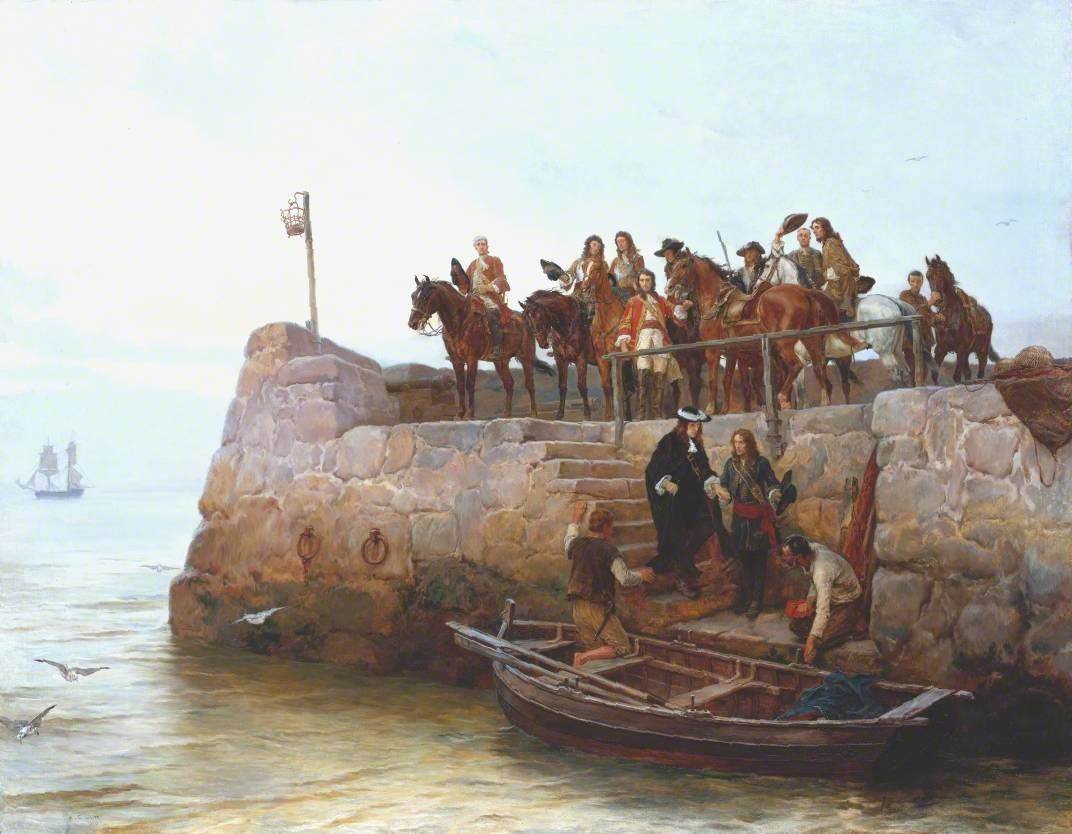
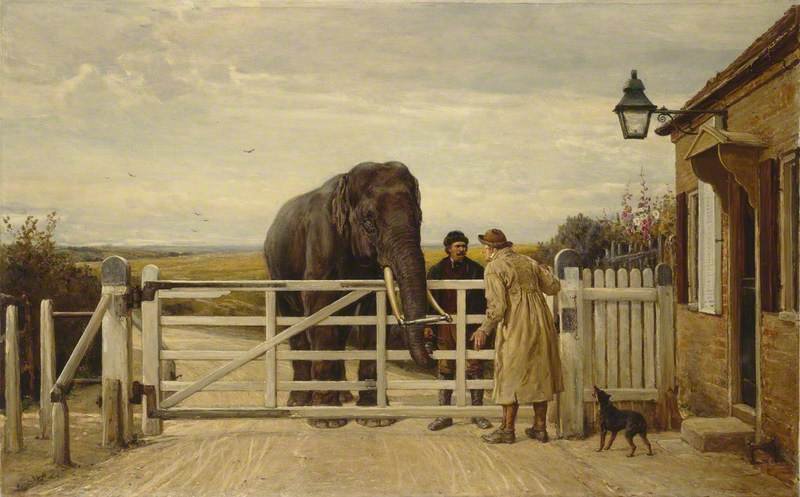
Andrew Carrick Gow, A Lost Cause, Flight of King James II after the Battle of the Boyne
This is my second defeat; the first (see Crossword136) took place nearly five years ago. That makes my win-loss record 350-2. To what do I owe this triumphant career? Exercise and diet. I spend at least six hours a day lifting virtual weights in my AI-assisted smart gym, and I fry my tofu only in lard.
I’ve objected before to the long triumphant march of ugliness that, already underway in the late Victorian period, has now overwhelmed everything everywhere: our art and literature, our music and architecture, our dress, manners and speech have grown so relentlessly transgressive, so unreservedly offensive, that nothing remains for them to transgress, and no one for them to offend, except, perhaps, a few sensitive souls, like you, gentle solver, and me. The most common word in informal conversation nowadays (used, with “ing,” as an all-purpose intensifier) is one that still, happily, cannot be printed in a newspaper crossword. So today I turn again, in my own crossword, to the ceaseless and untiring work of casting out ugliness in all its forms.
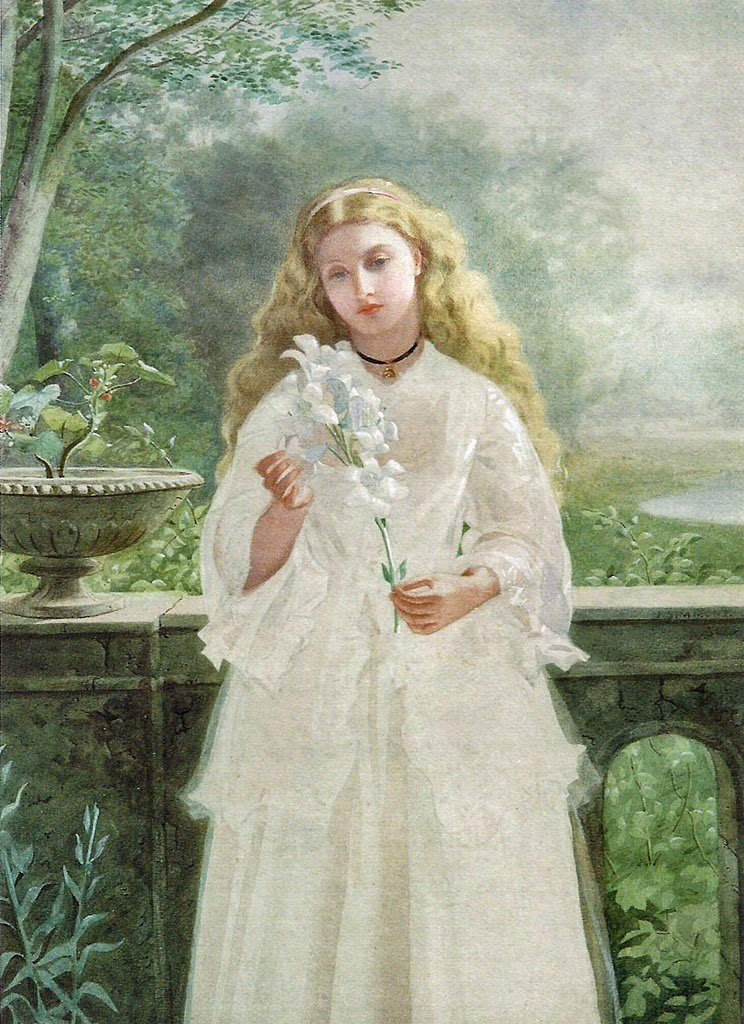
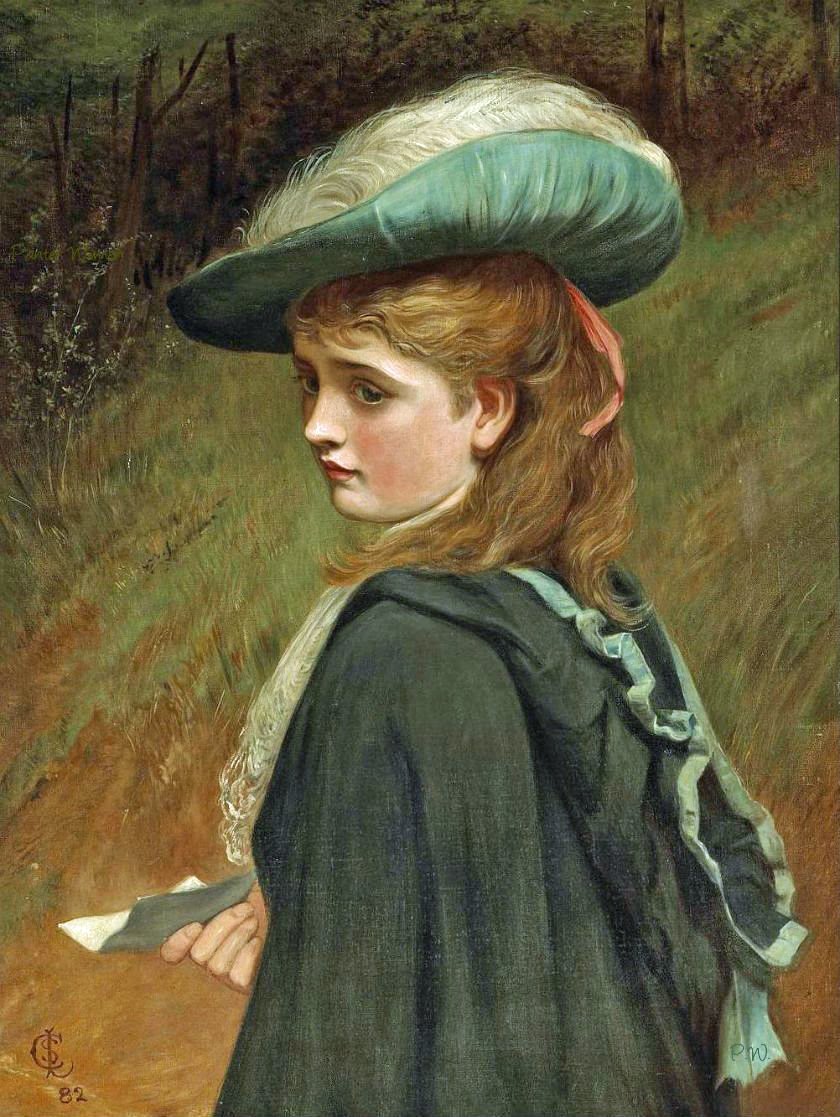
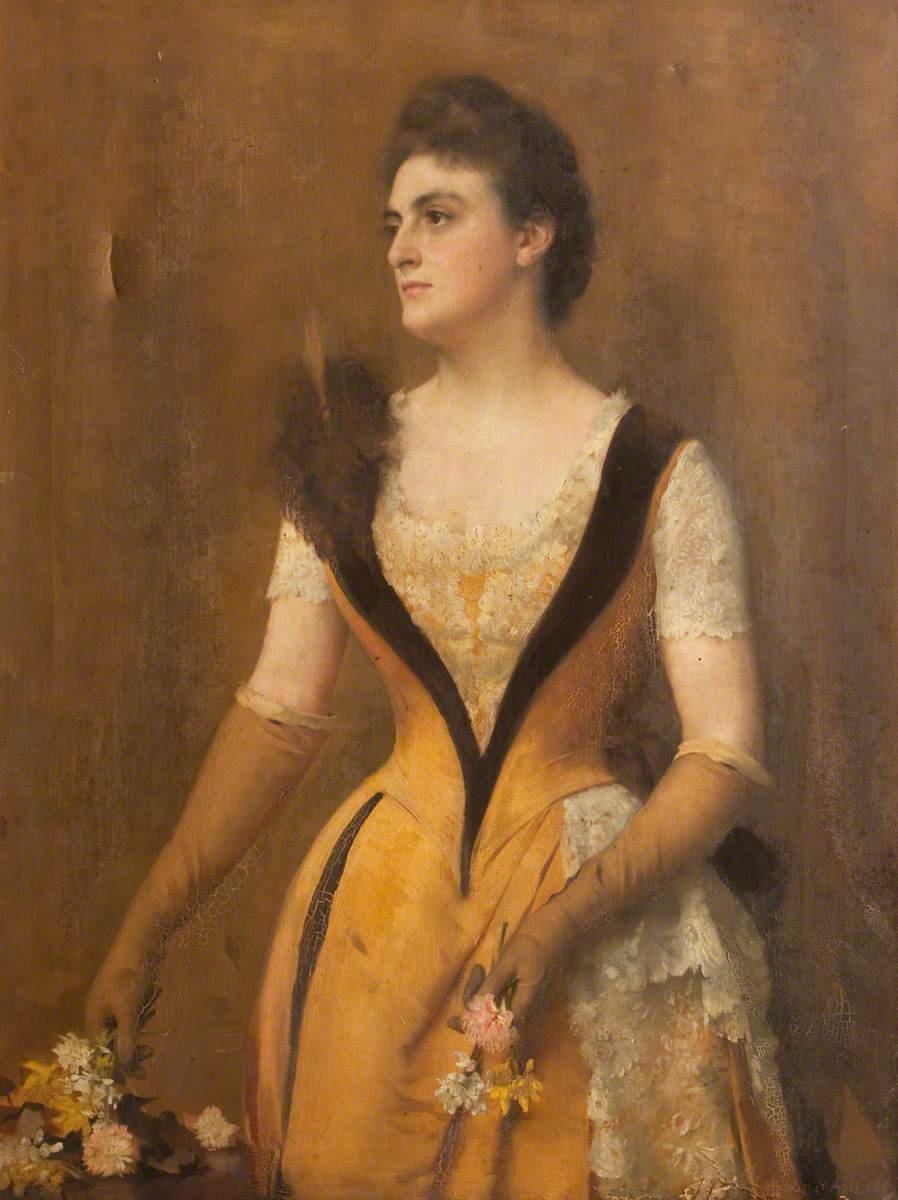
Thomas Benjamin Kennington, Portrait of an Unknown Lady
A rich but plain woman suspects the sincerity of her lovers.
Scottish-born Dorothea Gerard (1855 - 1915), who spent much of her early years with her family in Austria, and married an Austrian officer, set many of her novels in her adopted country; she wrote some 43 of them, some with her sister Emily.
It is “more than merely readable”; the heroine’s troubles “are treated with perfect sympathy, considerable subtlety, and an entire absence of sensationalism”; “the pictures of foreign life are informed by that thorough knowledge and insight familiar to Miss Gerard’s readers.” Athenaeum, June 2, 1894
The author “tells even the slightest story with grace and verve and never fails to introduce us to at least one winsome new acquaintance”; “the book cannot fail to win many readers.” Academy, June 16, 1894
You’ve got on your top hat, white tie, and tails, or your evening gown and string of pearls, and you’re seated at table next to the countess of this or the earl of that, and you’re using the right fork. “I wonder whether the weather will improve,” you say. Eyebrows are raised, gazes averted. Nobody responds. You’re never invited back. What, oh what, have you done? This puzzle supplies you with five practice phrases; learn to pronounce them properly and you may face your next dinner in high society with confidence.
A man is devastated by his wife’s death in childbirth.
Beatrice Whitby (c.1856-1931) wrote some 15 novels between 1889 and 1911.
“Very few of her contemporaries can vie with her in a certain indefinite charm of manner, which renders almost everything she writes very pleasant reading.” Spectator, June 2, 1900
“Not . . . a great book, but it is as good as” many contemporary “much-discussed, much-advertised volumes,” avoiding “second-hand, second-rate smartness”; features “quiet studies in human nature” showing “sympathy and understanding.” Athenaeum, June 2, 1900
Don’t let the title frighten you: this crossword is, like all my crosswords, free from full or even partial nudity, in fact of “erotic” content of any kind, and appropriate for family solving. In fact, I cleanse various phrases that might have once had an impure implication and redirect them to innocent ends,formy aim as a constructor is and has always been to save the world from itself, one puzzle at a time.
“We are delighted with this novel, both because it is quite new, and also because the story is very artistically constructed, as well as extremely interesting; and the subdued and polished style in which it is told adds immensely to the pleasure with which we peruse it”; despite a “too uniform tone of melancholy” it provides “a quiet yet truthful description of one kind of English domestic life.” Westminster Review, January 1862
The characters are “well drawn”; “a work of considerable power and thought, and shows that the authoress possesses a very keen insight into the habits and feelings of her own sex.” Critic, December 14, 1861
A contrasting view:
It has “an atmosphere of gloom so deep that the most pleasurable situation is overshadowed by the misery actors and spectators alike know to exist around them.” The author’s “decided literary power” gives it an “air of truth” that only makes it worse. Spectator, December 7, 1861
I’ve made seven phrases for today’s puzzle; my legal team is having them all properly copyrighted, or patented, or trademarked, or whatever—maybe all three. Meanwhile, I demand that everyone in the world refrain from using them (unless for nonprofit educational purposes) until they have entered the public domain in, I believe, February 2131.