Have you ever noticed how certain words or phrases sound more or less the same—sometimes are even spelled the same—and yet have entirely different meanings? This phenomenon was recently brought to my attention, and I had a thought: what if one were to base a crossword on it?
A fastidious man and his sensitive daughter live uncomfortably with their wife/mother, a selfish, second-rate novelist.
Elizabeth Robins (1862-1952) was born in Louisville, Kentucky, and raised by her grandmother in Zanesville, Ohio. Her mother, an opera singer, went mad; her husband, an actor, drowned himself. She worked as an actress first in America, then moved to London and established herself as a leading lady in the plays of Ibsen. In the twentieth century she became a prominent supporter of women’s suffrage. Amid all this, she found time to write several novels, among them this tragi-comic portrait of selfish literary pretense.
“A most excellent and powerful piece of work.” Athenaeum, August 25, 1894
The author is “evidently a literary impressionist who can succeed brilliantly in throwing off a vivid and dramatic conception of a group that interests him.” Spectator, August 4, 1894
A contrasting view:
“Surprisingly clever in its way, being direct and simple” but “exaggerated”: “the tables are turned on the ‘new woman’ with a vengeance, and with a degree of hot-headed malice and a lack of logic worthy of the ‘new woman’ herself in her newest aspect.” New York Times, August 6, 1894
I used to have a dog. I loved him, and he loved me. But since he left this sad world, I’ve found dogs annoying: the little yappy dogs next door yapping their little yaps all the yappy day, the muscle-y dogs lunging at me on the sidewalks, the sweatered and bootee-ed stroller dogs that complicate my efforts to regard their owners with the respect I try to confer on all humankind—they annoy me. Now, my old dog had his bad habits. He would leave his scent everywhere. He would shed all the time. He would try to kill the plumber. But he had a deep, rich voice, respected pedestrians, would have scorned to wear bootees—was, in short, just a better dog than the dogs of other people nowadays. This puzzle is dedicated to his memory.
“Bright and pleasant reading,” with “abundant interest and movement.” Athenaeum, October 10, 1891
It is “certain to be enjoyed”; Walford “has a good deal of . . . persistent and interested wakefulness of sympathetic observation” which gives “a charm to the apparently charmless commonplaces of ordinary life.” Spectator, October 31, 1891
What the world needs now is a mad hatter—not the Lewis Carroll tea party attendee with a broken watch and an insoluble riddle, but a maniacal putter-on of hats, a superhuman being whose mission it is to make everybody wear a hat, just like everybody used to do, before the modern obsession with being casual put an end to this wholesome practice. In the happy past, we didn’t have to look at the hairlines of strangers, and, since our eyes were pleasantly shaded by hat brims, we didn’t have to wear the sunglasses that now make us seem to each other hatefully dead-eyed and cruel. Who knows how much of the social conflict that our society has endured since the 1960s is just a side-effect of soulless stares and disagreeable haircuts?
“One of the saddest stories that we have read”; the characters are “thoroughly human, and, at the same time, thoroughly pitiful.” Athenaeum, July 26, 1873
“A painful story, and confused in its rendering of character,” but “there is a certain quality of intention in the characters of this book which carries the reader over the faults and dreary bits.” Saturday Review, August 23, 1873
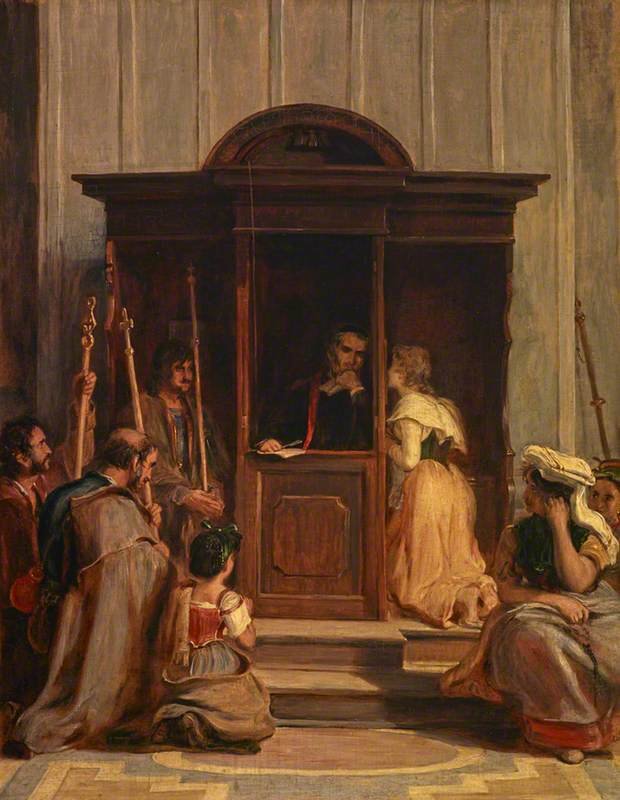
This puzzle comes with an important disclaimer: the “shrift” it provides is not effective as a means of remitting sin or conferring absolution. If that’s what you want, you need a priest.
For Trollope, see Novels029,079,138,189,190,191, and269. The reviews of this one were not particularly favorable.
“Though it excites little interest and furnishes little entertainment, it is agreeably written, and contains a sufficient number of pleasing scenes and descriptions to render it very readable.” Spectator, November 30, 1839
“Mrs. Trollope no doubt draws forcibly, but there is a rigidity in her characters which removes them from ordinary life.” Literary Gazette, November 30, 1839
“A very inferior novel . . . dull and disagreeable; . . . nothing so preposterous as the one-faulted husband ever existed.” Morning Post, December 6, 1839
Are you feeling unhappy? Do you wonder whether you’re missing out on life? Do you fear you’ve failed to reach your full potential? Plentiful examples in film and fiction have a solution for you: get divorced! If you’re single, get married, then get divorced! If you’re divorced, get remarried, then get redivorced! Try again and again until you’ve divorced the right person. Then you’ll be happy.
“The incidents are slightly improbable, but cleverly strung together. . . . The sooner the story is dramatized the better, for after reading the book we want to see the play.” Boston Globe, March 7, 1876
“An impossible story, with some very painful incongruities, and not a few betrayals of intellectual feebleness on the part of the author. And yet we imagine that there are many respectable three-volume English novels without half its brightness, and ingenuity, and readableness; many novels, of apparently much more thought, without anything like the natural quality, the insight, and even the poetry of this entertaining little book.” Scribner’s, May, 1876
The heroine’s charm is such as to “disarm any critical faculty which the reader may possess, which is fortunate, as otherwise sensible persons might feel obliged, in justice to themselves, to declare it was all nonsense all together.” Athenaeum, September 2, 1876
It has lately come to my attention that the Internet is infested with a great many people who have wrong opinions and do bad things. And I have to ask myself—and invite you, dear solver, to ask yourself as well—does not our use of the Internet render us complicit with these wrongheaded people and responsible for these bad things? I fear it does. So I’ve decided that if the Internet does not remove these people within a reasonable amount of time, I will withdraw from it myself and invite you to do the same. Reform, Internet, or else!
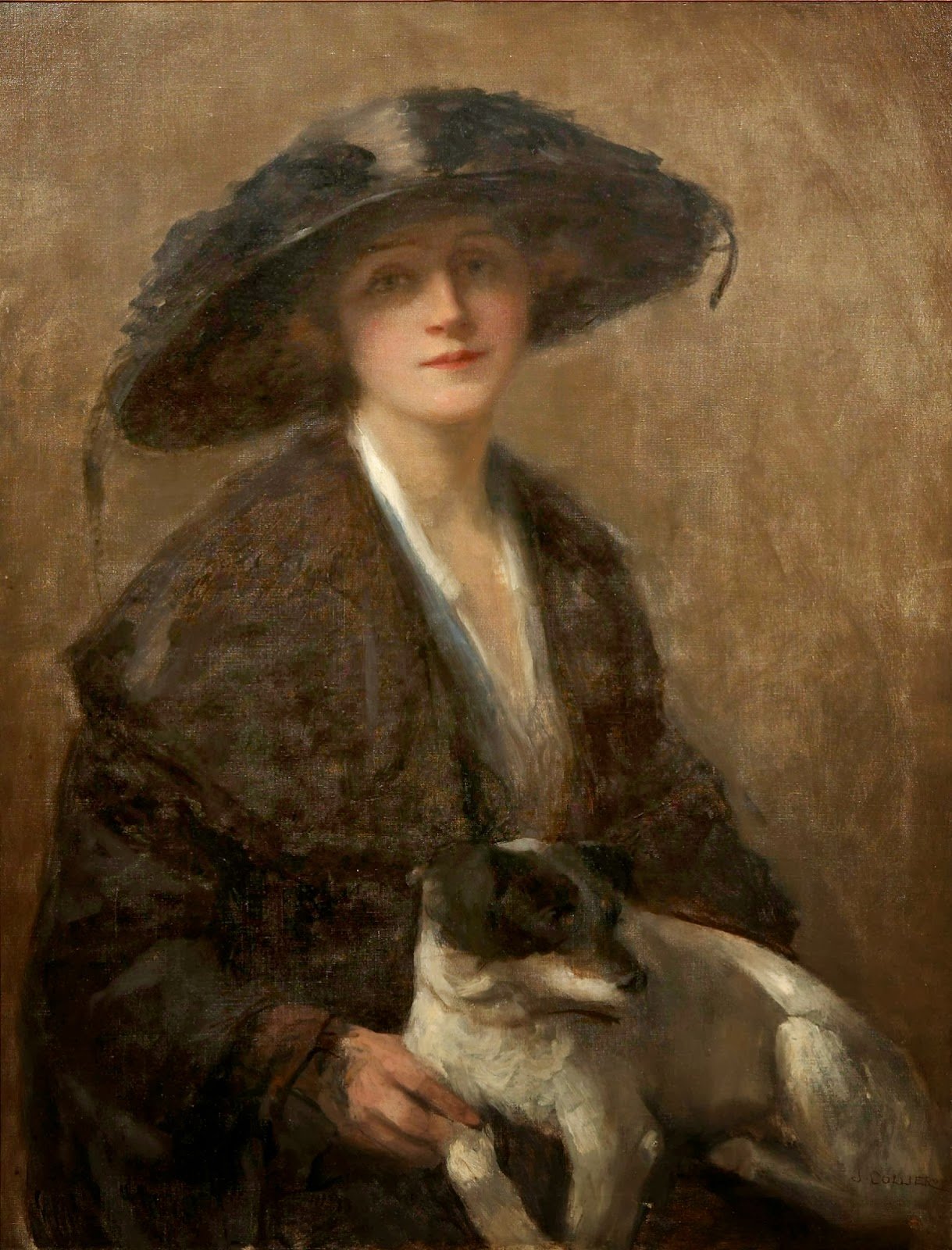
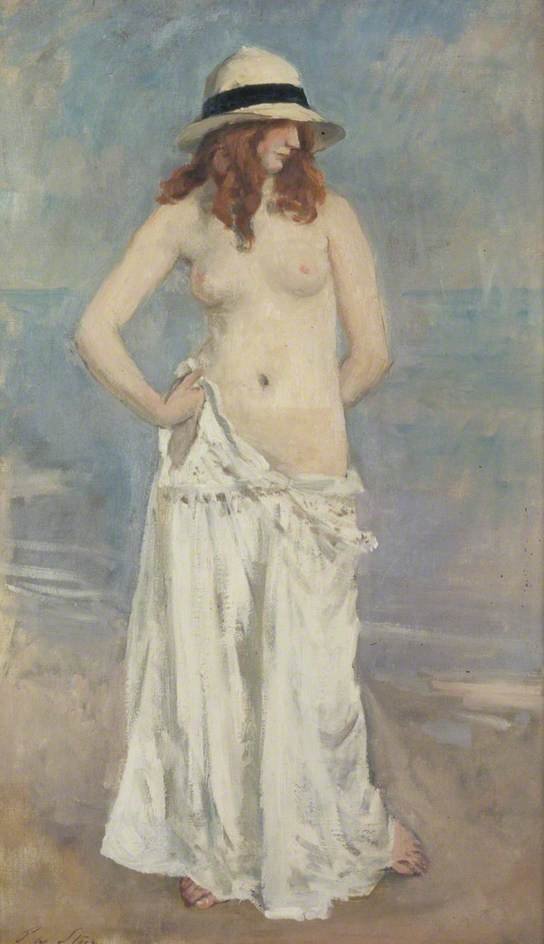
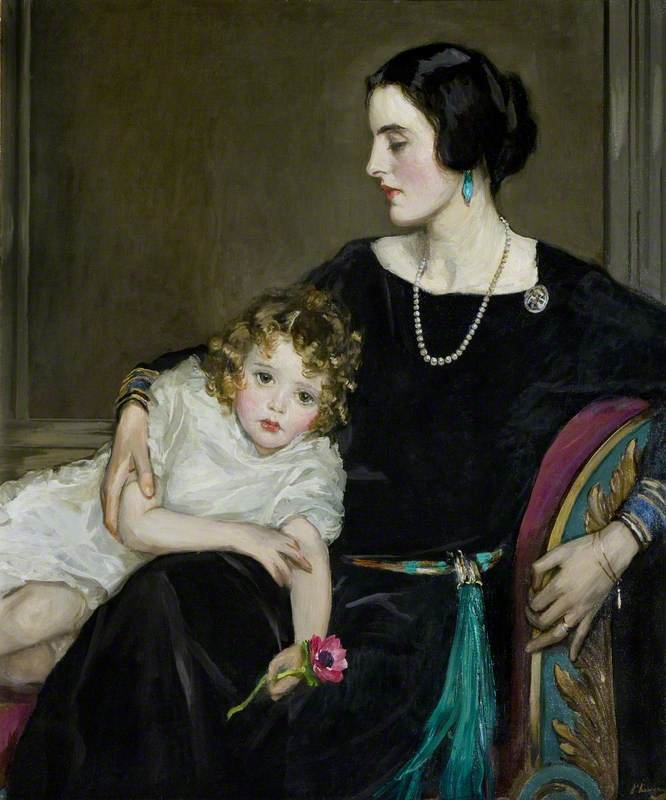
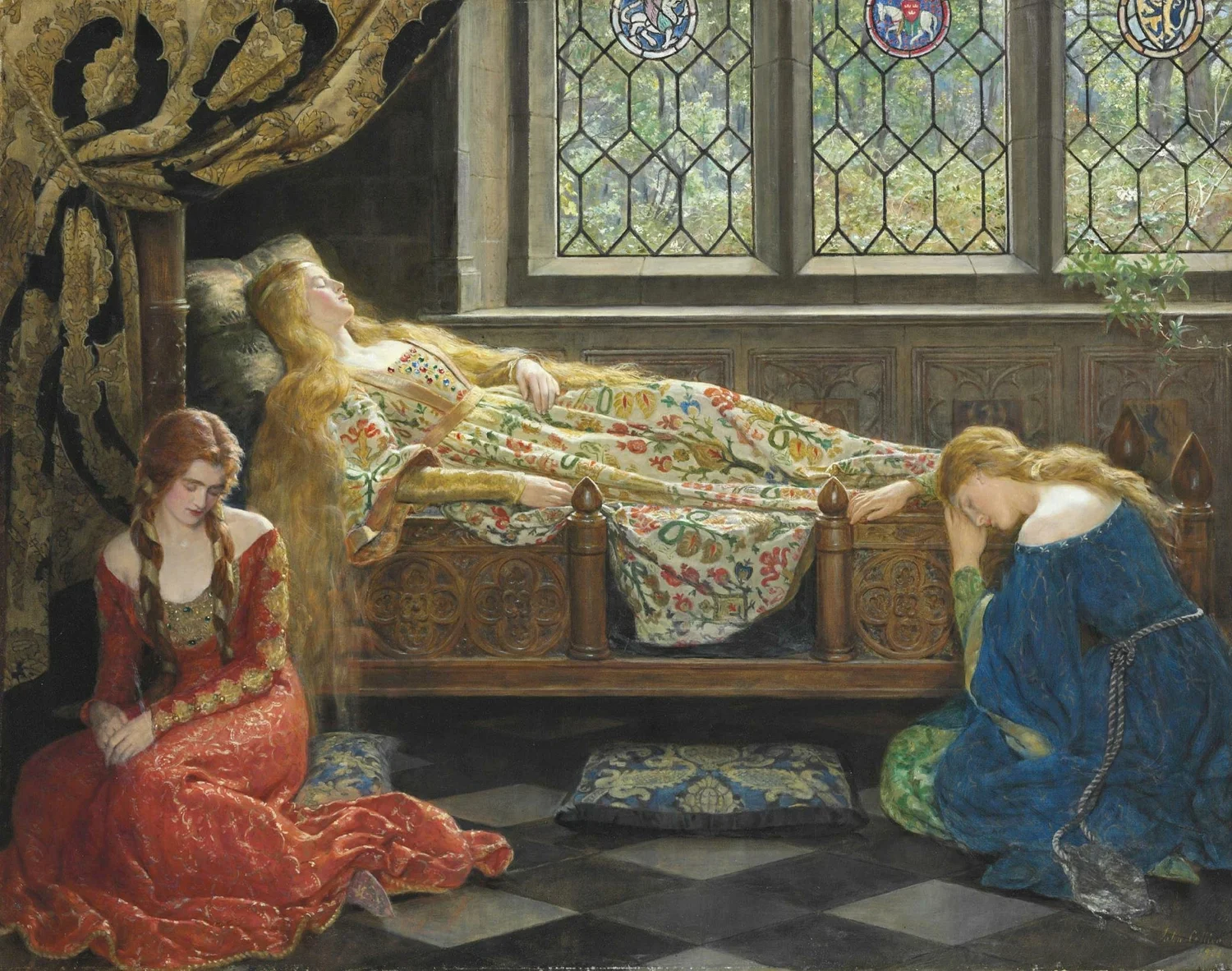
John Lavery, Anne Moira and the Honourable Mrs Forbes-Sempill
An attorney attempts to guide a client’s estate to a proper recipient.
Frank Barrett (1845-1926) wrote some 40 novels in a variety of subgenres between 1874 and 1914; this one has a particularly engaging narrator.
“A very pretty, natural, and refreshing story is A Recoiling Vengeance, although a slight and artless one. . . . in its clearness and brightness it reminds us a little of the manner of Anthony Trollope.” Saturday Review, September 8, 1888
Barrett has “a style which has ease and freedom, and at the same time a certain grace and restraint. . . . It is a bright, taking story, rendered all the more attractive by a vein of very pleasant humour which runs through it.” Spectator, September 29, 1888
Some time ago (seeCrossword 317) I promised a series of crosswords honoring the Periodic Table of Elements. So today I give you “SB,” the chemical symbol for antimony. But SB can mean many other things as well, according to Wikipedia: San Bernardino and Santa Barbara, the Solomon Islands and South Burlington, Vermont, the Statistic Bureau of Japan, and St. Bonaventure. Any solver who understands Wikipedia and is able to add to this list “A crossword puzzle by David Alfred Bywaters” may apply to me for an autographed copy of this puzzle, suitable for framing.
“The authoress considerably oversteps very often the limits of probability, and suffers herself to be betrayed into gross violation even of the possible,” but “it is long since we have perused a novel which afforded us more pleasure. . . . No one can fail to be struck with a certain air of freshness and originality in the conception, and great vigour in the working out of the narrative; from the commencement to the end there is an endless series of adventures, varied at every turn. Altogether the story of Lilly Dawson is a delightful tale, related with vigour, full of striking and original scenes, and displaying . . . considerable acquaintance with human nature.” Sunday Times, March 14, 1847
“It is . . . in the consummate art with which a character itself not very prepossessing is invested with interest, in the power with which the gradual awakening of sense and intellect, from the prostration of servitude and tyranny is portrayed, and in the life and character which is impressed upon each accessory character, rather than in the mere incident and narrative, that lie the chief merits of this truly clever and able performance. It belongs to that class of story which, since the days of Fielding and Richardson, has been the most enduring of all works of fiction.” New Monthly Magazine, April 1847
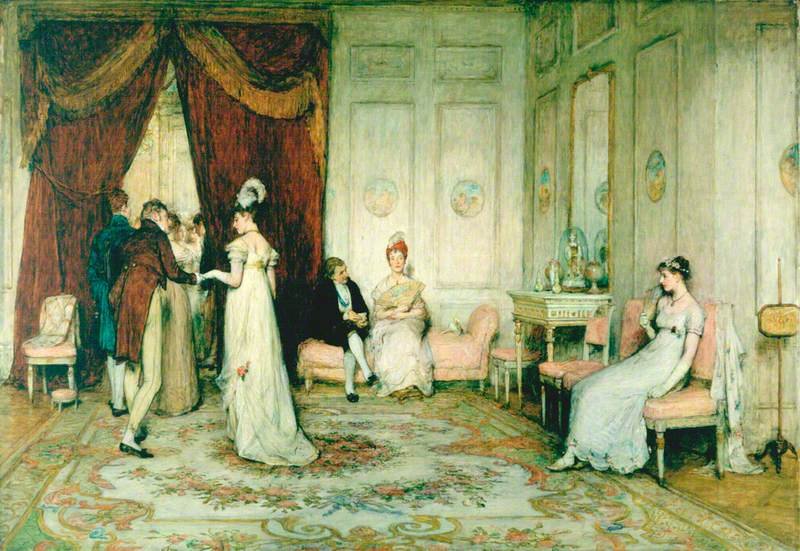
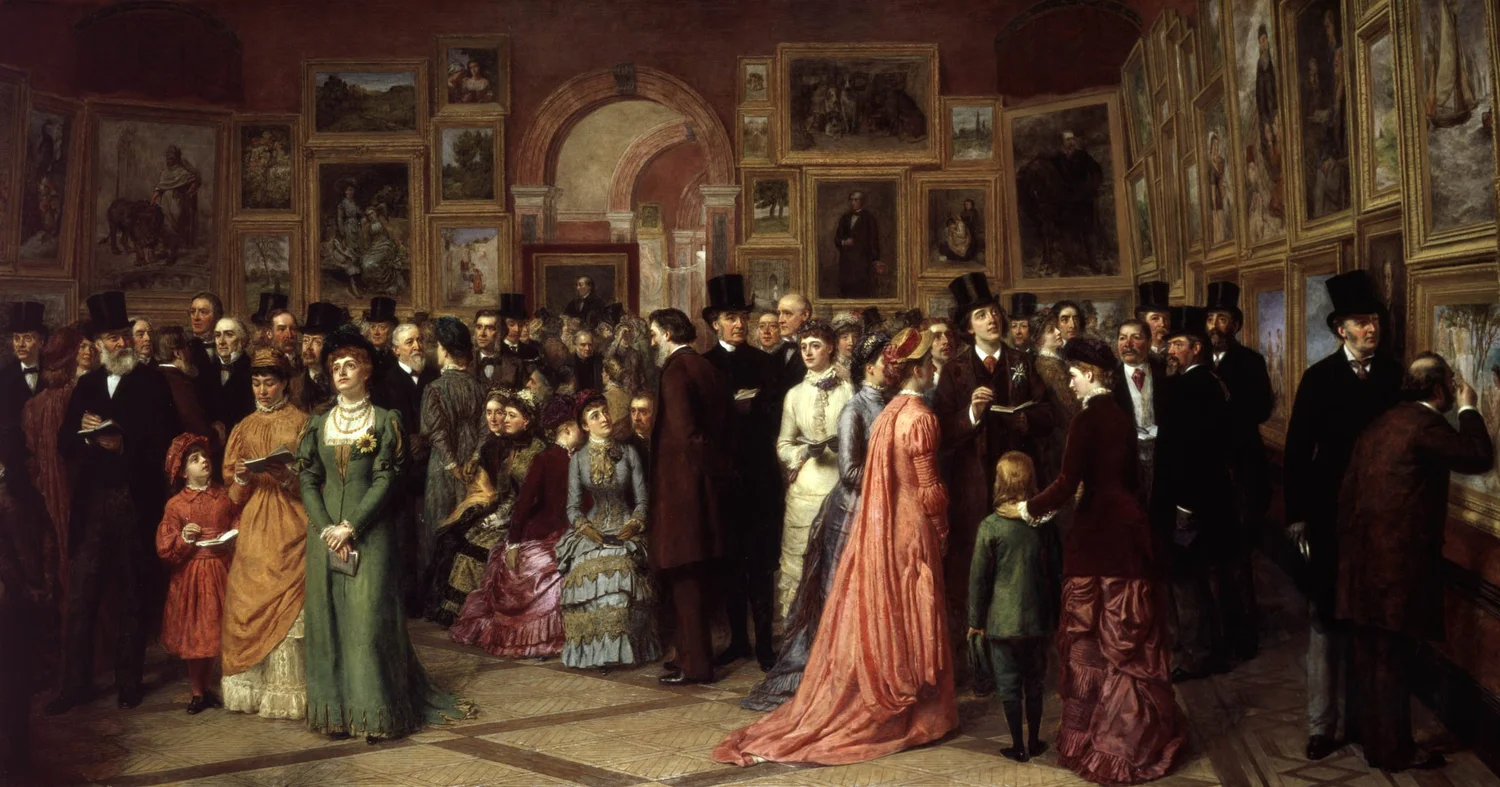
William Frith, A Private View at the Royal Academy
The purpose of this website, like that of all great modern art, is to bring about a radical rethinking of the human condition, of its meaning and purpose, its origin and end. When refined people see abstract painting or hear atonal music, their very sense of reality is challenged; they come away changed, ennobled, completed. Of course, there are those, not so refined, who see only smudges and hear only noise. And so it is with my crosswords. While I interrogate the unstable relationship between signifier and signified, with the aim of leading the refined solver to rethink the very meaning of meaning, there are those who just think, “Oh here’s another stupid pun.” But I do not cross my words for them.
What is it all for? It’s a question that eventually occurs to every thinking mind. Some turn to religion, some are content to rest in ignorance, and some distract themselves with more answerable questions like, “What’s 1 Across?”
Do you ever find yourself suddenly wondering whether everything you think and do is just wrong? This happens to me from time to time. For example, recently I found myself wondering whether posting crossword puzzles and Victorian novel recommendations for free on the internet every fortnight might not be the best use I could find for my time. Crazy stuff! But there’s no limit to the human mind’s potential for self-delusion.
“The elements of the story . . . are rather well worn” but “every part of the book is well written and lively.” Academy, September 18, 1886
“A very neatly told story, and it shows some good bits of character”; the author “provides his readers with a good deal of entertainment, and his well-known vivacity of style presents it in a very acceptable form.” Athenaeum, September 25, 1886