David Alfred Bywaters's Crossword Cavalcade & Fortnightly Victorian Novel Recommender. Every Saturday! Either a new language-torturing puzzle or an old novel by an unjustly neglected Victorian author. Why waste time on other amusements?

Novels

Novel 030: Thomas Adolphus Trollope, Durnton Abbey (1871)
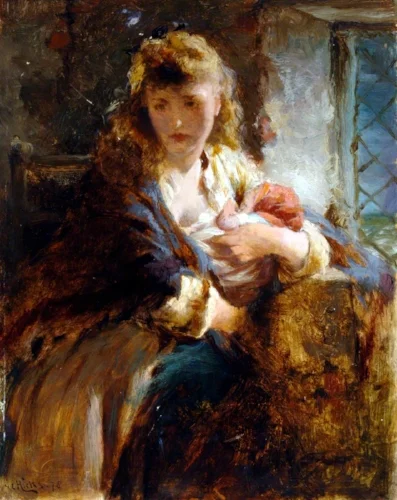
George Elgar Hicks, Mother and Baby

A feckless bank clerk woos a farmer’s daughter and is wooed by a local aristocrat in need of funds.


Thomas Adolphus Trollope (1810-1892) was Frances Milton Trollope’s first son and Anthony Trollope's older brother.  The plot of this novel heats up after a slow beginning; its bad characters are memorable studies in self-deception, led as they are by banal, routine desires into extravagantly evil behavior.

The characters are “natural but by virtue of their mediocrity. . . .  Virtue is mediocre in [Trollope's] hands, and the contrast between it and vice is marked only by the degree in which the latter falls below the mean”; still the novel is “well written, and superior to the common run of novels in originality and interest.” Athenaeum, July 29, 1871

“A well constructed, interesting story”; “one of the chief charms . . . is the humorous portraiture with which it abounds.” Graphic, August 5, 1871

“In spite of many scenes of considerable humour and not a little pathos,” the “coarse vice” portrayed in the novel “left in our mind . . . a most unpleasant recollection.”  Saturday Review, August 26, 1871

Download this week’s novel here:

v.1 http://access.bl.uk/item/viewer/ark:/81055/vdc_00000003F87C

v.2 http://access.bl.uk/item/viewer/ark:/81055/vdc_00000003F882

v.2 http://access.bl.uk/item/viewer/ark:/81055/vdc_00000003F876
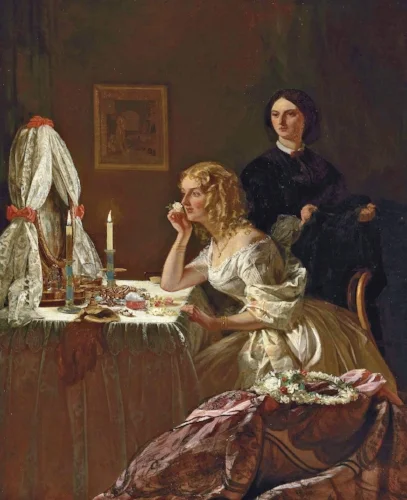
Novel 029: Frances Milton Trollope, The Ward of Thorpe Combe (1842)

Augustus Leopold Egg, The Toilet

An eccentric old man gathers his nieces and nephews in order to choose an heir.


Frances Milton Trollope (1779-1863), mother of Anthony Trollope, Thomas Adolphus Trollope, and Cecilia Frances Tilley, and sister of Henry Milton, and mother-in-law of Frances Eleanor Trollope, wrote over 30 novels between 1835 and 1856.  Here she provides a good comic plot and an entertaining variety of characters, especially the deliciously repulsive heroine.

“The principal portraitures of people, and sketches of manners, drawn by Mrs. Trollope, are so human and natural, that they ever come pleasingly home to the feelings of her readers.” Literary Gazette, April 2, 1842

“Mrs. Trollope never objects to peep into the pantry, to gossip with a comfortable old housekeeper, or to intrigue with an astute lady’s maid, and here she is particularly strong in life below stairs.” Her plot “will excite a strong interest.”  Athenaeum, April 9, 1842

“Excellent as Mrs. Trollope has always proved herself in pourtraying human character, its varieties and eccentricities, she has been more than usually successful in her delineation of the Ward of Thorpe-Combe. . . .  The attention of the reader is never allowed to flag, or to become weary.”  Gentleman’s Magazine, July. 1842

Download this week’s novel here:

https://books.google.com/books?vid=BL:A0017528094 (1-volume Paris ed.)

Novel 028: Lucas Malet, Colonel Enderby's Wife (1885)

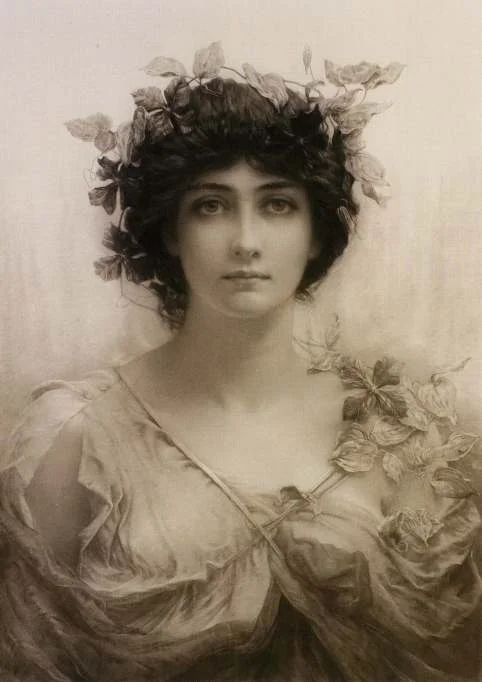
Hubert von Herkomer, Clematis
Hubert von Herkomer, Clematis

A quiet middle-aged man falls in love with a beautiful but strangely childlike young woman.


Mary St. Leger Harrison (1852-1931) was the daughter of novelist and reformer Charles Kingsley.  Under the pseudonym Lucas Malet, she wrote some 16 novels beginning in 1882; this one, amid more commentary on the human condition than might seem altogether necessary, presents vivid characters in helpless conflict.

“In these days of hurried workmanship it is a welcome contrast to encounter a story which combines imagination, observation and finish in such a high degree.  This is no sketch, but a whole gallery of portraits which have not suffered from the author’s elaborate method, but only gained in lifelikeness”; even if “the author, especially in her moralizing moods, is too uniformly, and perhaps consciously, clever.” Athenaeum, June 6, 1885

The novel’s style has “a quiet self-confidence and reserved power”; the author is “vivid and effective in her descriptions, and telling in her portraitures”; but “there is a morbid strain running through it; one is tempted to ask whether the imagination which conceived and executed this book has not a touch of inflammation.” Literary World, July 11, 1885

“It is poignant, grievously pathetic, a fateful, disheartening book, but it is unquestionably clever. . . .  Everything in ‘Colonel Enderby’s Wife’ is clever--the talk, the author’s pessimistic reflections, the arrangement of incident . . . and above all the delineation of character.”  Westminster Review, October, 1885

Download this week’s novel:

http://solo.bodleian.ox.ac.uk/OXVU1:LSCOP_OX:oxfaleph014443744

Novel 026: Elizabeth Darby Eiloart, The Love that Lived (1874)

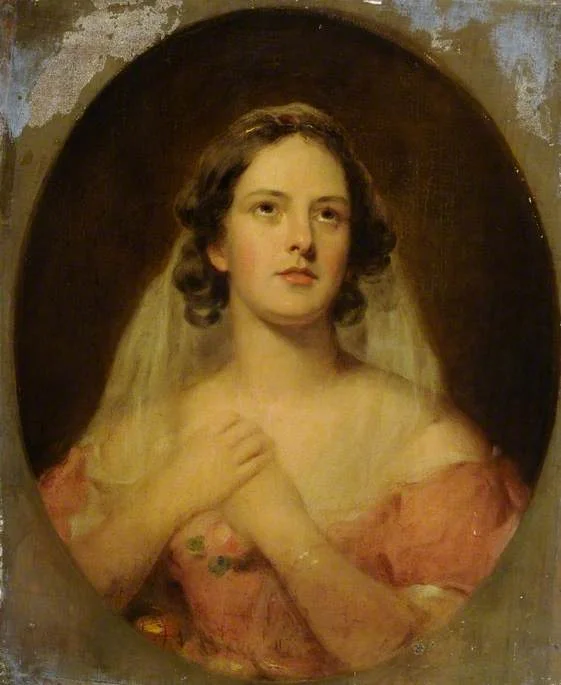
James Sant, The Bride
James Sant, The Bride

In a small town, a radical clerk is rescued from drowning by a rich young gentleman whom he resents; as it happens, the two men are connected by their parents’ secret past.


Elizabeth Darby Eiloart (1827-1898) wrote some 18 novels for adults (and several more for children) between 1865 and 1883; she specialized in middle-class characters and concerns, which emerge sharply in this novel, despite a charmingly silly plot.

“All Mrs. Eiloart’s books are honest books, spiced with independence of thought, and sweetened with a pleasant humour.”  This novel “breathes the fresh air of the country”; “its characters are true to life.”  Academy, July 18, 1874

Eiloart's “books are original and fascinating; they contain good plots, plenty of incident, and well described and distinctive characters.”  This is “one of the best and most interesting novels of the season.”  Morning Post, August 25, 1874

“Apart from the plot . . . Mrs. Eiloart’s novel is refreshingly and unaffectedly real.  There is nothing high-flown, nothing morbid in its tone.”  It “is not only a love-story.  It is a political story.  Conservatives and Radicals, rich and poor, the old school and the new, are all faithfully represented. . . .  This is one of the most pleasing and interesting novels of the season.”  Examiner, August 29 1874

Download this week’s novel:

vol. 1 http://access.bl.uk/item/viewer/ark:/81055/vdc_000000047580#?c=0&m=0&s=0&cv=4&xywh=-460%2C-181%2C3652%2C2238

vol. 2 http://access.bl.uk/item/viewer/ark:/81055/vdc_000000046A6A#?c=0&m=0&s=0&cv=4&xywh=-410%2C0%2C3265%2C200

vol. 3: http://access.bl.uk/item/viewer/ark:/81055/vdc_000000046A5E#?c=0&m=0&s=0&cv=4&xywh=-379%2C-1%2C3329%2C204

Novel 025: Margaret Paul, Martha Brown, the Heiress (1861)

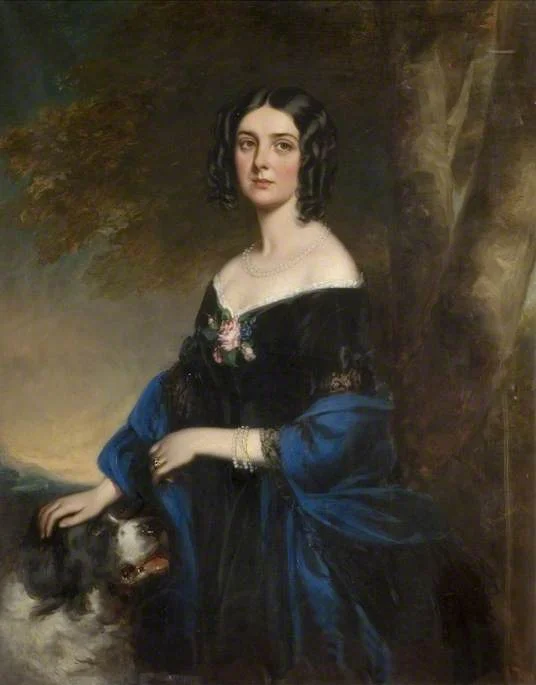
Richard Buckner, Margaret Laetitia, Lady Western, née Bushby
Richard Buckner, Margaret Laetitia, Lady Western, née Bushby

An heiress loves a poor but proud young surgeon.


Margaret Agnes Paul, née Colvile (1829–1905) wrote a dozen novels between 1856 and 1886, of which this was the fifth.  Just one volume, like many of her works, this has a good plot drawn from ordinary life, and a few vivid characters.

“A very pleasant evening’s reading—clever, sensible, brief, lively, and refined. . . .  It is sometimes a relief to read a novel which is good enough to admire, and not powerful enough for even a pretence to immortality.” Spectator, November 9, 1861

“interesting and original . . . related in a sharp, concise manner, which renders it very pleasant reading.” Athenaeum, November 9, 1861

Download this week’s novel:

http://dbooks.bodleian.ox.ac.uk/books/PDFs/600071637.pdf

Novel 024: Mary Cholmondeley, Red Pottage (1899)

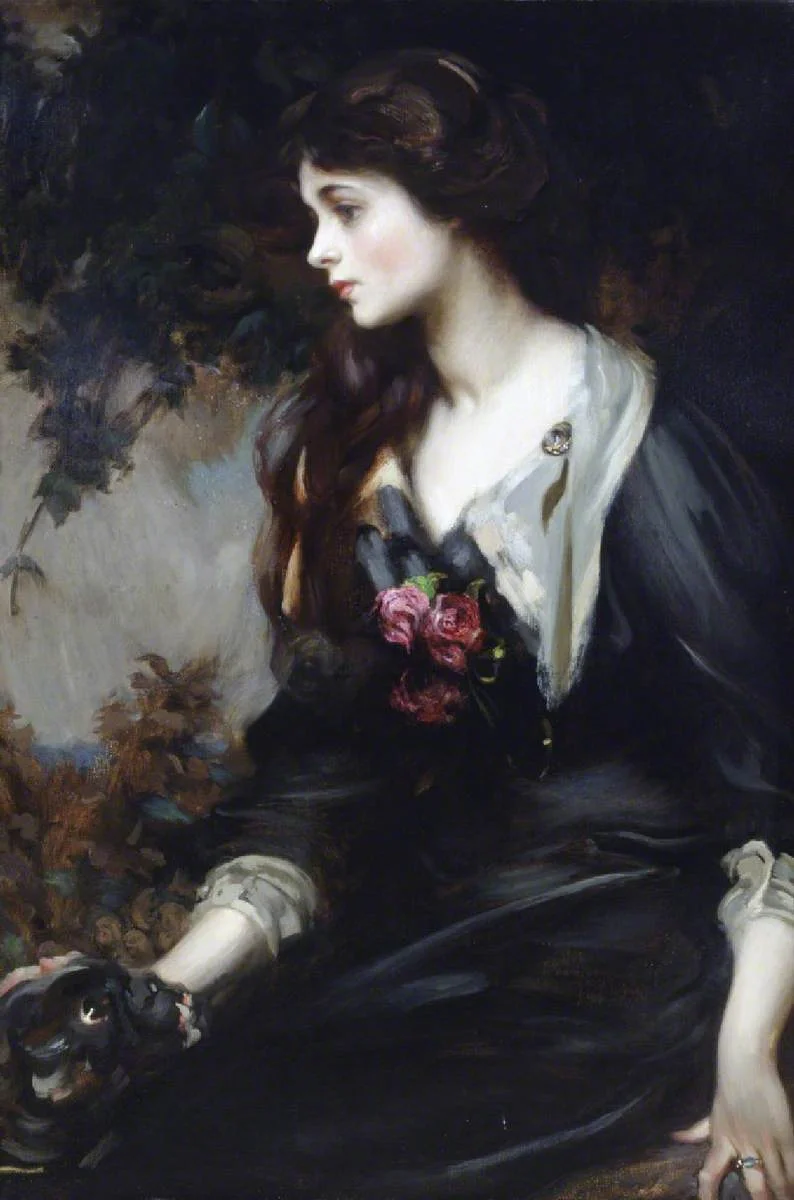
James Jebusa Shannon, Lady Marjorie Manners
James Jebusa Shannon, Lady Marjorie Manners

A young novelist lives with her clerical brother, while her friend grows to love a man with a dubious past and a secret problem.


Mary Cholmondeley (1859-1925) wrote ten novels between 1887 and 1913; according to some reviewers, this one outsold all the other novels of 1899.  Its self-satisfied clergyman is a unique creation, not to be missed.

The plot is “ingenious, original, and abounding in strong dramatic situations”; Cholmondeley “understands the art of making her characters not merely thrill us at crises, but interest us in the normal intervening spaces of their lives”; despite some blemishes, “criticism is disarmed by the freshness, the strength, and the pathos of this brilliant and exhilarating novel, by far the most exciting and original of the present season.”  Spectator, October 28, 1899

“A clever, well-told story.  The emotional feeling is not of a common sort, and the outlook on modern life and manners is touched with vivacity, with something of subtlety even.” Cholmondeley provides “close and, at times, humorous observation of character . . . produced with a light touch and an admirable absence of the descriptive manner.”  “Never aggressively witty nor epigrammatic, she yet often says a good thing in a way that makes one wonder why it has not been said before, or not in the same fresh or whimsical fashion.”  Athenaeum, November 11, 1899

The “central incident” is “improbable,” “but the insight into character, the vivid interpretation of a woman’s mind, and the happy gift of satire displayed by Miss Cholmondeley raise her book at once to a very high level.  She has a marvelous knack of portraying an unconscious fool, male or female, and one or two of her characters will live in her readers’ memories.  She has an admirable sense of style, and she knows the world of which she writes.”  Saturday Review, November 11, 1899

Download this week’s novel:

https://archive.org/details/ra556450500choluoft

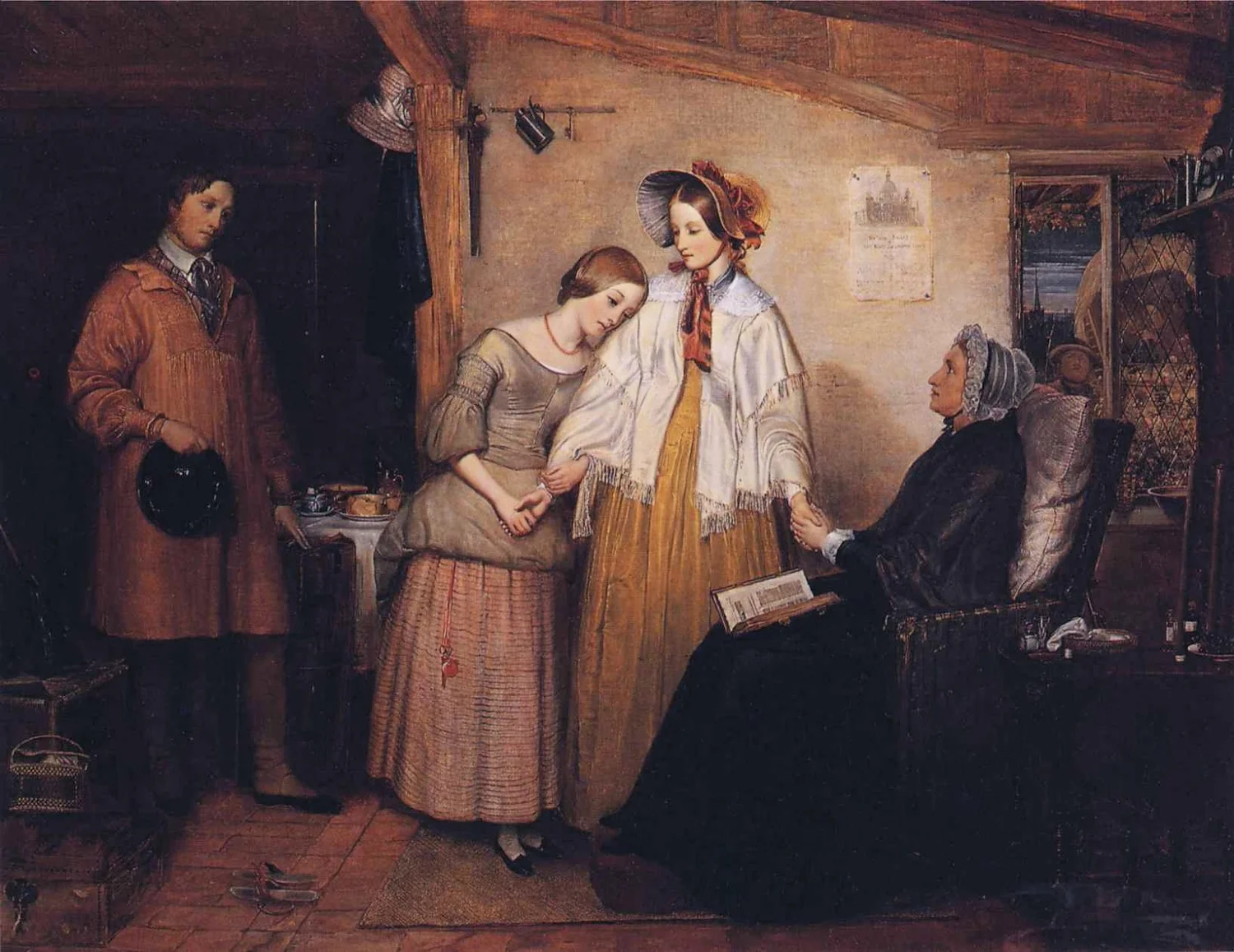
Novel 023: Catherine Crowe, The Adventures of Susan Hopley (1841)

Richard Redgrave, Going into Service
Richard Redgrave, Going into Service

A servant girl hopes to exonerate her brother from suspicion of murder.


Catherine Crowe (1790-1872) wrote a dozen works of fiction between 1841-1859, of which this is the first.  She specialized, as the Athenaeum later put it, in “marvellously dovetailed stories of incident, vicissitude, coincidence, exposure, and disentanglement” (March 13, 1852).

 “Crowded scenes and bustling actors, and a rapid succession of incidents,—whose movement is not restrained by any calculations on the part of the author as to their probability—keep up that sort of easy excitement which the confirmed novel-reader so much loves.  There is a dashing disregard of the old consecrated unities, highly favourable to the author’s go-ahead-ism, as the Americans call it:—and in their place, he has set up a quasi unity of his own.” Athenaeum, January 30, 1841

“It is marked by a quiet kind of talent, singularly free from literary affectation, and indeed all traces of the profession of letters; but the most striking feature of the book is the extraordinary number of characters introduced, with chains of complicated and related incidents, all relative to each other, and all tending, as ultimately appears, to one point.”  Chambers’s Edinburgh Journal, May 8, 1841

“We hardly know what to say of this book.  It perplexes us extremely.  It is powerful, beyond all question; but unsatisfactory.  The writer is entitled to one admission, as early as we can make it.  When we had read the first twenty pages, the book was not again laid down. . . .  It includes a large amount of nicety and truth of observation, as well as much skill and art.”  Examiner, February 28, 1841

“Mrs. Crowe possesses the rare faculty of telling a story so naturally that it is positively difficult for the reader to convince himself that is is not true. . . .  Susan Hopley is an extraordinary specimen of her genius in this respect.  From the beginning to the end the reader is impressed with the notion that it is not a fiction. . . .  There is the simplicity of a person telling truly what she has seen and heard. . . .  Hence it was that Susan Hopley has been more widely read by the public, although not so bepraised by the reviewers, than any novel of our time, with the single exception of the works of Dickens.” Critic, November 1, 1850

Download this week’s novel:

https://archive.org/details/06684358.1979.emory.edu

Novel 021: Alice Price, Who Is Sylvia? (1883)

Augustus Leopold Egg, Unknown Woman
Augustus Leopold Egg, Unknown Woman

A virtuous young lady endures various improbable accidents and misunderstandings.


Alice Price (1840-1891) wrote seven novels between 1883 and 1892, of which this is the first.  Its plot is full of exciting surprises; its characters are well delineated.

“Few recent novels can boast of so excellent a plot, of such remarkably well-drawn characters, and of the variety of incidents that is to be found in Who is Sylvia?.”  Morning Post, February 1, 1883

“This novel may be read with genuine pleasure; it is agreeably written, and the interest is sustained to the close.”  Academy, February 3, 1883
 
“The story is not overcharged with incident, but it has more than enough to relieve it from monotony, and the execution is much above the average.  There are indications of quiet power in this novel which give ample promise for the future work of its author, and it is in itself an achievement with which its readers are more than likely to be content.”  Athenaeum, February 3, 1883

Download this week’s novel:

http://solo.bodleian.ox.ac.uk/OXVU1:LSCOP_OX:oxfaleph014545736

Novel 020: Sir Henry Stewart Cunningham, Wheat and Tares (1860)

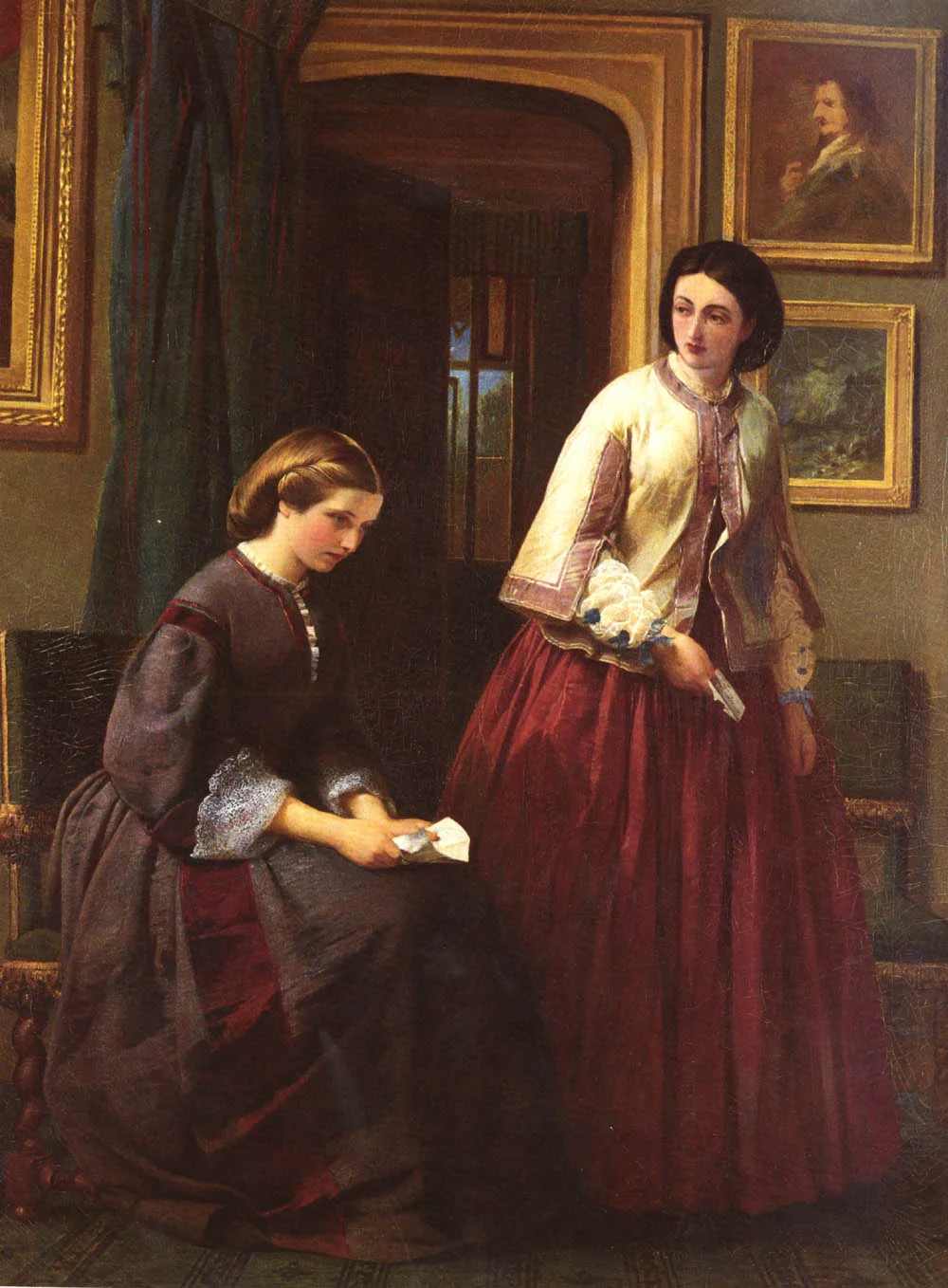
William Powell Frith, Portrait of Two Girls
William Powell Frith, Portrait of Two Girls

A brother and sister, staying at a seaside town with their uncle the archdeacon, are involved in various romantic conflicts.


Sir Henry Stewart Cunningham (1832-1920), a prominent barrister and judge, found time to write six novels between 1860 and 1894.  Here, maybe he ran out of time, for, after three hundred pages of excellent social comedy, he concludes abruptly with a hundred more of badly plotted melodrama.  The beginning and middle, however, are good enough to make up for the end.

“A capital story.  Fresh, sparkling, and cheerful as a summer’s morning”; it provides “a very faithful daguerrotype of the life in an English sea-side town.”  Christian Examiner, November, 1860

“This is a natural work.  It will please all readers, whose tastes and human feelings have not been utterly obliterated by the blood-and-thunder ‘sensation’ romances of the time.”  It “has the atmosphere of truth and the vigor of sincerity, and is executed with uncommon freedom, delicacy, and skill.”  Knickerbocker, (quoting the New York Saturday Press), November, 1860

“The dialogue is unusually brilliant, natural, and easy.  The fun is quiet, subtle, and continuous; and the illustrations of hidden thoughts and the shading off of finer traits of character are at once ingenious and truthful.  But above all, it has throughout the unmistakable impress of a refined and delicate taste.  The people in it who are represented as talking in drawing-rooms talk as if they really were in drawing-rooms, and not in the gilded saloons that haunt the fancy of Bohemia.  The ladies are ladies, and the gentlemen are about as wise and foolish, as well-behaved and as ill-behaved, as gentlemen usually are.”  Saturday Review, March 1, 1862

Download this week's novel:

http://access.bl.uk/item/viewer/ark:/81055/vdc_000000047376#?c=0&m=0&s=0&cv=0&xywh=-788%2C-129%2C2990%2C2565

Novel 019: Lady Georgiana Fullerton, Grantley Manor (1847)

William Dyce, Christabel
William Dyce, Christabel

A young woman is perplexed by a man who seems and does not seem to court her, and by a half-sister who may be very good or very bad.


Lady Georgiana Fullerton (1812-1885), daughter of an earl and convert to Catholicism, wrote roughly a dozen novels between 1844 and 1883.  Though the plot here is not always plausible, it enables her to place fully realized, sympathetic characters in interesting dilemmas.

“The skill with which the plot . . . is constructed, the exquisite truth of delineation which the characters exhibit, and the intensity of passion which warms and dignifies the subject, are alike admirable. . . .  The depth of passion which surrounds the story of Ginevra is the result of unquestioned genius.”  Times, August 24, 1847

“If sentimentalism is sometimes carried to a rather extravagant height, and tenderness and pathos are occasionally over-wrought, still it is impossible to deny to the work, striking and passionate scenes, exquisite and truthful delineations of English society and character, vigour and grace of language, and high intellectual power.” Ainsworth’s Magazine, July 1847

Fullerton “takes a high place among writers of modern fiction.  We have not for many a day read so charming a story. . . .  Though there is nothing violent in the nature of the interest, and weakness, not wickedness, induces the suffering, the suffering is deep enough for profoundest sympathy, and the feelings are moved and agitated to the last.  And neighbouring the pathos...we have occasional archness, simplicity, and quiet humour, the effect of which is most graceful and lovely.” Examiner, July 3, 1847

Download this week’s novel:

v.1  https://archive.org/details/grantleymanortal01full

v.2  https://archive.org/details/grantleymanortal02full

v.3  https://archive.org/details/grantleymanortal03full

Novel 018: L.B. Walford, A Stiff-Necked Generation (1889)

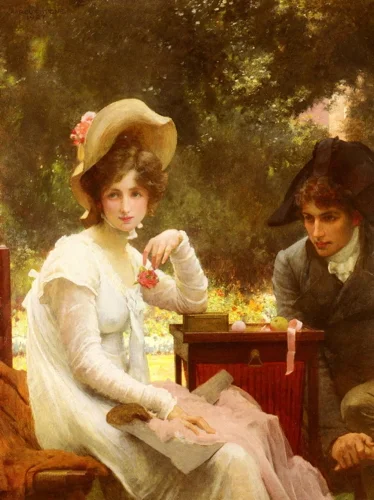
Marcus Stone, In Love

An aristocratic young lady, resisting her bullying mother’s plans, involves herself with a handsome but dubiously genteel army officer.


Lucy Bethia Walford (1845-1915) wrote over 40 novels between 1874 and 1914.  This one cleverly represents hopeless mutual incomprehension between characters of different social backgrounds.

“It is a society novel of an excellent type:  abounding in clever delineations of human character, interesting snatches of bright conversation, and pretty descriptions of natural scenery.” Scots Observer,January 5, 1889

“There is much that is unusually clever in the story.  The author’s sense of humour is genuine”; her “characters are, without exception, lifelike, even the workings of a young girl’s mind . . . are analysed with striking fidelity.” Morning Post, January 23, 1889

“A very interesting and carefully executed piece of work. . . .  As usual, the author has wisely declined to encumber herself with a complicated plot; and though there is . . . quite enough story to keep the interest from flagging  . . .  the book is mainly attractive in virtue of its bright, lifelike conception and its capable and artistic delineation of character.” “Subtlety of handling which results in simplicity of effect is always a fine art, and the portrait of Major Gilbert seems to us very fine art indeed.”  Spectator, April 29, 1889

Download this week’s novel:

v.1 https://archive.org/details/stiffneckedgener01walf

v.2 https://archive.org/details/stiffneckedgener02walf

v.3 https://archive.org/details/stiffneckedgener03walf

Novel 017: Mrs. W.H. Corning(?), Western Border Life; or, What Fanny Hunter Saw and Heard in Kanzas and Missouri

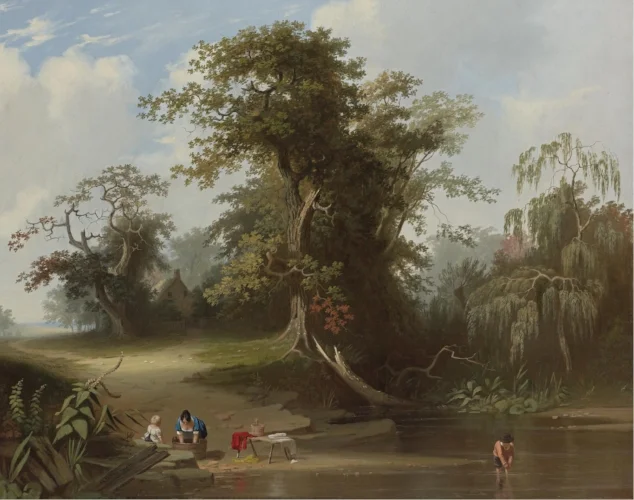
George Caleb Bingham, Landscape, Rural Scene

A Connecticut governess is hired by a Missouri family during the Missouri-Kansas border war.


The author is anonymous; but an excerpt, republished in 1895 by Louis Klopsch, editor of The Christian Herald (in a collection called A Budget of Christmas Tales and also including, e.g., Dickens’s “A Christmas Carol”) is there attributed to “Mrs. W.H. Corning,” about whom I can find no information.  Though disfigured at the end by a melodramatic dénouement, and throughout by sentimentalism (especially as regards one Aunt Phebe, a sort of female counterpart of Harriet Beecher Stowe’s Uncle Tom), the novel gives us a close view of 19th-century Missouri life, and, more generally, a chillingly plausible account of the way in which average, moderately selfish people may be led by habit and tribal belief into horrific cruelty and casual murder.

“Evidently by an unpracticed hand” but “written with great freshness of feeling, and a fine perception of character.” Putnam’s, November, 1856

“We beg to congratulate” the author on the novel’s “good spirit and general truth to nature—at any rate, to nature as seen from a feminine point of view in New England”; it includes some “artlessly successful . . . character-painting.”  Saturday Review, February 21, 1857

“The story . . . is interesting and readable, and that goes a long way towards making a good novel.  The scenes of Western border life are vivid and graphic, and have the air of being real.”  Athenaeum, March 21, 1857

Download this week’s novel:

https://archive.org/details/westernborderlif00newy

Novel 016: Mary E. Mann, Moonlight (1898)

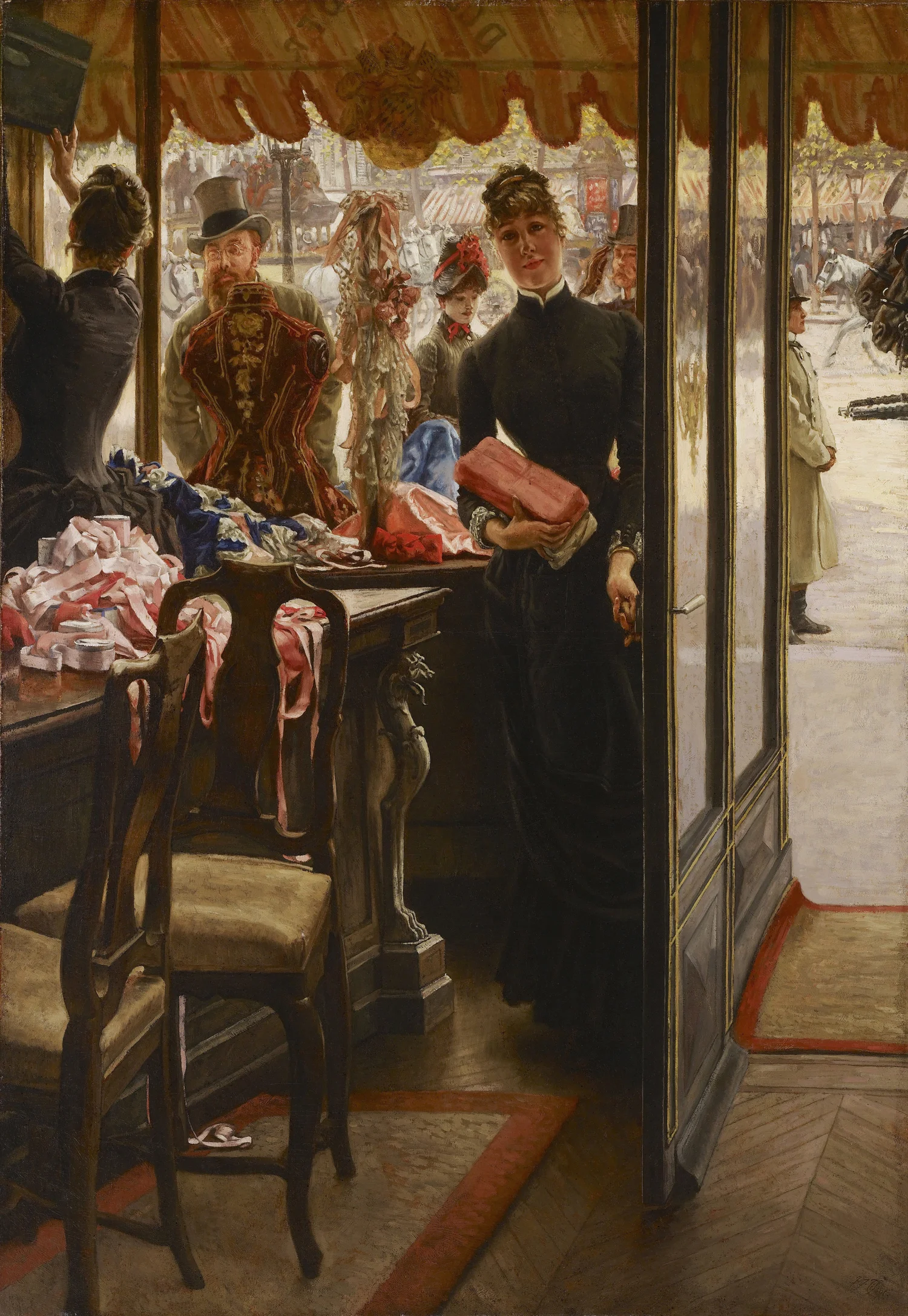
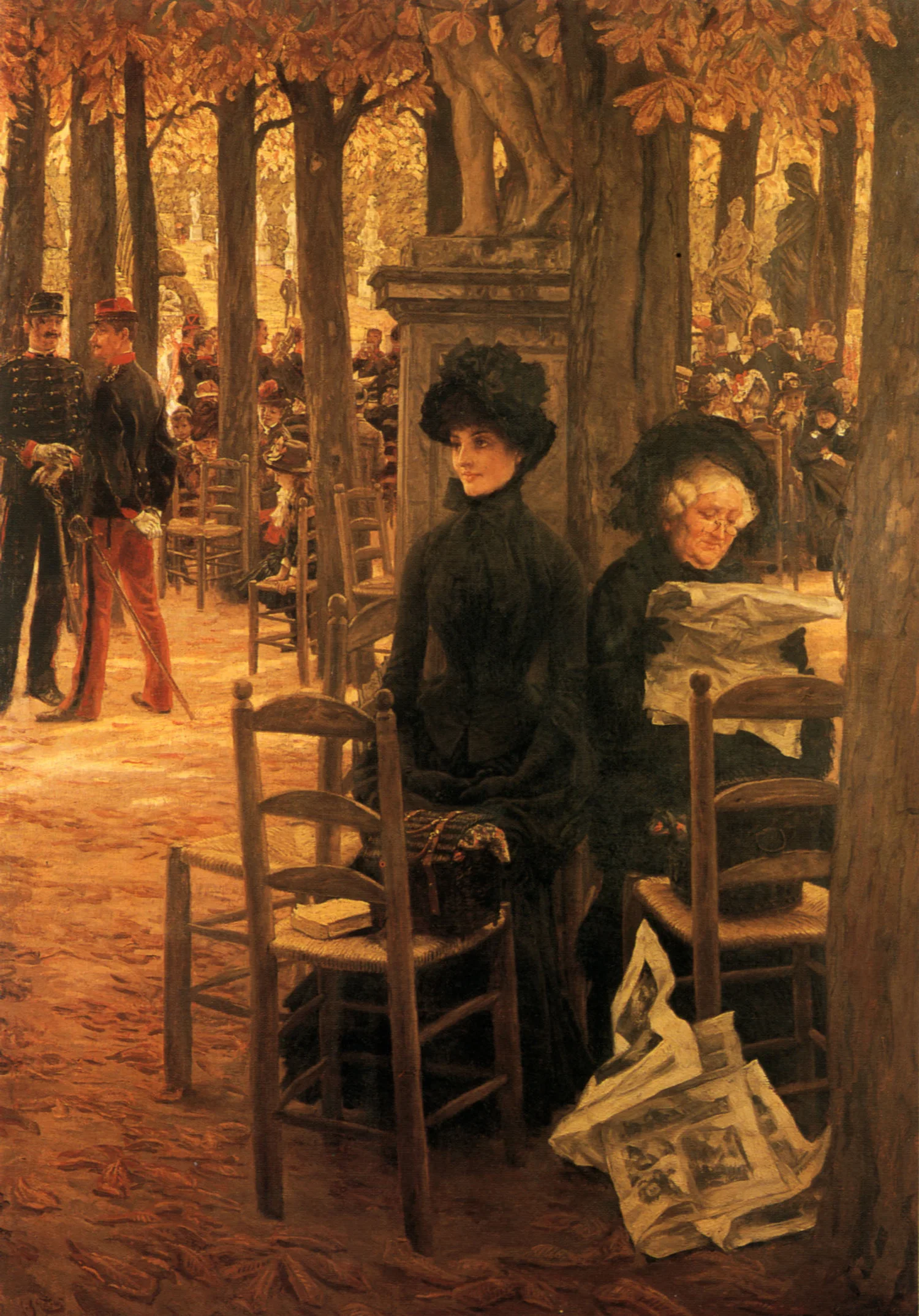
James Tissot, The Shop Girl

A young woman, daughter of a once-prosperous farmer, is forced by his bankruptcy to seek work in a shop, where she is courted by the local veterinarian.


Mary E. Mann (1848-1929) wrote nearly forty novels between 1883 and 1918. Here she provides (in just one volume)  memorable characters, an unusual setting, a bright style, and an engaging plot.

“Written in a brief, simple, unemphatic style, with never a note forced anywhere, this story yet produces a wonderfully strong effect. . . .  Commonplace persons, with average standards of conduct and quite unideal, even vulgar instincts . . . are neither rated nor made fun of; merely observed with a wise tolerance and with a tender sympathy for the joys, and the sorrows, and the weariness they share with the more gifted tithe of humanity.  This altogether uncritical yet observant attitude gives us a sense of novelty, and convinces us of the writer’s uncommon power.”  Bookman, January 1899

“An excellent style, a command of natural, crisp, and vivacious dialogue, a firm grasp of character, and a dramatic imagination.”  Speaker, February 25, 1899

Download this week’s novel:

http://access.bl.uk/item/viewer/ark:/81055/vdc_000000043B84#?c=0&m=0&s=0&cv=0&xywh=-822%2C-133%2C3099%2C2658

Novel 015: Theo Gift, Lil Lorimer (1885)

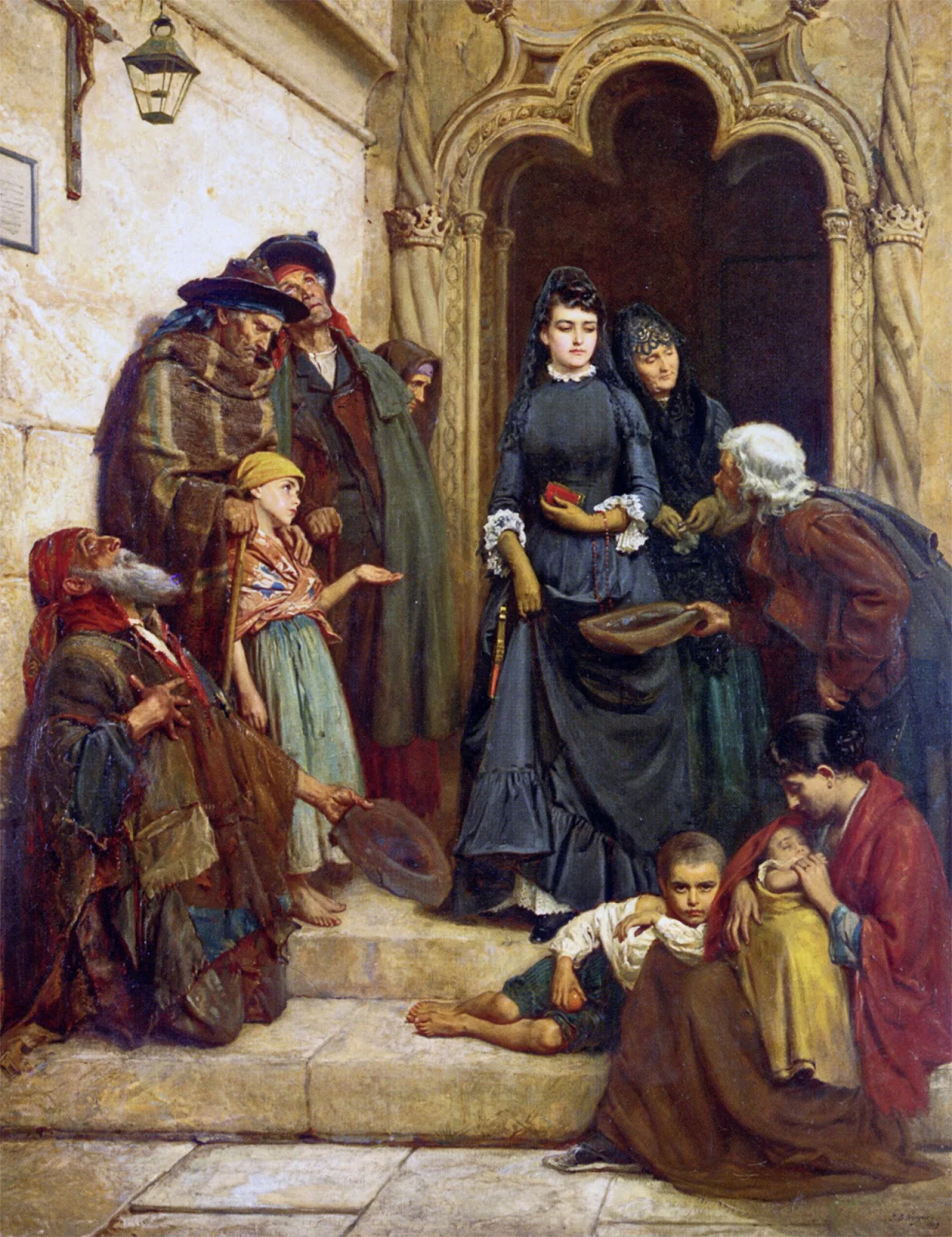
John Bagnold Burgess,  The Church Door
John Bagnold Burgess, The Church Door

A young lady, neglectfully raised by her disreputable English father in Montevideo, finds herself in trying social circumstances.


Dorothy Boulger, née Havers (1847-1923) published some 17 works of fiction under the pen-name Theo Gift between 1874 and 1901.  She spent her late teens and early twenties (1861-70) in Uruguay, a setting carefully realized, along with some convincingly conflicted characters, in Lil Lorimer

“A charming and romantic novel. . . .  The . . . characters are invariably lifelike. . . .  The author has painted South America with a realistic fidelity.”  Morning Post, April 16, 1885

The “descriptions of Urugayan town and country life . . .have all the appearance of being reproduced from original experiences”; The plot is true “to the complex realities of life.” Graphic, May 16, 1885

“The descriptions of life in that part of South America are both instructive and entertaining. . . .  The character-drawing . . . is also good, and the plot . . . is simple and natural.  But the story depends for its interest less on dramatic episodes and startling surprises than on portrayal of character and analysis of motive.” Spectator, July 25, 1885

Download this week’s novel:

v.1 http://access.bl.uk/item/viewer/ark:/81055/vdc_0000000421B0#?c=0&m=0&s=0&cv=6&xywh=-493%2C-1%2C3557%2C2104

v.2 http://access.bl.uk/item/viewer/ark:/81055/vdc_00000003C53A#?c=0&m=0&s=0&cv=6&xywh=-396%2C0%2C3383%2C2000

v.3 http://access.bl.uk/item/viewer/ark:/81055/vdc_00000003AEA2#?c=0&m=0&s=0&cv=6&xywh=-390%2C-1%2C3356%2C1985

Novel 014: Julia Rattray Waddington, Janet; or, Glances at Human Nature (1839)

Frank Stone, Friendship Endangered
Frank Stone, Friendship Endangered

An unassuming, affectionate young lady is envied by her older sister


Julia Rattray Waddington (1801-1862) wrote only four novels, all between 1838 and 1842.  This one, illustrating the passion of envy, is notable for its vivid and original characters; one of the best, a middle-aged unmarried woman living in a small town, seems possibly autobiographical

It “contains passages of feeling and sparkles of humour, subdued in tone, but still true to life.” Athenaeum, January 26, 1839

“The result of watchful observation in collecting the materials, and of much care, thought, and pains, in working them up . . . Its merits are—a nice and miniature delineation of those persons and of that life with which the mass of novel-readers are familiar; much truthfulness of dialogue; a keen but never malicious satire . . . the whole being embodied in a story which sometimes runs and never drags.” Spectator,January 26, 1839

“The story is made up of such incidents and feelings as characterize every-day life. . . . There are abundant proofs that the writer is a close observer of mankind and manners, habitually reflective, and a good natured satirist.  The dialogue is often particularly clever and effective.”Monthly Review, February, 1839

Download this week’s novel:

http://solo.bodleian.ox.ac.uk/OXVU1:LSCOP_OX:oxfaleph013983847

Novel 013: B.M. Croker, Katherine the Arrogant (1909)

James Tissot, Without a Dowry
James Tissot, Without a Dowry

A young lady, raised in aristocratic wealth but left penniless by her heedless father, persuades an aged friend to hire her as servant and companion.


Bithia Mary Croker (1848?-1921) wrote nearly 50 novels between 1882 and 1920.  This charming post-Victorian social comedy has motorcars and electric lights.

“A good story on a theme which always attracts, the woman who has to conquer the world.” Spectator, March 27, 1909

“An excellent story; crisply and vivaciously written, and thoroughly interesting from start to finish.” Bookman, April 1909

“It is written with an appearance of ease and competency of touch tending to disarm criticism.” Athenaeum, April 17, 1909

Download this week’s novel:

https://books.google.com/books?id=53IOAAAAIAAJ&printsec=frontcover#v=onepage&q&f=false

Novel 012: Catherine Gore, Mrs. Armytage (1836)

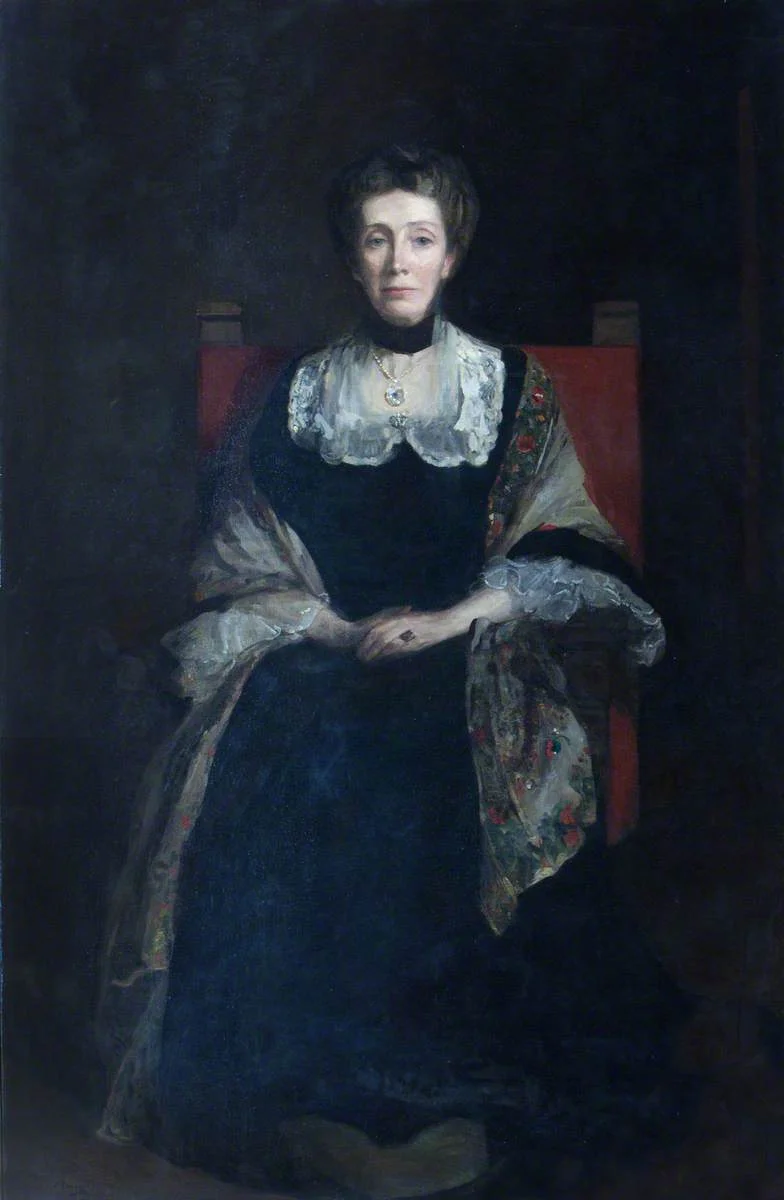
John Lavery, Elizabeth Welsh
John Lavery, Elizabeth Welsh

A proud, rich widow seeks to control her children.


Catherine Grace Frances Gore, née Moody (1799-1861), one of the most popular and esteemed novelists of the early Victorian period, wrote over 50 novels between 1824 and 1858.  Mrs. Armytage dates from the year before Victoria’s accession; its compelling and original main characters more than make up for some implausible plotting.

The novel provides “a capital and very agreeable picture of society in its various shades,—the trifing, scheming, laughter-and-scandal-loving exclusives; the respectable, unpretending, domestic nobility; the smaller Yorkshire squires; the family oddities which grow up in a remote provincial neighbourhood.  Most of the characters too are exceedingly well drawn,—effective yet without the exaggeration in which a more vulgar artist would have indulged.”  The style is “light, rapid, sparkling, and pointed, the combined result of natural wit, much observation of life, and considerable practice in writing.”  Spectator, July 9, 1836

Gore excels “in depth as well as nicety of observation, in the various portraiture of manners, and in the connecting with peculiar force minute traces of artifical character with strong movements of natural passion.”  Examiner, July 24, 1836

The novel shows “acute penetration into the motives by which individuals and even whole classes of society are actually though not openly impelled. . . .  The character of Mrs. Armytage is conceived with delicacy and discrimination, developed and sustained with admirable consistency and effect.” Morning Post, August 1, 1836

We “wish that Mrs. Gore could change her sex, and become M.P. for some borough . . . for she displays all the brilliant elements of one in every page. . . .  Her information is abundant, her shrewdness wonderful, her tact excellent, and her perceptions of character delicate, and happy in the extreme.”  Court Magazine and Monthly Critic, February, 1837

Download this week’s novel:

v.1 https://archive.org/details/mrsarmytageorfem01gore

v.2 https://archive.org/details/mrsarmytageorfem02gore

v.3 https://archive.org/details/mrsarmytageorfem03gore

Novel 011: James Payn, Thicker Than Water

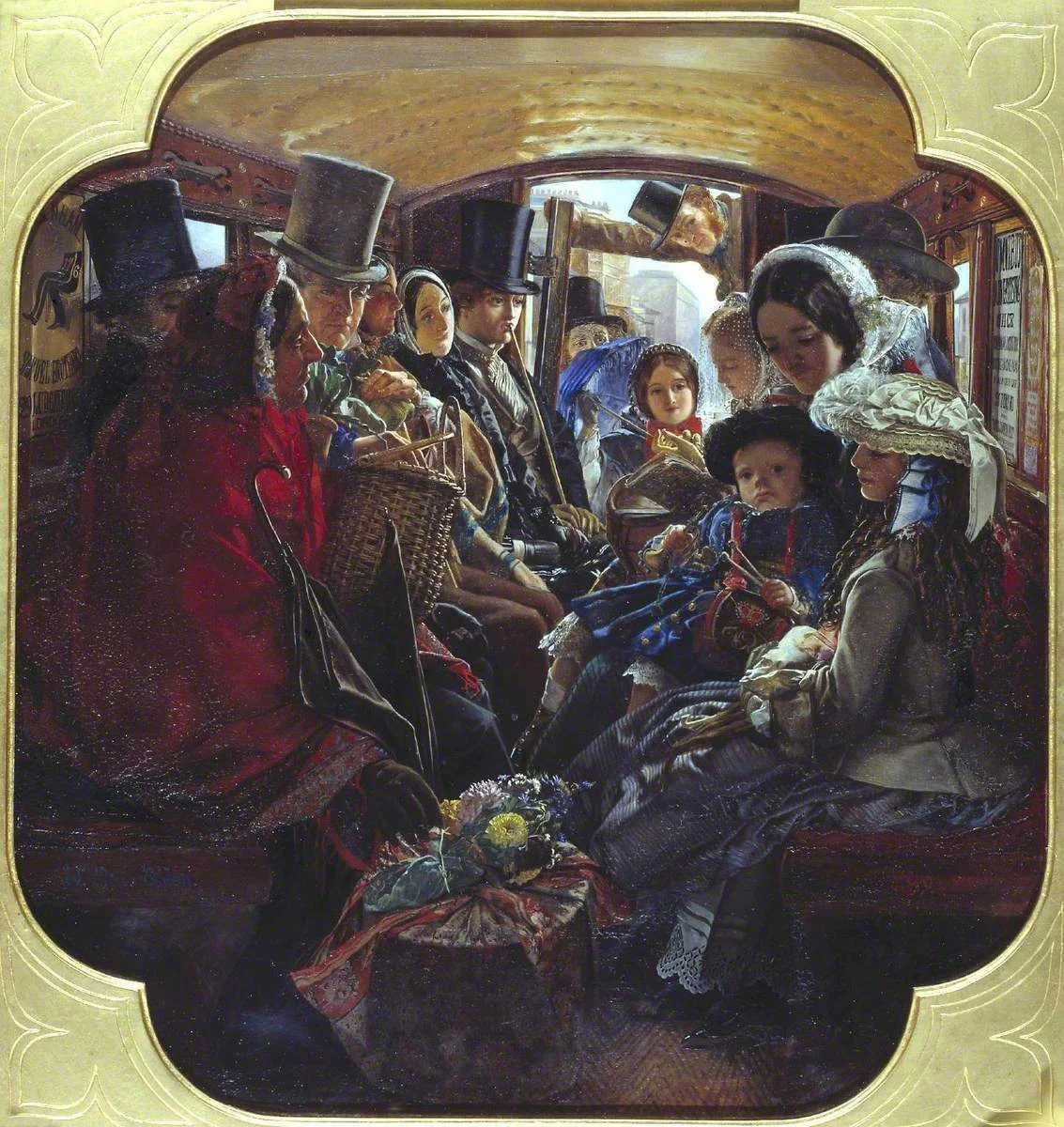
William Maw Egley, Omnibus Life in London
William Maw Egley, Omnibus Life in London

A proud but poor young lady endures the misbehavior of her various rich and eccentric patrons.


James Payn (1830-1898) wrote some 60 novels between 1857 and 1898.  This one has an intricate plot and a wide range of characters; its modernism is shown by the heroine’s resolve at one point to make her living with a typewriter.

“The writer’s thorough knowledge of the world enables him to lay bare the motives that prompt the actions of his personages, chosen in the most opposite classes of society. . . .  His characters are strikingly natural, and the individuality of each and all of them stands out in bold relief.”  Morning Post, September 10, 1883

It is set “among remarkable or original people, who meet with a variety of remarkable and more or less original incidents, as adventures come to the adventurous; while the scenes of the story are perpetually shifted, from town to country . . . and from the fashionable end of London to the extreme East.” Saturday Review, October 6, 1883

“Mr. Payn is as gay, as sprightly, as diverting as ever”; his story is “well imagined and well told enough to be interesting from beginning to end. . . .  Its personages are all of them natural and are many of them new; they are presented with a great deal of insight and vivacity; they have a flavour of reality which is refreshing in no mean degree.” Academy, October 27, 1883

Download this week’s novel:

v.1 https://archive.org/details/thickerthanwater01paynj

v.2 https://archive.org/details/thickerthanwater03paynj

v.3 https://archive.org/details/thickerthanwater02payn

Novel 010: Anonymous, Eva Desmond; or, Mutation (1858)

Arthur Hughes, A Passing Cloud

A virtuous but poor young lady falls in love with a man whose family wants him to marry money.


Nothing is known about the author of this novel which, with a large cast of lively characters and much circumstantial detail, tells a story of what might be called Providential revenge.

“There is a certain air of actual life, marks of observation, traces of personal experience and investigation, and a power of pourtraying things and people . . . which would have been graphic were it not for the dream-like air of unreality."  Athenaeum, September 18, 1858

The novel has a “felicitous closeness of observation, and a fluency as well as vigour of style.”  Spectator, September 25, 1858

“A work of uncommon merit.  Its construction is admirable; for, although the story is intricate” and each of its “vast crowd of personages is made to preserve...a distinct...personality,” still “the reader is never suffered to lose sight of . . . the central object of the plot, the heroine of the story.”  Critic, September 25, 1858

"Among recent fictions we know of none having a stronger claim on our commendation . . . for a freshness and sweetness that breathe of the heather of the Irish mountains.  We know not that we have ever made acquaintance in the realms of fiction with a more truly fascinating person” than Eva Desmond.  Eclectic Review, November, 1858

Download this week’s novel here:

v.1     https://archive.org/details/evadesmondormut00desmgoog

v. 2    https://archive.org/details/evadesmondormut01desmgoog

v.3     https://archive.org/details/evadesmondormut02desmgoog

Novel 009: David Christie Murray, Hearts (1883)

Henry John Yeend King, Milking Time

A young gentleman seeking success in music and in love is undermined by a false friend and defended by a true one.


David Christie Murray (1847-1907) wrote some 30 novels between 1880 and 1907.  Here he sets out to disprove the claim of an “American writer of fiction”  (attacked in his preface) that “all the stories have been told” with an involved, and involving, plot.

 “The interest of the story is well sustained.” Academy, June 6, 1883

The villain’s “picture is drawn with remarkable skill”; the plot “is good throughout, and towards the end, where the action becomes more rapid, rises to a high level of merit”; the author provides “acute observation of life” that is “both vigorous and just.” Spectator, June 9, 1883

“The novel is bright and readable.” British Quarterly Review, July 1883

Download this week’s novel:

v. 1   https://archive.org/details/heartsnovel01murr

v. 2   https://archive.org/details/heartsnovel02murr

v.3   https://archive.org/details/heartsnovel03murr