Hey, lads and lasses, the old year passes! Deck those halls! See that blazing yule! Don that gay apparel! Troll that ancient carol! Maybe you struggle to remember that ancient carol? Well, I used to have that problem too. “Boughs of holly . . . what? what comes after ‘holly’? what’s the next line?,” I’d find myself wondering, again and again, while the merry measure went on without me. Then I hit on a mnemonic that has never failed me since. I enshrine it in this week’s crossword, as my gift to you.
“One of the best novels of the year. . . . Nothing can be happier than the development of three characters in the second volume.” Athenaeum, April 19, 1873
“We hesitate not to say that May Heriot is one of the very finest characters in the wide range of English fiction. And yet there is nothing unnatural about her—you feel that there have been, and are, just such good Scotch gentlewomen as May Heriot.” British Quarterly Review, July 1873
A (somewhat) contrasting view:
“If only she could have reduced the number of death-beds and mourning scenes with which it abounds, it would have been a very good novel indeed.” Examiner, May 5, 1873
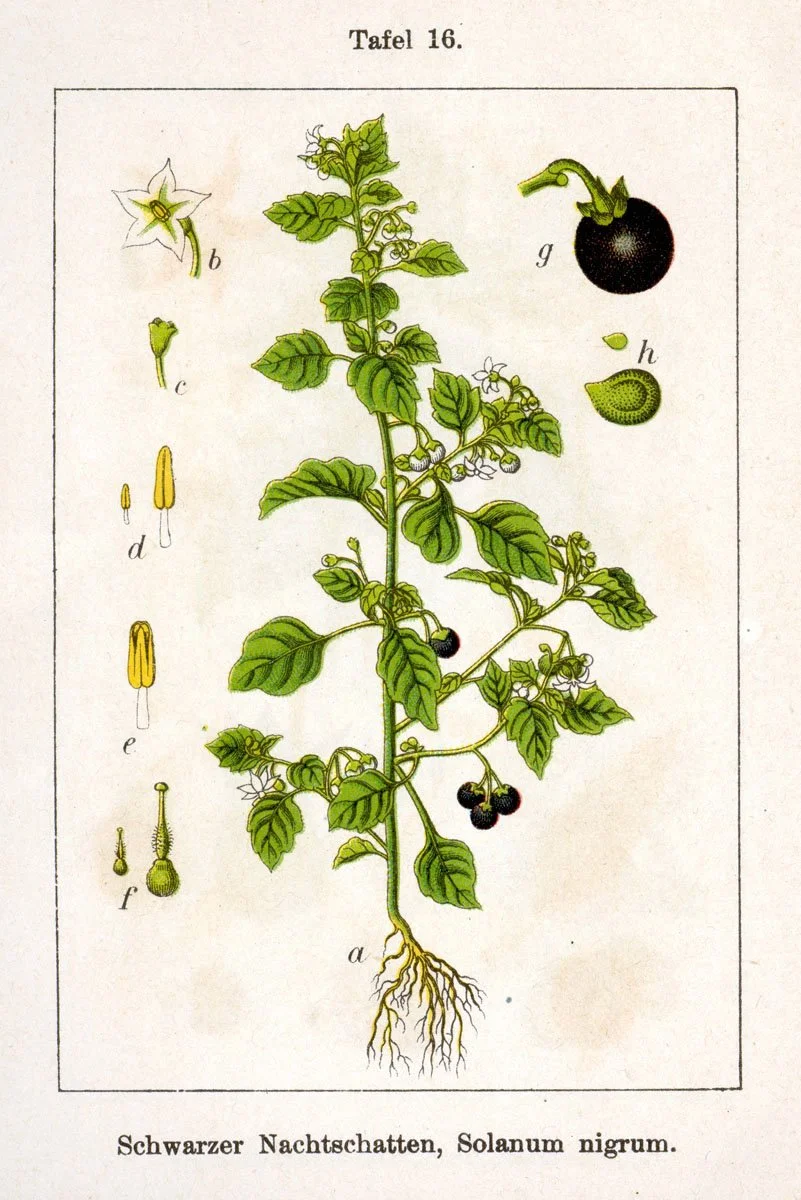
The petty morel, or black nightshade, is depicted above, in a page from Jacob Sturm’s Deutschlands Flora in Abbildungen. This puzzle follows “Heart’s Ease,” illustrated in Carl Axel Magnus Lindman’s Bilder ur Nordens Flora (seeCrossword 253), as the second in our ongoing series of crossword versions of color plates from northern European botanical guides of the 18th, 19th, and 20th centuries. Stick around; you won’t want to miss the rest!
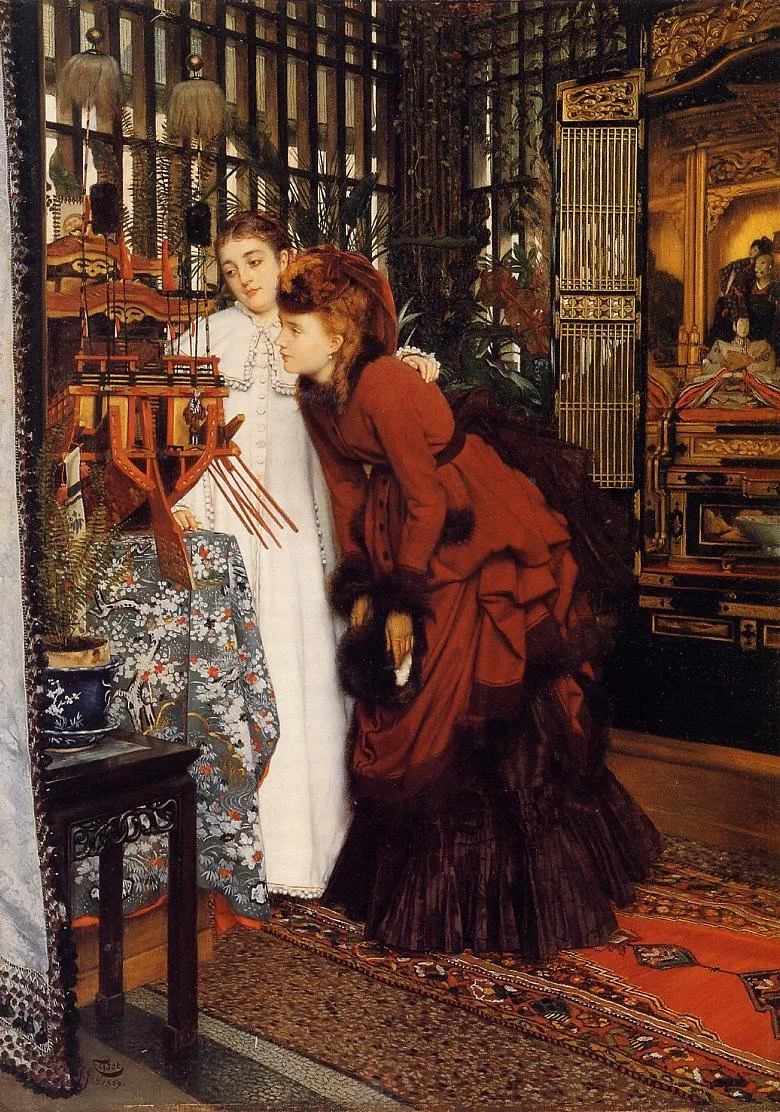
James Jacques Joseph Tissot, Young Ladies Looking at Japanese Objects
To escape the drudgery of teaching in Chicago, a young lady exchanges identities with a friend, then becomes engaged and moves to Japan.
Nothing seems to be known of Annie Carruthers, who published another novel or two after this one, without much apparent success. And yet (if one forgives the improbable plot twists, and ignores the admiring descriptions of the heroine’s fabulous outfits that laughably intrude at the most dramatic moments) it is altogether good, depicting a bad marriage made worse by the setting of a claustrophobic European outpost in Hakodate, Japan.
“A worldly, sensible, and rather cynical story, sufficiently well told to be read with pleasure, . . . really above average in merit, and something more than simply readable.” Athenaeum, April 15, 1882
“Some portions of the book are interesting as giving a faithful view of the life of the isolated English settlement” in Japan. Academy, April 22, 1882
Where did you go? You didn’t fall for the blandishments of those other crossword constructors, did you? Well, it wouldn’t be all that surprising if you did. Since this website’s inception many years ago (Obama was still president!) thousands of new constructors have appeared on the internet; in fact, every thirty seconds someone puts a new crossword online; and if current trends continue, by the year 2025 fully 50% of all internet words will originate in crossword puzzle clues or answers. Meanwhile, the number of crossword solvers has fallen precipitously: already constructors outnumber solvers by a ratio of three to one. So, if you didn’t go, don’t! I need you!
Today’s puzzle is a kind of sequel of my Los Angeles Times puzzle of November 18 (available for the time being in the LAT puzzle archive at www.cruciverb.com)—in case you were wondering how that came out. If you didn’t happen to see that puzzle, however, don’t worry; this one is sufficient unto itself.
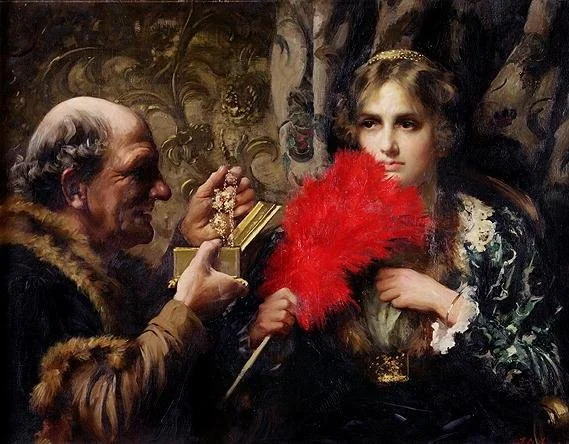
An English gentleman stays at the home of a French duchess in the duke’s absence; unexpected consequences, involving a beautiful singer and a valuable necklace, ensue.
Here is another breezy but involving novel by Hope (seeNovel 124).
“It is dramatic and thrilling, and keeps the reader aroused from cover to cover. It is also charmingly written. . . . No one can help becoming engrossed in the book. But it is not a story with a purpose.” Congregationalist, November 22, 1894
“The interest is, by turns, pleasantly sentimental or strongly exciting. There are strange happenings in every chapter. . . . The element of dramatic suspense is skillfully contrived and well sustained. The story is wildly ‘improbable,’ but it is purposely so. The improbable has a wholesome tonic effect when the literary malady called ‘realism’ is epidemic.” New York Times, November 24, 1894
A (somewhat) contrasting view:
If Hope “does not excite us much, or stir our deeper emotions, he at least succeeds in keeping us amused and awake. It would be absurd to talk about literature in connexion with such a book . . . and it would be uncharitable to deny that it is of more than average merit regarded as a means of intellectual entertainment of quite as high a kind as collecting crests or taming white mice. We must have something to read after dinner, and we might just as well turn the leaves of The Indiscretion of the Duchess as struggle with the evening paper.” Saturday Review, December 1, 1894
I confess that when I applied the title “Teaser Rates” to this puzzle, I wasn’t sure exactly of the phrase’s meaning. Was it a sibling-behavior phenomenon studied by child psychologists? Was it a metric for hair salon workers whose compensation is based in part on the size of their tonsorial creations? It turns out that, like the title ofCrossword 144, it’s just another dubious financial practice. So it sounds more fun than it is—like so many things in life. But not like this puzzle!
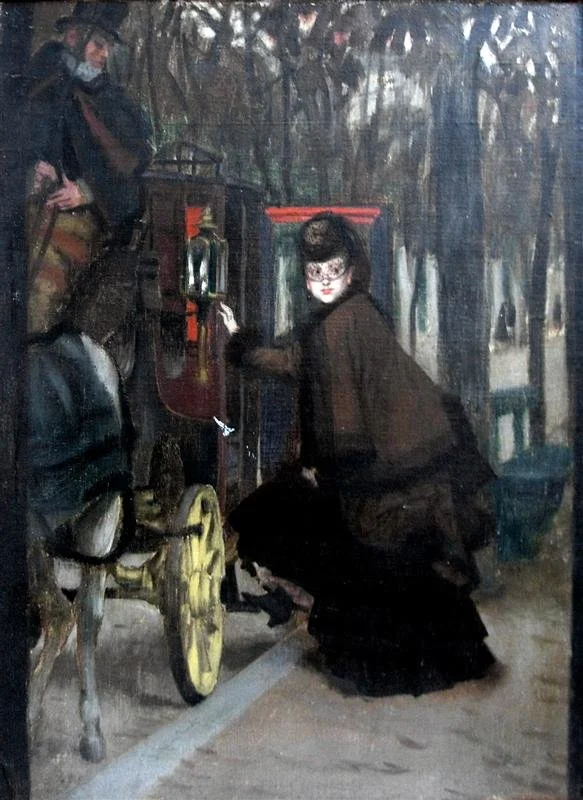
James Jacques Joseph Tissot, The Secret Rendez Vous
A bad man manipulates a weak, fearful woman.
Here is another novel by Fullerton (seeNovel 019), again featuring a woman helplessly enmeshed in impossible dilemmas.
“It is . . . finely natural, discriminating in tracing the movements of the human heart, affording admirable contrasts, and being touchingly pathetic. . . . The . . . author . . . passionately unfolds the wretchedness of a soul in mortal agony through doubt, uncertainty, crushing oppression, and irresistible despair. It is, indeed, a tale of woe, with little or no relief; and all who do not shun the luxury of tears over the pictures of fiction will hasten to their delineation here by a pencil of the deepest interest and potent effect. The finale is most affecting; and what precedes and makes it inevitable is yet more forcible.” Literary Gazette, May 11, 1844
Fullerton “has shown a depth of observation surprising in so young a writer; the power of sustaining a strong and simple interest; a taste for homely portraiture; and a wholesome contempt of the trival follies of what are called fashionable subjects.” Examiner, June 1, 1844
A contrasting view:
“This novel is the work of a clever and accomplished writer, possessed of considerable skill in the conduct of a story and the management of dialogue; and as such it cannot be read without some gratification. Its grand defect is the almost unmitigated monotony of wretchedness pervading the tale of misery. Its wearisome painfulness is not lessened by the purely constructive woes of its heroine; neither do the artful ingenuity and verisimilitude of the details hide the improbability of the main circumstances or the inconsistency of conduct in the principal persons. . . . The vein of religious sentiment running through the work is out of place in a fiction not involving matters of creed and opinion. . . . The pathos is of a morbid larmoyante kind—disagreeable without being exciting.” Spectator, May 18, 1844
We’ve mentioned before the benefits this website is designed to confer on elderly solvers, whose incipient dementia will be held at bay by the mental gymnastics it requires. We haven’t, however, dwelt as much on its benefits for very young solvers, whose struggles at reading will be eased by the insight it provides into the inner workings of language and meaning. In fact, every puzzle is subjected to intense review by two focus groups, one of 80-year-olds, one of 8-year-olds, and carefully shaped in response to their experience. And that’s why four out of five geriatricians and nine out of ten pediatricians recommend this website.
A wealthy solicitor’s son is secretly engaged to be married.
Here is another clever and lively novel by Cook, for whom see Novels040,111, and166.
“Much of the painting it contains is not inferior to Mr. Trollope’s. . . . The novel has scarcely any poor work in it, and no bad, trashy work.” Spectator, October 3, 1868
“Mr. Cook has done a new and somewhat daring thing” in his plot, and “has, moreover, achieved this new and somewhat daring thing in a style and with a completeness of success that . . . put him amongst our best living novelists. This high praise is given . . . after cool reconsideration of the numerous merits of the story; its skilful construction, uniform freshness and sprightliness of diction, wholesomeness of interest, and . . . the unconstrained humour of its somewhat superficial but thoroughly truthful delineations of character.” Athenaeum, October 10, 1868
A contrasting view:
“Mr. Cook stands just outside the circle of penny romanticists—one half-penny beyond them, so to speak. . . It would be difficult to imagine a slighter story, yet Mr. Cook spins and spins with a hundred-spider power, and clothes the poor bit of plot in three volumes. . . . The thing is a literary cobweb. . . one of the most vicious specimens of the porous, no-thinking, windy school of novelists that we have seen for many a day. A course of such reading would in a few years materially increase the amount of national imbecility.” London Review, October 21, 1868
We conclude this website’s fifth year as we have concluded the other four—with a 21 x 21 “Cavalcade of Crosswordese” (see Crosswords052,104,156,208): a puzzle featuring words overused in crosswords because of their convenience to constructors, combined into hilariously unexpected phrases. As if this weren’t enough to satisfy the most demanding solver (and of course it is), this year we’ve alphabetized the words in each phrase, and the phrases overall in the puzzle, a service that we alone, of all crossword constructors, have ever, to our knowledge, provided.
Maybe, grateful as you are for yet another year of puzzles and Victorian novel recommendations, you feel a sort of an urge to do something, but you just don’t know what. Well, here’s an idea! Click the “Donate” button below and give us a trifling sum of money (you may also donate through PayPal or Venmo using our email address.): $12 will get you a bonus 15 x 15 “Victorian” puzzle filled only with words in use before 1901; $13.50, a bonus 21 x 21 puzzle; $15, both of these; and $10,000,000, your name on the website.
Now mind—whether you give us anything or not, we’ll just go right on making crosswords and Victorian novel recommendations till we feel we’ve made enough. It’s entirely a matter between you and your conscience, assuming you’re troubled by such a thing at all.
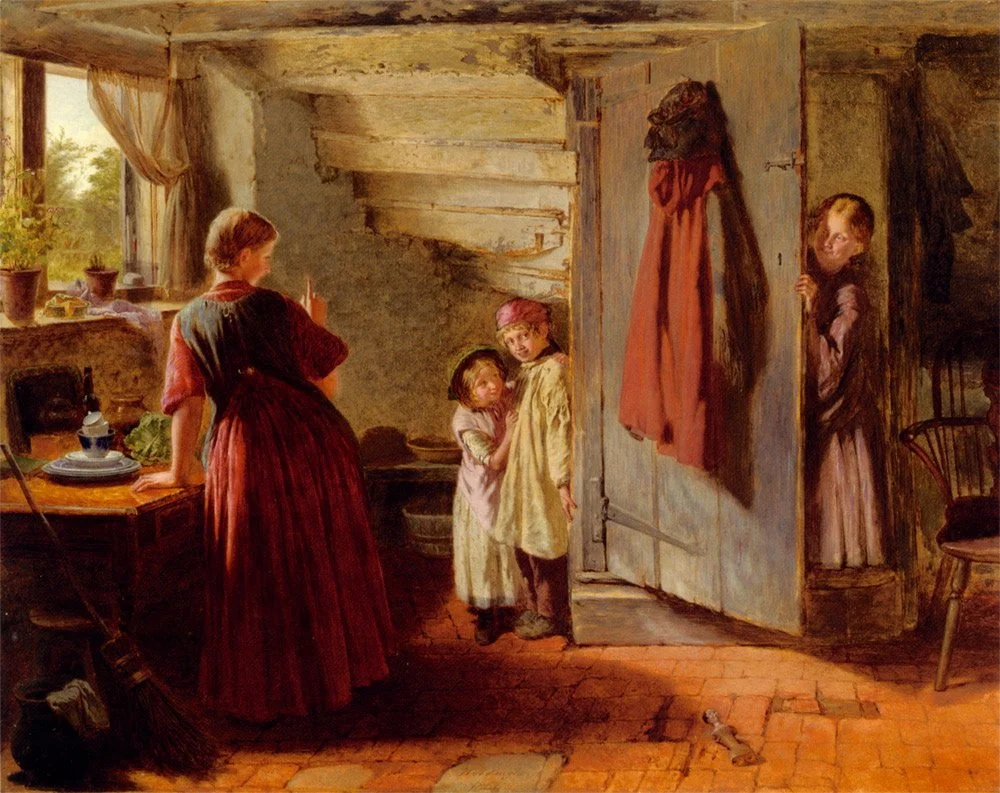
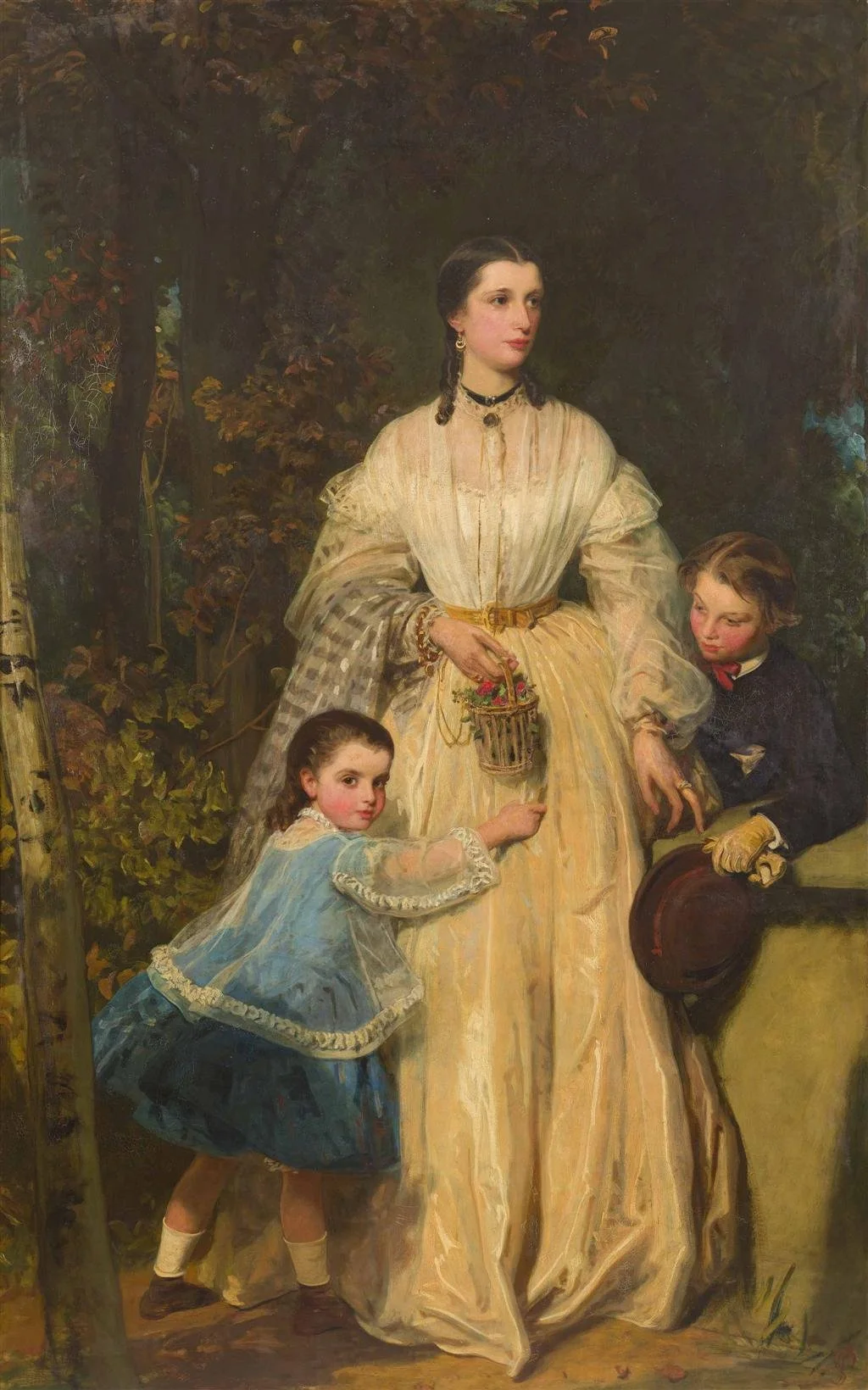
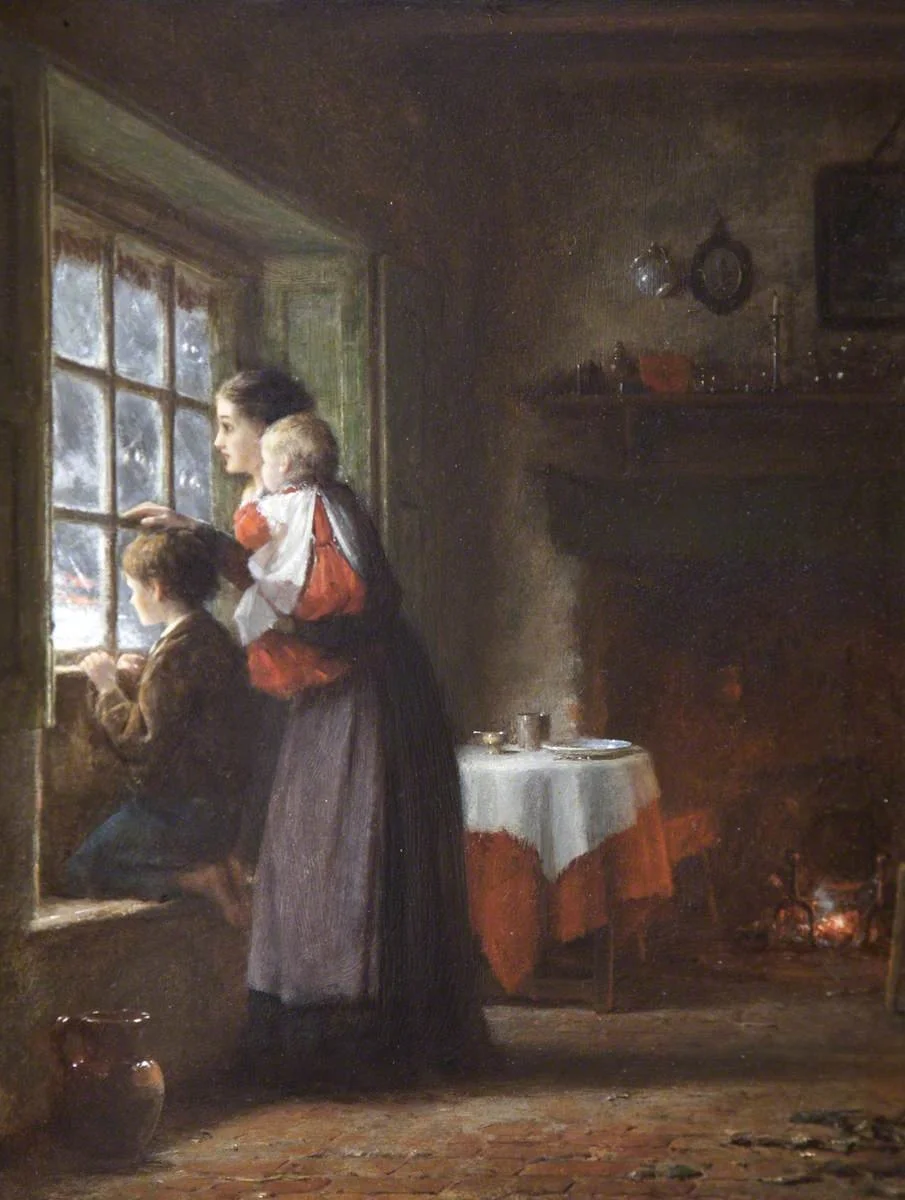
James Sant, Mary Fothergill and her children Richard and Mary
A woman devotes her life to a former lover’s orphan children.
Here is another novel by Yonge (see Novels003,053,103,155,210) who, in the matter of character delineation, is, I will recklessly assert, the greatest of all novelists ever.
“Miss Yonge has . . . been remarkably successful in sustaining to the end the interest of the story, and we do not often meet with a novel in which it is less easy to predict beforehand what will become of each of the principal characters.” Literary Gazette, November 3, 1860
“The union of a chivalrous sense of honor with a keen perception of the ludicrous, and of dainty literary tastes with strictly High-Church principles, and the fondness alike for practical duties and errant fancies, seem as essential to the character of the author of ‘Hopes and Fears’ as to that of the heroine. Novel readers . . . will find the story full . . . of the same quiet humour and the same high moral principles” as all Yonge’s novels. North American Review, April, 1861
A constrasting view:
“Without the help of a genealogical tree, we are completely at a loss to understand the plot of the story, for we are carried through no less than four generations of one family, and are favoured with the history of all their relations, connexions and friends. Moreover . . . nearly every person mentioned in the book is known by a very unfair number of nicknames, which only makes confusion worse confounded. . . . The moral of the story seems to prove (whether intentionally or not we cannot say) that if children are duly instructed in religious principles, and receive a careful education they will probably turn out good-for-nothing, worthless characters; but if sufficiently neglected . . . there is every hope that they may ultimately become praiseworthy and valuable members of society, even, perhaps, zealous, hard-working High-Church clergymen.” Athenaeum, November 3, 1860
Duty is an important value with us here at David Alfred Bywaters’s Crossword Cavalcade and Weekly Victorian Novel Recommender, as it was with the Victorians themselves; so this week’s puzzle, which concludes the website’s fifth year, is a cruciverbal Ode to Duty, just like Wordsworth’s, except that it’s a puzzle made up of crossed words rather than a poem..
Are you feeling a dutiful inclination to help support this website? Now’s your chance! As at other years’ ends, along with giving you absolutely free two 21 x 21 puzzles (this week and next week), we are offering bonus puzzles to those who donate. You may click on the button below, or donate through PayPal or Venmo using the site’s email address. There are four donation levels. Donate $12 and receive a 15 x 15 crossword which employs only words current during the Victorian era (and, of course, still current today). Donate $13.50 and receive a large, themed 21 x 21 crossword. Donate $15 and receive both.
And again, for a donation of $10,000,000.00 the site will be renamed in your honor. So if your name is, say, Melon Usk, it will henceforth be known as Melon Usk Presents David Alfred Bywaters’s Crossword Cavalcade and Weekly Victorian Novel Recommender. Why do this? Well, say you’re a little remorseful about spending 44 billion dollars on a social media platform that’s good for little but abusing one’s enemies and congratulating oneself—wouldn’t you feel much better about things if, for a tiny fraction of the price, you purchased in addition the right to present the world’s premier source of crossword puzzles and Victorian novel recommendations?
Here is another novel by the great W.E. Norris, for whom see Novels002,054,104,156, and209.
“Few novelists of Mr. Norris’s fertility proceed from good to better. But it is a fact that in Marcia he has reached what is so far his greatest effect in art. . . . Never has Mr. Norris been in better form; never has he been so acute and observant; never has he employed his really admirable convention to better purpose. . . . The style is smooth and equable without being monotonous and fatiguing, and almost every page contains some remark which, though it may not have the sting or the bite, has more than the veracity and charm, of most epigrams.” National Observer, December 20, 1890
“The book strikes us as one of the cleverest which Mr. Norris has yet produced, though, until towards the end, hardly the most agreeable. The study of every-day people which it contains is so good as to be rendered painful during the first two volumes by its very excellence; for the men and women are so like to life, that they bring home to one the pettinesses and unworthinesses of human nature with disagreeable force. . . . Fortunately, however, the third volume makes amends.” Spectator, January 17, 1891
A somewhat contrasting view:
It is “more readable than many of the current novels, but it is not up to the author’s standard. It is dragged out by the introduction of a multitude of petty details which do not add to the interest of the story in the least.” San Francisco Chronicle, February 1, 1891
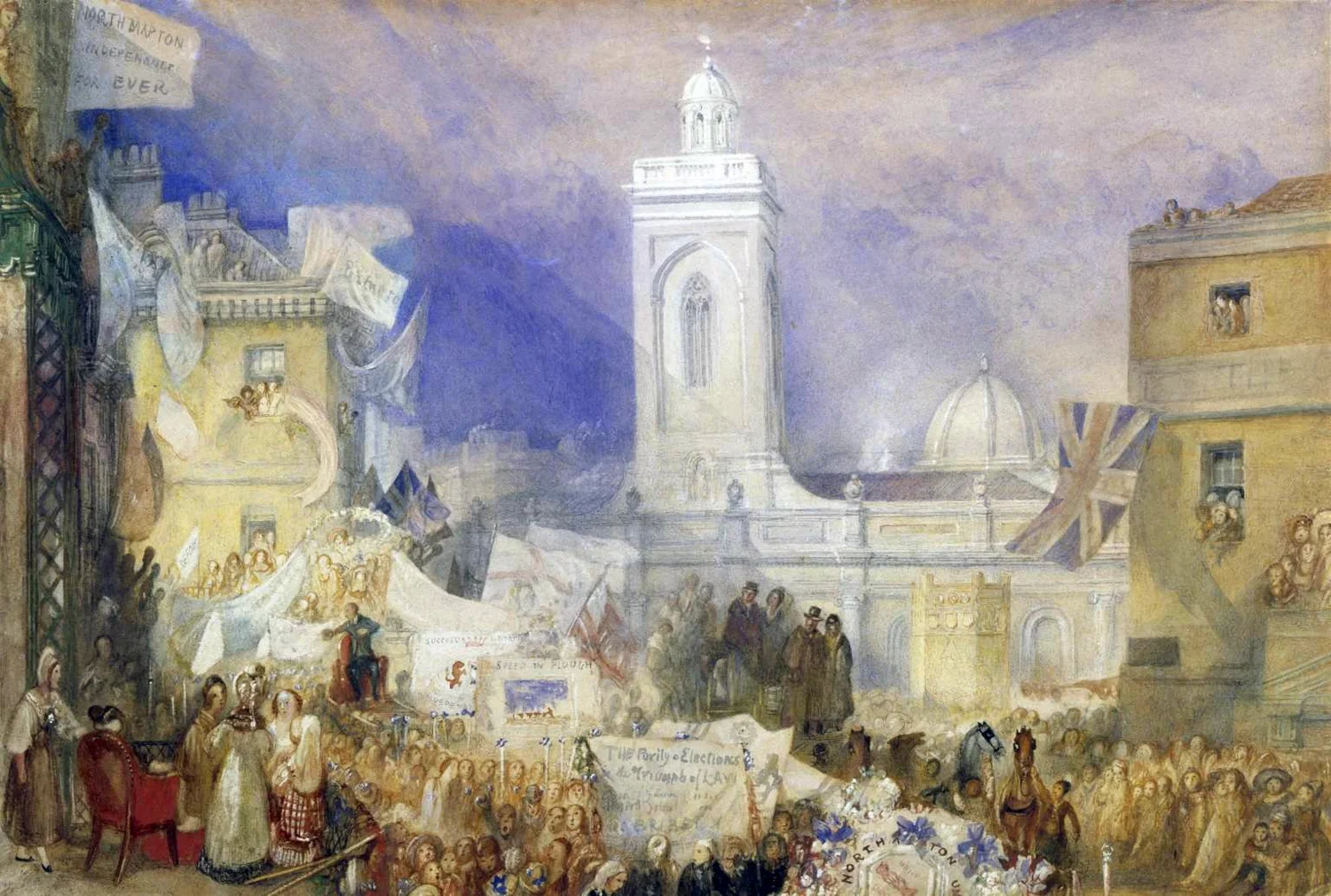
JMW Turner, The Northampton Election, 6 December 1830
Next Tuesday is Election Day here in the U.S.A.! So here’s a puzzle for the occasion, as the polls close, and this candidate leads by that margin while we await those precincts, and the television personalities holler in front of their multi-colored maps, and the pundits speculate and explain, and the portentous election-day music plays, and the garish election-day graphics swirl, until the wise voter unplugs everything and retires to bed with a Victorian novel, content to read the results in tomorrow’s paper.
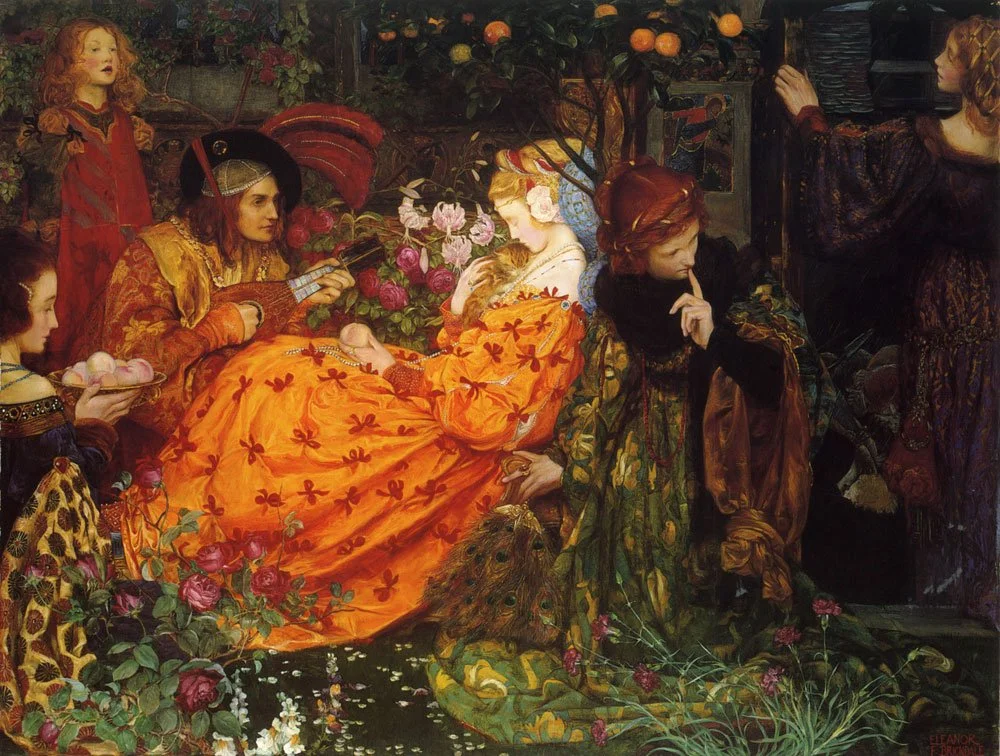
Eleanor Fortescue-Brickdale, The Deceitfulness of Riches
A boarding-school pupil-teacher, abandoned by her father and compromised by her jealous employer, is rescued by a poor young barrister.
Here is another novel by Croker, for whom see Novels013,073,129, and183.
“Mrs. Croker is always a lively and spirited writer. . . . There are passages of natural humour and also of pathos here to hold the reader’s attention.” Academy, January 8, 1896
Some more or less contrasting views:
“The human nature in the book is wrong from the beginning to end. . . . But if you can get over the utterly false psychology, the bare outline of the tale as given here will show you that there is incident enough to make a lively story.” Bookman, February 1896
The heroine is in “a fine situation, possessing unlimited possibilities, possibilities which would weigh heavily on the mind of a conscientious young author; but they sit lightly on Mr. Croker, and he canters ahead untroubled by the claim of subtleties, for which we are grateful, judging his power from the display he makes of it in the story. Mr. Croker writes in an undistinguished, not to say common, style, and the three volumes show no artistic merit whatever. But he is not pretentious, and he is not dull, and though we are not dying to read another of his novels, we did read this one right through without wanting to stop.” Saturday Review, March 14, 1896
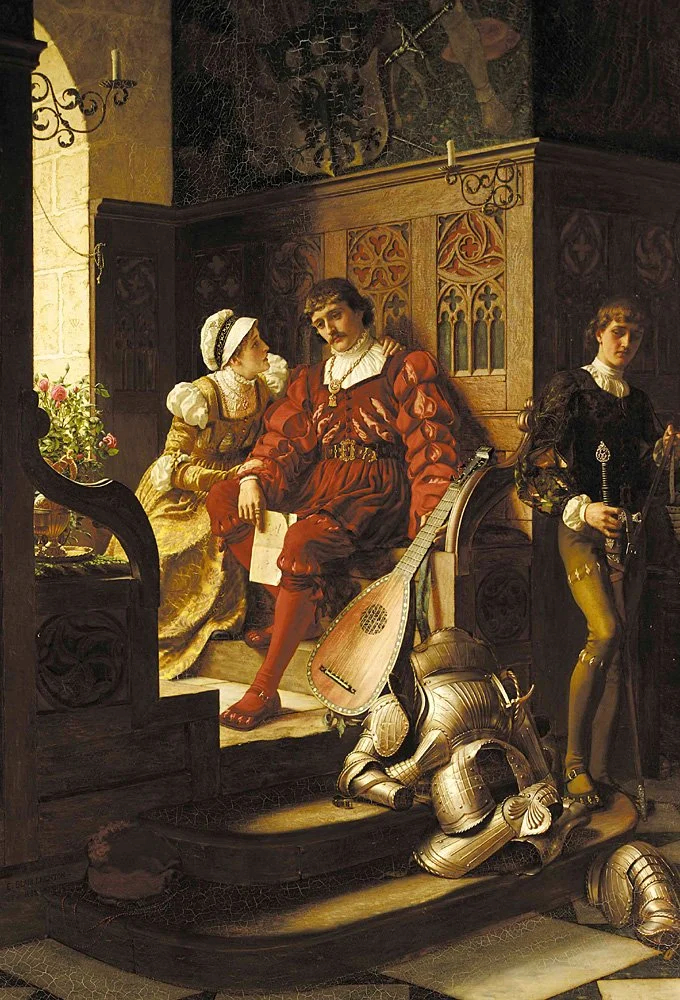
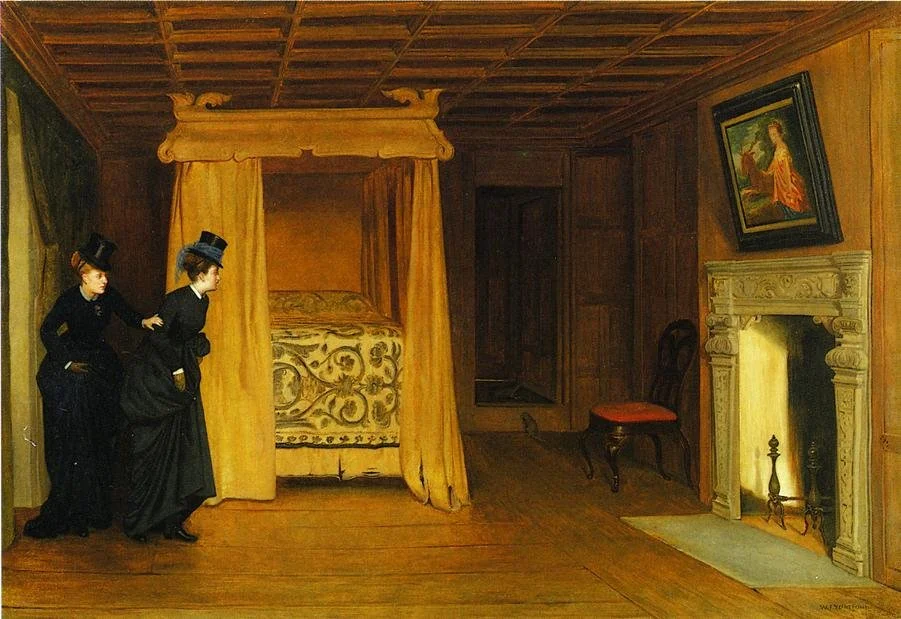
William Frederick Yeames, A Visit to the Haunted Chamber
Why should ghosts be traditionally associated with aversion and fear? I’d love to encounter one, and thereby disprove to myself the seeming probability of personal annihilation. So if you know any ghosts, please send them my way; or at least try to gather and pass on to me any tips they might be willing to share as to posthumous survival.
A wealthy English scientist is appointed guardian to his late German collaborator’s beautiful daughter, who is otherwise at the mercy of a scheming aunt.
Here is another novel by Sidgwick (see Novels082,142,200), vivid and well crafted as usual.
“Reticent and light of touch as our author is, you are never allowed to forget how deep are the depths of passion that lie beneath this humorous, shrewd surface-play. ‘The Professor’s Legacy,’ in fact, is one of the most interesting and well-told novels of the season, and it should be one of the most popular.” Academy, October 28, 1905
“The tale is a good one in its quiet way, told with much humor and much excellent character study. The scenes too, shifting from a German university town to a country place in England, afford an opportunity for varied pictures of life and manners.” New York Times, November 25, 1905
“Her sharply contrasted and clear-cut portraits of various social types are done with admirable verve.” Spectator, December 15, 1905
We’ve been having more labor trouble here at David Alfred Bywaters’s Crossword Cavalcade and Weekly Victorian Novel Recommender. The new hires are sadly unqualified. One of them crossed the name of a little-known actor with the name of another little-known actor. We had to “let him go.” Another crossed a Star Wars character’s name with a Star Trek character’s name. We fired her too. But there’s only so much one scrappy little crossword maker can do. The same kind of thing is happening everywhere. Standards throughout the industry have grown ever more lax, degrading the entire crossword labor pool.
And meanwhile, what about the millions of desperate solvers who have turned to crosswords as a last resort—to stave off dementia, or addiction, or trauma, or boredom? We cannot fail them! We need national standards, a system of certification and licensure, and a well-trained enforcement arm, and we need them now!
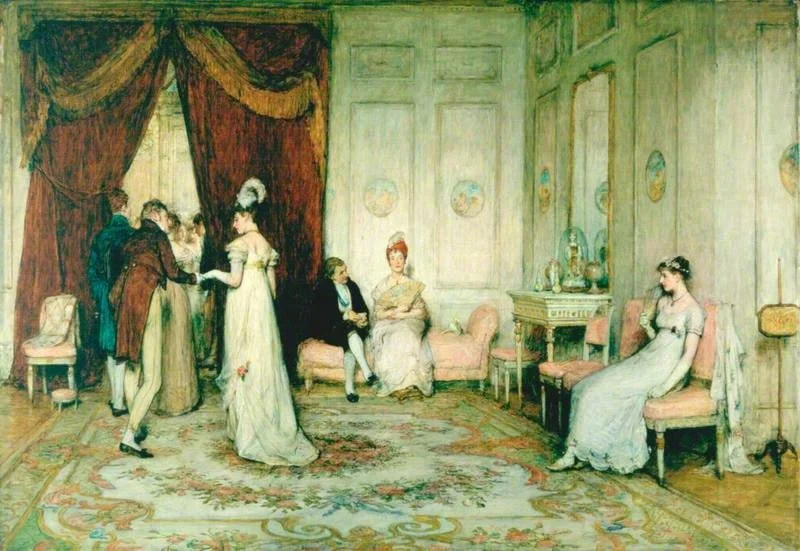
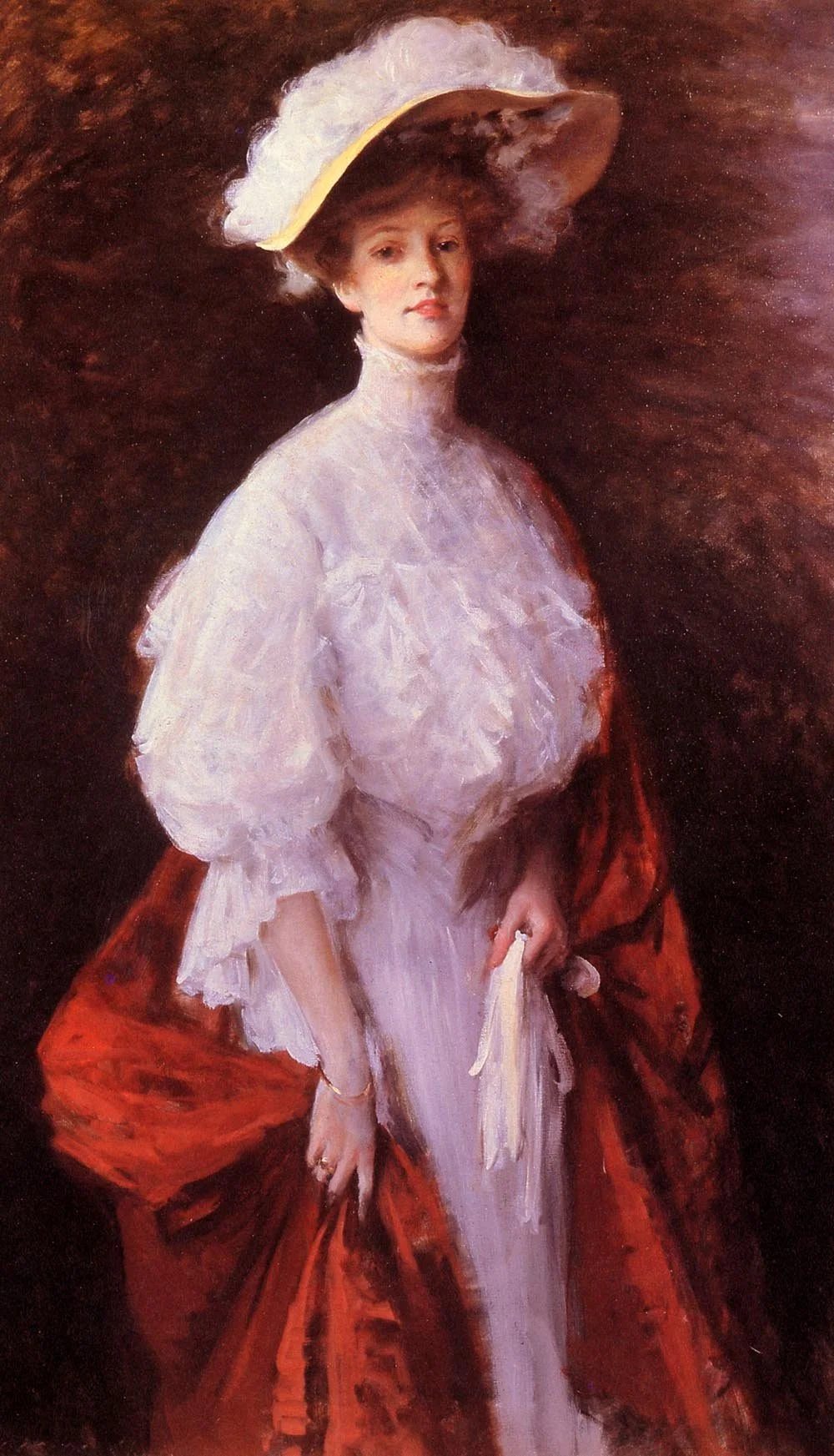
William Merritt Chase, Portrait of Miss Frances V. Earle
A New York heiress is courted by various young men.
Robert Grant (1852-1940) wrote some fifteen novels, of which the last appeared in 1931. This was his first, a light-hearted representation of the sad quandaries facing a fashionable young woman of the period.
“Mr. Grant writes without affectation, and appears to know New York society well; his book is decidedly attractive and lively.” Athenaeum, October 29, 1881
“The naïve account which the young lady gives of her triumphs is exceedingly amusing. . . . Very lifelike and amusing are her incidental sketches of the four gentlemen who specially honour her by their preference.” Spectator, November 5, 1881
A contrasting view:
“It is a long time since we met with a book—if, indeed, this is not entirely by itself—which credited our fair American cousins with so much vulgarity and so many little petty intrigues.” Academy, February 26, 1881